
Traffic Control: Steady Business Sees Slight Slowdown On Global Tours, Strong Local Demand
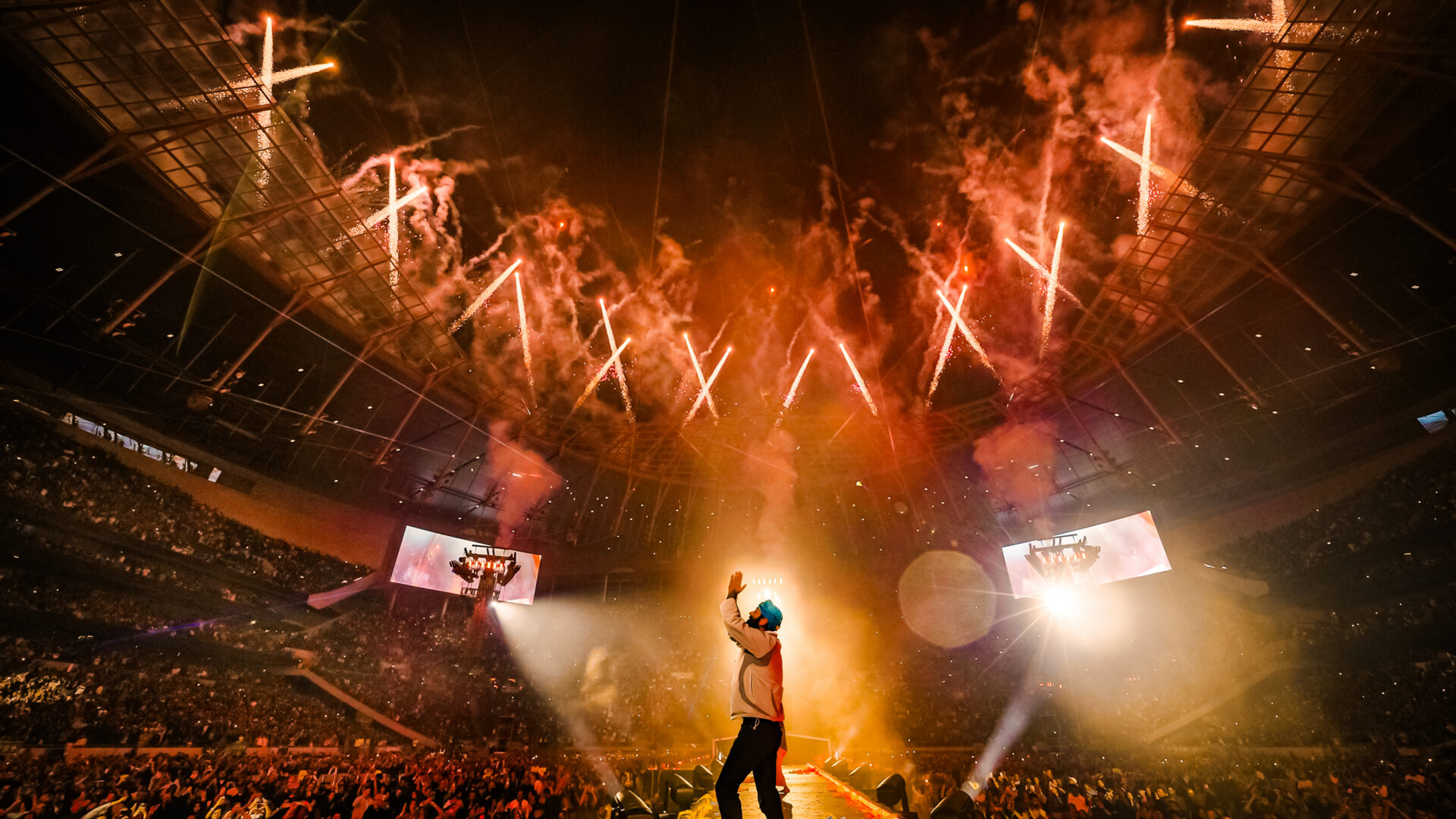
Europe and the UK remain both an opportunity for touring artists and a stronghold on its own, as evidenced by this year’s Pollstar Magna Charta rankings based on box-office reports from across the Atlantic submitted to Pollstar between Feb. 1, 2025, and Jan. 31, 2026.
Although plenty of challenges — from inflation affecting the bottom line to geopolitics creating uncertainty across the globe — a cross section of industry pros across the continent share positivity about both the domestic concert scene as well as the strength of international touring.
The touring totals this year of submitted data add up to $2.74 billion grossed by the Top 100 artists — not shabby when compared with Pollstar’s 2025 Year End total of $9.5 billion grossed by the Top 100 Tours Worldwide — and 25.4 million tickets sold. However, this year’s grosses and ticket sales significantly dropped compared to the previous year’s Magna Charta totals of $2.98 billion and 27.6 million tickets, down roughly 8.4% and 8.3%, respectively, suggesting a slowdown in volume as major blockbuster tours like Taylor Swift’s “Eras” wrap up.
The biggest touring act to grace Europe in 2025 was Imagine Dragons. The U.S. pop-rock band sold over 1.48 million tickets and grossed $169.3 million on their “Loom World Tour” last year. It actually started in July 2024 and will not wind down until March this year, encompassing 93 shows in total. The run of shows in 2025 included dates in China as well as lengthy stints in Europe, North America, Mexico and South America.
Trailing them, but only slightly, was Ed Sheeran. His touring in 2025 saw him sell 1.34 million tickets and gross $147.7 million.
Fellow Brits Coldplay were snapping at Sheeran’s heels as he traversed the globe. They sold 837,000 tickets and grossed $138.2 million. They sold 62% of the tickets Sheeran did, but grossed 93% of what he did.
The upper echelons of the list was dominated by U.S. and UK acts, with Dutch violinist and conductor André Rieu being the only act outside of the two dominant markets to make the top 10, landing at No. 9 with 605,000 ticket sales and a gross of $70.4 million.
Stray Kids were the leading Asian act, selling 391k tickets and grossing $64.4 million. The imminent return of BTS will surely see South Korea high up in the leaderboard for 2026.
Imagine Dragons and Ed Sheeran were the only acts in 2025 to surpass 1 million ticket sales, although legendary British metal band Iron Maiden came close, shifting 962,000 tickets and grossing $101.8 million, making them the most successful touring heritage rock band of the year.
Six out of 10 of the biggest tours of the year were by solo acts, but Ed Sheeran significantly outpaced Kendrick Lamar (although this was a joint tour with SZA), Beyoncé, Bruce Springsteen, André Rieu, and Lady Gaga.
Data from stadiums showed that long runs or residences were a significant trend last year, with Coldplay breaking the record at Wembley Stadium in London, with a run of 10 nights. That said, their record was a short-lived one as Harry Styles will play 12 nights at the same venue this summer on his new tour.
In recent years, there has been talk of older, heritage acts sucking up all the space at the arena and stadium levels, but arena operators now beg to differ.
“What I’ve seen in the last 12 months is a massive energy and drive with a lot of artists who have broken into the arena market and will continue to break into the arena market this year,” Guy Dunstan, SVP & GM of Co-op Live in Manchester, UK tells us in the arenas section.
As a heavyweight in the sector, Eventim Live is highly buoyant, but its CEO, Klaus-Peter Schulenberg, warns the industry to not rest on its laurels here and insists that all the different parts of the business must work in synchronicity and be mutually supportive.
“Anyone who wants to play the bigger stages ultimately needs a professional environment – strong teams, clear strategy and long-term commitment,” he says. “At the same time, we are operating in an era of massive content inflation. Standing out, setting cultural moments and building real artist brands requires more focus, investment and patience than ever before. Live music plays a central role in that process, but lasting success only comes when all partners are aligned around long-term development rather than short-term visibility.”
Nina Holländer, international marketing at Semmel Concerts Entertainment in Germany, adds that everyone in live needs to be able to move with, or even anticipate, significant changes.
“For some time now, it has been clear that the market is shifting,” she says. “This requires promoters and partners to be more agile, flexible and, at times, more willing to take calculated risks – both internally and externally. We anticipated this development early and adjusted our strategy accordingly. At the same time, new players continue to enter the market, which demands constant attention and energy.”
She sounds a note of caution here. “After several very strong years, the market is currently consolidating, and I do not expect overall growth in the short term,” she says. “I also believe that territories with a broad and healthy domestic touring ecosystem will be better positioned to navigate the current political and economic uncertainties.
She concludes, “It underlines that the live business is in a phase of transformation. Framework conditions, audience behavior, trends and expectations are all changing. Those who fail to adapt quickly enough will struggle, but this period of change is also driving new ideas, formats and concepts.”
FREE
 Daily Pulse
Subscribe
Daily Pulse
Subscribe
 Daily Pulse
Subscribe
Daily Pulse
Subscribe