
Exec Profile: How Joe Rinaldi Went From Indie Record Store and The Viper Room To Music Box, Mission Bayfest & NIVA’s New California President
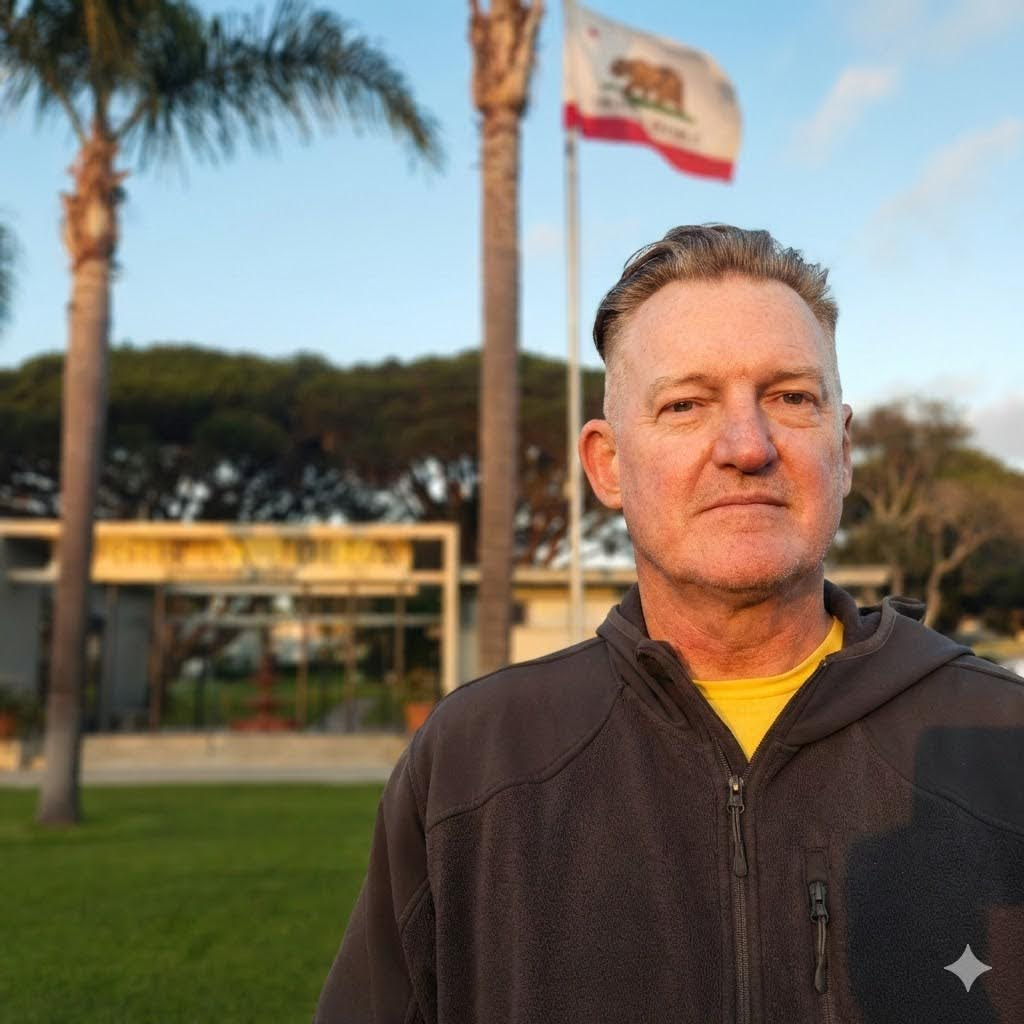
Pollstar caught up with Joe Rinaldi, managing partner of San Diego’s 705-capacity Music Box and the national buyer for Mission Bayfest festival, in celebration of his recently appointed role as president of the National Independent Venue Association of California.
NIVA CA is the state chapter of the National Independent Venue Association, which represents independent venues, promoters, and festivals across the state and works to “preserve and nurture the ecosystem of independent live performance through advocacy, education, and community building.”
Rinaldi, who has served as NIVA’s Southern California Advocate since 2021, succeeds the two-year co-presidency of Gabe Docto, Jim Cornett, and Josh Lieberman. His history in the live industry also includes serving as the talent buyer and general manager of the famed The Viper Room on the Sunset Strip in West Hollywood as well as the talent buyer for L.A.’s former House of Blues, Hard Rock Hotel San Diego and 4th & B in San Diego.
Pollstar: What does being named president of NIVA CA mean to you?
Joe Rinaldi: Well, I’ve worked with the organization pretty much since its inception, both with the national organization and with the state organization, and had a pretty solid role with the state group from the get-go; we worked on the grants together. There was a state level grant as well as the Save Our Stages Grant, and then there was legislation related to liquor licenses, which we took on after, that we also were able to successfully navigate. I worked on all those things at a pretty involved level. … I thought it gave the organization its best chance at continuity to agree to take on the role when it was the other guys’ time to pass the baton.
How did you get your start in the live industry?
I wanted to work in live, and I always idolized the El Rey Theatre. I lived in Los Angeles at the time. It was going to be very, very difficult to actually just apply and get a job there because these are really sort of insular positions. Instead, I took this crazy path – I opened a record store across the street from the El Rey called Found Music, and we specialized in in-store [performances] and indie releases. It was somewhere between a pop-up and a permanent store, but it wound up doing pretty well. It was open for about two and a half years, and it won an award from the LA Weekly as the best free live music series, which we were floored when that happened.
Then we struck up a relationship with the folks at the El Rey because we were neighbors and so when it came time to actually get a legitimate job after doing about 100 in-stores and learning how to book bands that way, the El Rey guys actually recommended me for my first job, which was at The Viper Room, to go and take over there, which is sort of like a zero to hero story because that’s one of the most vaunted jobs in the club booking world. To get a call like that and then have them say, “Yeah, out of the 100 applicants, you’re the guy we want to do this,” was, again, sort of flooring.
That’s how I got started. I worked at The Viper Room for five years, and it all cascaded from that – House of Blues Sunset and I came down to San Diego and [worked at] big rooms like Hard Rock and Fourth & B down here, and then culminating in this run with Music Box.
Any lessons learned over the years working at such iconic venues?
Well, I think number one with a bullet is diversity. The thing that I didn’t have as a skill set when I left The Viper, I had to learn really, really fast. If you only book rock bands, you’re going to have a really hard time in the booking business. I learned how to do talent buying for Spanish language and hip-hop and blues. We normally categorize stuff as 11 genres of music and 22 if you count the version in Spanish. I really get into it from that angle.
We’ve found a lot of success because it allows us to use diversity to book when otherwise it would be a way too crowded field. Everybody is in the “booking the latest hot indie band game,” and that gets incredibly competitive. But if you can do that plus be in the hunt with all the other genres, you’re always going to do just that much better because you’ll be ready to keep your venue open a lot more.
Now you serve as the managing partner of San Diego’s Music Box. What are some of the latest highlights and challenges for the venue?
Well, the Music Box just celebrated its 10-year anniversary. Our highlights are that we’ve gained enough stature within the community that we can do business with anybody. So, we’ve been able to have all the really important storied independent venues in town feed into our room … culminating in 250 shows in our 10th year and renewed interest in partnerships.
We opened in 2015, and out of the gate, we were able to secure a relationship with the CRSSD Festival people, and it’s just never left. So 10 years in, we still do a dominant number of after-parties during their festivals and then shows throughout the year with them. And they now operate a New Year’s event with us.
The challenge, of course, is all the stuff that’s got me interested in fighting in the NIVA space. All-in ticketing hit us like a ton of bricks just because it was actually an inadvertent inclusion in a bill about restaurant receipts that got all-in pricing to be the law in the state.
We sell about 100,000 tickets a year. Every customer [felt like we] had a 20% increase in prices, and then lo and behold, that was going to lead to a bit of a draw down in demand. Like every other business, we had to adjust to that, and we’re a year, possibly 18 months in, and that adjustment has been happening. There’s a light at the end of the tunnel, but that definitely hit us like a ton of bricks all at the same time. We [had] the demand go off and then expenses going up at the same time, and then a little bit of a hit to the economy, so that’s been a bunch to navigate. I think we’re starting to see that dissipate a little bit.
That’s good to hear that customers are adjusting to all-in pricing.
I think everyone is adjusting from all sides. They’re streamlining their prices so it doesn’t look like a really odd number, sort of learning from the airline industry about how to back into a $99 one-way ticket, you know, on an airline where all the stuff that ends in pennies is in the fine print. We’re starting to see that happen in all-in ticketing. When all in-ticketing first happened, a ticket that might have been like, for instance, $25 even suddenly became like $31.67, and it was really off-putting to customers because they’re used to more streamlined pricing. So those kinds of things are trickling into the equation. And to your point, yeah, customers are also adjusting. They’re realizing we didn’t actually increase our prices. … It doesn’t change at the end. It’s taken a while for them to get used to that.
What can you share about Mission Bayfest’s 2026 edition?
We love what we’ve got going with Mission Bayfest, and we’re happy to be announcing our lineup in March. We’ve been out there now five years [at Mariner’s Point Park in MIssion Beach] and just absolutely love it and love how it’s been embraced by the industry and at this point we even have folks emulating us in the marketplace. … I can’t wait to share the lineup. I can’t wait to be back on the grounds. The best thing about Mission Bayfest, year in and year out, is that it’s got to be the best location for a festival in the continental United States. It feels a lot like a destination festival like you would go to Cancun or the Caribbean for, but it’s right here in San Diego, and all natural backdrop on the water, and people are just floored when they see it.
For anyone who’s maybe not familiar with the state chapters of NIVA, can you talk about why someone who works at a venue in California would want to get involved with the state chapter?
It’s a bit of a misnomer just to be the state chapter. It’s a state plus several localities kind of amalgamated together, which is a way to think about it. If you’re an independent venue or an independent festival in the state of California, you have to navigate several layers outside of what’s going on in the national story. As you probably know, the national organization NIVA is in Washington working in the halls of Congress with the Senate and the House of Representatives and in some cases some of the executive branch, like the SBA, and they’re working really hard on national agendas. They also do some coordination efforts at the states and so we’re always on a consistent message with consistent goals. But at the state level, you’ve got what happens within the state legislative bodies. You’ve got what happens within the state executive system in California. That’s the GO-Biz organization [Governor’s Office of Business and Economic Development] that’s meant to help navigate business systems within the executive branch of state government.
But then you’ve also got county and municipal basically governing bodies to navigate. It’s critically important because that’s generally three levels of government all within the state that folks that are running a small business like an independent venue – whether it comes to administration [or] ticketing … whether it’s different levels of occupational safety … that’s three different stakeholder groups that you really want to be able to effectively communicate with.
Our state chapter, we’re in constant recognition of each of the different layers … It’s very daunting to have to navigate all those different layers. Between having a relationship with a really well-qualified lobbyist and having experience, but then also, really importantly having the network ability where you can talk to 650 venues in the state and [say] like, “Hey, so how are you navigating these pressures to overcome this sound ordinance or this curfew ordinance?” It allows us to have a best practices network and combined forces to go through these things. Otherwise, everybody would be sort of on their own without resources, trying to fight what sometimes feels like a 50-dimensional battle.
Under your leadership, NIVA CA has outlined a strategic four-pillar agenda for 2026: Achieving Self-Sufficiency, Unifying the Industry, Legislative Reform and Establishing a State Music Office. Anything you can share about the agenda?
The ticketing one sits at the top of that, and we’re three years in on ticketing legislation. We are in as strong a position as we’ve ever been to actually get the state to help with ticketing legislation. I think with the recent unanimous vote on the assembly floor for [California Assembly Bill] 1349, all indications are the the state is ready to put ticketing action in place on a couple fronts that we might get rules against deceptive practices especially in the secondary market and then we might further with 1720 [the California Fans First Act], get price caps, which would then put us on consistent footing with success stories we’ve heard from other states like Maine and Maryland and other countries like the United Kingdom.
It’s very necessary to get to these changes. And I can understand why a state like California would not be first in a lot of these cases because there’s so many stakeholders to sort of appease, but it is such a giant part of the economy. We’d want to be as organized as possible. This is our best chance to get to that. So we’re fighting really, really hard to push through ticketing legislation.
I’ve called it a state music office, but I do think in the end it’s going to wind up being a little bit of a wider definition to be sure that we include comedy and anything involving a stage, really. But to be inspired by states like Tennessee and Texas and get a centralized office, that helps our part of the nightlife community stay organized. Going back to what I had said about how many different layers it takes to run a business in this space, that state agency would be a godsend to independent venues in the state. It would also help us with our budgetary requirements to try to talk to everybody … marketing with everybody and keep our mutual interest in the public eye. But its time has come. Texas has had a state music office for 40 years, and what they’ve done has just been a benchmark for everyone else. And then Tennessee was able to follow suit in the last few years. We want to be in a leadership position with the state, and that would have to include an office in that nature.
Moving on to the networkability. Like I had mentioned just in terms of venues and that’s without getting into festivals, we’ve been able to count what we think are about 650 venues in the state that qualified for SVOG [the Shuttered Venue Operators Grant program] back when it was Save Our Stages but then also run and maintain independent venues and what they do for the communities is invaluable – we always say we fight blight, we go into the worst neighborhoods in a lot of cases and help the process of turning those neighborhoods into leaders in their communities. We go there for a reason; it’s where we find the best aspects of culture … and we want to celebrate that. Getting those folks to talk to one another and combine efforts is third out of this conversation, but always first on my mind. I’ve found so much value in getting the California venues to talk. I’d love to see that group get larger and larger and larger over time. It’s absolutely a big agenda item for me.
Lastly, I’d like to figure out a way to have the state effort be self-sustaining, not take any money from the national organization and be able to have our own resources. And not because I want to do what I’m doing right now in a self-sustaining fashion, but because I want to do so much more.
Anything you wanted to add?
One thing I always want to mention is that NIVA, the national organization and its state chapters, is a membership-supported endeavor. We have a membership program, and there are tons of benefits to it. You can look on the NIVA website for a long list of things that come out of being a part of it. They also have what’s turned into one of the most important music conferences in our industry. Feels like overnight. They’re on their fourth one now. I can’t wait to go to this one that’s coming up in Minneapolis in June. That city needs our support, of course.
It’s a great phenomenon. But differentiating the state from that, whether you’re a member or not, if you’re an independent venue, we want to hear from you. We’d love it if you made contact with us and networked. I actually learned this from the national organization. I’ll take participation over steadfastly demanding dues any time and if I can get just the attention of the independent venues, I can get a lot of my work done so there’s a participation level out there for every single person in the independent space and I’d love to connect and I’ll make it as easy as I possibly can. There are easy ways to connect with us at any time. We think that the networking thing is the thing that separates us from everyone else. We can’t wait to connect with folks and get a common agenda out there.
For more information on NIVA CA, contact NivaCalifornia@gmail.com.
FREE
 Daily Pulse
Subscribe
Daily Pulse
Subscribe
 Daily Pulse
Subscribe
Daily Pulse
Subscribe