
VN Feature Of The Month: Cacti Park Sweetens Up MLB’s Grapefruit League Spring Training

No two words lift the spirits, hearts and minds of the baseball faithful more than spring training. It’s a February wakeup call from the long late-October slumber when hope still springs eternal and everyone’s team is still batting a thousand.
The Sunshine State emerged as a prime location for baseball’s spring training in the early 1900s due to a combination of warm winter weather, access to railroads and a growing tourism industry. Today, 15 Major League Baseball teams prepare for the regular season at high-end facilities in three geographic regions – the Tampa Bay area on the west coast, the central region surrounding Orlando and the southeastern part of the state near Palm Beach.
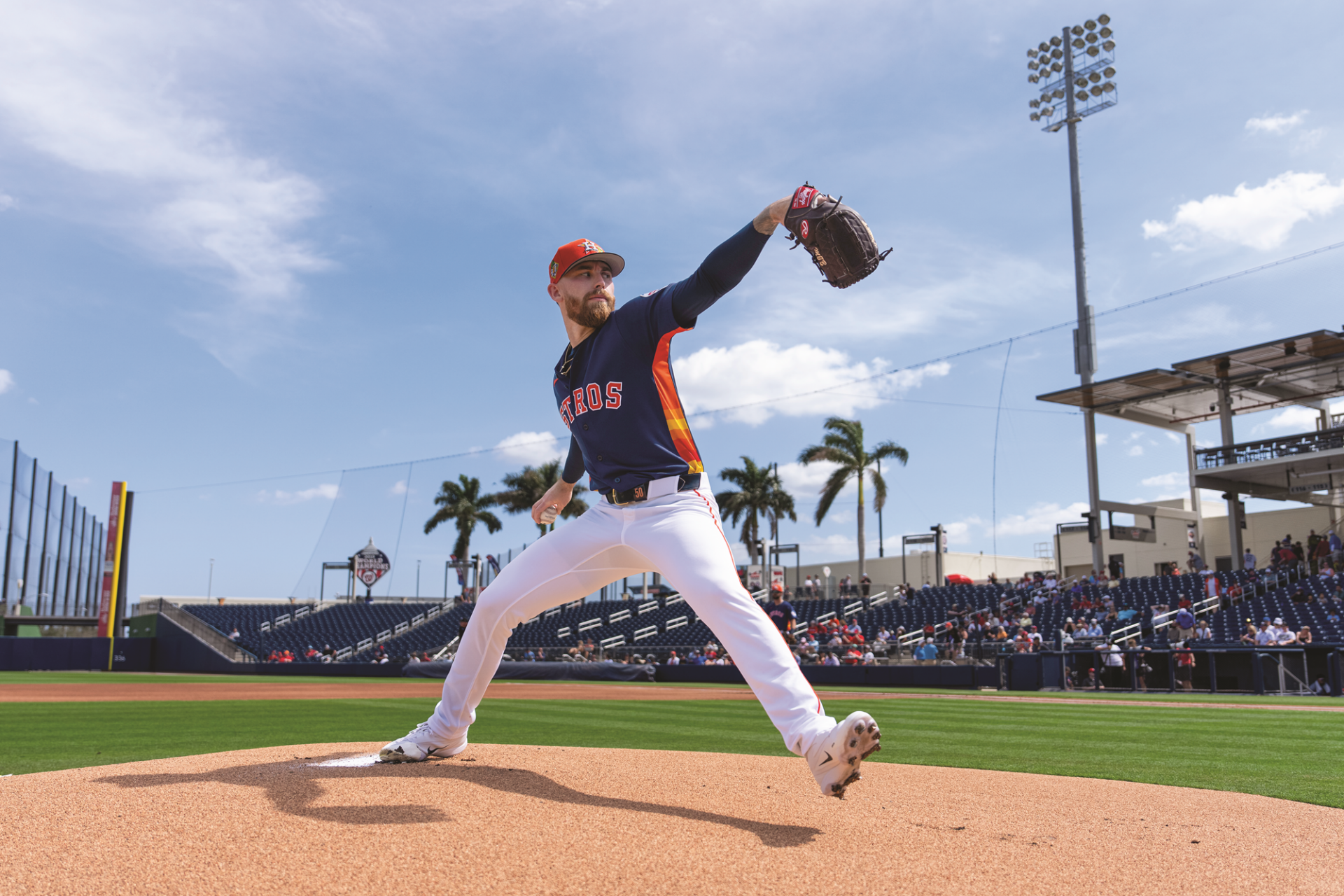
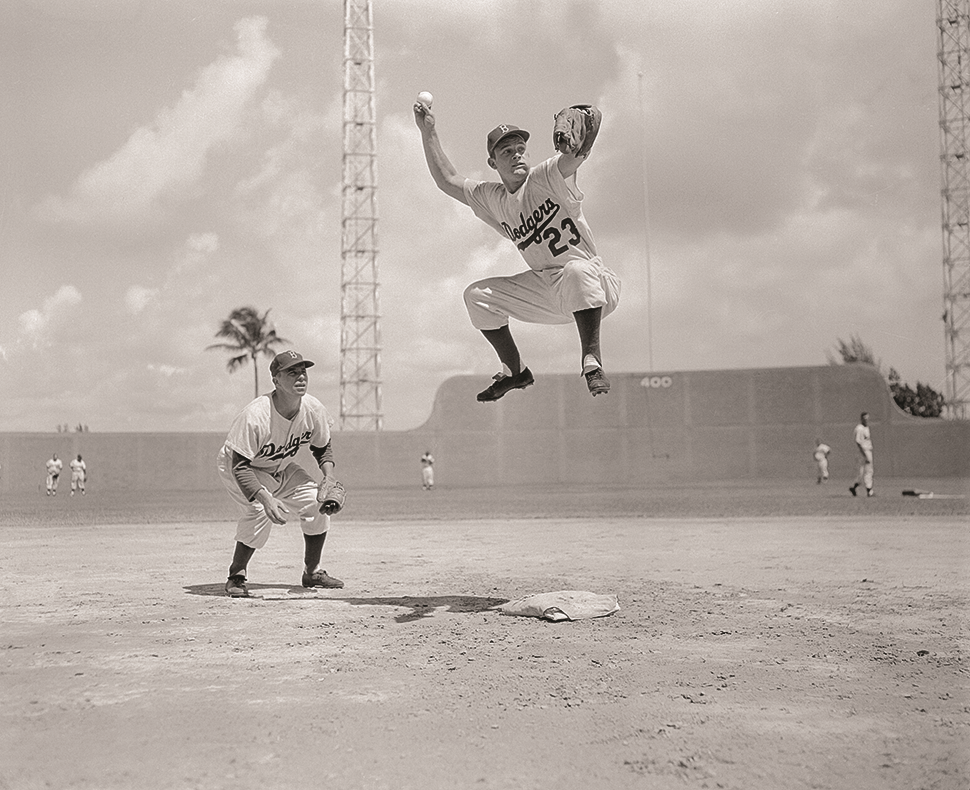
The first recorded spring training was the Chicago White Stockings (later the White Sox) in 1888 in Tampa, but the practice became more organized and popular in the 1910s and ‘20s, when Hall of Famer Babe Ruth elevated athletic preparation to celebrity sightseeing with fans trailing The Sultan of Swat everywhere he went. Teams started scheduling spring games against each other and fans flocked like flamingos to watch them play.
St. Petersburg became known as the birthplace of spring training, hosting teams including the St. Louis Browns and the New York Yankees, but the league gradually expanded southward and eastward as more teams sought modern training facilities.
After World War II, there was a post-war boom through the 1960s with more teams relocating their spring training to the state. Around the same time, sports writers started dubbing the league after Florida’s famous grapefruit industry, similar to how Arizona’s league is called the Cactus League.
Improved roadways and airports made travel easier, hotels and local infrastructure were primed for tourists and baseball’s popularity surged nationally. Teams in the Grapefruit League included Major League Baseball’s Yankees, Red Sox, Cardinals and Phillies. Cities competed for teams by offering new ballparks, luxury accommodations and community events.
The teams drew a large contingent of local enthusiasts and a growing number of devoted fans who traveled to see spring games. Teams began owning or investing in training facilities, not just renting city ballparks.
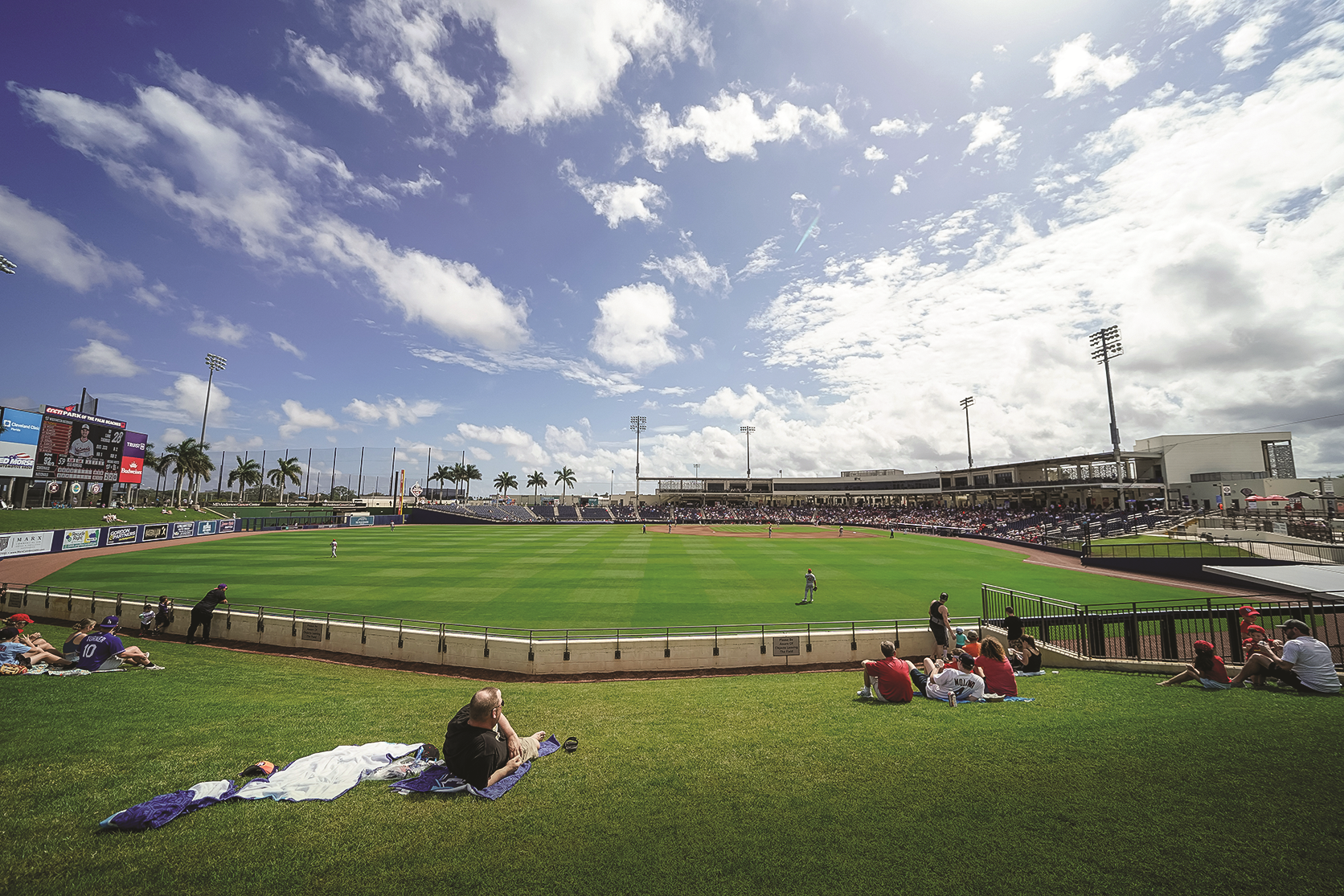
Courtesy CACTI Park of the Palm Beaches
Today, the 30 MLB franchises are split evenly between Florida and Arizona, where 15 teams practice at 10 stadiums concentrated in the Greater Phoenix area.
Much of the original access and nostalgia remain. Depending on the team and where they are in their training schedule, fans can stroll between practice fields and the stadiums and often see players up close before regular season play begins. Teams still play daily exhibition games against each other and minor league affiliates.
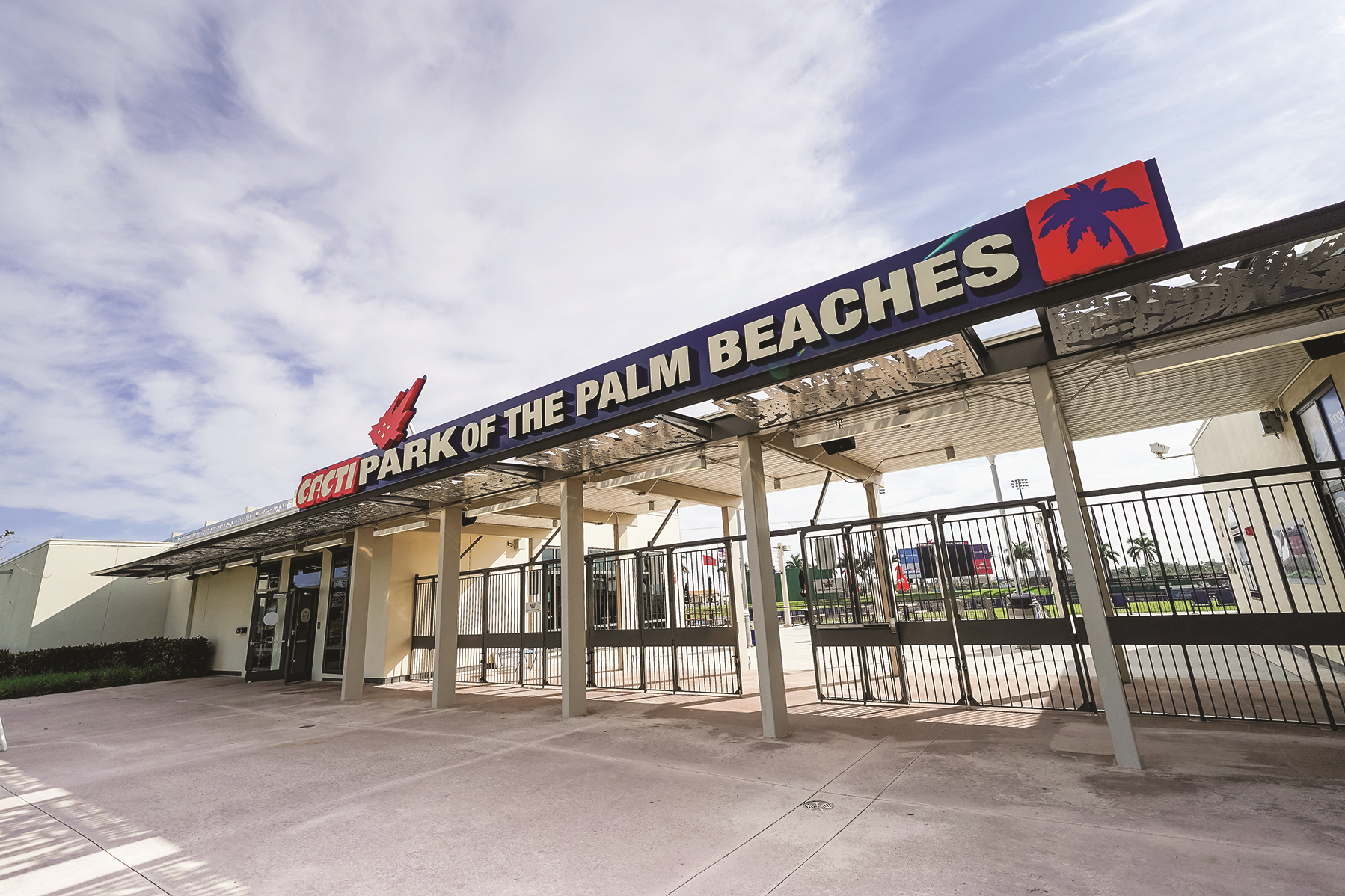
It’s a huge draw for fans seeking early-season baseball, scouts evaluating prospects and local communities benefiting from tourism revenue. Facilities have evolved from sand lots surrounded by chain link fencing to modern complexes, sometimes shared by multiple teams including Roger Dean Chevrolet Stadium in Jupiter (home to the Miami Marlins and St. Louis Cardinals spring training) and neighboring CACTI Park of the Palm Beaches (formerly the Ballpark of the Palm Beaches) in West Palm Beach, which is a joint venture between the Houston Astros and the Washington Nationals.
At CACTI Park, which opened in 2017 at a cost of nearly $148 million, the Astros and Nationals share the facility for spring training but each maintain their own training areas on either side of the stadium.
Since relocating to Washington D.C. in 2005, and during their time as the Montreal Expos (1969-2004), the Nationals have held spring training in West Palm Beach, Viera, Daytona Beach and Jupiter, Florida.
For the Astros, West Palm Beach represents their fourth spring training home in franchise history, following previous stops in Arizona, Cocoa Beach and Kissimmee.
“This property came to be because the Astros were looking for a new spring training site,” explains Mike Sophia, general manager of CACTI Park. “Their deal in Kissimmee was over and they wanted to do something bigger and better and they were looking at West Palm Beach and they wanted to have a two-team facility. …From the county and the clubs, it was a win-win.”
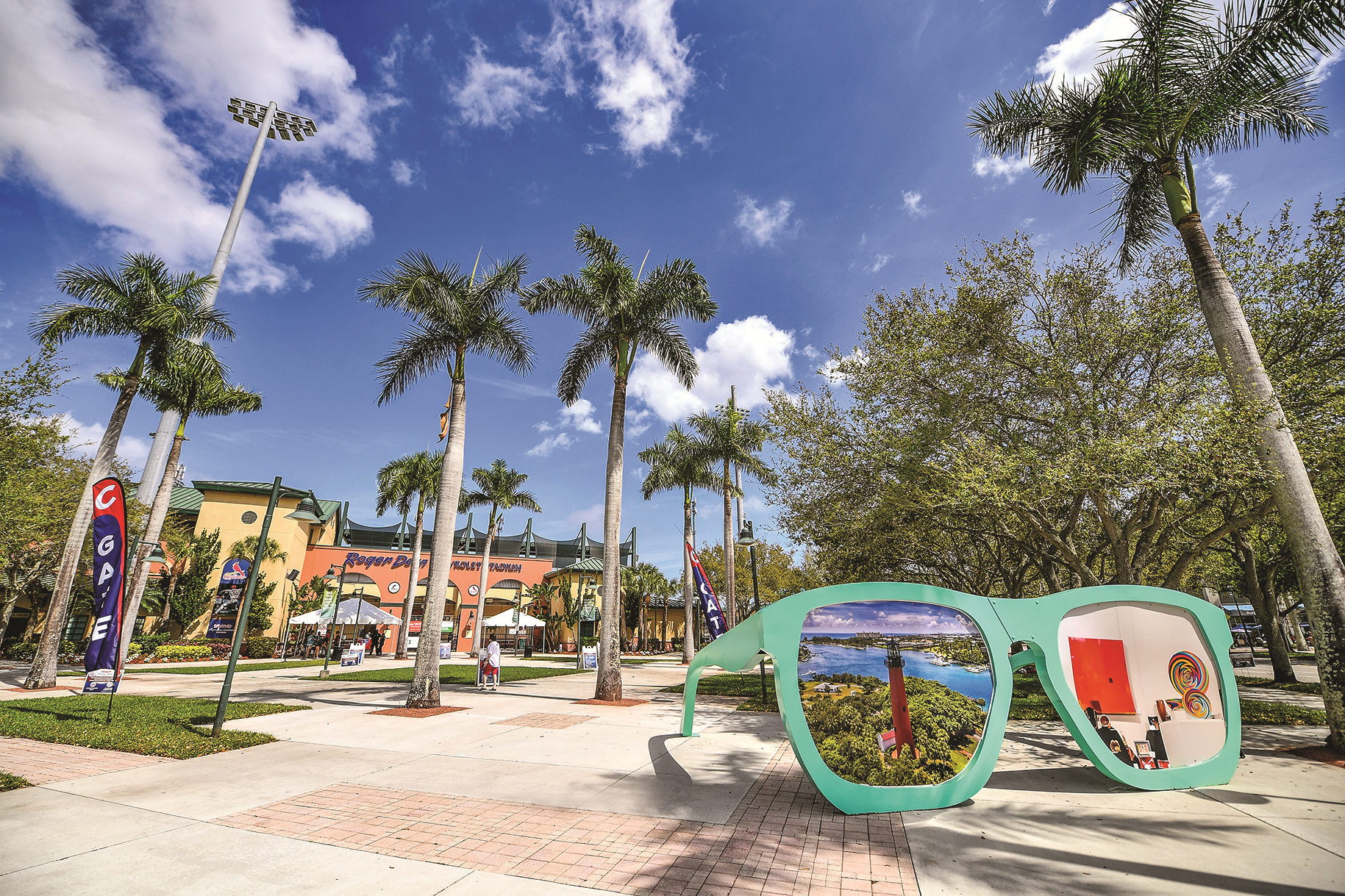
Photo by Mark Brown/Getty Images
Combining resources was a sound business strategy, but it also ensured that there would be a base of teams in South Florida that could play games with the nearby Cardinals, Marlins and Mets in Port St. Lucie. The shared complex model offers fans the opportunity to see multiple teams and games over a concentrated spring schedule.
CACTI Park is made up of three distinct areas on 160 manicured acres. Sophia’s team is responsible for all stadium operations, including landscaping and field maintenance on all 13 fields.
“Inside each of the clubhouses, it’s their own operation,” says Sophia. “That’s one of the interesting things about it as a joint venture. We have two Major League teams and philosophically, they approach life differently. … They both cooperate and we work together on what’s best for the stadium, what’s best for the enterprise.”
The central fixture of the complex is an 8,000-seat stadium with fixed seating and grass areas for fans. The venue has a 360-degree concourse, shaded seating, VIP suites and two large party decks overlooking the field as well as a store selling individual team and Grapefruit League merchandise. The hospitality partner is Levy, with a variety of cashless options from cheesesteaks and brisket sandwiches to custom hot dogs and Cracker Jack popcorn.
“It’s a major league stadium set up on a smaller scale,” says Sophia, who has been in sports and entertainment for three decades.
CACTI Park has six practice fields which are shared by the Astros and Nationals – including one for each team that is the exact size as the team’s home field. The teams operate independently on either side of the stadium with personalized locker rooms, weight rooms, meeting rooms, batting cages and warm-up and agility areas. During the exhibition matches, cameras throughout the stadium are capturing data that is used in real time to make training adjustments.
From his perspective between the fences the major change in spring training has been in player development.
“The amount of investment in player development is what’s significantly different,” says Sophia, who grew up in Tampa watching spring training games in Winter Haven and Plant City, Florida. “These places had a handful of fields and a big locker room. Now, we’ve got state-of-the-art weight rooms, hydrotherapy. Everything that you need for professional athletes and all the data to go with it.”
The amenities are for a series of games that last roughly five weeks through late March when everyone packs up and heads back to their respective home stadiums for opening day on March 26. Average ticket prices for Grapefruit League spring training games in 2026 generally range from $20 to more than $60, with median prices between $40 to $50 for standard seats. Lower tier and lawn seating is as low as $10 to $15 for some games, making it an affordable option for families. Prices vary based on the team, popularity of the opponent and seat location.
Fans say the pre-season experience is an affordable way to enjoy a matchup that feels more casual and up-close than regular season MLB games.
“It’s a very nice ballpark for spring games,” says Vaughn James, who was at the park for a game between the Nationals and Philadelphia Phillies. “You’re closer to the players.”
“We’re from Pennsylvania, so we are two hours from Philly and two hours from Washington, so we’re not rooting for either team, we want them both to win,” adds wife Stephanie James. “That’s because we’re [Pittsburgh] Pirates fans,” chides Vaughn James.
The height of spring training is the height of tourism in the market, so the city and tourism officials are just as interested in what happens at CACTI Park when the teams leave.
“It’s the summer months the city is most interested in when it comes to this facility,” says Sophia, who was VP of Sports & Entertainment for Visit Fort Lauderdale before he was named GM at CACTI Park four years ago.
After MLB spring training, the associated minor league teams stay for another two to three weeks before they break camp and the venue reclaims control of the two four-field quads to run youth leagues and amateur tournaments with teams from across the country through November with one month off to let the fields rest. Because of the rising popularity of women’s sports, female locker rooms were added, but no major renovations are planned.
The venue has also hosted a handful of concerts – including a benefit for a local performing arts school with Gwen Stefani performing on the infield for 500 donors – but competition in the market including the 20,000-capacity iTHINK Financial Amphitheatre at the South Florida Fairgrounds makes booking a challenge. There are also logistical obstacles including limited field access due to a low bridge, so pulling a stage in requires a hand build.
“It was so great,” says Dennis Cunningham, owner of Airtab Music which produced the Stefani benefit. “We hardscaped the entire field, which made the experience phenomenal. We had Gwen at second base and did a dinner show for a charity.We’ll be doing a bunch more shows there.” The facility also hosts community events such as the Sprint Into Spring Training 5K, where families race across the ballpark’s fields and winners get special perks like throwing out a first pitch at a spring training game and a career fair in partnership with Junior Achievement that hosted 24,000 eighth grade students over three days.
For Sophia, CACTI Park connects community, culture and commerce with nostalgia.
“I remember all of it,” recalls Sophia of watching spring training as a teen. “Just being able to walk on the backfields and see [Hall of Famer] Dave Parker – just to hear him talk with whoever he was talking with. It was the players you watched that you idolized, and you were right there with them on the backfields. And that’s the same thing today. You get up close and personal.
“We’ve still maintained that with spring training. We still have the intimate ballparks. They’re a lot different than they used to be. … But we still haven’t lost the intimacy that I think everybody associates with spring training.”
FREE
 Daily Pulse
Subscribe
Daily Pulse
Subscribe
 Daily Pulse
Subscribe
Daily Pulse
Subscribe