
When Women Ran Nashville

With the wild-fire success of a new crop of women country artists like Megan Moroney, Ella Langley and Lainey Wilson, the four-time and current Academy of Country Music and Country Music Association Entertainer of the Year, it would seem Nashville’s “female problem” has ended and women have turned the tide of less than in country music.
Sadly, that’s not exactly the case.
Radio remains a desert for women, many who make the charts sharing tracks with men. Langley and Wilson both broke through with award winning duets – “You Look Like You Love Me” with Riley Green, “Wait in the Truck” with Hardy, respectively – where they were clearly the star.
Once upon a time, just being nominated for Female Vocalist felt like winning. Alison Krauss, Patty Loveless, Trisha Yearwood, Pam Tillis, Lee Ann Womack, Kathy Mattea, Tanya Tucker, Faith Hill, Martina McBride, Mary Chapin Carpenter, K.T. Oslin, Sara Evans – besides ubiquitous superstars Dolly Parton, Loretta Lynn, Tammy Wynette, Barbara Mandrell, Crystal Gayle, Reba McEntire and Emmylou Harris – all won the CMA Female Vocalist of the Year Award. They also regularly logged plenty of No. 1s and Top 10 hits on country radio.
Then there were the nominees. Rosanne Cash, Wynonna, Shania Twain, Suzy Bogguss, LeAnn Rimes, Deana Carter, Jo Dee Messina, Terri Clark, Kelly Clarkson all created generational hits, won awards, sold millions of albums and dominated country radio. All of the above were examples of what country was when men and women actually had parity on radio.
What happened? Beyond focus groups and the thinking “you can’t play two women back-to-back,” there’s an unspoken truth about Nashville in the ’80s and ’90s. Once upon a time, women ruled Music Row and the business of country. Nashville had a vision that long shaped how it did business and artists were developed. Beyond the checklist, there was the gut, the grace and a sense of how music reflects a world people lived in.
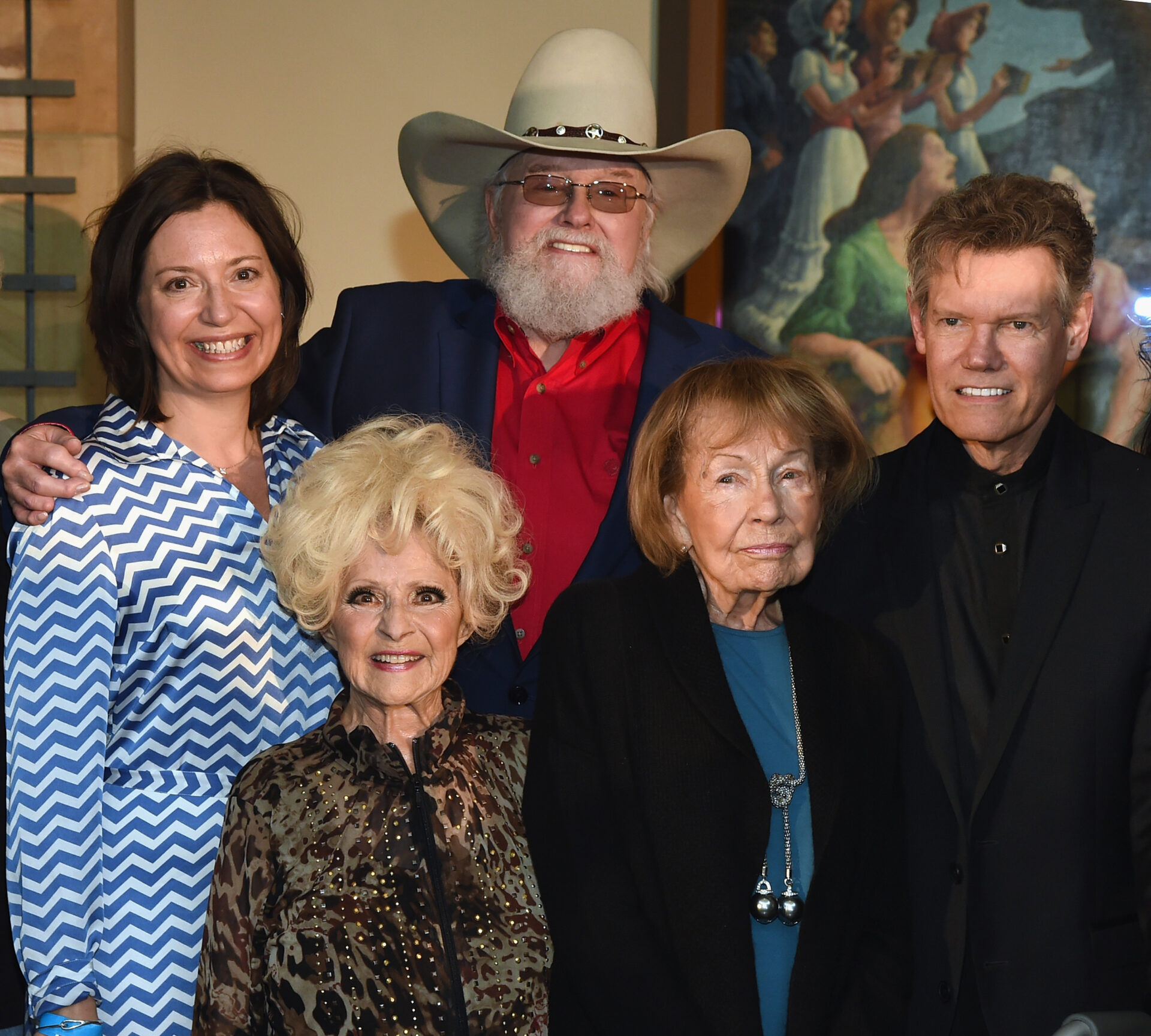
Whether it was Jo Walker-Meador, elected to the Country Music Hall of Fame in 1995, moving from first paid employee in 1959 to leader of the Country Music Association shortly after; Louise Scruggs, managing and booking her husband Earl Scruggs and the Scruggs Family Review; publishing rights titan Frances Preston, who would lead all of BMI after years of running Nashville’s division; and Connie Bradley, who made ASCAP a formidable competitor; or Donna Hilley, who rose from Tupperware parties on Music Row to Chairman of Sony/Tree Music Publishing, making her Entertainment Weekly’s No. 4 Most Powerful People in country music in 1992, they all brought passion for artists, songs and creating success for the genre.
Country was still a second class citizen, despite the success of the film and California’s country-rock movement, which started with the Byrds, the Flying Burritos, Poco and the Nitty Gritty Dirt Band, and ultimately delivered the Eagles, Linda Ronstadt, Jackson Browne, JD Souther and Bonnie Raitt.
The genre saw Willie Nelson, Kris Kristofferson and Waylon Jennings, as well as Emmylou Harris, emerging as voices for a rebellious country that went toe-to-toe with stars Johnny Cash, Merle Haggard and George Jones.
BMI’s Frances Preston was a big believer in the Outlaws, long before they were icons; just struggling writers who wrote a different kind of poetry. Nelson had written “Crazy” and “Hello Walls,” iconic hits for Patsy Cline and Faron Young, but he wasn’t breaking. Kristofferson was working as a janitor at CBS Records’ studios, trying to get cuts with “For The Good Times” and “Sunday Morning Comin’ Down,” ultimately smash hits for Ray Price and Cash.
When songwriters needed bolstering Preston was there. Sue Brewer, who’d opened Jones’ Possum Holler on Broadway, as well as doing promotions for Young, was more grass roots; her door was open for these not quite clicking artists as they worked to develop a style that made them legends. On any given night, Jennings, Kristofferson, Nelson, Shel Silverstein, and more could be found when the bars closed at her apartment, looking for encouragement and inspiring the oft-covered “On Susan’s Floor.”
Hilley also recognized writing’s power as these legends emerged as singular forces. When Buddy Killen sold the independently-owned Tree Publishing to Tommy Mottola’s CBS Records, Hilley, a writers champion, was the only choice to take over. She’d stewarded catalogues for Nelson, Haggard, Roger Miller, Bobby Braddock, and Sonny Throckmorton, then leaned into artist development. On Hilley’s watch Kix Brooks and Ronnie Dunn emerged as the breakout duo who dominated the ‘90s/2000s and now 2020s; CMA Female Vocalist, Album, two-time Single and two-time Musical Event winner Lee Ann Womack and progressive traditionalists the O’Kanes, Gary Allan, Raul Malo of the Mavericks and producer/artist/writer Rodney Crowell.
Marijohn Wilkin, who wrote “Long Black Veil,” “Cut Across Shorty” and “One Day At A Time,” founded her own publishing company. She launched Kristofferson, Ed Bruce and Johnny Duncan. Maggie Cavender, trained as a lawyer, got her start at Pamper Music when Nelson was beginning. By the late ’60s, she left to become the Executive Director of the start-up Nashville Songwriters Association. Also an advocate for young writers, Cavender recognized working class truth in a bearded guitar player named Randy Owen and published his – and his cousins Teddy Gentry and Jeff Cook – songs through her MayPop Music/their Alabama Songs.
It seemed they were making it up as the need arose, but these women were shrewd and collaborative. Cavender was tapped to help Jo Walker-Meador create the first CMA Awards to recognize the best in country music. Untelevised in 1967 and hosted by Bobbie Gentry and Sonny James; by 1968, the CMA Awards was airing on network prime time.
Under Meador’s tenure, things happened. Beyond establishing the Awards and the week-long festival Fan Fair – now CMA Music Fest, Walker created a national fundraising campaign to build the Country Music Hall of Fame and Museum, as well as encouraging female execs. Among her tribe: narrative shapers Cathy Gurley, Judy Turner and Executive Director of Programs and Special Projects Helen Farmer.
While a woman wouldn’t run a major Nashville label until Sheila Shipley-Biddy re-launched Decca Records in 1994, after being an integral part of 139 No. 1 hits, women were driving some of Nashville’s most progressive A&R signings. Mary Martin came from management, introducing Bob Dylan to the Band and handling Leonard Cohen and an early Van Morrison; her A&R tenure at Warner included signing Emmylou Harris. Martin would help sign Clint Black to RCA, “guide” Vince Gill, Crowell and encourage Keith Urban to move to the U.S.
Warner always had a bold female presence in A&R, women who embraced artists beyond what was working. Martha Sharp signed deep-voiced traditionalist Randy Travis and Paige Levy née Rowden inked hardcore Dwight Yoakam, bookends for the ’80s era of reborn classic country.
Eventually Renee Bell, a protégé of producer/MCA President Tony Brown, would rise through the ranks – finding songs for George Strait, Reba, Loveless, Yearwood and more – to lead the A&R staff at Capitol Nashville, then all of Sony. Her infectious “awesome” and “killer” reactions meant career-changing hits.
Back then, the women ran massive companies and key departments. But for the most part women didn’t manage; the commissioning positions went to the men. When Randy Travis hit, savvy club manager Lin Hatcher, who’d become his wife, was an anomaly.
Then dynamics started to change in promoting and management. Ali Harnell is now Global President/Chief Strategy Officer for Live Nation Women, Nashville veteran Sally Williams and co-manager of Old Crow Medicine Show served as the General Manager of the Ryman Auditorium and then rose to Opry Entertainment Group’s Senior Vice President of Programming and Artist relations as well as the Grand Ole Opry’s General Manager before taking on the role of President of Nashville Music and Business Strategy for Live Nation. Management is now women’s bedrock.
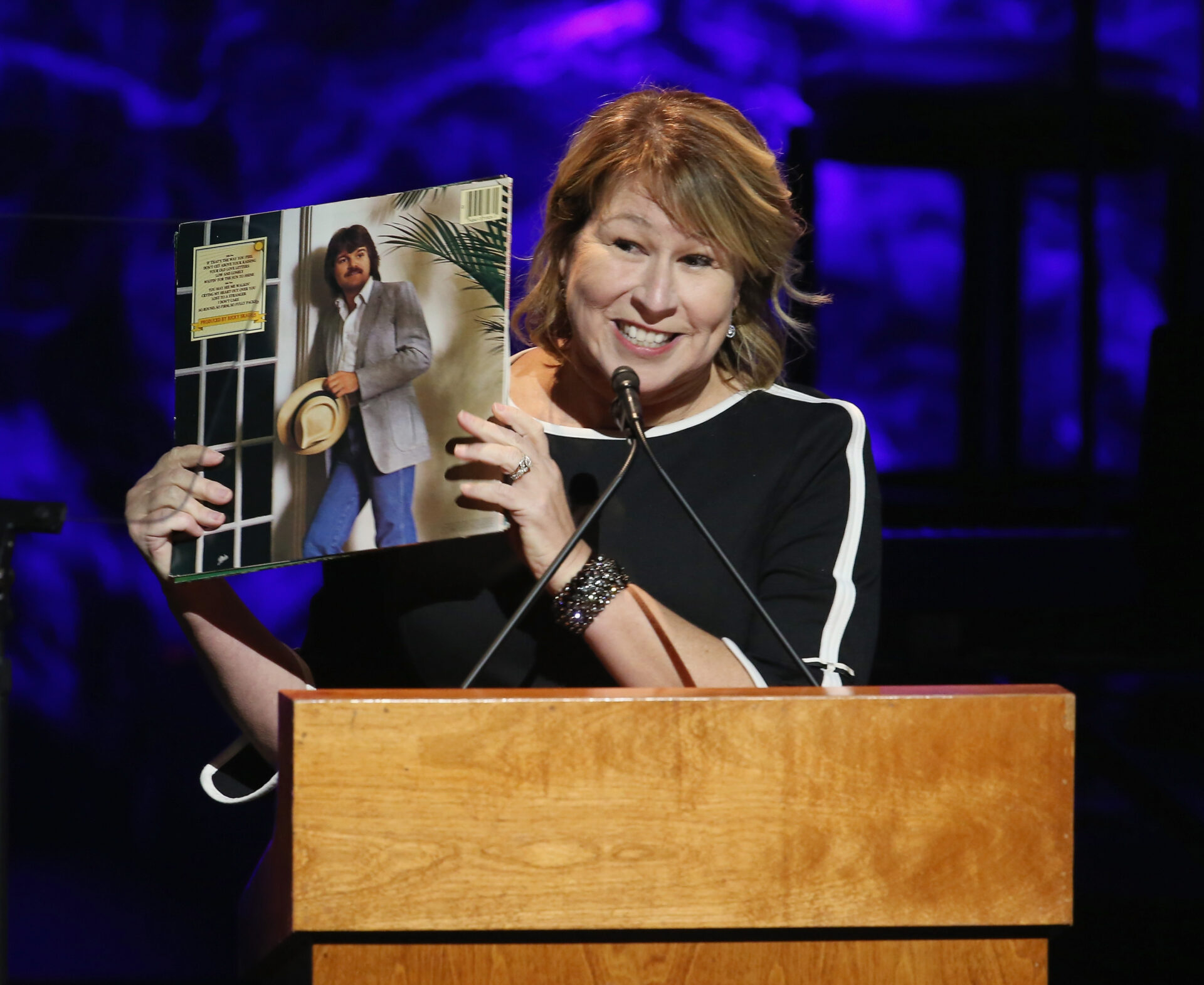
Sarah Trahern leads the Country Music Association (though set to retire after 2026), Becky Gardenhire co-heads WME’s Nashville office, Taylor Lindsey is Chairman/CEO at Sony Nashville and Cris Lacy is the Chair/President of Warner Records Nashville.
Maybe it was Nancy Russell, the publicist tapped by Alan Jackson as the 2000s dawned, who changed the dynamics. Jackson flourished, and Loretta Lynn staged her Jack White-produced renaissance on Russell’s watch.
Marion Kraft, who’d day-to-day’ed for the Chicks and Mary J. Blige, managed a young Miranda Lambert to become one of the genre’s most important artists. Protecting Lambert’s Texas-forward music, Kraft – now with Crystal Dishmon in partnership – forged an identity for her client that’s spawned a label (Big Loud Texas), clothing line (Idyllwind), housewares line (Wanda June, through Walmart), alliances with Tractor Supply and a nationally recognized dog rescue (Mutt Nation).
Simultaneously, Ann Edelblute took Carrie Underwood from “American Idol” to multi-platinum. Beyond the awards – she’s won them all – the lithe power-singer has a line of athleisure wear, as well as belting out NFL Football themes and singing with icons of hard rock and heavy metal from Axl Rose to Steven Tyler.
As the crisis at country radio hardened into an insurmountable reality, women managers began digging in. Luke Bryan benefited from Kerri Pauley Edwards’ attention to detail; Kane Brown found a tireless advocate in Martha Earls. Mary Hilliard Harrington has been Dierks Bentley’s co-dreamer for decades, in the same way Traci Thomas guided Jason Isbell since he left Drive-By Truckers.
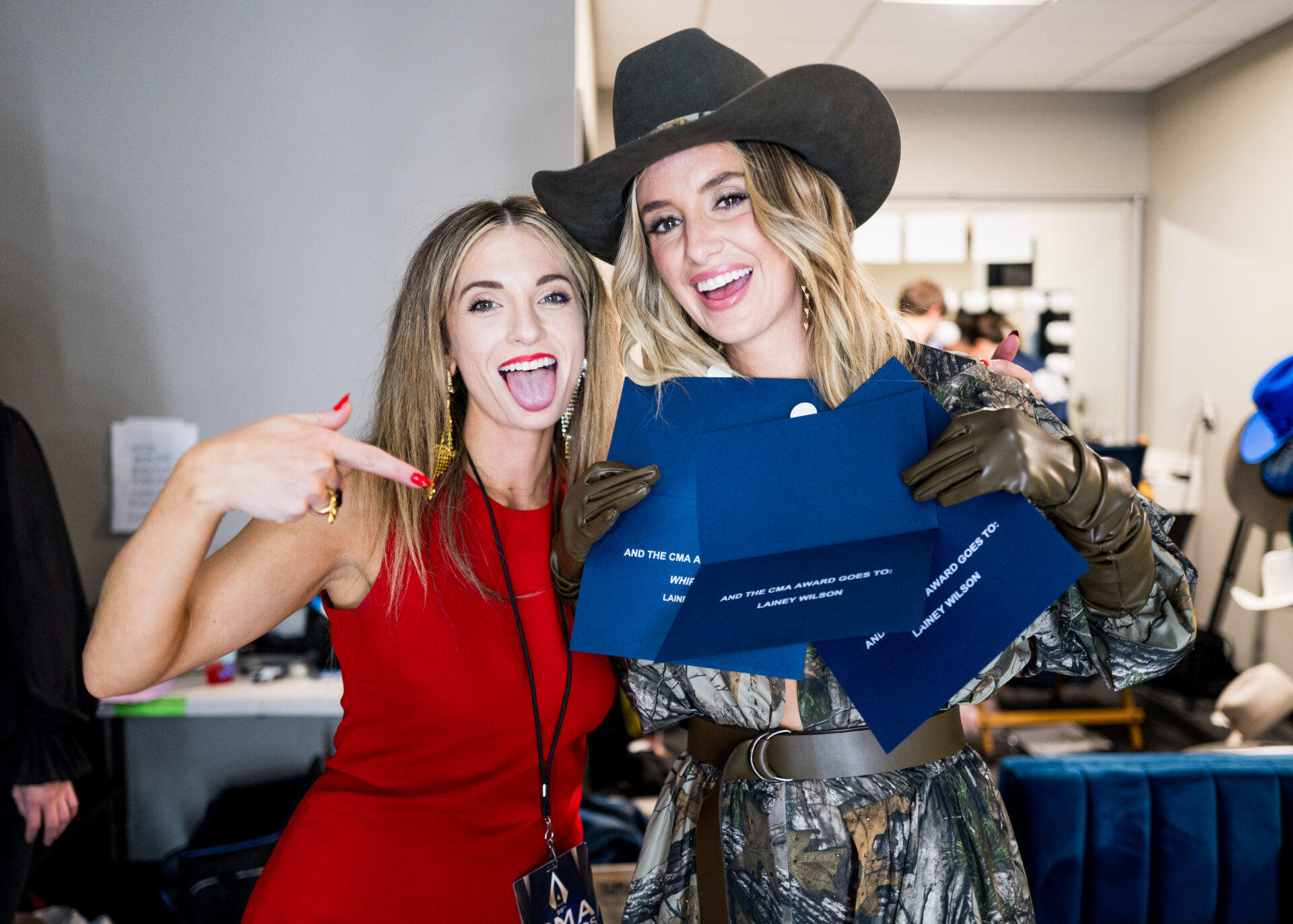
The new wave of female artists has especially benefited. Mandelyn Monchick stayed with Lainey Wilson across several male managers, believing, fighting for and keeping the hard-working, hard-hitting performer/songwriter building to solo-hosting “The 2025 CMA Awards.”
Janet Weir has steered Maren Morris through industry darling and cultural lightning rod moments with equal clarity. Straddling genres and grounding her client no matter what life delivers, Morris remains a progressive pop/country/alt force.
Hayley Corbett has served as Moroney’s right-hand executioner since the blond star’s confectionery rise – often self-generated by their all-girl team and Moroney’s narcotic songwriting. The 20-somethings create a reality that women of all ages relate to: a little bit sparkly, a little bit sobbing, but mostly triumphant, alive and “what next?”
Megan Hinde, Director of Business Operations and Artist Manager at Painted Rock, delivers the same thigh-to-thigh-through-the-gates-of-Hell function for Langley. Recognizing her client’s visual and musical creative power, she seeks to support and realize Langley’s dreams.
That care for detail, that desire to support a (female) artist’s vision on a granular level may be the secret sauce for women breaking down the doors and creating artists who are unique, powerful and important to female fans. There is no “too much pink,” “too much work” or “Stevie/Chappell/Lana already did it” in their vocabulary; it’s simply figuring out how to hit nine cities in nine days, or creating videos that reflect who these artists are.
Carrie, Miranda and Kacey seemed to speak to a new rise of female artists. Taylor, of course, transcended. But somehow getting past three or four women as factors – Kelsea Ballerini breaks through, while Carly Pearce and Ashley McBryde linger on the verge – is still elusive.
To return to the glory days of so many women with such different sounds remains something of a fever dream. Knowing women are again ascending in quantifiable ways, landing in positions of power, it’s a harbinger – hopefully – of good. If history repeats, it’s the women who know the power of women’s art, not just for the girls, but everyone.
FREE
 Daily Pulse
Subscribe
 Daily Pulse
Subscribe