
Joining The March Madness: How Venues Get In On The NCAA Tournament
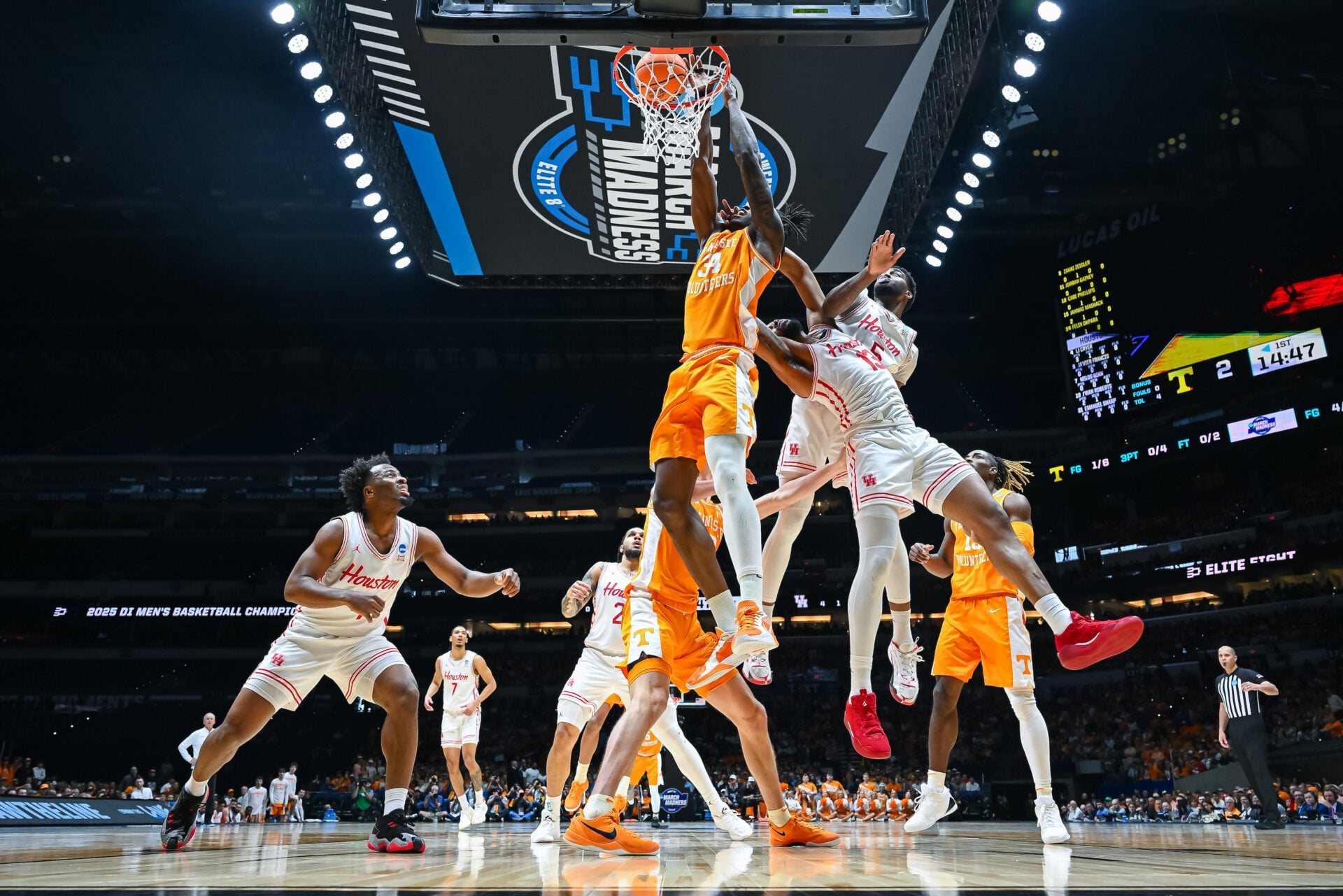
With the crowning of a college football champion and the Super Bowl now yesterday’s news, the first two months of 2026 rapidly came to an end, but gave way to the next major (and for many, most exciting) sporting event in the country.
March Madness approaches, which means fans are glossing over the top 25 NCAA men’s basketball teams to determine how they’re going to fill out their brackets to win the office pool.
It’s also crunch time for the 13 buildings hosting the men’s tournament and the three with women’s tourney games, a process that began several years ago with venues bidding to take part in the madness in March.
“It’s highly competitive,” says James Hamnett, vice president of booking events at SAP Center in San Jose, California. The venue is hosting West Regional games in late March. “You have Intuit Dome, Crypto.com Arena, Honda Center, and that’s just a few on the West Coast. That’s over 10 buildings that can accommodate this event, whereas 10 years ago, we may have only had six.”
There’s always been prestige surrounding the NCAA Division I Tournament, but the desire to host a slew of games has only grown because of the massive crowds the event can attract. Unlike football, a venue can host as many as four contests and have a significant economic impact on a city, especially if one of the games features programs from major conferences.
Across 67 games, the men’s tournament attendance in 2025 surpassed 700,000 for a third consecutive year. The women’s competition was also a hit, drawing 351,777 fans, the tournament’s third-highest mark.
Lakeisha Roberts, vice president of booking for Monumental Sports & Entertainment, operator of Capital One Arena in Washington, D.C., tells Pollstar that venues can indicate which rounds they prefer to host, but it’s ultimately up to the NCAA how games are distributed. The sports organization evaluates detailed proposals from arenas and considers various factors, including venue operations and capacity, premium and broadcast infrastructure, hotel inventory and transportation access.
For venues that have multiple tenants and host concerts, like Capital One Arena, the bidding process “requires extensive collaboration from a building-calendar perspective,” Roberts says, and identifying certain windows in the schedule “often necessitates extended road trips to accommodate NCAA championship play.”
Unlike other large sports entities, Hamnett says the NCAA collaborates with the venue, the city and the host university designated to each site (in SAP Center’s case, it’s San Jose State University) for games and fan fests. Hamnett says there is a tournament manager at San Jose State who works with dozens of others on logistics, staffing and presentation.
“It really is the city, the university and the building that come together to execute the event, and the NCAA assigns someone from the men’s basketball operation committee that oversees and makes sure that we have all the necessary elements that we need and we’re meeting all the criteria that they have,” Hamnett added.
Sites hosting the Final Four are set through 2031, and the venues with preliminary round games are locked in through 2028.
Indianapolis relishes tournament time, and the city will again have the Final Four at Lucas Oil Stadium, home of the NFL’s Colts. It marks the fourth occasion the stadium is hosting the tournament semifinals and national championship, the last time being in 2021 during the COVID-19 pandemic without anyone in attendance. The venue hosted 143,387 fans during the 2015 Final Four, including 71,149 attending the championship.
General Manager Eric Neuburger says the nearly-18-year-old building was designed with basketball in mind, configuring spaces and sightlines that would work with much more than football. Lucas Oil Stadium has also hosted the NBA All-Star game, USA Swimming Olympic trials and WWE’s Royal Rumble. The NFL stadium will also take on the NCAA Women’s Final Four for the first time in 2028, signifying growing interest in women’s basketball, and it will have an 800-room Signia by Hilton hotel open by then to accommodate the extra fanfare.
“Some place us in the center of the college basketball universe, being in the state of Indiana, which is the mecca of basketball,” Neuburger says. “We’re the home of the NCAA. The headquarters is in Indianapolis, and this event has an enormous economic impact on our community. For all those reasons, we don’t hesitate to raise our hand when there’s an opportunity to host an NCAA Men’s Final Four.”
Magic is the word some executives use to describe the event itself and how it all comes together, and it seems appropriate.
“The pageantry, the school pride, the bands, the rivalries—it creates a completely unique atmosphere,” Roberts says. “And when a local or regional team makes a run, that energy can escalate even further, as the city rallies around a story in real time. There’s truly nothing like the magic of March Madness.”
FREE
 Daily Pulse
Subscribe
Daily Pulse
Subscribe
 Daily Pulse
Subscribe
Daily Pulse
Subscribe