
Making WAVES: The 411 On The Water and Venue Exchange & How Venues Are Helping Protect Our Most Precious Resource
For many of us lucky enough to have access to clean drinking water, it’s easy to take the precious resource for granted. Even for those sustainably minded in the live music space, reducing water use hasn’t always been a top priority.
The sustainability network GOAL (Green Operations & Advanced Leadership) aims to change this with WAVE (the Water and Venue Exchange), described as the live event industry’s only consortium for water-focused solutions.
WAVE is planned as a series of events throughout the year with key themes including Water Access and Conservation, Water Quality, and Water Resilience. The initial summit takes place March 31 through April in Chicago, celebrating World Water Day (March 22) and the kickoff to Earth Month, and is dedicated to water quality, as a key sub-topic related to water in the Midwest region.
“While the sports and entertainment industry has taken a lead on waste reduction, because it’s so visible, and energy efficiency, because energy is so expensive, water has been a less-explored topic, though we know water to be a looming environmental challenge for many reasons We created WAVE, the Water and Venue Exchange, to be the first-of-its-kind event for the industry, helping to fill a gap in knowledge and comfort when addressing environmental topics,” says Kristen Fulmer, who serves as Head of Sustainability at Oak View Group (Pollstar’s parent company) and the Executive Director of GOAL.
WAVE aims to accomplish three main goals: 1) Highlight success stories that already exist, in hopes of inspiring others; 2) Educate live event leaders on water-related issues that they may not even be aware of; 3) Showcase innovative water solutions that have interest in piloting their solutions in live event venues.
Fulmer notes that the event – which is being put on in partnership with Great Lakes Wise (Water Innovation and Stewardship Exchange) – will include a tour of Wrigley Field as well as a Cubs game, “highlighting that even historic venues can be sustainable.” Following the tour on March 31, the event will include a talk on “Why are we here?” with Fulmer; Paul Sambanis of Sloan, the world’s leading manufacturer of commercial plumbing systems, which is committed to water preservation; and Lora Shrake, COO of the Council of the Great Lakes Region, a network of nonprofit organizations in Canada and the U.S. focused on sustainable development across the bi-national Great Lakes economic region.
“The venue space is really important because they’re such a big consumer of water. And in addition to them being able to implement water stewardship practices themselves, they have such an opportunity to reach a very wide audience through the events that are taking place in their venues,” Shrake says.
She adds, “Water is not an infinite resource. It’s a lot easier to be proactive now than to have a water crisis and then try to resolve the issue after it’s already happened. … I think that we really need to ensure that the steps that we’re taking prevent any sort of crisis from happening. I mean, we already see in the United States and in other parts of the world water scarcity issues – that’s not an issue for us so much here in the Great Lakes region, but water quality is. We’re at the stage where we need to really start paying attention before we’re in a crisis mode.”
The second day of WAVE will feature Success Stories from a trio of sports and entertainment venues, including Minnesota Twins’ CRO Sean Moore speaking along with Pentair’s Chief Sustainability Officer, Oriana Raabe. For nearly 16 years, the MLB team has called Minneapolis’ Target Field its home, and the venue has long made sustainability a priority, including partnering with Pentair, which provided a custom-designed rainwater recycle system that has captured, purified and reused nearly 20 million total gallons of rainwater. Last year, the ballpark partnered with Uponor, with the venue noting that the company is supporting ballpark innovations and community efforts to restore Minnesota’s shorelines, lakes and rivers.
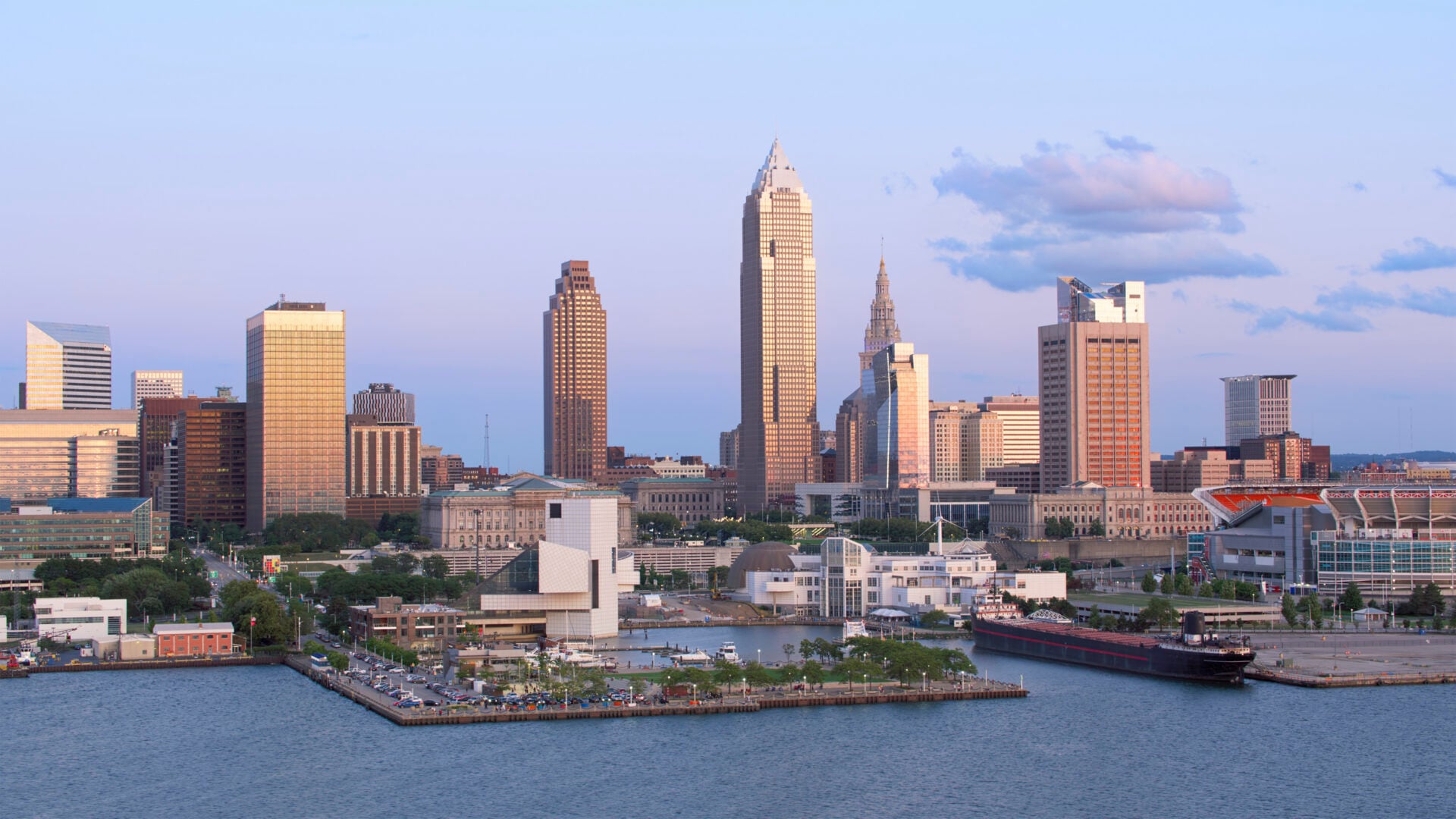
Danielle Doza, who serves as Vice President of Sustainability and Environmental Services at Rocket Arena, home of the NBA’s Cleveland Cavs and AHL’s Cleveland Monsters, will also speak. Noting that the venue is situated between Lake Erie and the Cuyahoga River, Doza tells Pollstar that Rocket Arena is “dedicated to responsible water stewardship and connection to our region’s freshwater resources,” from incorporating low-flow fixtures and proactive maintenance that prevent waste, to ongoing efforts to reduce overall water usage. She adds, “That same commitment extends to our AHL Cleveland Monsters, who are celebrating freshwater through Project Lake Blue – an initiative that supports a healthy Lake Erie and underscores the importance of water to hockey, our community and the ecosystems, recreation and economy that depend on it.”
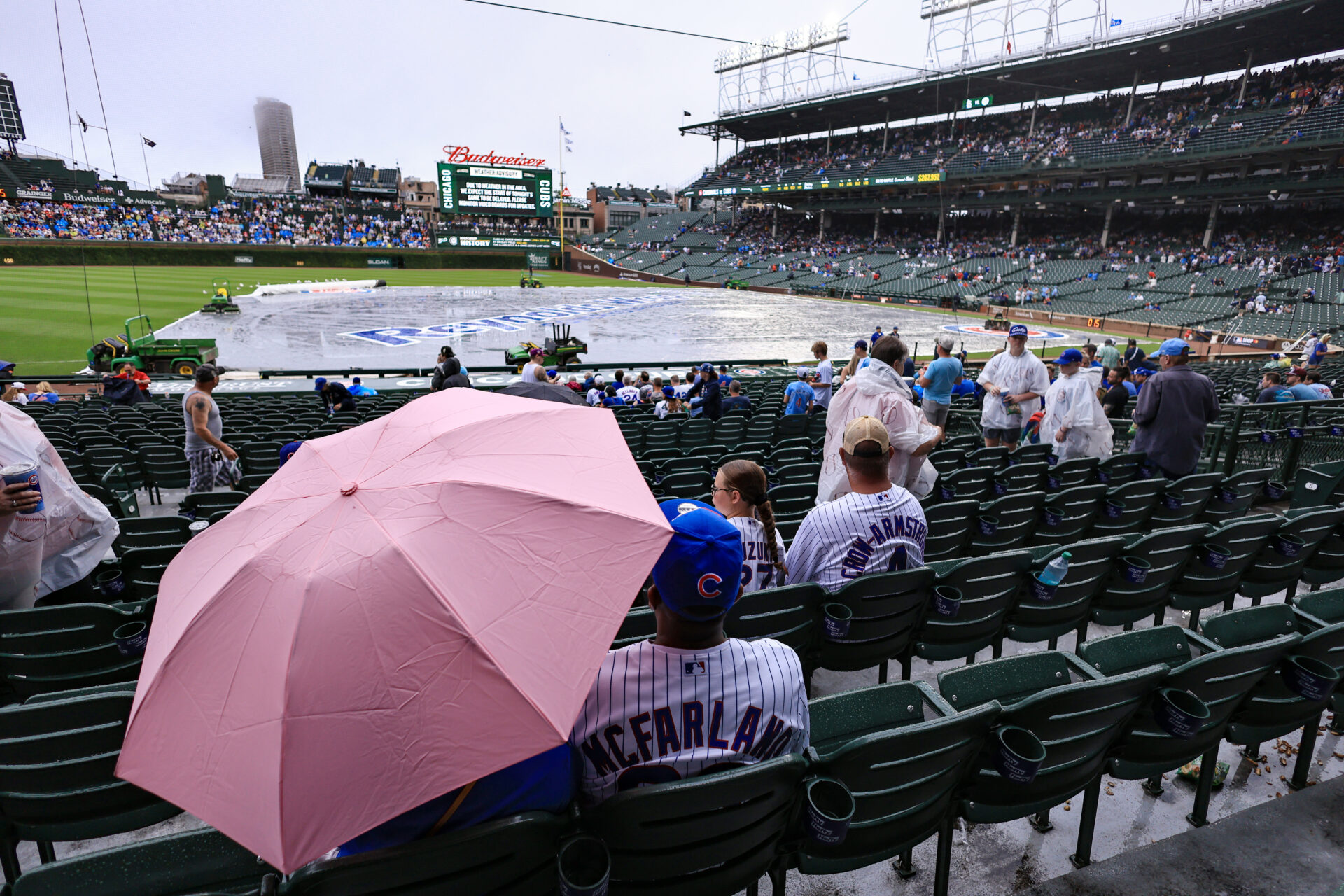
installing a rainwater capture under the field, which could save 1 million gallons of water per year. Here, fans try to stay dry during a rain delay.
Photo by Geoff Stellfox / Getty Images
Attendees will also hear from the host venue’s Maria Sapienza, who serves as the Director of Analysis & Planning Operations. She explained that Wrigley Field partnered with Sloan as its water efficiency partner and during its five-year renovation that wrapped in 2019, the venue was outfitted with the company’s high-efficiency, low-flow, touch-free fixtures that save water.
The venue’s other water-focused initiatives include adding 11 new water refill stations, installing submeters to better identify water use by location and type, and installing rainwater capture barrels in Wrigley’s hand-turn scoreboard, which are used to water the historic junipers in center field. Looking ahead, Wrigley Field is in the design stage of installing a rainwater capture under the field, which could be put in place as early as the 2027 offseason, with an estimated savings of 1 million gallons per year.
“We’re excited to learn from like all of the industry leaders that we’re helping to convene because we’re not experts,” Sapienza says. “That’s why we engage experts like Sloan that are really great partners and know a lot about the space. … We’re excited to host everyone, share what we did, but then get feedback from everyone to say, ‘Hey, now you’re in our building. You’ve heard what we’re doing, but what else is out there? What’s the low-hanging fruit? What’s on the cutting edge that maybe we’re not thinking of that may require some infrastructure or some buildout?’”
FREE
 Daily Pulse
Subscribe
Daily Pulse
Subscribe
 Daily Pulse
Subscribe
Daily Pulse
Subscribe