
Agency Intel: Paquin Artists Agency Co-President Vinny Cinquemani ‘Working Harder And Accomplishing More Than Ever’ Toward Walt Grealis Special Achievement Award
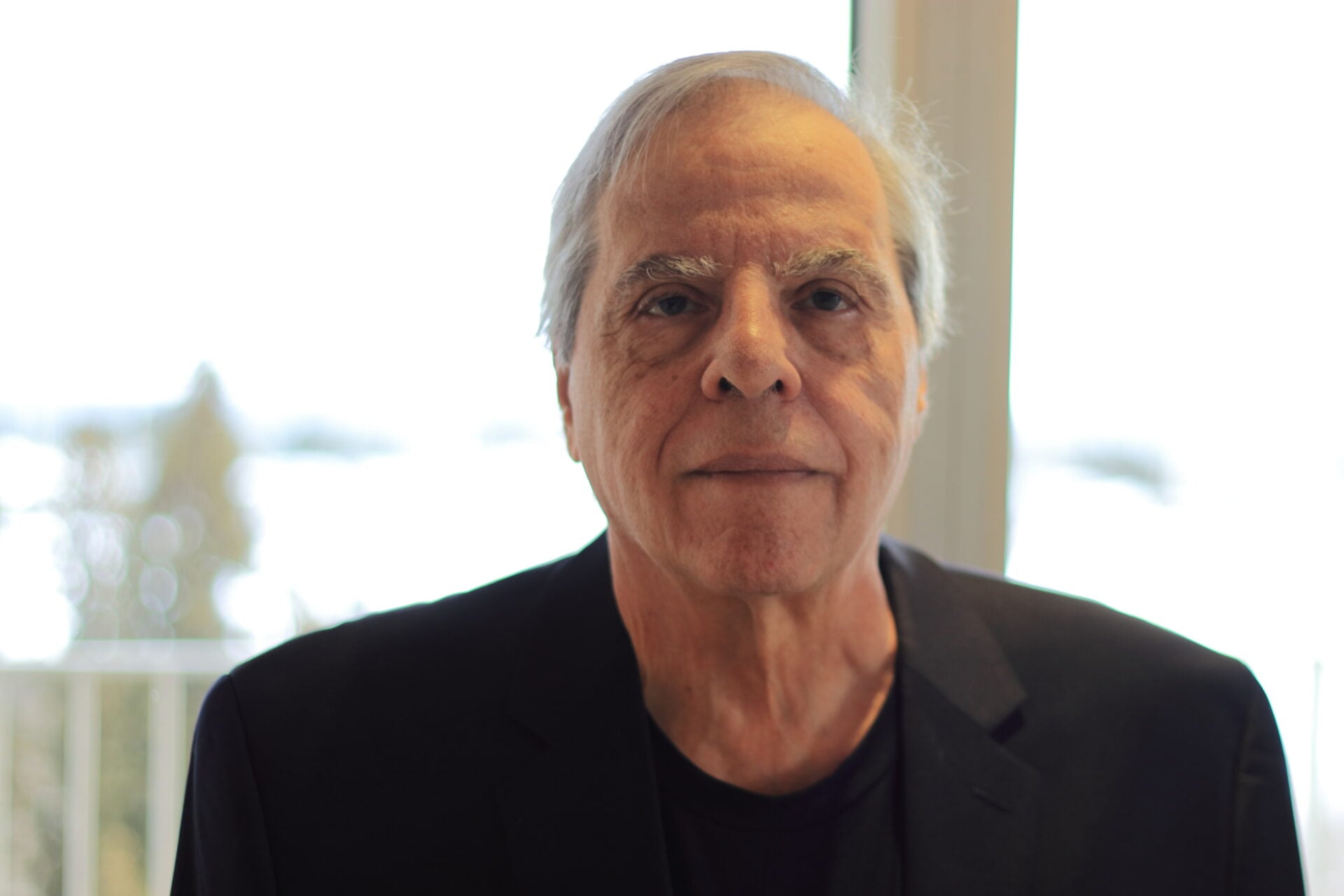
Vinny Cinquemani, co-president, Paquin Artists Agency (PAA), is into his 48th year as an agent, and works longer hours today than when he started in Toronto, new to Canada from New York City, making the transition from a singer in bands to the business side.
“I have to tell you, I love it more than ever, and that’s hard to say because sometimes my head is pounding, no lunch, sometimes weekends, no holiday. It’s a lot of work, all the time,” he tells Pollstar in an exclusive interview days before receiving the highest honor in the Canadian music industry, the Walt Grealis Special Achievement Award, presented in front of his peers at the private Juno Awards gala dinner on March 28. “You have responsibility — the responsibility of representing these artists and doing a really good job for them.”
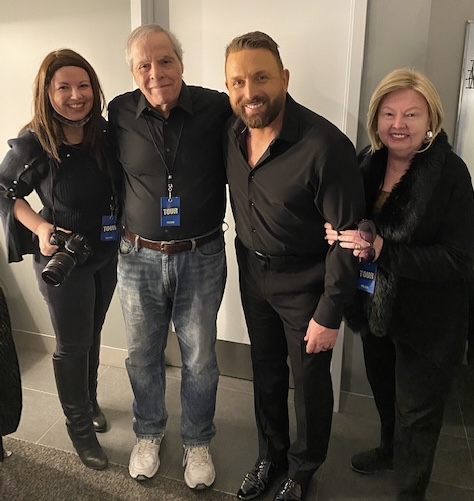
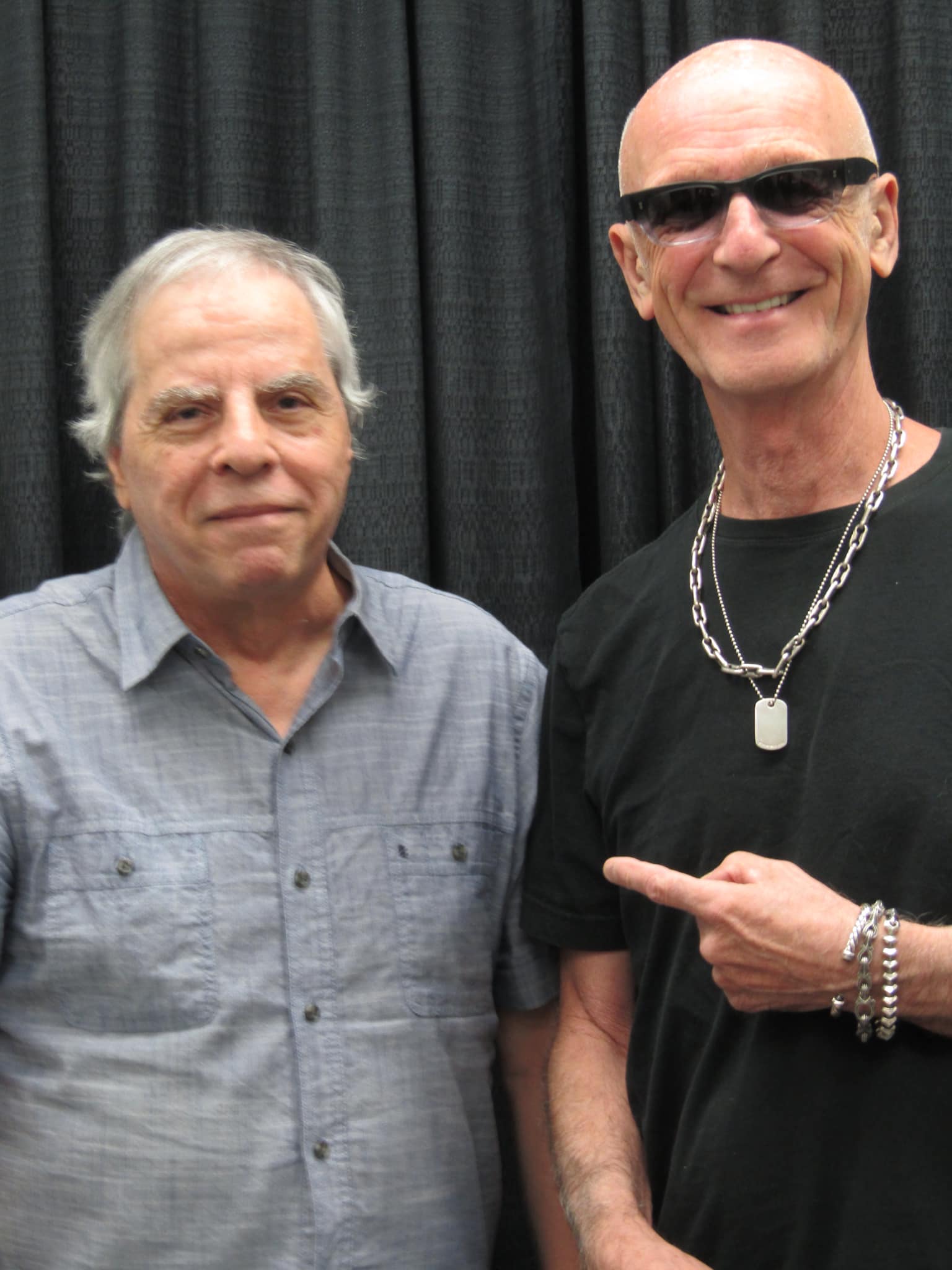
It’s that singular purpose, simple, to the point, to do right by the artist, that has enabled Cinquemani to be the responsible agent in Canada for Bryan Adams, Tom Cochrane, Kim Mitchell and David Wilcox for over 35 years; Amanda Marshall for almost 30; Jann Arden over 15; Michael Bublé, Simple Plan and Johnny Reid for over 20; and “new” clients David Foster + Katharine McPhee over 10 years, and The Offspring over six. That shows loyalty from both sides.
He was also Rush’s RA for 40 years until the passing of drummer Neil Peart, and worked as RA for Triumph, Burton Cummings, Anne Murray, Sarah McLachlan, Our Lady Peace, The Tragically Hip, The Parachute Club, Martha and The Muffins, The Guess Who, Max Webster, Loverboy, Glass Tiger, Sheriff, Finger Eleven, Frozen Ghost and Luba, among others.
“As an agent, my 47 years is because the artists are delivering unbelievable live shows,” Cinquemani says, but he has been instrumental in creating opportunities for those artists, Canadian acts he’d helped become major stars at home, and develop their careers, in most cases, across the border, and overseas.
Born in the U.S., Cinquemani came to Canada in the mid ‘70s with his wife Florence looking for “a fresh start in a young business, and try to develop it, as we developed ourselves in the Canadian music industry,” he says. They became Canadian citizens a few years into the move.
He tried to find work in the agency business, get his foot in the door, as Florence supported the two of them by working as a typesetter at the long defunct trade publication Record Week.

“I was a musician, booking and managing myself, and I learned what to do and what not to do, and how to be screwed over by everybody else that’s supposed to be helping me,” says Cinquemani. “I made a point about when I finally became an agent, and had the privilege to be a real agent, to represent an artist, that I’d take care of them and do everything that’s right for my artists, as many didn’t do it for the right reason.”
He got that opportunity when he landed a job at Concept 376, which they renamed Stand Ovation Agency, then got his feet wet briefly at Music Shoppe International, before having enough of a base to create his own agency, Platinum Artists in the ‘80s. He next moved on to The Agency, as president, before joining S.L. Feldman & Associates (SLFA) in 1994 as VP of artist relations, promoted in two short years to president. In 2010, he became senior VP, where he remained until COVID.
When he left in 2021 after 25 years, he accepted the position in 2022 of co-president of PAA with Julien Paquin, the founder’s son. It is a testament to his relationships and symbiotic loyalty that most of his artists followed him. In 2023-24, he helped execute the merger with APA Canada, instantly creating the country’s largest agency.
Over his nearly five-decade career, Cinquemani has been named booking agent of the year an unprecedented 10 times by CMW’s Canadian Music Industry Awards and twice earned international agent/promoter of the year from UK’s Performance Magazine. More recently, he topped Billboard Canada’s Top 100 Power Players in 2024 and 2025 and made Billboard U.S.’s prestigious Global Power Players list in 2025.
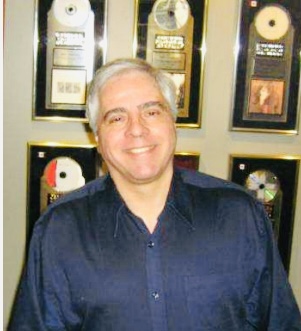
Still, it’s the Walt Grealis Special Achievement Award that tops them all, placing him in the company of other industry giants, like Bruce Allen, Ray Danniels, Sam Feldman, Terry McBride, Donald K. Tarlton, Bernie Finkelstein, Randy Lennox, Riley O’Connor, and more.
“So incredibly proud of you, dad – this is so well deserved!” posted his daughter, Amanda, on Linkedin. “You approach everything with excellence, love, care for others, and excitement, now we get a chance to celebrate you!”
Pollstar talked with Cinquemani just days before the award ceremony on Saturday, March 28 about getting his start, his artist-first approach to booking, his strategies, and leaving the industry in the hands of others.
Pollstar: There’s no higher honor in the Canadian music business than receiving the Walt Grealis Special Achievement Award? How does it feel?
Vinny Cinquemani: It’s completely surreal to me. To be mentioned in the same breath as the legends who have won this award before me, it’s an absolute honor. Many of them are no longer here. I can’t believe that I’m in that list with these people. Aside from Sam Feldman, who started as an agent and then became a top manager, I’m probably the first agent ever to receive this award.
You took a new position with Paquin just four years ago, so clearly you are not slowly down or looking to retire.
I work longer hours today, harder, and feel we’re accomplishing more. The company is booming. We’re number one. Our artists are doing great. There’s nothing about retiring. It’s actually great to receive this now, while we’re having the biggest year we’ve ever had, and in between growing and growing and growing.
You helped build this industry, and the careers of so many Canadian acts. You were a musician yourself. Who showed you the ropes to be an agent?
Everything that I did, had to work for and do a lot of it on my own. Coming from being a musician, the first job I had in Canada was working with Tom Wilson, who used to run Canada’s largest agency, Concept 376. I got to meet him after everybody left the company — all the agents, all the bands had left him. So, I managed to meet him, and he gave me a job helping and assisting him book because I needed to make some money for the family and I knew how to book because I was doing booking on my own, and managing myself and being an agent, learning the ropes on my own. And, he gave me some input.
What was the first tour you booked?
The Hollies from England. This was right after “Long Cool Woman in a Black Dress” [1971]. I booked a bunch of dates, including [Toronto’s] Massey Hall. The opening act was a band called Sherbet. They were managed by this young guy named Roger Davies who ended up doing Tina Turner and Olivia Newton John [and later, P!nk].
If no one showed you the ropes, who was in your circle back then?
[Trade writer and fellow Walt Grealis award recipient] Larry LeBlanc was one of the first people who was a friend, who helped to show me a lot of things in music. He is a friend today. But, I worked for Tom for a while. That lasted maybe a year, then I went to Music Shoppe International, which was a big company. Stayed there for a bit, not long, six months, a year. And then, I formed my first company called Platinum Artists with Mike Greggs and Ralph Jolivet. We started booking bands like Rush, Triumph, Burton Cummings. We did Platinum Artists, I can’t remember for how many years, and then eventually I was approached by the people who ran The Agency, and I was offered the job and became president, which was Canada’s largest agency. We had a deal with Sam Feldman, who had a company in the west, so they did the west and we did the west and that went for years, then, eventually, I went to Feldman Agency, as vice president, and eventually became president of the company for many years, 15 years, with Sam as the chairman. I’m trying to put [my career] in a nutshell. Then, COVID hit and I became senior vice president for a while. Thing were changing, then at that point I made the change and I left and I went to PAA.
That must have been a tough decision to leave Feldman Agency after so long. That’s a big change.
It was a big change, but COVID had hit. Things were changing, working from home, and I was looking to do more. Also, Sam Feldman, one of Canada’s great managers and agents who owned the company, who was a friend and the reason I was at the company, decided to sell the company [2018]. He got totally into management. I felt when he left that it was time for me to think about a change. It was very difficult and I did it. I met Julien and numerous other people from my company, Feldman, were already at Paquin. I talked with my family, my wife and daughter, and I thought it was a good idea. My contract was over and I went.
How has it been?
It’s been over four years now that I’ve been co-president of PAA and it’s been phenomenal. I don’t think I’ve ever been happier. It’s the greatest group of people. We’ve expanded so much. When I got to Paquin, or PAA as I call it, we had an office in Toronto and Winnipeg. Now we have Vancouver, Winnipeg, Toronto and Montreal. We acquired APA with Ralph James and Jack Ross [2023], and their staff, Mike [Graham] and Lorraine [Webb] and everyone else, with Nickelback and the Arkells, and it’s worked great. Ralph, he’s doing tremendous; you’ve got to hear the new Nickelback song, it’s a monster.
You said business is booming and Paquin is having its biggest year. Can you recap?
Bryan Adams played his last tour, sold out. It was the biggest numbers he’s ever done in percentage. I just finished the Offspring and Bad Religion tour of Canada. It was the biggest alternative tour of the year. They were doing 13,000 people in Edmonton and Calgary, selling out 14,000 in Montreal, 16,000 in Toronto and four years before that, they were doing 4,000. So, the numbers have been gigantic in everything. Michael Bublé, we’ve done I don’t know how many private and big shows and he’s getting ready with a new album for a global tour. And then I look at Jack Ross and the Arkells selling out Hamilton stadium [Tim Hortons Field]. Jack is having a fantastic year with all his artists.
What do you think is the biggest issue facing the live business today?
The biggest issue facing us is the economy right now. Unemployment is high, taxes are high, gasoline — everything is expensive. There are too many tours out there, and the issue that I see is you need to play the right venue at the right time, the right tour at the right time. I spent hours today on with Ian Low from Live Nation going through the Bryan Adams B market. Bryan’s tour is so big that we’re now doing a Bryan Adams B market tour of Canada that’s selling out. We also went on sale with Simple Plan, Marianas Trench and Bowling for Soup at [Toronto’s] RBC Amphitheatre three weeks ago and we could’ve sold out on pre-sale. Could you imagine with all these shows, we did 15,000 paid on presale, and I had to hold a thousand tickets to go on sale the next day. We sold out. So, maybe we come back and do Scotiabank. The numbers are big in every way, for all of the bands we’re doing. The Sarah McLachlan tour, the Diana Krall tour, that level. Every end that we’re doing is doing well, but because it’s planned and we communicate with our artist and management company, playing the right venue, the right capacity, at the right ticket prices. Ticket prices are astronomical, but I can’t say I feel anything is down; we’re having the best year I’ve seen in probably decades.
Do you think there should be some kind of consumer education on why ticket prices are up so that they understand production costs, crew, flight, hotels gas?
We’d love to educate people more. I’m a firm believer that whatever the band is, they have the top ticket, which is a P1, but I believe you can have a P1, a P2, a P3 a P4, a P5, all different ticket prices based on X amount of the capacity, so everybody has a chance to buy tickets. Of course, you have the platinum tickets, but I believe it’s up to the agent, manager and band to try to set the ticket pricing. I’m not talking about resale at all; I’m talking about ticketing for the general public.
I believe that if you put an artist a band or an artist in the right venue that they should be playing, at the right ticket pricing, that the show will be successful. It’s about the body of work that fans must come and see, so if someone should be playing Massey Hall, they should play Massey Hall and not play Scotiabank [Arena] or RBC Amphitheatre. Even the RBC Amphitheatre is 16,000 capacity, 8,800 seats [rest G.A. lawn]. So, only selling the seats, but you do 4,000 people what good is that, when you could go in and do Massey Hall and sell out, or maybe do two Massey Halls and build and build the following? When people can’t get into a show that they want to get into, that is the greatest promotion that anyone can have for an artist — turning away people is no good, but if you can’t get into a show you’re going to be first in line on the next tour. I believe, it’s playing the right venue at the right ticket price at the right time with the right package and with the right band.
While you’re not slowing down, we do have a responsibility to the new artists, new agents, like every sector in the business, to teach them the ins and outs so that when we retire or we’re gone, that they are knowledgeable and can continue thriving and building the music industry. Is that important to you?
We have a lot of young and new agents and assistants in the office in Toronto, Winnipeg, Vancouver, and Quebec and they need to be built. Agents need to be assistants; agents need to learn. It’s really really, really important. We need to create the blueprint for the next generation of agents, managers, promoters navigating independence, creativity and a global reach. That’s what I feel, and it’s our responsibility, because we’re still doing what has to be done and healthy and feeling great. Our company is made of great men and women — great agents, great assistants, great admin — right across the country, young and older. I’m just happy and fortunate that things are going so well and I’m able to do it for how long I don’t know, I’m hoping for a while, but when the day comes I’m hoping there’s not just one or two, in the office — because there’s about 75 — but hopefully 25 new agents who understand and really do it for the right reasons, loving the music, loving the artist, and doing what’s right for the artist.
FREE
 Daily Pulse
Subscribe
Daily Pulse
Subscribe
 Daily Pulse
Subscribe
Daily Pulse
Subscribe