
Could Live Nation Vs. DOJ/U.S. States End In A Mistrial? Possibly. Appeals? For Sure
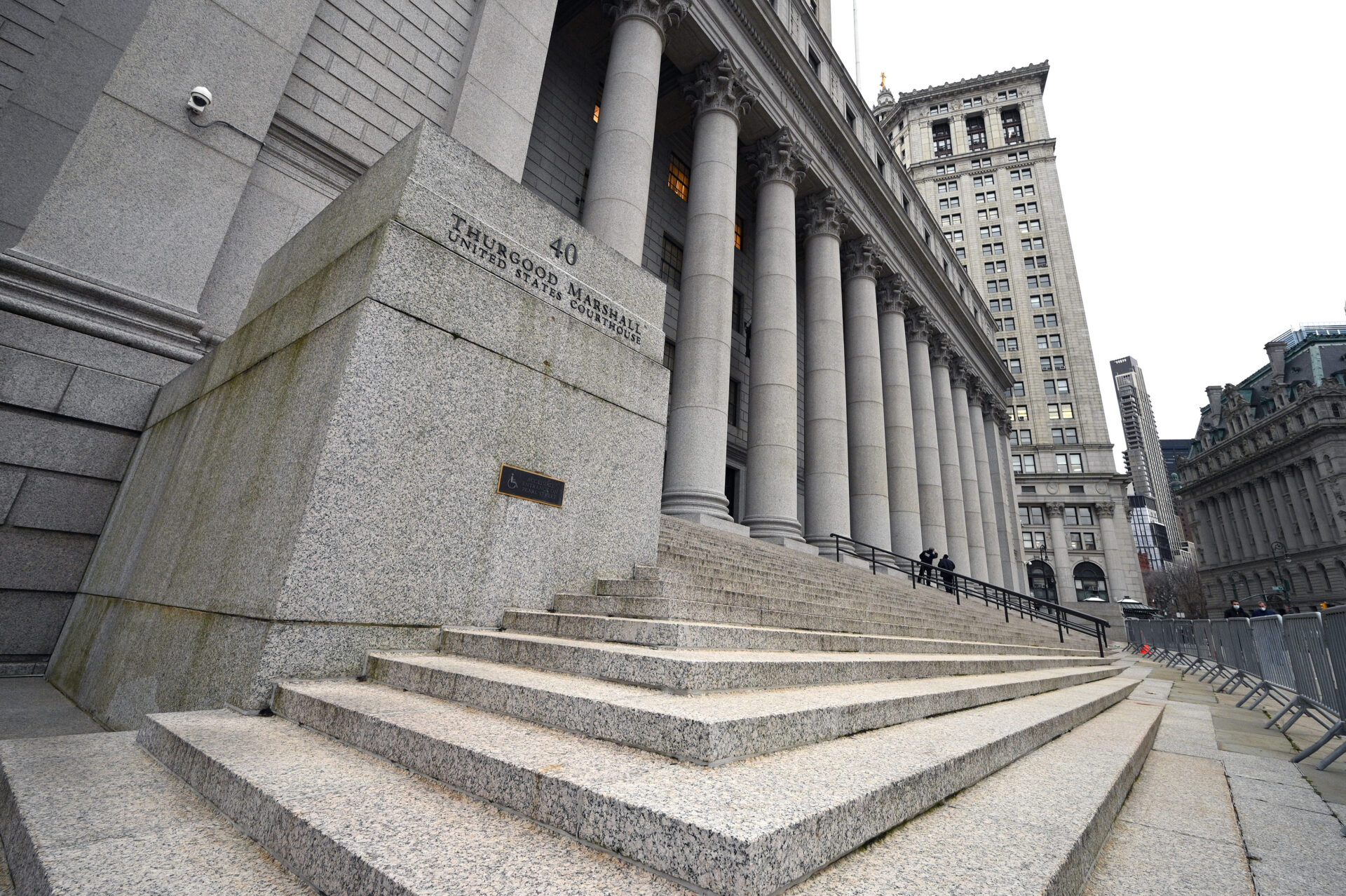
With closing arguments for the States vs. Live Nation anti-trust trial set for tomorrow (April 9), and a verdict likely next week, there’s a number of larger questions in this case to be considered.
Observing the U.S. anti-trust trial against Live Nation — which started as a collaboration between the Department of Justice and dozens of states — it would hardly take an expert in jurisprudence—and maybe only a casual viewer of “Law & Order”— to think all is not well with this case. The DOJ, under the Biden Administration, filed anti-trust charges nearly two years ago. Since jury selection kicked-off March 2, with opening arguments the following day, the case has gone through rather strange peregrinations in a relatively short amount of time in “pursuit of justice”—which in this case often seems elusive at best.
For one thing, two days into the trial, on March 5, the DOJ and Live Nation agreed on a settlement, which one might think would mark the end of the trial. The settlement included a $280 million fund to settle claims made by the states; an eight-year agreement allowing third-party ticketers, including Seat Geek and others, to use Ticketmaster’s technology; Ticketmaster was barred from using any means to restrict venue choice from the primary ticketing marketplace and must offer venues the option to be non-exclusive. The company was also required to terminate its preferred ticketing agreement with Oak View Group (Pollstar parent company).
More than 30 states and the District of Columbia, however, did not believe the settlement did enough to remediate anti-trust issues. The states, after having a period to find a settlement, decided to continue their cases against Live Nation, despite the DOJ conclusion.
“The settlement recently announced with the U.S. Department of Justice fails to address the monopoly at the center of this case, and would benefit Live Nation at the expense of consumers,” said New York Attorney General Letitia James. “We cannot agree to it. My attorney general colleagues and I have a strong case against Live Nation, and we will continue our lawsuit to protect consumers and restore fair competition to the live entertainment industry.”
At the time of the settlement, Washington, D.C.’s attorney general moved for a mistrial, which didn’t come to fruition and was withdrawn by the states when they decided to go through with the trial.
Furthermore, when the DoJ settlement was announced on March 9, it caught Judge Arun Subramanian, of the U.S. District Court for the Southern District of New York, off-guard. Subramanian (who incidentally oversaw the Sean “Diddy” Combs case) asked why the case went on until Monday despite an apparent settlement the previous Thursday. The clearly perturbed judge stated “It shows absolute disrespect for the court, for the jury, for this entire process, and it is entirely unacceptable.”
This led to a week-long break in the trial allowing for states and Live Nation to find a settlement, which never transpired. In that time, though, two jurors dropped out before the trial went back to the courtroom on March 16, with the chairman and CEO of AEG Presents Jay Marciano, testifying. This would also change the tenor and tone of the trial with Jeffrey Kessler of Winston & Strawn and Jonathan Hatch of the Office of the New York State Attorney General co-leading the trial for the states.
When the first list of witness was initially released, it was voluminous and included a wide swath of top executives from venues, management agencies, ticketers as well as experts, fans and more. Some asserted it would be impossible to corral the entire witness list in what was originally slated to be a five-week trial. Then, on March 19, the timeline seemed to change as Kessler, the lead counsel, said the states would rest their case after roughly a week of witnesses, a significantly shorter timeline then case DoJ case was originally scheduled for.
Meanwhile, two more jurors were excused from duty due to financial hardship that same day (March 19), just as Michael Rapino, CEO and president of Live Nation was taking the stand. With no alternates, the trial is now continuing with 10 jurors (some of whom, our reporter noted, appeared to be snoozing during the trial).
All of this begs the question, does all this together rise to the occasion of a mistrial? According to one legal professional, it’s a high bar to reach.
“A mistrial is an extreme remedy that is difficult to get,” said Lauren Spahn, a partner in Buchalter’s Nashville office with a background in entertainment law and specializing in live. “The judge put a few safeguards in place. Ultimately, the states filed for the mistrial. The judge then had this cooling off period and basically helped to provide mechanisms that would take away certain prejudices that could harm the states. They gave them additional time to get ready for trial and to prepare the witnesses. They did certain things with the jury and instructed them on what they can and can’t do to ensure that they didn’t have prejudice and that they were not observing outside outlets reporting on this. The judge essentially came in to cure the chaos, to help set it up the grounds for a mistrial to be even more difficult to reach that higher burden.”
As for having 10 jurors versus 12, all federal civil trials, unlike many state civil trials, require a unanimous decision, which may be easier to reach with two fewer jurors.
Last Thursday (April 1), according to a report, Judge Subramanian questioned AEG’s counsel over conduct that may have discouraged a witness from testifying, with the judge reportedly asking “why (the lawyer) shouldn’t be sanctioned right now?” (and which one side termed “witness tampering”). The judge also reportedly questioned the States’ damages expert Dr. Rosa Abrantes-Metz whose model of primary ticketing reportedly excluded the fixed payments ticketers make to venues, which are often substantial and a significant omission.
Spahn, again, doesn’t believe these issues rise to the level of a mistrial. “My assessment is still pretty much the same,” she wrote in an email, “as it seems there are sufficient corrective measures the court has taken and could take in these two witness issues to avoid a mistrial. Since a final verdict has not been reached, the corrective measures would most likely remedy any material or prejudicial impact caused by these issues. Judge Subramanian seems to be set on continuing this trial.”
Even though a mistrial, at this juncture, may be unlikely, these issues present many possible grounds for appeal.
“Let’s say that the states win,” Spahn said, “they’re going to claim that there was prejudice with the jury, the confusion from the federal trial with the settlement, with the time in between there were more opportunities that the jury could gain information from outside sources. They may be confused about the process. Now they’re looking at different requirements of the law. Before there were federal charges and elements that had to be met, and now you have different state laws that have different elements. There’s confusion because it’s two different sets of rules and instructions that they’re given, which could cause issues with the jury.
“If you’re looking at the State side,” Spahn continued, “they might say they were prejudiced from the beginning. This was settled and then it put them in this position where they had to quickly get up to speed. They could argue the same kind of prejudice and issues with the jury as well.”
Adding to the peculiarity of this trial was an article in late March in the The Wall Street Journal profiling Mike Davis, who in its headline was called “MAGA’s Top Antitrust Fixer.” Davis, according to the story, helped push through a number of major anti-trust up for review by the DoJ, including Hewlett-Packard and Juniper Networks as well as Compass Realty and Anywhere Real Estate with minimal remediation. The WSJ claimed Live Nation’s hiring of Davis—along with former WME head Ari Emmanuel (now head of TKO Group Holdings) reaching out directly to President Donald Trump—led to Live Nation meeting with the (now former) U.S. AG Pam Bondi and other DOJ officials in the White House to forge a settlement. There is nothing illegal about influence peddling, in fact it’s a time-honored Washington, D.C. tradition practiced on both sides of the aisle. Still, one has to wonder, if anti-trust settlements can withstand future DOJ scrutiny?
Also, as Pollstar’s recent “The Biz” pointed out, the matter of the DOJ-Live Nation settlement will have a 60 day review that is required under the Tunney Act, a Nixon-era law that requires judicial review of all antitrust settlements. Under the Tunney Act, proposed settlements must be published for public review for at least 60 days – judges can revise that timeline based on the relative complexity of the case or increased public interest, which the Live Nation suit no doubt has.
A final salient point is the disconnect between the trial’s goals, which ostensibly is to bring down concert ticket prices, and how little impact this case will have on that goal—no matter the outcome or how upset Taylor Swift fans and their parents are at getting shut out of her shows. There is an insatiable demand for a limited supply of tickets for most major tours that transcend any promoter’s or ticketer’s ability to fulfill that demand. Adding fuel to the ire felt by frustrated fans, parents of Swiftees and grandstanding politicians, is the secondary market, which in most states legally operates and exponentially jacks-up prices with no investment whatsoever in the artist or tour while exacerbating fan exasperation. High secondary market prices also put an upward pressure on primary ticket prices. Try as they might, there is no promoter or ticketer on earth that could please all the Taylor Swift fans shut out from her concerts. At the outset, the fans never stood a chance—which is just the immutable law of supply and demand.
FREE
 Daily Pulse
Subscribe
Daily Pulse
Subscribe
 Daily Pulse
Subscribe
Daily Pulse
Subscribe