
Taking Total Control Of The Fan’s Experience: How Openstage Wants To Put Artists Back In Charge
The music business is a people business. You hear it all the time, and it’s true. Relationships are key, and no relationship is as important for this industry’s health as the one between the artist and the fan.
In marketing circles, it’s become somewhat of a mantra to speak of artists as brands. But unlike the relationship between a brand and a consumer, the relationship between an artist and their fans is a deeply emotional one.
And because artists know their fans best and have a clear understanding of what it is that made them flock to their music in the first place, it is the artists, who should be the stewards of that relationship.
This most valuable aspect of an artist’s career, their relationship with the fan, has traditionally not been owned by the artist. But it’s changing fast, and companies like Openstage have a huge role to play in that development.
One of the reasons it’s hard for artists to control all of their fan data is because it so dispersed across social media, various DSPs, labels, merch stores, mailing lists, fan clubs, and other service providers they may be working with. That’s where Openstage comes in.
According to co-founder and chief strategy officer Rob Sealy, “we want to make it easier for artists to open up and tap into the power of the relationship with their fans by building a platform where you can consolidate all of your existing data, all of your different engagement points.”
Openstage presents the data in ways in which artists can extract the most meaning from it, giving them a clear understanding of who their fans are. “With the help of these insights you could bring people into your world, manage their experience and reward fans in a way that is completely on brand for you as an artist,” Sealy explains.
The data breakdown happens for each individual fan. Artists can see what they are listening to, which emails they’re opening, what merchandise they bought, etc, and that builds a profile.
This profile shows the artist what level of fan they’re dealing with, how dedicated they are, which enables the artist to reward them in special ways.
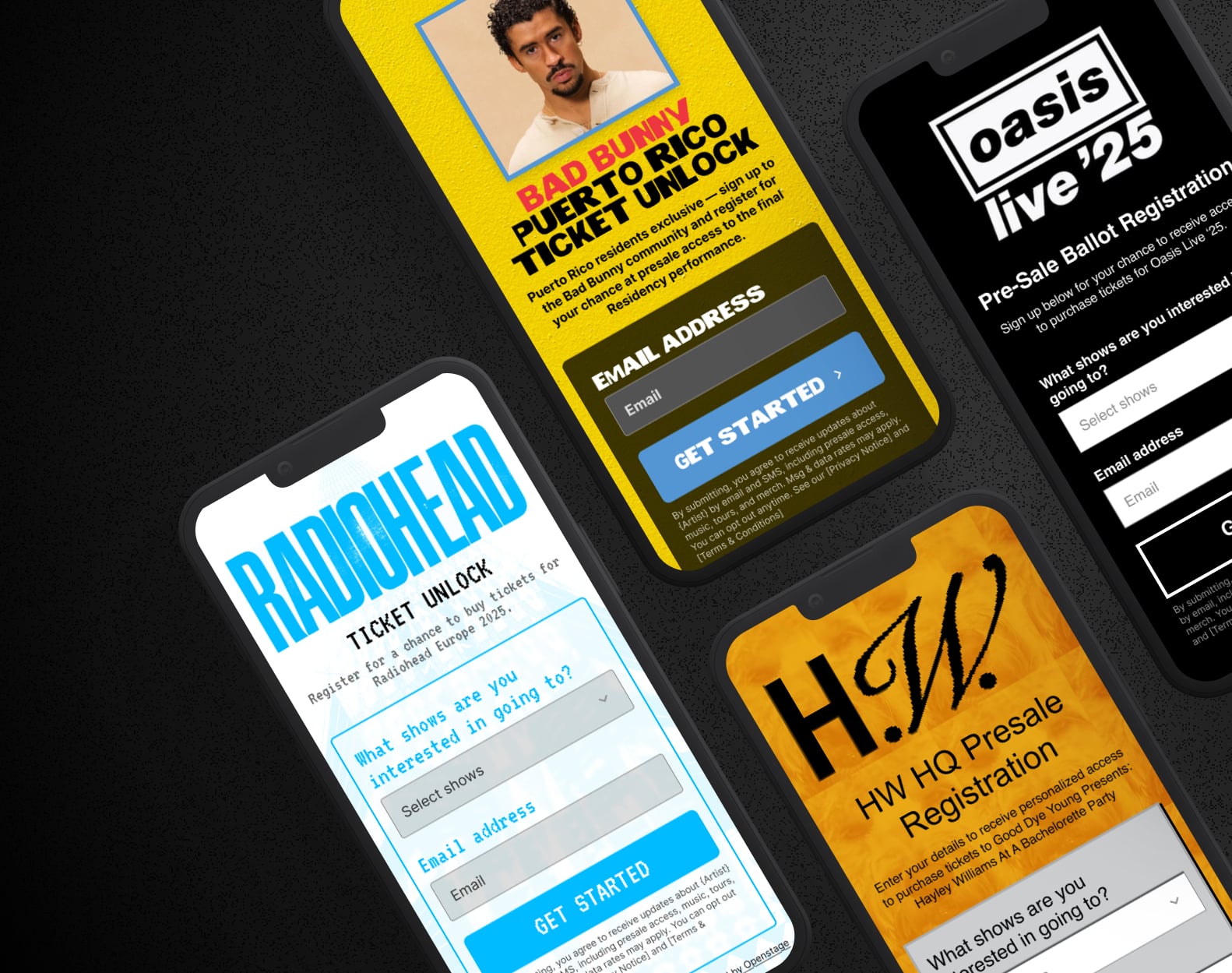
Oasis and Radiohead, two high-profile artists using Openstage, have been running their own fan clubs for decades. It’s easy to see the quality of in-depth fan profiles they could build from that amount of data, and then reward the most loyal of them generously.
When Bad Bunny played his Puerto Rico residency “No Me Quiero Ir de Aquí” last year, his team hand-picked the fans that would receive tickets to each show from his Openstage database. Imagine how it must feel for a die-hard fan to receive an email from their idol, inviting them to a show.
It is the small bands just starting out and building momentum, that benefit most from a service like Openstage. With all available metadata, from contact details to locations to listening habits gathered in one place, Openstage is able to generate heat maps showing artists which regions are the most active for them – a feature agencies in particular have been relying on forever. Now, artists can look at that info themselves, which allows them “to make really strong, tactical decisions, and have better negotiations with promoters and brands,” Sealy explains.
He showed Pollstar an example of a small band from the UK, who discovered they had more fans in mainland Europe than in their home market. When they began to put together a European tour, their promoter told them they would pick the smallest play in each city, since the band had never toured those cities before.
However, thanks to the available data from the heat map, they knew they had way more fans in cities like Prague or Berlin than the venues selected by the promoter would have catered for.
Had they gone with the promoter’s venue choices, they would have ended up selling some 3,500 tickets across 300-cap venues in 17 cities. But because they kept pushing to upgrade the venue in certain cities, they ended up selling an extra 20,000 tickets than what would have been possible on the promoter’s original routing.
There’s a band from Scotland that nobody will have heard of, called Tide Lines, that were able to play three nights at the 2,000-cap Barrowland Ballroom in 2024. They’ve got less than 20,000 followers on Instagram, and yet they were able to sell 6,000 tickets in their home city, closing the year with a 14,000 tickets sold across a Scottish tour. Sealy is convinced that “without the strength of conviction their Openstage account gave them, they would not have been able to. And they’re also one of many artists who have been able to make decision on where not to go for lack of demand, which is just as important.”
Sealy and his co-founders believe the music industry is way smaller in terms of business volume that it could be. “Money is being left behind,” he says, “if you’re Oasis or Radiohead, that might be less of a concern. But if you’re a band fighting for your life, you need to sweep every five pound note off the table. And this tour I mentioned actually broke even rather than lost money.”
Which dispels another industry myth, which is that you simply don’t make money on your first tour, with few exceptions confirming the rule.
Openstage offers API integration for an artist’s merch store, their streaming services of choice, and every other touch point with fans. Artists see what their fans have been spending on, which campaigns they signed up for, what caused engagement and what didn’t.
If a fan has shared their mobile number, artists can directly message or call them at the push of a button.
Exclusive rewards like these can be saved for those fans, who’ve spent the most money on you. And, going through Openstage’s backend, it’s utterly fascinating how much money certain super fans are spending even on small bands you’ve never heard of.
“A fan like that should not have the same experience as every other fan. Nor should they receive the same emails I send to all the others. Artists can choose to talk to their super fans very differently and more frequently,” says Sealy.
And they can sell tickets to them, exclusively, without forcing their biggest supporters to join a queue with thousands of others, who may only have been following that artists for a few days or weeks.
If you’re a 10, 15-year long fan, and you lose out in an anonymous general on sale, it can be heartbreaking. With Openstage, an artist could run an independent pre-sale registration, set it up, brand it, ask people to sign up, and maybe even ask them what dates they’re interested in going to see the show. That’ll allow artists to make decisions around adding a second show etc.
Most importantly, though, they know they’re talking to real fans, real humans, who deserve first access to tickets. Why even ask them to queue? Why not email your biggest fan directly with the best seat in the house reserved just for them. The possibilities for engagement are only limited by the artist’s imagination.
And because these fans have proven time and time again with their interactions that they’re real humans, targeting them directly also solves the bot problem during on sale.
It’s a two way street. If a band wants their fans to properly engage, they need to offer them something that makes them want to. This has to go beyond “join our mailing list to get updates”.
Artists using the platform tell their fans, ‘if you sign up, you’re gonna have a direct relationship with us, and that means you’re going to see it first, hear it first, wear it first, and get first access to tickets’.
But it goes beyond. A band can now show all of their less engaged fans, how fan club members are being treated. According to Sealy, this is called inside-out marketing, “you market from the inside and you show the outside world what it means to be a fan of your band.” It creates a form of FOMO on what it means to be a fan, a very powerful marekting dynamic.
Openstage wants artists to run their fan relationships via its platform on an ongoing basis. Pricing is built around the amount of contactable fans they have. It costs around £100 pounds for artists with 10,000 followers or less; about £400 pounds if you have 100,000 or more; and about £3,000 if you have a million or more.
“Any marketeer worth their salt will be able to recoup that money by managing that direct relationship. We’ve got bands with less than 1,500 fans on the platform, and it’s paying for itself,” says Sealy, and adds, “fans are not born equal. Unfortunately, we do not live in an equal society. But some fans will pay a lot of money just to have a personalized experience. No all artists want to do that, but we’ve got some extraordinary case studies, where a very small, concentrated group of a few dozen fans have given artists hundreds of thousands of dollars.”
And he concludes, “Openstage is taking artists off of rented marketing channels, which come with a dependence on those platforms, and with constantly fighting an algorithm that gives you less and less reach, and is instead allowing them to bring fans into their own world, where they are in total control of shaping their fans’ experience.”
FREE
 Daily Pulse
Subscribe
Daily Pulse
Subscribe
 Daily Pulse
Subscribe
Daily Pulse
Subscribe