
Pollstar Live! 2026: Putting AI To (Good) Use In A Live Environment
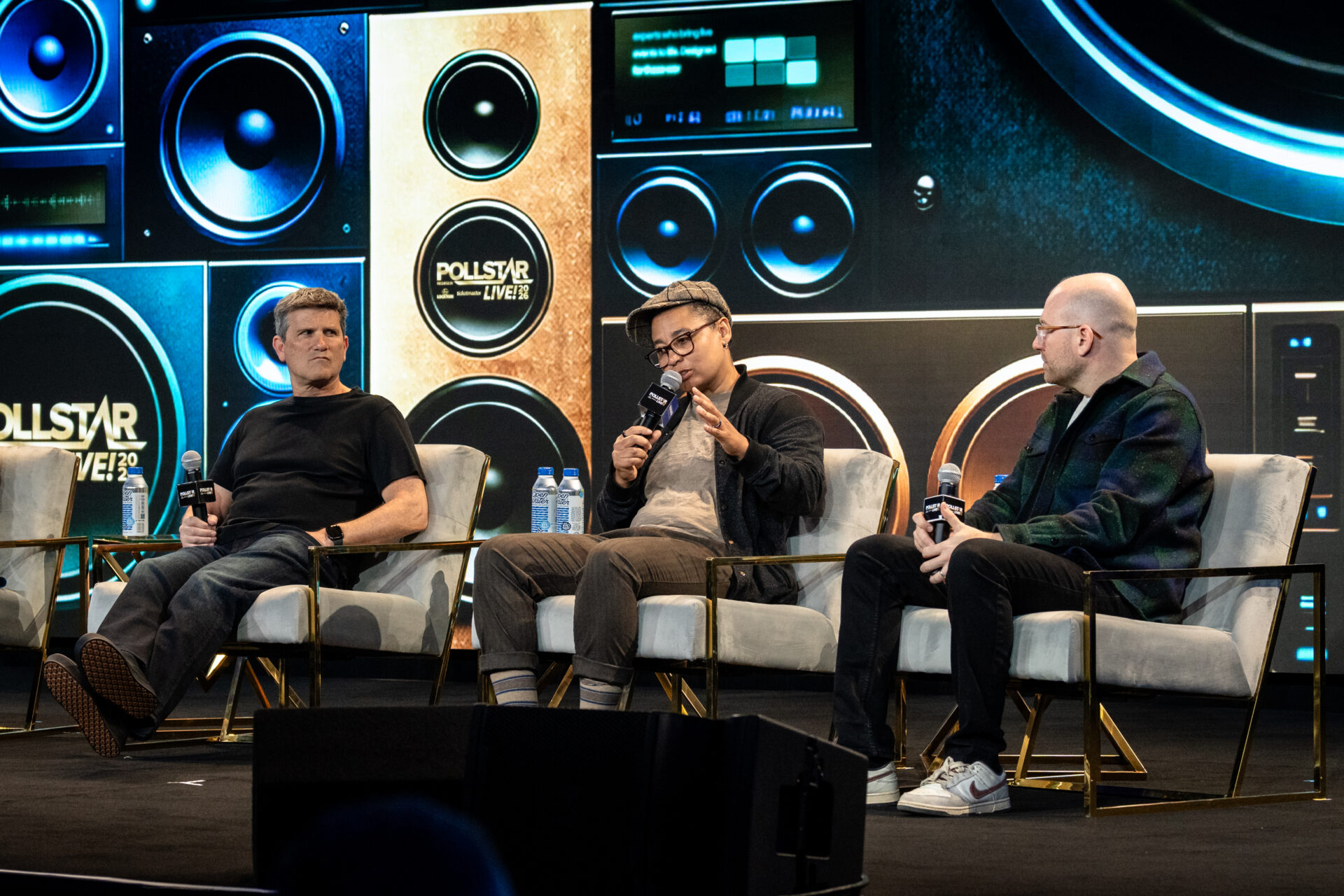
Moderator: Joshua Litwack, Quantizr
Panelists: Randy Nichols, Force Management; Tobi Parks, Tour Tech; Matt Yaseck, ROAM
A conversation about the use of emerging tools in artificial intelligence in an industry that relies extensively on the human creative process has the potential to get fraught. Whether AI-generated music can or should compete with wholly humanist output is maybe better left for philosophers.
But how artists and their teams can improve their careers with the use of AI is a more practical discussion., And there’s no doubt there’s value.
“The promise of AI is to simplify the repetitive tasks — ticket coutns, tracking deposits and payments and settlements — and freeing up time to do the creative parts of the things we do to advance an artist,” ROAM’s Matt Yaseck said.
It’s a good point: if AI can handle the data-intensive, often tedious, but necessary parts of touring, agents, managers and promoters free up time and manpower to work on the actions that can actually improve a career.
And, possibly, better compensate the artists.
“There’s so much money sloshing around our industry,” Tour Tech’s Tobi Parks said. “AI can help us get that to the people who it should go to.”
Force Management’s Randy Nichols is an enthusiastic adopter of AI, though he emphasizes that to get the best outputs, it’s best to move on from the generally available “generic AI tools.” He punches in “projects” for artists he works with and lets AI crunch all that data and all those inputs and what comes out the other side is remarkable.
“The AI learns and speaks like I have for that artist,” he said.
All of the panelists agreed that the old data maxim of “garbage in, garbage out” remains true even for the highly advanced AI that’s hitting the market. Data organization is still important and recognizing the limitations of various models — large language models are notoriously bad at math — is still critical. Yaseck laments that nearly every agency, management firm, promoter and venue structures data differently, making amalgamation and, therefore, useful outputs oftentimes difficult to achieve. Which means, well, humans still have to be trained to correctly interpret what AI generates.
Importantly, Parks said, AI’s unique ability to merge large amounts of data can help bridge the biggest “chasm” in the industry: that between live and recorded.
“If my buyer can look at regionalized data on streaming, it can help smaller venues make better decisions, which makes the business more sustainable,” she said.
Yaseck said AI-analyzed data can improve efficiencies across an industry that still often operates on “folklore.” But, as ever with the live game, Parks said, the human factor is still the critical component.
“We still have to use our brains.”
FREE
 Daily Pulse
Subscribe
Daily Pulse
Subscribe
 Daily Pulse
Subscribe
Daily Pulse
Subscribe