
Production Live! 2026: Tour Logistics – The Fine Art Of Being In The Right Place At The Right Time
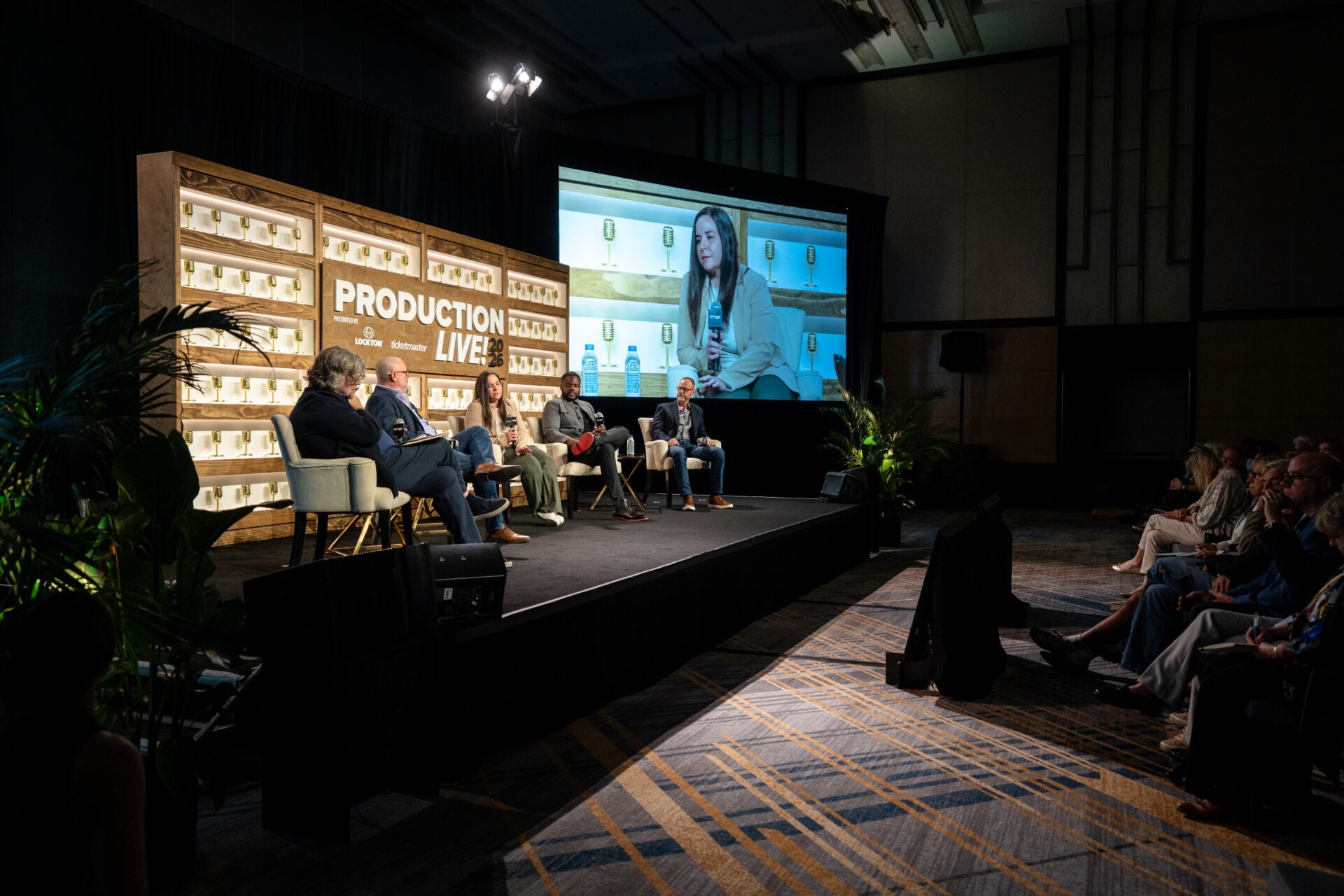
At Production Live 2026, a panel of touring experts examined how to map out tours more efficiently. Here are some of the key takeaway from that session, moderated by Steve Dixon (Pophouse), and featuring Shelbi Curtis-Moehle (Family Entertainment Live), Ben Ikwuagwu (Soundcheck Live), Wayne Linder (Pioneer Coach), and Jeremy Young (RockForce).
A large portion of the discussion focused on the ways in which technology may elevate the touring industry.
Linder said, “I’m hugely interested in how AI can make us more efficient, when it comes to scheduling vehicles, in regard to communicating tours quicker, better.”
Ikwuagwu said: “I think of our software tools as a really smart intern. A smart intern that can learn anything on this planet, but they’ve never been on stage, on tour, or produced a show. So, you wouldn’t give an intern the key to the kingdom. You’d be like, here’s the context, here’s my tribal knowledge, here’s my data, and then you would see how it performed. Over time you would say, ‘okay, here’s a little more’. Software is not a solution, it’s just a tool, a really good one, but it’s a tool.
“When chaos happens, it’s a chance to learn. We need a post-mortem, where we ask: what do we need to do now, so this doesn’t keep happening. That’s not just talking about it while on the bus, it’s documenting it. That’s where software comes into play. It can be a great companion, because it allows you to document things, collect data and build real systems. So, the next time happens, you’re like, we’ve seen this before, this is how we handled it.”
Curtis-Moehle agreed that it would be crucial to figure out how to extract the knowledge built by those currently working in the biz and put it into a system “that works and flows consistently for the next generation that comes through. We go to a venue and we have a back-up plan. But next year maybe it’s not me who’s there. There’s a back-up plan from team A, but now touring unit B is going in, and they’re re-engineering [what should have already been passed down].
“Taking the knowledge, gathering it, putting it in one single place, to then be able to share and communicate it, could almost revolutionize this industry, definitely change it for [the better].”
Young touched on the human element technology would never be able to replace. The most important tool at one’s disposal, he said, was “over-communicating, whether it’s via cell phones, email or Morse code. Over-communicating is always the way to go.
“Systems are great, AI is great, but from a labor perspective there’ll always be the human element, and we’re very focused on flipping the script for the local labor pool to create career paths and that will create reliability, trust and loyalty, which in turn creates productivity and efficiency and just makes a better day.
“Yes, of course we’re using AI and systems to track scheduling and especially being in the payroll business time-in and time out and all of that, but we’re focused on the people, and creating upper mobility, which breeds loyalty to us, and everybody on this stage and in the room in the benefactor of that.”
Dixon said this was still a business where one individual could make million-dollar deals sitting at their kitchen table with nothing but a phone, but said there were also still “a lot of inefficiencies in what we do. Lot of time spent, lack of data, lack of coordination etc. In the next five years, how do you fix that?”
Shelbi Curtis-Moehle aswered, “A lot of it is going to come from the people you surround yourself with, who work through the processes and the procedures to help better inform. There’s so much knowledge just in this room, and if we took one percent of what everybody has here, we would have knowledge beyond years. But it’s locked up here,” and she pointed to her head as she said this.
Linder said, “From where it was 20 years ago, we’re exponentially safer, we’re more transparent, and we’re operating at more reliable levels than we’ve ever been. When I started in this industry as a driver, I didn’t necessarily follow DOT rules. Today, with the technology, we receive automated emails from our busses telling us what’s wrong with them. That’s how far it’s come, and it’s a great thing, it’s exponentially better than it’s ever been.
“Moving forward five years from now, we’ll be exponentially safer again, and more reliable than we’ve ever been. There’s never been this much focus on reliaibility and taking care of clients than there is right now.”
Dixon remembered the times when “the tour accountant was the only sober guy to carry the drug money.” He said, “You’d have two days, 1,000 miles to go, I remember bus drivers never stopping even to go to the bathroom, there was always something left you did not see. It really has changed, as DOT regulations change. Today, if the project leader told a group of bus drivers to break the law to get one place to the next, they would be criminally negligible in the case of a loss of life. And regulations will only get tighter.”
Linder said, “The reality is that DOT laws have always been there, we just worked in a renegade industry. We’ll never put an artist or driver at risk of breaking the law.”
FREE
 Daily Pulse
Subscribe
Daily Pulse
Subscribe
 Daily Pulse
Subscribe
Daily Pulse
Subscribe