
How Live Nation’s Recent Business Moves Could Cushion The Impact Of Antitrust Verdict
With yesterday’s explosive news that a jury found Live Nation guilty of operating as monopoly in a trial brought by the more than 30 U.S. states, what many may have missed, is that for the last several years the world’s largest music promoter has made a raft of acquisitions, built new venues and made partnerships greatly expanding its portfolio, especially on the international front. Such moves make it increasingly clear that Live Nation, will still remain one of, if not the, world’s top promoter. (Keeping in mind, though, the trial’s verdict is not yet set in stone. “The jury’s verdict is not the last word on this matter. Pending motions will determine whether the liability and damages rulings stand,” Live Nation said yesterday in a statement.)
“In 2025, the bond between artists and their global fan bases reached new heights, fueling another year of double-digit growth,” said Live Nation President and CEO Michael Rapino in Live Nation’s recent year-end earnings report, which surpassed $25 billion for the first time. “As artists continue to unlock untapped markets and headline the world’s most iconic stadiums, we’ve built momentum that carries us into a record-breaking 2026.”
Tapping into new markets is smart strategy: If the trial results in Live Nation’ divesting of its Ticketmaster holdings, the company’s number one revenue-generating division at $3.1 billion in the last fiscal year, the world’s largest live entertainment operation has more of a financial cushion by increasing its buildings, promoters and other partnerships.
Live Nation was steadily bulking up its business well before the post-pandemic boom, acquiring companies and venues that have helped it set new earnings records each year. Over the last several years, its M&A activity has grown significantly. According to the company’s most recent adjusted operating income in its yearly earnings report, its acquisition expenses shot up to $259.6 million in the 12 months of 2025, more than double the $128.6 million reported the previous year.
The company has invested heavily in the venue side of the business, whether it’s building one from the ground up, taking over an existing structure or partnering with an operator.
One region where Live Nation has been aggressive in expanding its global footprint is Latin America, which has seen significant growth as the world transitioned out of the COVID-19 pandemic. One of the biggest deals last summer was the acquisition of an additional 25% stake in OCESA, a major Latin promoter in Mexico and Colombia, which finished No. 4 on Pollstar’s 2025 Year End Top 100 Promoter Grosses chart with $970.3 million. Live Nation now owns a majority 75% of the Latin company, which also operates major venues, including Estadio GNP Seguros, the world’s top-grossing stadium.
The deal was worth $646 million, far more than the $444 million Live Nation paid to acquire 51% of the company in 2021, underscoring the rapid growth of the Latin American market.
“Our investment in OCESA has been incredibly successful, and [OCESA CEO] Alejandro [Soberón] and his team have done a tremendous job utilizing the global Live Nation infrastructure to drive growth in Mexico,” Rapino said when the deal was announced. “Together we have more than tripled the number of fans attending our concerts in Mexico since 2019, making Mexico now the third largest music market in the world, and I expect we have many years of strong growth ahead of us.”
Mexico isn’t the only country to be influenced by Live Nation. The live giant has announced major venue deals in Colombia, Chile, Argentina and Peru.
One of the most significant deals was acquiring a majority stake in Movistar Arena in Santiago, one of the busiest buildings in the world, which placed fifth in Pollstar’s 2025 Top 200 Arena Grosses with $153.63 million from nearly 2 million tickets sold. In addition, DG Medios, a popular Chilean promoter mostly owned by Live Nation, inked a deal with Estadio Monumental David Arellano for preferential booking rights, signaling that more stadium concerts are on the way to South America.
Other notable deals in Latin America include operating the 15,000-capacity Arena Cañaveralejo in Cali, building a new arena in Lima, renovating and managing Argentina’s Estadio Luna Park, acquiring Dominican Republic promoter SD Concerts and partnering with Club Atletico River Plate, Dale Play and DF Entertainment in a deal that gives Live Nation exclusive presentation of live shows at Mâs Monumental Stadium in Buenos Aires as well as the granting of the stadium’s naming rights.
And that’s just one region. Live Nation has made similar deals in Europe, Asia, Africa, the Middle East and Australia.
Live Nation announced in February the acquisition of ForumNet Group, one of Italy’s leading venue operators with buildings such as the 15,800-capacity Unipol Forum, Carroponete and Teatro Repower.
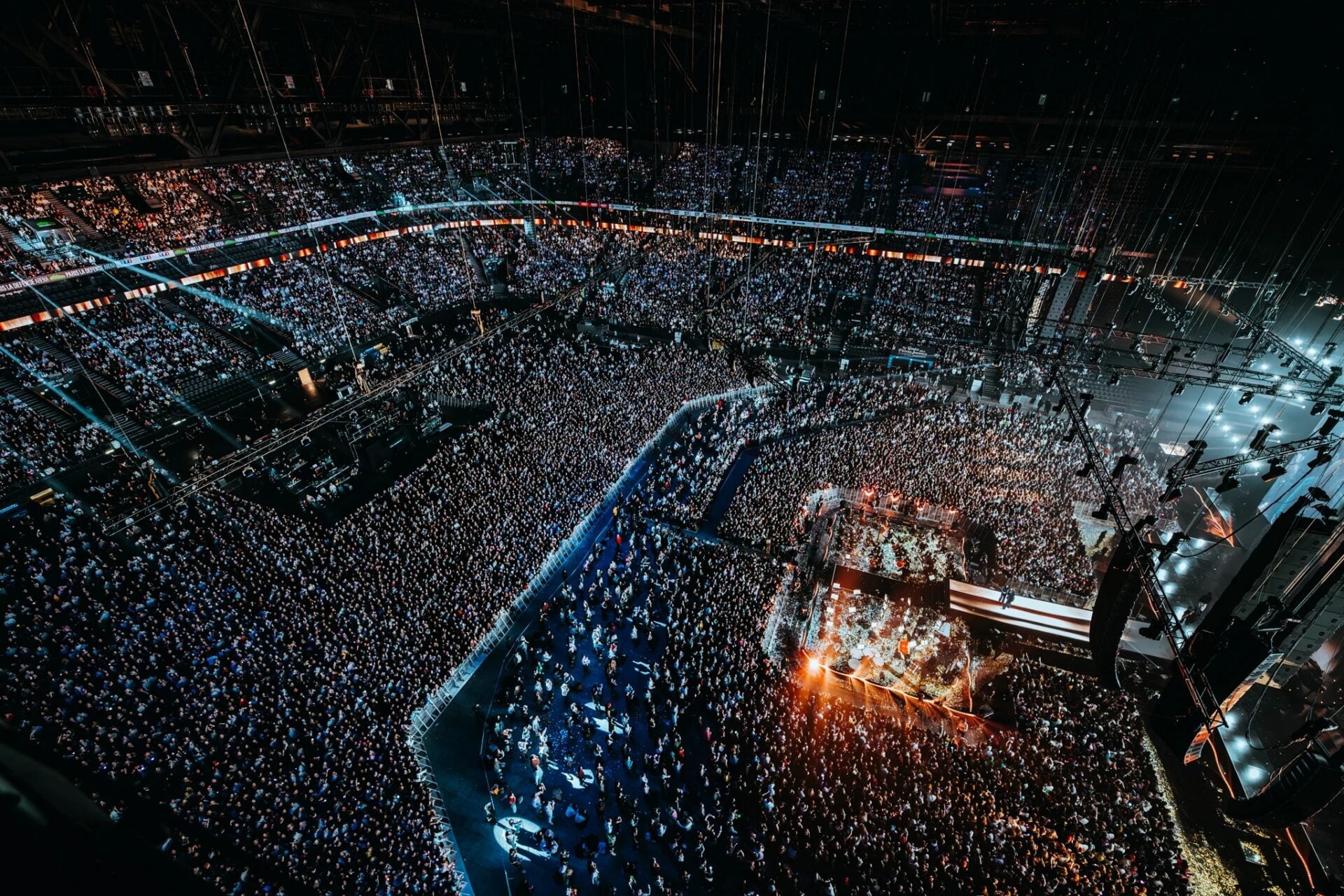
In January, the promoter surprised many in the business when it acquired Europe’s largest indoor venue, Paris La Défense Arena in France, which was among the top 25 in Arena Grosses last year, reporting $84,317,380 to Pollstar Boxoffice in 2025.
“Our ambition is simple: to make Paris La Défense Arena a venue that welcomes more productions, with the finest facilities for artists, all event producers and promoters and, above all, the audience,” Angelo Gopee, managing director of Live Nation France, said. “This ambition is rooted in a strong commitment to local inclusion, education and cultural access – ensuring major live experiences drive local development and inspire younger generations.”
Other European dealings include the acquisitions of MEO Arena in Lisbon and Denmark’s Royal Arena, becoming a strategic partner on the 20,000-capacity Munich Arena project in Germany and operating Helsinki Halli, Finland’s largest arena. In March, Live Nation acquired a majority stake in Romanian promoter Emagic and Slovakian booking agency Vivien, in what the local press described as a package deal.
The expansion of Live Nation is also within its original borders. The company announced last June that it was investing $1 billion in U.S. venues to “revitalize live music venues, bringing more big shows to smaller cities across America.” The 18-month commitment to opening new or renovated venues included buildings in markets like Atlanta, Birmingham, Denver, Indianapolis, Nashville, Pittsburgh, Seattle and Virginia Beach.
Over the last two months, Live Nation announced three projects in the States. The entertainment giant will operate a KETTLER-developed 4,300-capacity music venue in Tampa that is expected to open in late 2028, and the company announced plans to propose a 2,500-cap Bentonville Ballroom in collaboration with the Momentary, in Northwest Arkansas. Live Nation is also slated to operate a 6,200-capacity amphitheater developed by Bedrock and Rock Entertainment Group in downtown Cleveland, and it’s set to open in a few years. In June, outside Minneapolis, Live Nation is set to open the 19K-cap Mystic Lake Amphitheater in Shakopee, Minnl.
Decades of vertical consolidation made Live Nation the largest owner and operator of live music venues, especially theaters and amphitheaters. While the recent jury verdict could disrupt the promoter’s “flywheel” model, which includes a variety of revenue streams, including ticketing, global touring, sponsorship, management, venues, production and more, with its continued expansion across the globe should ensure the company’s continued success.
FREE
 Daily Pulse
Subscribe
Daily Pulse
Subscribe
 Daily Pulse
Subscribe
Daily Pulse
Subscribe