
Pollstar Live! 2026: O Canada – Live Music in the Great White North
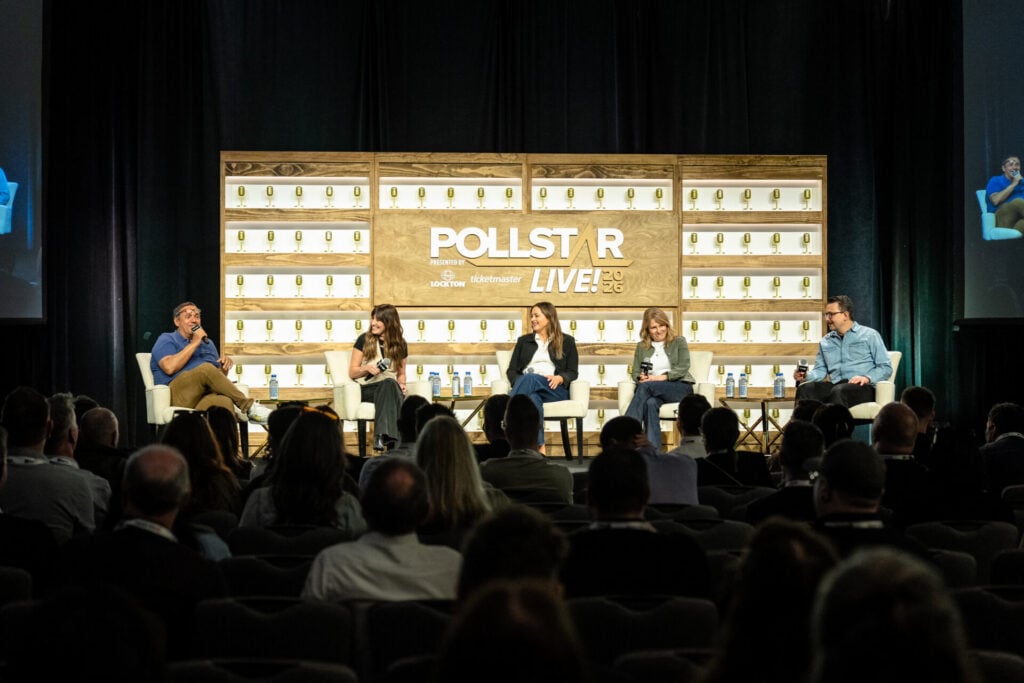
In Canada, the touring olive branch is a maple leaf with North American cross-border touring on the rise and a growing number of international acts appearing in Canada’s lesser-known markets.
Moderated by Joey Scoleri of Live Nation Canada, the Pollstar Live! 2026 panel included Lindsey Myers of CAA, Alex Patton of Oak View Group (Pollstar’s parent company)/TD Coliseum in Hamilton, Ontario, Tricia Silliphant of Scotiabank Arena/Maple Leaf Sports & Entertainment in Toronto, and Alex Vyskocil from Live Nation based in Calgary, Alberta.
On the topic of cross-boarder touring, Myers observed, “It seems to me that we’ve never had more across Canada tours. We’ve never had more artists coming from all over the world to tour markets in Canada. …In markets that they would never even have thought of playing cities they’ve never heard of.”
U.S. artists who have exhausted summer amphitheater runs are turning to Canada.
“We just did this with Darius Rucker last summer, where we needed to go and give the U.S. a break so we did a cross-Canadian tour in the arenas,” explained Myers. “It was incredibly successful. It gave him an opportunity to go invest in a fan base that he may not have fully invested in prior to that. So, it’s those kinds of growth opportunities for our artists that really make Canada a dream, right next door.”
Not only are more artists touring Canada, they are playing longer runs according to Vyskocil.
“We’ve definitely seen a change as more agents are looking to play more dates,” he said. “If you look at a bunch of bands like Bryan Adams, he’s doing 25 plus dates. Another domestic artist, Three Days Grace is doing 25 shows across Canada over two-year period – secondary markets and majors. International artists like The Offspring are doing 16 plus dates. So, people are going deep.”
Markets driving the surge include Halifax in eastern Canada and mid-markets in Ontario such as Sault Ste Marie, which are selling out 4,000-cap venues. Vyskocil said that extending the length of the tour helps manage cost.
“Every artist is different. Some of them want to do three or four markets. Some of them want to do eight,” he explained. “One of the things I’m finding is that you need to do 12 to 14 markets to make the budgets work.”
The influx of talent presents scheduling challenges for Silliphant, who is already working around schedules for nine sports teams including the NBA Toronto Raptors and the NHL’s Toronto Maple Leafs.
“I think the challenge is always finding that sweet spot in terms of when we actually have avails and we have the ability to book shows,” said Silliphant, who submits 80+ dates a year to each league. “If you can get to us before we have to submit the schedules to the leagues, that’s a really great time to do it.”
With the recent opening of TD Coliseum in nearby Hamilton after a $300 million renovation, the market has become a twofer.
“There’s been a lot of hesitancy of playing Toronto and Hamilton on the same run, and we’re starting to prove the model more and more,” said Patton. “Triumph is a good example. They weren’t really sure how the tour would perform and both of our venues are on the trajectory to sell out that show. …As we build more stories like this, and we see artists like Cardi B and Ne-Yo and Triumph and Hilary Duff going up at the same time, announcing both markets and both being able to sell out, we’ll be able to build that story and more and more bands will be more confident about playing both markets on the same run.”
Acts including Nine Inch Nails are also opting to play Hamilton on a second run after playing Scotiabank Arena during the first leg. Increasingly artists are playing Toronto and Vancouver and then coming back to do Hamilton, Montreal and Ottaway.
The festival market is providing an additional platform for discovery – especially for artists that aren’t ready for a headline tour to build a fanbase. But tariffs and the exchange rate have presented persistent challenges.
“No question that tariffs and exchange rates were really challenging for the last year, year and a half, and that made the festival business challenging and difficult in a big way,” stated Myers. “I’m sure lots of people in this room felt that in various degrees. So, we had to get pretty creative around that.”
What they’ve done is focus on developing the next generation of headliners. Easy routing between festivals during a condensed summer season is also beneficial.
“What’s really nice about the ecosystem in Canada, is the routing that exists between those festivals,” said Myers. “So, you aren’t just playing them one at a time. You can route Ottawa and Festival d’été de Québec and even though it’s not necessarily drivable Calgary Stampede or Cowboys all in the same bucket, which helps with some of those costs as well.”
Economic challenges are hitting venues, too. Silliphant said costs at Scotiabank Arena have increased 3% to 5% each year since the pandemic.
“It really behooves venues to figure out all the different ways to try and offset those costs, because we can’t necessarily pass them all on,” she said. “One thing that we’ve tried to do being the new building in the market is price ourselves to be competitive to Toronto and be a little bit lighter on some of our expenses to help make sure that the artist is going to see the same return,” added Patton. “So, that has been challenging, because we are trying to keep our prices a little bit lower and still produce the same level of show.”
FREE
 Daily Pulse
Subscribe
Daily Pulse
Subscribe
 Daily Pulse
Subscribe
Daily Pulse
Subscribe