
Pollstar Live! 2026: The Power Of Female Fandom
The music industry has evolved rapidly over the decades, especially in the modern digital age with companies utilizing the myriad tools available to develop the business as well as artists, and women are the ones leading that charge.
Female music fans are essential to all facets of the live entertainment industry, so much so that artists, managers, promoters and venues are focusing their marketing efforts on that fandom.
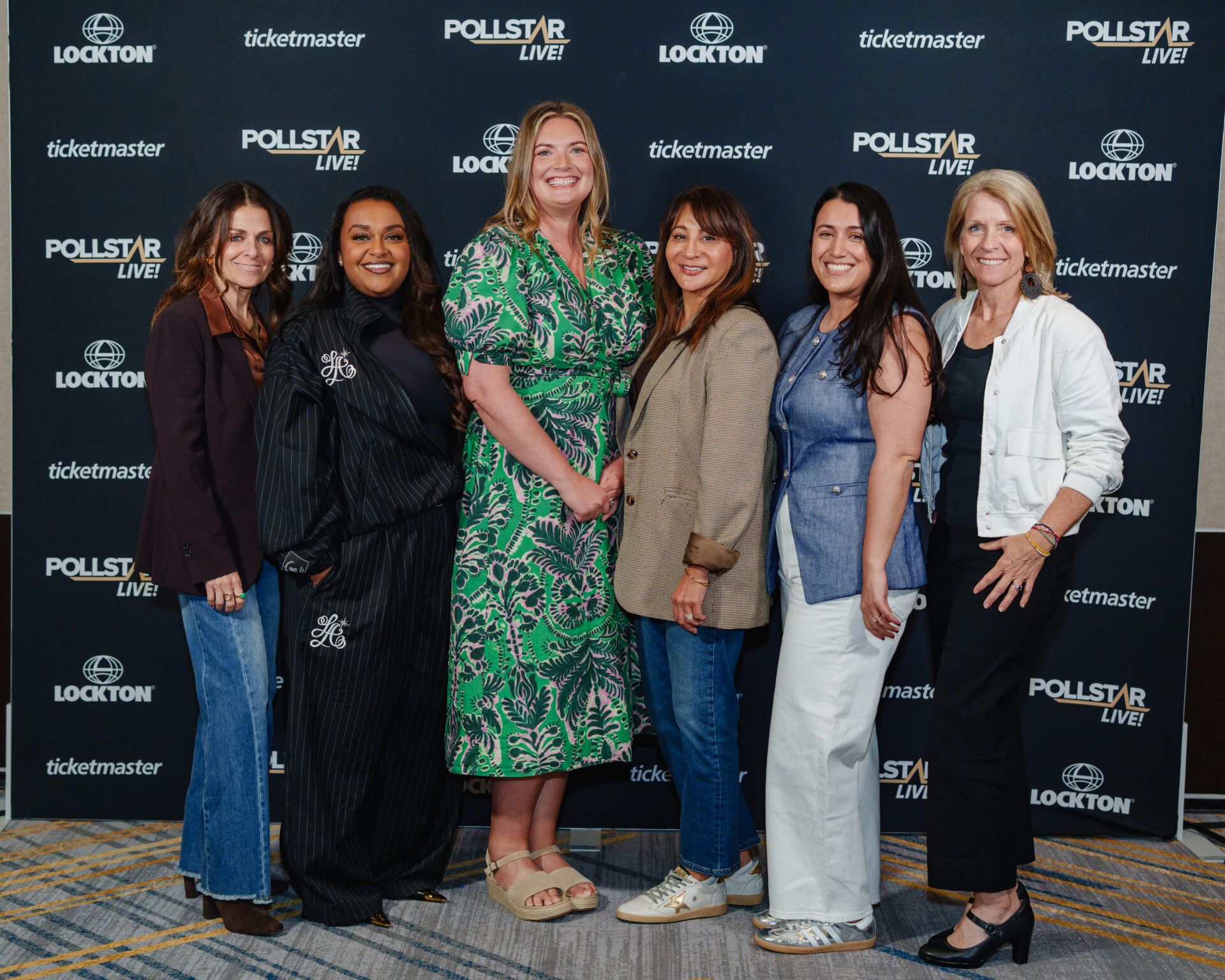
Pollstar Live!, the leading conference for live professionals, hosted a panel, “The Power of Female Fandom,” to discuss the growing trend and how the business can maximize growth in the female-forward era of music. Thayer Lavielle of The Collective moderated the conversation and was joined by 10Q Management’s Lydia Asrat, Christy Castillo Butcher of SoFi Stadium and Hollywood Park, Ali Harnell and Alisha Strother of Live Nation and American Express’s Janan Morgul at Loews Hollywood Hotel April 15.
“We’re not just consuming—by we, I mean women—music,” said Lavielle. “We’re also organizing the ecosystems around music. That’s changing how this whole business has been growing. Today, 77% of women listen to online audio each month. Gen Z women are attending more live events than men. … We’re super powerful consumers. We’re huge fans, and yet, we’re not necessarily seeing all the things we want to see or haven’t been given the experiences that we necessarily want.”
Castillo Butcher, senior vice president of programming at SoFi Stadium and Hollywood Park, believes that change can happen when the business starts considering women more in not only senior positions behind the scenes but also fans when planning music events.
“Women need to be thought of not as attracting but from the beginning, building with strategies from the beginning,” said Castillo Butcher, who brought some data to drive home her point. Women account for 65% of SoFi Stadium’s non-NFL ticket buyers, and it’s 62% at YouTube Theater, which is located within the stadium property.
Eighty-three percent of the fans at BTS’s SoFi Stadium shows were female fans. For Stray Kids, it was 81%; Chris Brown was 80%; and Bruno Mars and Julión Álvarez were at 71%.
Ali Harnell, who leads Live Nation Women as well as the company’s global touring division, isn’t surprised to hear such numbers. Live Nation is well aware of how significant female fandom is to their business and how consistently they show up for their favorite artists, whether they are male or female.
She highlighted the All Things Go festival as a good example of building a community and giving a platform for women of all ages and the LGBTQ+ community to gather and as a launchpad for female artists.
“I saw a place where you can see that these fans feel so safe and so served and seen and heard, and if we can continue to build those platforms and give artists an opportunity to platform themselves and fans an opportunity to show up in the community,” Harnell said. “To me, it’s this future of touring pipeline that we were helping to build that powers this whole thing.”
Strother, vice president of fan insights at Live Nation, says that what distinguishes female fans from men is their emotional intensity for art and the escapism they feel when going to a live event.
“In our biggest study ever with 40,000 consumers across the globe, we asked if you could only have one form of entertainment for the rest of your life, what would it be?” Strother said. “Everybody collectively chose live music and concerts as the No. 1 ride or die. But women were 38% more likely to choose it than men. So that really showcases live is something that she really can’t live without.”
That data corroborates what companies like American Express, which work alongside promoters like Live Nation, have seen over the years.
Morgul, vice president of global music and entertainment sponsorships at American Express, acknowledged that women are the “most engaged fans” and most willing to participate in sponsored events and presales.
“We’re partnering with some of the most relevant artists with massive global range,” she says. “Our focus is on co-creating with artists to make sure we’re giving their fans opportunities to connect with each other.”
Artists are starting to understand the power female fandom wields in entertainment, Asrat says, and that women are the ones driving rollouts of all kinds, from presales to album launches.
“I think that a lot of artists can do a better job at understanding that they have that right now,” she adds. “The music industry is still trying to work through the ecosystem of male domination, which we do have, but the women are understanding that, and they are doing a lot of giveaways and a lot of things during the rollout that are focused on women.”
FREE
 Daily Pulse
Subscribe
Daily Pulse
Subscribe
 Daily Pulse
Subscribe
Daily Pulse
Subscribe