
How The Trump Administration’s Anti-Green Policies Are Affecting Sustainability At Live Venues
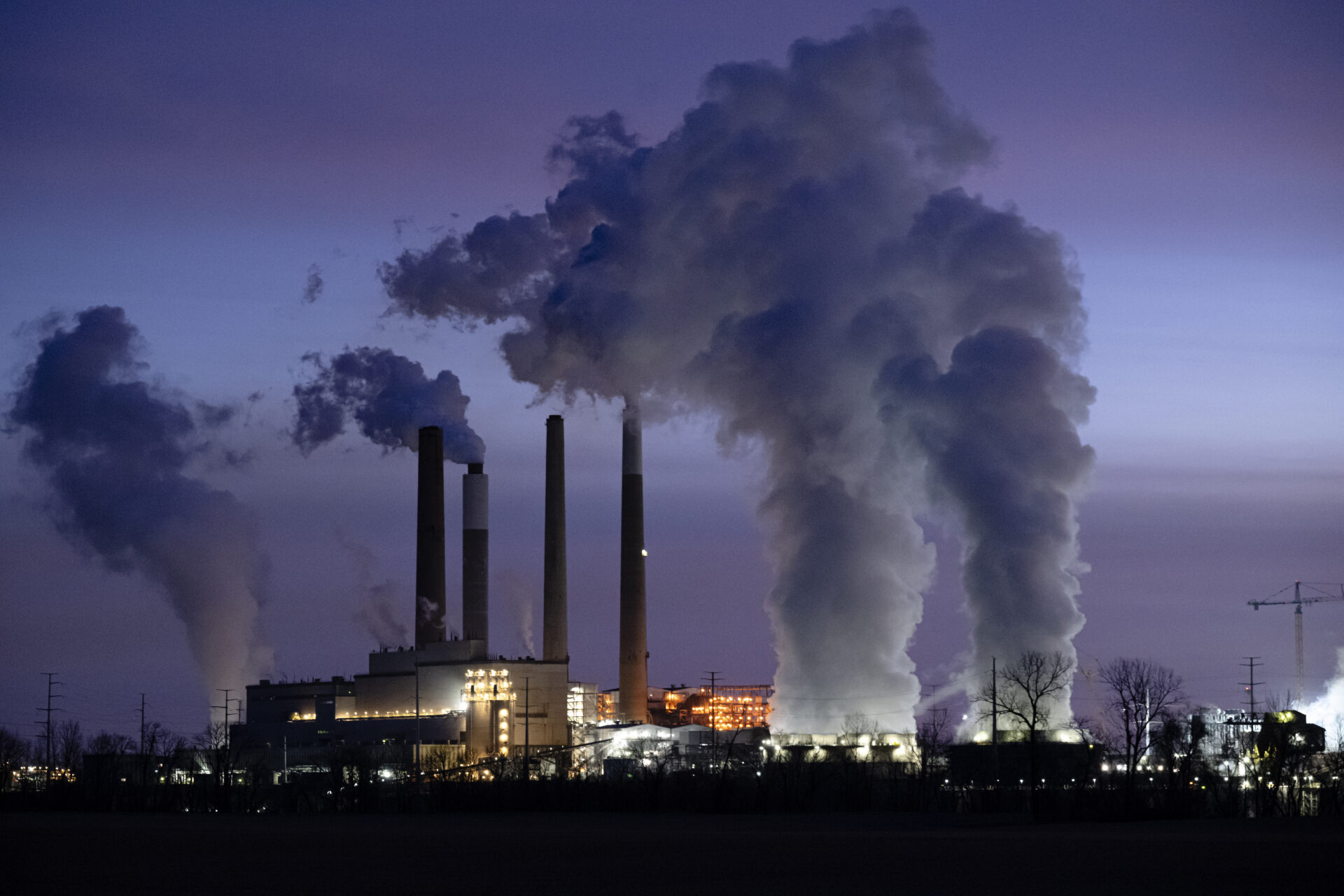
There doesn’t seem to be a whole lot to celebrate this Earth Day, especially when it comes to recent anti-environmental policies enacted or proposed by the Trump administration.
February saw the administration revoking the Environmental Protection Agency’s 2009 “endangerment finding” that classified carbon dioxide and other greenhouse gases as a threat to public health and welfare. And the next month, news broke that the U.S. government is paying $1 billion to a French energy company to refund two U.S. offshore wind leases, with the funds invested in fossil fuel projects. The first week of April, the White House released its budget proposal for the next fiscal year, which included slashing funding for the National Science Foundation and Environmental Protection Agency by more than 50%, as well as cutting the budget for National Oceanic and Atmospheric Administration by nearly 27%.
Meanwhile, citizens and environmentally-minded businesses alike – including live music venues – are still grappling with the effects of the One Big Beautiful Bill (OBBB), which critics like Patrick Drupp, director of climate policy for the Sierra Club, have called “the most anti-environment bill in history.”
Anti-environmental components of OBBB include rolling back incentives and tax credits under the Inflation Reduction Act for clean energy technologies including solar and wind projects. Music venues looking to install solar projects can still qualify for the Investment Tax Credit – but have to hustle to begin construction.
“The ITC goes back to 2006. It was actually first passed under a Republican administration. And those [tax] credits were expanded under Biden with the Inflation Reduction Act. … It pays for up to 50% (minimum of 30%) depending on certain parameters of the cost of the solar project in the form of a tax credit,” explains Michael DeCaluwe, President of Nania Energy Advisors, which works with venues including Chicago’s Wrigley Field and San Francisco’s Oracle Park.
“As part of the Big Beautiful Bill, they didn’t end it immediately. There’s an off-ramp. You need to pass one of the two thresholds to qualify for that credit. It’s an either/or. The first deadline is July 4 of this year, where if you start a project [and] you qualify, you’ve got four years to complete it. … There’s a second option and that’s if you have your project completed and energized by Dec. 31, 2027. So you’ve got a year and a half to complete the project … [and] the grid has to plug in and certify completion of the project. If you do that by the end of next year, then you also qualify for the tax credit.”
He adds, “What we expect though is that there will be a big push for solar. So, there will likely be supply chain constraints on solar and companies that are in a rush to meet that threshold because of the size of the tax credit. We saw two other changes in 2016 and 2020 to the tax credit. And when those came there there was a huge infusion of projects coming online.”
Chris Castro, EVP, Chief Sustainability Officer and Founding Director at Climate First Bank, says that with higher electricity demand and electricity rates, and the sunset of tax credits, this is potentially going to have an impact on rising operational expenses, which could be a real threat to venues. Climate First Bank offers personal and business services as well as mission-driven products such as rooftop solar and credible carbon offsets while supporting initiatives such as affording housing and education rather than investing in fossil fuels.
“I want to be clear that there is still a business case for venues to make investments in energy efficiency and in solar without the tax credits,” says Castro, who was an appointee in the Biden administration and served at the Department of Energy. “And what we offer at Climate First Bank is low-cost financing … all of our loans don’t require any rebates or tax credits to make the financing work. In other words, we underwrite the loan without the anticipation of those incentives even being paid.”
Castro points out that clean energy solutions are a way to mitigate the rise in utility rates, which are expected to continue increasing, especially with the demand for AI data centers.
“Technologies like solar and investing in green building solutions, they’re not just good for the environment. They actually are cost-saving strategies to drive affordability and to drive more value and risk reduction ultimately for the business. … The good news is clean energy is not a snake oil solution. It is a win-win situation,” Castro says.
And despite the current administration’s efforts, you can’t (totally) stop progress.
“Interestingly enough, last year, 92% of all new energy that was put online on the grid was carbon-free clean energy – solar, wind, or batteries. In Trump’s first year, even as they were rolling back all of these incentives,” Castro says. “Ultimately, the market is what’s determining what’s getting installed and the market cares about what’s the cheapest and most affordable and most reliable source of technology. It just so happens to be clean energy.”
Beyond OBBB, Katherine Tsantiris, Director of Government Relations at Ocean Conservancy, comments on the Trump administration’s overall anti-environmental policies and says, “The administration has made a huge pivot away from renewable energy, offshore to more extraction of oil and gas. … Anything that is going to make climate change worse is going to make the challenges surrounding live events worse as well. … Music festivals, concerts, theater productions, they are all impacted by the environment around them and by extreme weather and under the worst-case scenarios of climate change that will get worse. We’ll see more extreme weather, we’ll see more sea level rise, flooding, extreme storms, wildfires.”
Looking toward solutions, Tsantiris and others recommend voicing support that state projects for renewable energy are able to move forward, along with calling on Congress to ensure agencies like NOAA have funding.
David Willett, SVP, Communications for the League of Conservation Voters, is looking ahead to the U.S. midterm elections this fall.
“There are a lot of folks that are up for election in the fall that voted for [One Big Beautiful Bill], and we’re going to be talking to voters about that. And hoping that influences the choices they make in the fall,” he says. “There’s also a lot of work going on at the state level and there’s a lot of things states can do to accelerate clean energy production in their state. And we work with a lot of states on that. People can be encouraging their state governments and kind of picking up the slack where the federal government is just woefully behind.”
FREE
 Daily Pulse
Subscribe
Daily Pulse
Subscribe
 Daily Pulse
Subscribe
Daily Pulse
Subscribe