
How Live Nation’s Amphitheater Business Could Change
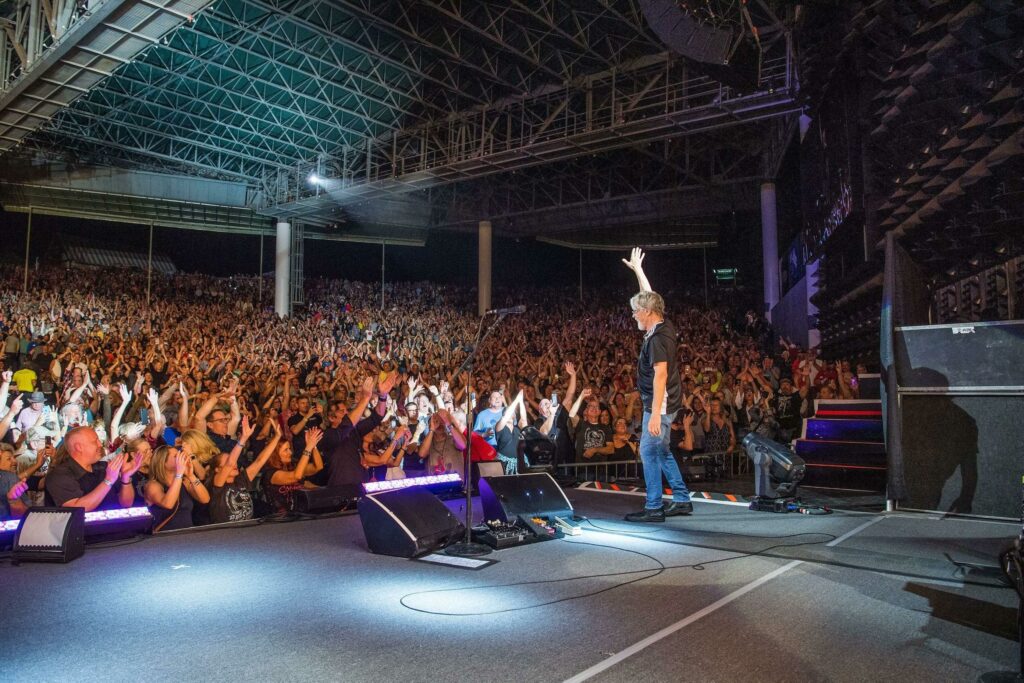
Photo Chris Schwegler for 313 Presents
When it comes to domestic amphitheaters, the recent states’ verdict against Live Nation could significantly weaken control of the company’s massive outdoor presence. According to Live Nation Entertainment’s 2025 annual earnings report, the company owns 10 amphitheaters, has an equity interest in two more and operates a whopping 66 amphitheaters – for a total of 78 sheds all with a capacity of 5,000 to 30,000.
The initial DOJ settlement, which is still pending, directly targeted 13 Live Nation amphitheaters for divestment and/or release of control, which could vary significantly from market to market.
While the penalties for the states’ suit is still unknown, it seems likely that they will exceed the DOJ settlement. The wording about “Artist Access to Amphitheaters” from the proposed remedy of the suit states: Live Nation will allow artists to rent amphitheaters owned, operated, or controlled by Live nation regardless of whether the artist also retains Live Nation to provide promotional services. Live Nation must also offer rental terms to artists using a third-party promoter that are at least as favorable as those offered to Live Nation-promoted artists. For the avoidance of doubt, Live Nation may not refuse artists access to its amphitheaters where the artist has engaged a promoter other than Live Nation to secure access to a Live Nation amphitheater.”
The antitrust finding hits amphitheaters specifically. The jury didn’t just rule on ticketing it found that Live Nation monopolizes the market for large amphitheaters and it tied access to those venues to its promotion business. The result is that the way Live Nation controls routing, promotion and access to its amphitheaters is subject to remediation.
Far from over, the likely near-term changes boil down to less exclusivity and broader access.
Even before final remedies, the DOJ settlement could signal what’s ahead with the end of exclusive booking agreements at 13 amphitheaters where the venues must allow competing promoters and ticketing platforms, with limits on retaliation if venues choose other ticketing providers.
What that means operationally is that artists may have more flexibility in routing tours and ticketing at those venues may become non-exclusive, with Ticketmaster no longer the automatic provider.
A subtle, but important distinction is that the language is often described as “divestiture” but Live Nation is not selling the venues, there are giving up exclusivity, not presence. Many fans will still see Live Nation shows – it just won’t be exclusive.
What’s important about the list of venues specifically covered by the DOJ settlement is that none of them are owned by Live Nation, though they are all under exclusive booking relationships.
They share some common characteristics: they are all owned by municipalities and mission-driven organizations or third-party owners; they are legally easier to unwind than company-owned assets; and they are in key routing markets including Texas, the Midwest and Northeast.
The 13 amphitheaters where exclusive Live Nation deals could be ending and the facilities would move to an open model from the DOJ settlement include:
- Empower Federal Credit Union Amphitheater, Syracuse, New York, which is publicly owned by Onondaga County and the state fairgrounds authority.
- Maine Savings Amphitheater, Bangor, Maine, which is owned by the city.
- Bethel Woods Center for the Arts, Bethel, New York, which is owned by a 501(c)(3) nonprofit out of the Gerry Foundation.
- Riverbend Music Center, Cincinnati, Ohio, which is owned by the Cincinnati Symphony Orchestra.
- Pine Knob Music Theatre, Clarkston, Michigan, which is privately owned by 313 Presents.
- American Family Insurance Amphitheater, Milwaukee, Wisconsin, owned by the city.
- BMO Pavilion, Milwaukee, Wisconsin, also owned by the city of Milwaukee.
- Brandon Amphitheater, Brandon, Mississippi, owned by the city.
- Wharf Amphitheater, Orange Beach, Alabama, owned by the City of Orange Beach.
- Germania Insurance Amphitheater, Austin, Texas, owned by the city through the Circuit of the Americas complex.
- The Cynthia Woods Mitchell Pavilion, The Woodlands, Texas, owned by the nonprofit Center for the Performing Arts at The Woodlands.
- Ford Idaho Center Amphitheater, Nampa, Idaho, owned by the city.
- Walmart AMP, Rogers, Arkansas, owned by Walton Arts Center, a nonprofit tied to Walmart family philanthropy.
The venue owners would regain control of decision making and presumably need in-house talent buyers like other unaffiliated outdoor venues and would be free to select a promoter or talent buyer however they choose.
With remedies not reached yet for the guilty verdict relating to the 30-plus states, structural change to how amphitheaters will operate going forward is unclear but the verdict undermines the strategy that made them so powerful. The decision challenges the integrated model of artist/promotion/venue/ticketing in one ecosystem. The core amphitheater network is eventually where the real lawn chairs will hit the grass, and the model was a big part of the initial rollup of SFX which became Clear Channel Entertainment and later Live Nation.
If remedies go as far as regulators want, amphitheaters could function more like neutral infrastructure, host shows from multiple promoters and use multiple ticketing systems that would be a structural change to the U.S. live business.
With far more venues operated by Live Nation than owned, the ruling may weaken Live Nation’s control but not its presence.
FREE
 Daily Pulse
Subscribe
Daily Pulse
Subscribe
 Daily Pulse
Subscribe
Daily Pulse
Subscribe