
Staying On Target: Live Nation Continues To Expand Its Global Footprint, Strengthening Its Position In Major Markets

Live Nation’s legal strategy may have changed following last week’s bombshell verdict, in which a jury found the live entertainment giant operated as a monopoly, but its mission remains intact: global expansion through acquisitions and investments.
A week after the big news that shook the booming live industry, it was business as usual for Live Nation, which announced its investment in Louder, an independent promoter in the United Kingdom specializing in electronic music events and outdoor shows.
It’s yet another addition to Live Nation’s vast portfolio, which has grown exponentially over the past decade, especially post-COVID.
According to the company’s recent 2025 financial report, it connected “159 million fans to over 11,000 artists at 55,000 events” last year. That kind of influence can only come from deals like the one made in the U.K., and Live Nation has inked even bigger ones in established and developing markets, even having a hand in the rapid globalization of Latin music through such transactions.
A solid chunk of its significant deals involves venues, whether they’re building one outright, leasing the property, managing bookings or having equity in it. Live Nation has 460 venues in its portfolio, 127 outside the U.S., and it expects that number to rise in 2026 and beyond, giving the company a financial cushion to soften whatever blows it may be dealt during the remedy phase.
Live Nation’s 2025 capital expenditures, mainly investments in venues and ticketing systems, exceeded $1 billion, a 66% increase from the previous year’s total of $632.63 million.
And that figure will likely be higher in 2026.
“Revenue generating capital expenditures for 2025 increased from the same period of the prior year primarily due to venue expansion and enhancements across North America and Latin America,” the company stated in its most recent financial report. “We expect capital expenditures to be approximately $1.1 billion to $1.2 billion for the year ending Dec. 31, 2026, with 85% dedicated to revenue generating projects, including $800 million to $850 million of spend relating to our venue expansion and enhancement plans.”
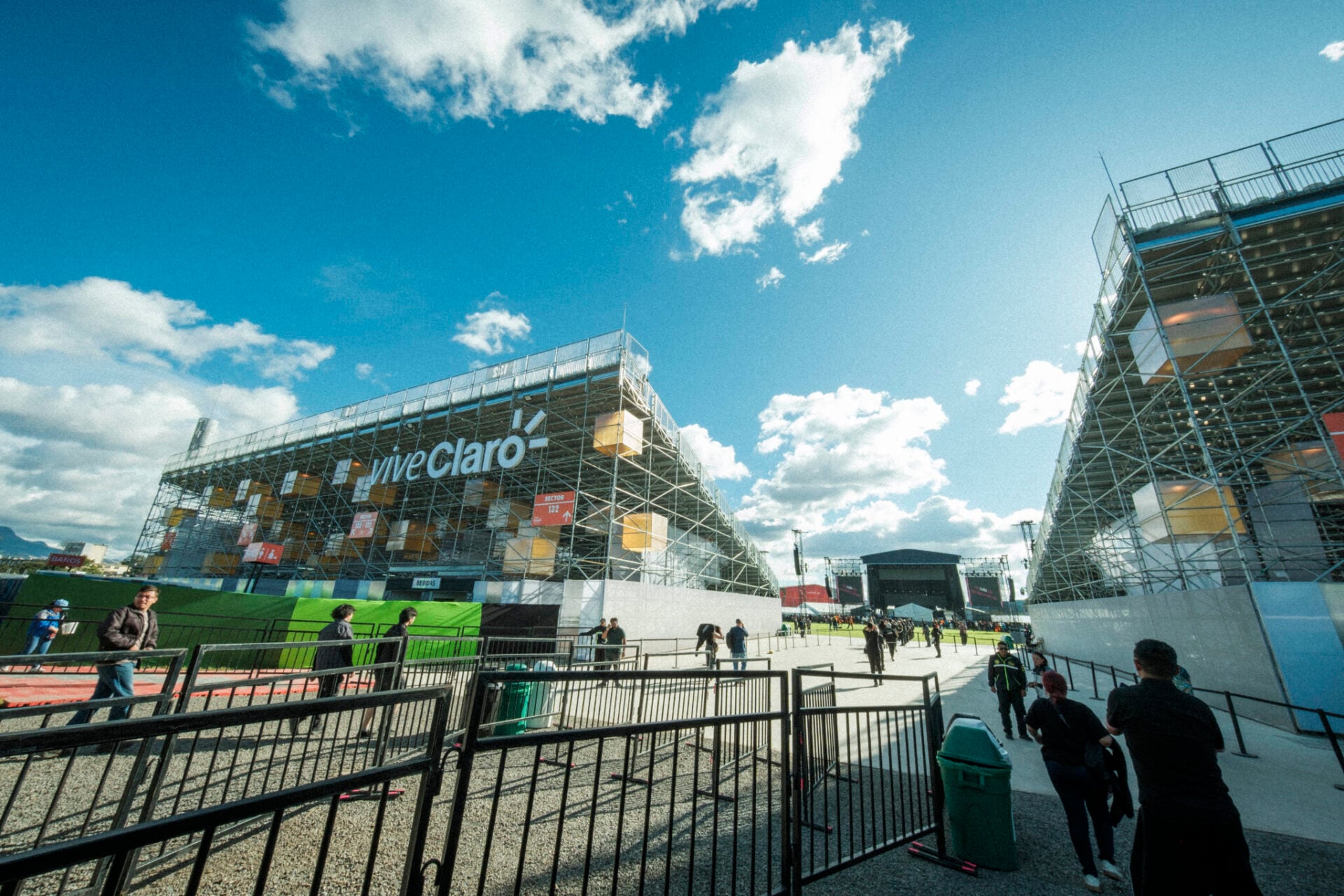
One of those projects was via OCESA, one of Live Nation’s hundreds of subsidiaries. The Latin promoter, which operates in Mexico and Colombia, opened the 40,000-capacity Vive Claro in Bogotá, drawing acts such as My Chemical Romance, Green Day and Shakira. The stadium is not only a game-changer for Colombia but also for the entire region, underscoring South America’s growth and the countries’ willingness to develop their markets as essential destinations for artists.
OCESA finished No. 4 on Pollstar’s 2025 Year End Top 100 Promoter Grosses chart with $970.3 million. Live Nation acquired an additional 24% stake in company last summer in a deal worth $646 million, far more than the $444 million it paid to acquire 51% of the promoter in 2021, underlining Latin America’s (and the music it produces) rapid growth in just five years.
The Latin promoter also happens to operate Estadio GNP Seguros, the world’s highest-grossing stadium, where Bad Bunny had eight sold-out shows in December and grossed $85.3 million off 517,736 tickets, according to Pollstar Boxoffice reports.
“Our investment in OCESA has been incredibly successful, and [OCESA CEO] Alejandro [Soberón] and his team have done a tremendous job utilizing the global Live Nation infrastructure to drive growth in Mexico,” Michael Rapino, CEO and president of Live Nation, said when the deal was announced. “Together we have more than tripled the number of fans attending our concerts in Mexico since 2019, making Mexico now the third largest music market in the world, and I expect we have many years of strong growth ahead of us.”
Rapino can also expect growth in another busy Latin American market following Live Nation’s majority stake acquisition of Movistar Arena in Santiago, Chile, which was among the top five grossing arenas in the world with over 2 million tickets sold.
Live Nation has made similar venue deals in other major LATAM markets, including Buenos Aires, but its interests extend beyond established cities. In January, the company announced a majority investment in Bizarro Peru, strengthening its presence in a developing market, specifically in Lima, the nation’s capital, where Live Nation is opening an 18,500-cap arena.
And that’s just one region. Live Nation has been just as aggressive in Canada with the opening of Rogers Stadium in Toronto, as well as the Middle East, the U.K. and Europe, where it inked venue deals in Italy, Denmark, Portugal and another major one in France by adding Paris La Défense Arena to its stacked portfolio.
Live Nation is acting on the ever-evolving habits of consumers, many of whom are packing their bags to explore other worlds. Most countries experienced an uptick in travel in 2025, and music is one of several factors driving that trend, which is why Live Nation Asia partnered with Trip.com to bundle concert tickets with flights across key Asian markets, including Thailand, Singapore, South Korea, China and Hong Kong.
A lot is happening globally, but that doesn’t mean American cities and buildings are being ignored. Live Nation, which dominates the U.S. amphitheater market, announced last summer that it was investing $1 billion in local venues to “revitalize” them and bring “more big shows to smaller cities across America.” The 18-month commitment includes buildings in Atlanta, Birmingham, Denver, Indianapolis, Nashville and Pittsburgh.
Additional U.S. buildings are also on the way, with Live Nation announcing three projects earlier this year. The entertainment giant will operate a KETTLER-developed 4,300-capacity music venue in Tampa that is expected to open in late 2028, and the company announced plans to propose a 2,500-capacity Bentonville Ballroom in collaboration with the Momentary in Northwest Arkansas. Live Nation is also slated to operate a 6,200-capacity amphitheater developed by Bedrock and Rock Entertainment Group in downtown Cleveland, and it’s set to open in a few years. In June, outside Minneapolis, Live Nation is set to open the 19,000-cap Mystic Lake Amphitheater in Shakopee, Minnesota.
“Our global footprint of venues continued to expand during the year with more new club, theater, amphitheater, arena and stadium opportunities around the globe planned in 2026 and beyond,” the company stated in its 2025 financial report. “… We are optimistic about the long-term potential of our Company and remain focused on the key elements of our business model: expanding our global platforms to connect artists and fans.”
Even with the verdict and punishments looming, it’s likely that optimism remains high, and it should. Live Nation was at the forefront of the globalization of various genres and artists’ growing reliance on touring for income, using its vast resources wisely to expand beyond its borders and invest in the world’s biggest stages to attract those acts.
FREE
 Daily Pulse
Subscribe
Daily Pulse
Subscribe
 Daily Pulse
Subscribe
Daily Pulse
Subscribe