
A North Wind Doth Blow: The UK Independent Spirit Remains High Amid Corporate Domination (Annual UK Focus)
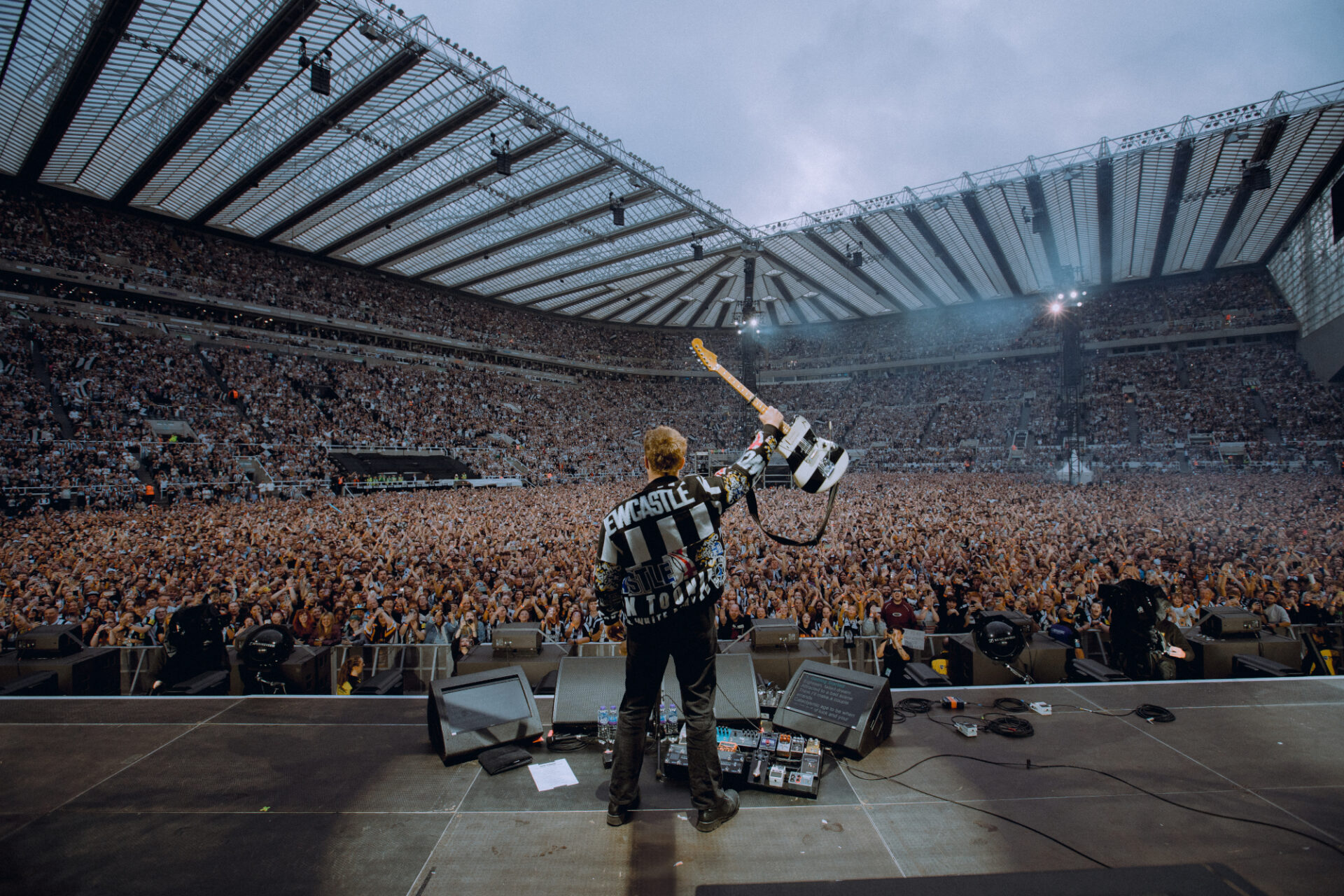
The UK has seen many concert milestones over the last year: the July 5 “Back to the Beginning” farewell concert for Ozzy Osbourne, featuring all original members of Black Sabbath comes to mind; Oasis “Live ’25” reunion in the summer; or Coldplay‘s 10-night homecoming residency at Wembley Stadium in August and September, which (allegedly) brought their historic three-and-a-half-year “Music Of The Spheres World Tour” to an end.
Promoted by SJM Concerts, Metropolis Music, and Live Nation, the shows moved a total of 791,000 tickets at a $131,700,000 gross. That’s right: 10 shows that generated more than a tenth of a billion in gross revenues at the box office.
No wonder Coldplay leads Pollstar‘s ranking of the top 100 artists touring the UK in the past 12 months. And even though that accolade is less prestigious than being crowned Pollstar’s Top Touring Artists of the Millennium last December, it’s still an impressive feat considering the competition they’ve had all year from the likes of Beyoncé, Kendrick Lamar and SZA, Dua Lipa, the list goes on.
The above-mentioned artists and tours played an important role in giving Live Nation UK its best year to date, and 2026 looks to be even stronger, according to Denis Desmond, Chairman, Live Nation UK & Ireland, who said, “This year is shaping up to be our strongest yet, with ticket sales set to surpass the 20 million achieved in 2025. Our 2026 schedule already includes sold-out stadium shows from global superstars such as Metallica, Bon Jovi, The Weeknd, Harry Styles, BTS, Bruno Mars, Bad Bunny, System of a Down and Calvin Harris.”
The world’s largest promoter is also “performing exceptionally well” across arenas and sheds, chalking up major sell-outs from artists including Alanis Morissette, Teddy Swims, The Cure, Florence + The Machine, Katy Perry, The Lumineers, Kings of Leon, Lorde, RAYE, Olivia Dean, and Dave, as well as rising talent, including “CMAT, Geese, Keo, Amble, Kingfishr, Lola Young and Florence Road,” says Desmond.
SJM Concerts ranks second on this year’s UK promoters chart, thanks to both Oasis’s incredible 17 date reunion tour and Coldplay’s record breaking 10-night residency at Wembley Stadium, as well as healthy indoor business from the likes of Lorde, Wolf Alice, JLS, Mumford & Sons, D Block Europe, Lewis Capaldi, Miles Smith, Gracie Adams, Olly Murs, and Jamiroquai, amongst many others.
A personal highlight for SJM director and promoter John Cornwell was “Radiohead’s four-show residency at The O2, breaking the house attendance record each consecutive night, and Yeah Yeah Yeahs’ two sold-out nights at the Royal Albert Hall. We’ve also been proud to present a number of other outdoor shows including Sam Fender at London Stadium and Stereophonics’ ‘Stadium Anthems Tour.’”
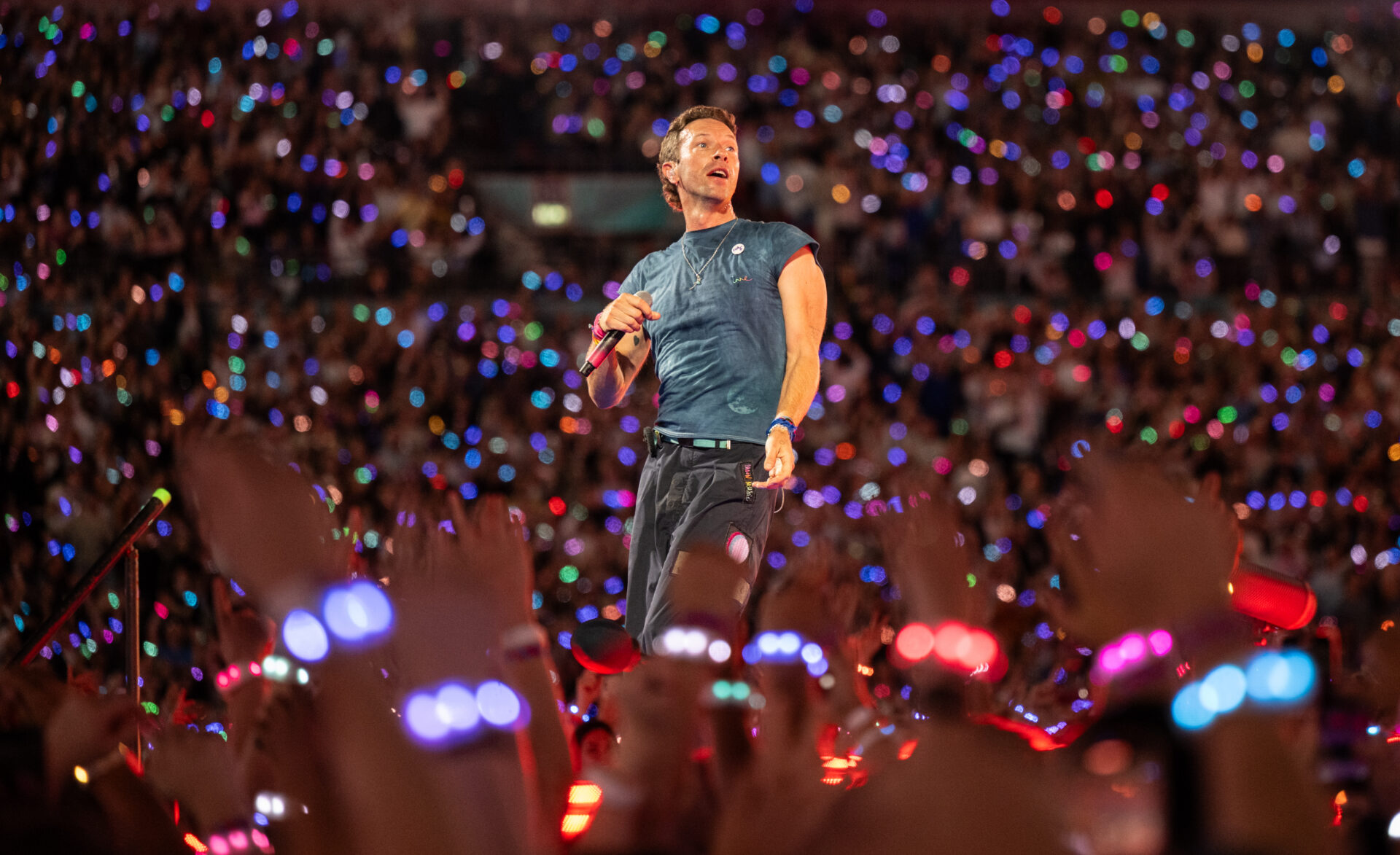
Fender is one of the UK’s biggest stars right now, coming fresh off two BRIT Awards wins for Song of the Year (“Rein Me In” with Olivia Dean) and Alternative/Rock Act, which he also won in 2025 and 2022. He played three concerts at St. James’ Park stadium in his hometown of Newcastle, June 12-15, moving 150,041 tickets for a $14,643,784 gross, according to box offce reports from promoter Kilimanjaro Live/KMJ Entertainment.
Kilimanjaro Live director Steve Tilley ranks the shows amongst the greatest moments of his career. “I’m a working class lad from the North East of England that supports Newcastle United,” he says. “I was only a kid when The Police were a band. I was only a kid when Dire Straits were a band, and obviously Sting and Mark Knopfler are Geordie legends. Sam [Fender] is up there now, and to get to do his shows in the place we call home is actually a dream come true.”
Two other Kilimanjaro Live clients performed three nights at their home stadiums last year: Ed Sheeran, a lifelong Ipswich Town supporter, played Portman Road stadium July 11-13 (83,838 tickets sold; $9,557,249 grossed); while Stereophonics took over Principality Stadium Cardiff, the National Stadium of Wales, July 11-12 (109,644 tickets, $11,225,102 grossed).
Kilimanjaro Live’s 2025 client list also features Hans Zimmer, Gorillaz, Ludovico Einaudi, Andrea Bocelli, Lang Lang, Craig David (handled by KMJ CEO Stuart Galbraith); Jalen N’Gonda, The Wombats, Kae Tempest, Transcenders, Faye Webster, Gillian Welch, David Rawlings, Parcels, Feeder, Marc Scibilia (Tilley); Bullet For My Valentine, Trivium, Papa Roach, Levellers, Sisters of Mercy, Babymetal, Wasp, Atreyu, Refused, Graham Nash, Suzanne Vega (Alan Day), a healthy comedy business overseen by Michael Clapham, and more.
According to Tilley, “It proves that there may be multinational companies doing global deals, but we’re still operating at the highest levels as a UK-based promoter [backed by German live entertainment giant DEAG]. The Mercury’s went to Newcastle. The Brits went to Manchester. Our three biggest individual concerts last year all took place in provincial British cities, Cardiff, Newcastle and Ipswich. It proves that the domestic market is really important. It doesn’t have to all be about London. And it doesn’t always have to be about global American artists either, as much as I love working with them.”
Bristol in the West, another UK city steeped in musical history, is building a 20,000-capacity arena scheduled to open in 2028. Brighton in the South now has two firmly established festivals besides the long-standing Great Escape, which returns for its 20th anniversary in May. The first is On The Beach Brighton, inspired by Fatboy Slim’s legendary Big Beach Boutique rave in 2002. Brighton Psych Fest returns for its third edition to venues across the city in September, shining a light on some of the UK’s finest grassroots music venues, which are having a hard time in the current live economy.
As Tilley points out, the grassroots sector isn’t just where new artists hone their skills, but also where the professionals working behind the scenes learn their craft. “We need people who can rep shows, who understand ticketing. We need people who have the ambition to become promoters. The job is so all-consuming, the hours, the pressure, the competitiveness, the demands, it can be daunting. The industry has to find a way to encourage young people to become promoters, and offer a route in for those prepared to do the hard yards. Whether it’s sound engineering, tour managing, rigging, ticketing, marketing, production, etc. – all these roles need a constant supply of new people, which is why grassroots, to me, isn’t just about the artists, it’s about the whole ecosystem.”
Cornwell agrees: “We need to be both mindful and supportive of all pieces of the puzzle that creates our live grassroots circuit: all of the venues, artists and the staff who all make this possible. The Music Venues Trust has done some great work to support the sector over the past few years and I’m hopeful that, alongside the Live Trust and a number of other emerging initiatives, the decline can be arrested and allow new artists to flourish.”
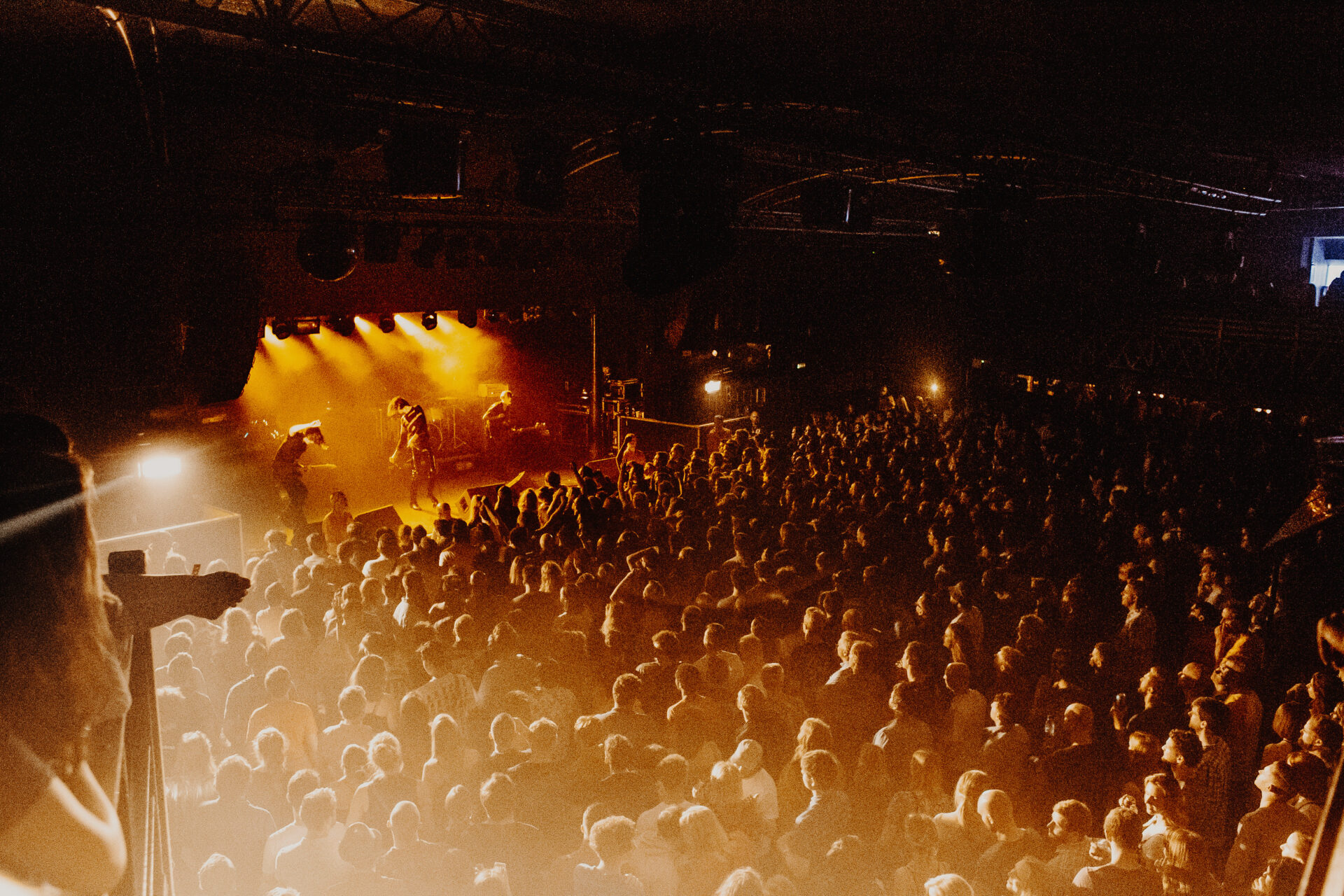
One grassroots company that is thriving in spite of the economy is DHP Family. Its portfolio of venues includes Rock City, Rescue Rooms, The Bodega in Nottingham; The Garage and Oslo in London; and Thekla in Bristol. Founded and run by George Akins, DHP Family also operates several festivals, and promotes concerts across the UK – making it the last of a dying breed of truly independent businesses dealing in all parts of the live ecosystem.
To play at the same game as the multinationals, says Akins, requires “being a specialist in your area. We have tastemaker events like Dot To Dot, Bearded Theory, or Footsteps; We have venues with pedigree coming out of their eyeballs. People want to play those stages and feel that history and soul. The teams in these places live, breathe and eat their venues. Most of our bar staff are in bands. Being grassroots, especially from the venue base, allows us to consider everything, including artists, who can have a career without necessarily becoming an arena act. We have methods to support those starting their careers through our small venues, and our ability to put small acts on festivals and support their growth. It’s a really key area of business, because there is going to be more of a gap between the stadium and the grassroots.”
Akins acknowledges the great promoters working at the corporate level, many of whom have a passion for developing new talent through the pipeline, and he’s right. As Desmond points out, “a third of the artists we promote are in the early stages of their careers – double what it was five years ago. We will also be celebrating the 20th anniversary of The Great Escape, our festival for emerging talent, this May.”
All reasons why Akins says, “It’s not all doom and gloom, but at the same time, their power is the worry. The more power that is concentrated in one place, the less choices we’re going to have.”
Size does matter, and not just for promoters, but agents, as well, according to former UTA and Coda agent Matt Hanner, who went independent with his own agency Runway in 2020, but wasn’t able to sustain the business. One of the reasons was that it has become very difficult to get lesser-known acts onto bills.
Says Hanner, “There are very strong relationships between certain festival producers and the bigger agencies, because they know that’s where their talent pipeline is going to come from. A lot of these events are not curated as artistically as they once were. It’s data driven, how certain artists might impact sales. Obviously people running events are always trying to sell tickets, but it just feels like it has become much more that way, especially for those that are controlled by big corporations. There’s just less incentive to be bold. Why waste your small slots on companies like ours, when you could do a favor for someone that might be giving you your headline act next year. The people you’re dealing with to book festivals
are no longer necessarily curators or even programmers. They’re talent buyers.”
It’s a word that gives Kilimanjaro Live’s Steve Tilley the creeps. “I don’t ever want to be referred to as a talent buyer,” he says, “I don’t want to take part in auctions. If I wanted to do auctions, I’d go and work in the property business.” He adds, “Every part of the food chain has to be able to make a pro”t, otherwise the whole ecosystem ultimately collapses. I have no problem with competition, but if the competition is so powerful, that it can basically price you out of the game, and if one company uses its might in the festival space to hoover up all the new talent going, an awful lot of artists are just going to get thrown off the other side of the scrap heap. Because you’ll end up running out of slots, and once you only focus on the ones that are creating traction on radio, TikTok or streaming, the rest will just get pushed aside. I’m all for healthy competition, but I’m vehemently against monopolies.”
The reason his independence is so important to Akins is quite simple: “I don’t really want to work for someone. I believe in what I do, I enjoy what I do, I think I have a good business idea working. I can make my own choices, and I’m able to do things without having to consult with a board. We just walk through the room, and we can have a natter, I can talk to the kids that just started. I like it. I like the ecosystem, and the way I can support things I’m interested in. I do okay, so I don’t need to sell. I’m happy not being part of that machine. I like to be in a rock and roll business, and that’s what lots of people like me want, as well. We’re in this industry, because we’re not going to get jobs in the normal world. This world is built for people that are different and able to grow and thrive in this environment.”
FREE
 Daily Pulse
Subscribe
Daily Pulse
Subscribe
 Daily Pulse
Subscribe
Daily Pulse
Subscribe