
Big Box Bonanza: Convention Centers Take Center Stage With $15+ Billion Development Boom
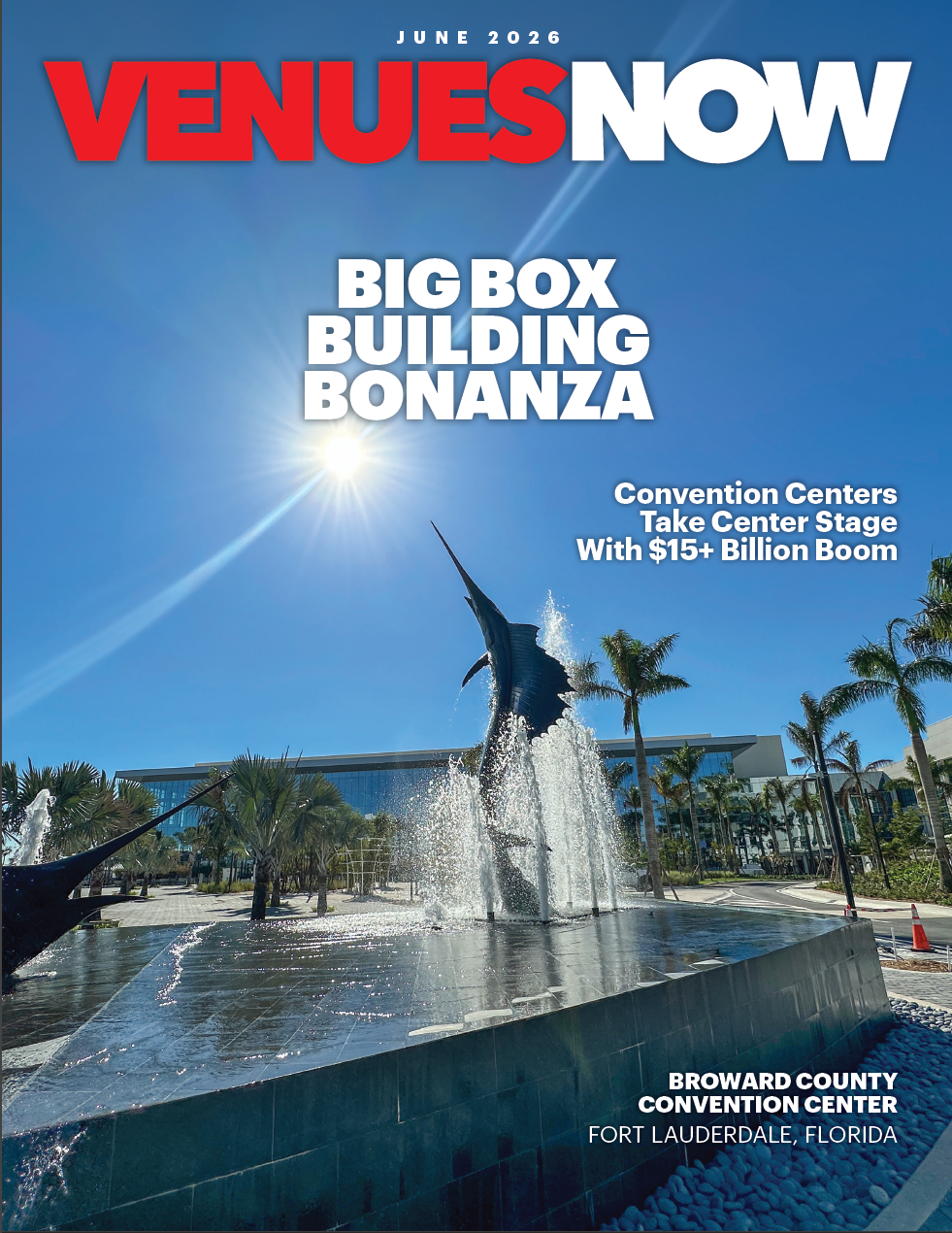
Convention centers have gone from big box to big development, with dozens of facilities under construction or in various stages of renovation and expansion across the U.S. with an estimated combined cost of some $15 billion.
Once relegated to empty lots on the outskirts of town, modern convention centers are being integrated into the fabric of the community and designed to be anchors for entertainment districts and destinations for local residents as well as out-of-towners.
The country is experiencing its largest convention center boom in decades, but the fuse was lit by the pandemic when facilities closed and operators had to reimagine how to remain relevant as gathering places and attract new business when the doors reopened.
According to the Center for Exhibition Industry Research (CEIR), the U.S. exhibition industry reached about 95.6% of 2019 activity levels by the end of 2024, the industry’s strongest post-pandemic performance.
“I believe that ecosystem was hit hardest,” says Michael Lockwood, Senior Principal at Populous. “But it also means there was an incredible pent-up demand for people coming back together. Early in the pandemic it was, ‘Conventions were never going to happen again.’ People were going to be meeting online and that was the future. What we understood and what the market found out is that people want to meet together, in person.”
Most convention facilities are city-owned and were considered essential economic drivers via tourism. For the general population, convention centers were usually out of sight and often out of mind.
“I would say in terms of public assembly, these are usually the largest buildings in the city. Larger than stadiums. Larger than arenas. So, they were built on a piece of land that could fit that building type,” says Lockwood. “If convention centers are successful, the city will grow toward them and in a lot of cases, around them, which presents a new problem, which is how do you expand this building if it’s been successful?”
Today the multibillion-dollar rebirth is being driven in large part by Texas and California including the $1.96 billion Los Angeles Convention Center redesign, which is scheduled to be completed in time for the 2028 Olympics in Los Angeles, and a proposed expansion of the San Diego Convention Center and waterfront, which could cost up to $3 billion.
Texas represents the largest concentration of convention center activity in the U.S. nearly topping $9 billion.
Major projects include the Kay Bailey Hutchison Convention Center in Dallas, with a full $3.3-$3.5 billion reconstruction and expansion tied to downtown revitalization; the George R. Brown Convention Center in Houston with a $1.4-$2 billion expansion and district redevelopment scheduled to be complete in 2028; the $1.6 billion Austin Convention Center, with the existing center demolished to make way for a larger modern campus in 2029; and the Fort Worth Convention Center, $606 million expansion, which nearly doubles convention capacity and is scheduled to be completed by 2030.
Renovations in Texas are tied to convention tourism, district development or conference infrastructure, which includes having access to adequate numbers of hotel rooms and transportation hubs that can serve thousands of guests.
San Antonio’s upcoming expansion at the Henry B. González Convention Center is projected to cost between $750-$900 million and is part of the city’s downtown redevelopment project. Corpus Christi is considering spending up to $500 million to develop its downtown waterfront and Hilliard Center complex. Fort Bend Epicenter Convention Center in Rosenberg, Texas, is looking at adding a new hotel at a cost of $236 million. And smaller venues are tossing a cowboy hat in the renovation ring, too, with the 1848 Event Center in Laredo, Texas, embarking on a $6.3 million refresh.
The Hotel Occupancy Tax (HOT) fueled the Texas convention center surge. Texas allows cities to use hotel occupancy taxes and related tourism taxes to fund convention center projects and adjacent “project venues.” That means cities can issue bonds, capture future hotel taxes, fund convention center districts and build supporting infrastructure without relying entirely on local property taxes.
Industry estimates place the number of major convention centers in the U.S. anywhere from 175 to 250 – although that number swells to more than 2,000 if you include smaller municipal meeting spaces including fairgrounds and expo centers.
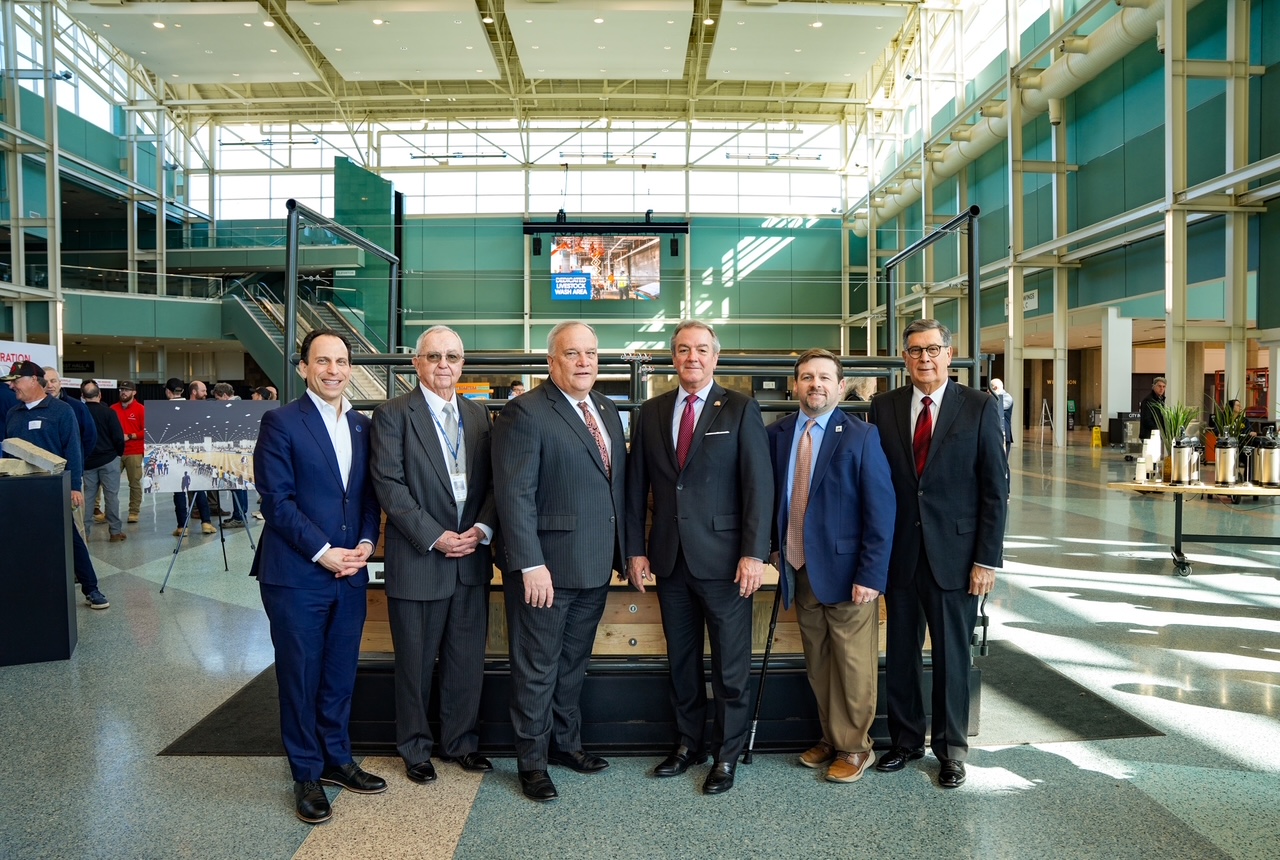
Some of those include the Kentucky Exposition Center in Louisville at $460 million, which should open later this year; Albany Capital Center’s $54.9 million expansion; Orange County Convention Center’s $560 expansion in Orlando; Las Vegas Convention Center’s $600 million campus renovation to be completed later this year; Ernest N. Morial Convention Center in New Orleans multi-phase $557 million renovation; the $190 million renovation of the Cobb Convention Center in Atlanta metro; and the $110 million modernization of the Hawaii Convention Center in Honolulu.
The biggest convention center investments are phased redevelopments, where parts open years before the entire facility or district is completed. Most projects are funded through combinations of hotel occupancy taxes, tourism development taxes, municipal bonds, public/private partnerships, state tourism incentives and convention district financing zones.
“Historically, the idea of the convention center was the loss leader around economic development, heads in beds and driving people to the community,” says Josh Kritzler, President of North American Venues & Content, Legends Global. “And that still remains true. But I think as the industry has gotten more sophisticated, the idea is that you can create more premium experiences, elevate the experience with so many choices. There are new ways to drive revenue and be competitive in a very competitive market.”
Cities are thinking about their convention centers as year-round revenue generators by attracting large trade shows, multiple simultaneous meetings, international conventions, activations around major sporting events like FIFA World Cup and NFL Super Bowl, political conventions and technology expos.
“Originally, convention centers were really conceived as a container,” offers Sheba Ross, Global Practice Director at design firm HKS. “What’s the biggest box I can get to accommodate the maximum number of people? No one was thinking about the experience as much as the capacity. … Suddenly, it wasn’t about what can the space accommodate. It became about connection.”
North Carolina is a growing convention market with a $387.5 million expansion and district redevelopment in Raleigh that includes doubling the size of the existing center, relocating the popular Red Hat Amphitheater a block away to accommodate a second convention center and the addition of a 600-room Omni headquarters hotel.
“Watching the steel go up at the new amp is a great visual representation of the strides we’re making toward this totally transformed downtown Raleigh,” says Kerry Painter, Executive Director of The Complex. “It’s the sprout of this growth that’s going to blossom into all these great new venues and moments here in Raleigh.”
Most new projcts are no longer standalone buildings and now include public plazas, entertainment districts, transportation infrastructure improvements, mixed-use real estate, waterfront activation and convention headquarters hotels, often driving the price tag to beyond $1 billion.
“Municipalities and communities realize how much of an economic impact convention centers are,” says Greg O’Dell, President Venue Management for Oak View Group, Pollstar’s parent company. “They’re really thinking more broadly about the convention center district – or the entertainment district – and how you can connect the dots in terms of local spaces where people work and play and also where people do commerce.”
The impact of a convention center is less about “heads in beds” and increasingly about being an incubator for future business growth – including relocation – in the city.
“People realize there are industries that are meeting in your spaces, in your buildings, that are bringing new business, in some cases, propelling your industry,” offers O’Dell. “Whether it’s medical or biomedical in Boston or financial in places like Charlotte, North Carolina, people are being very thoughtful about what kind of thought leadership comes into their city for these meetings.”
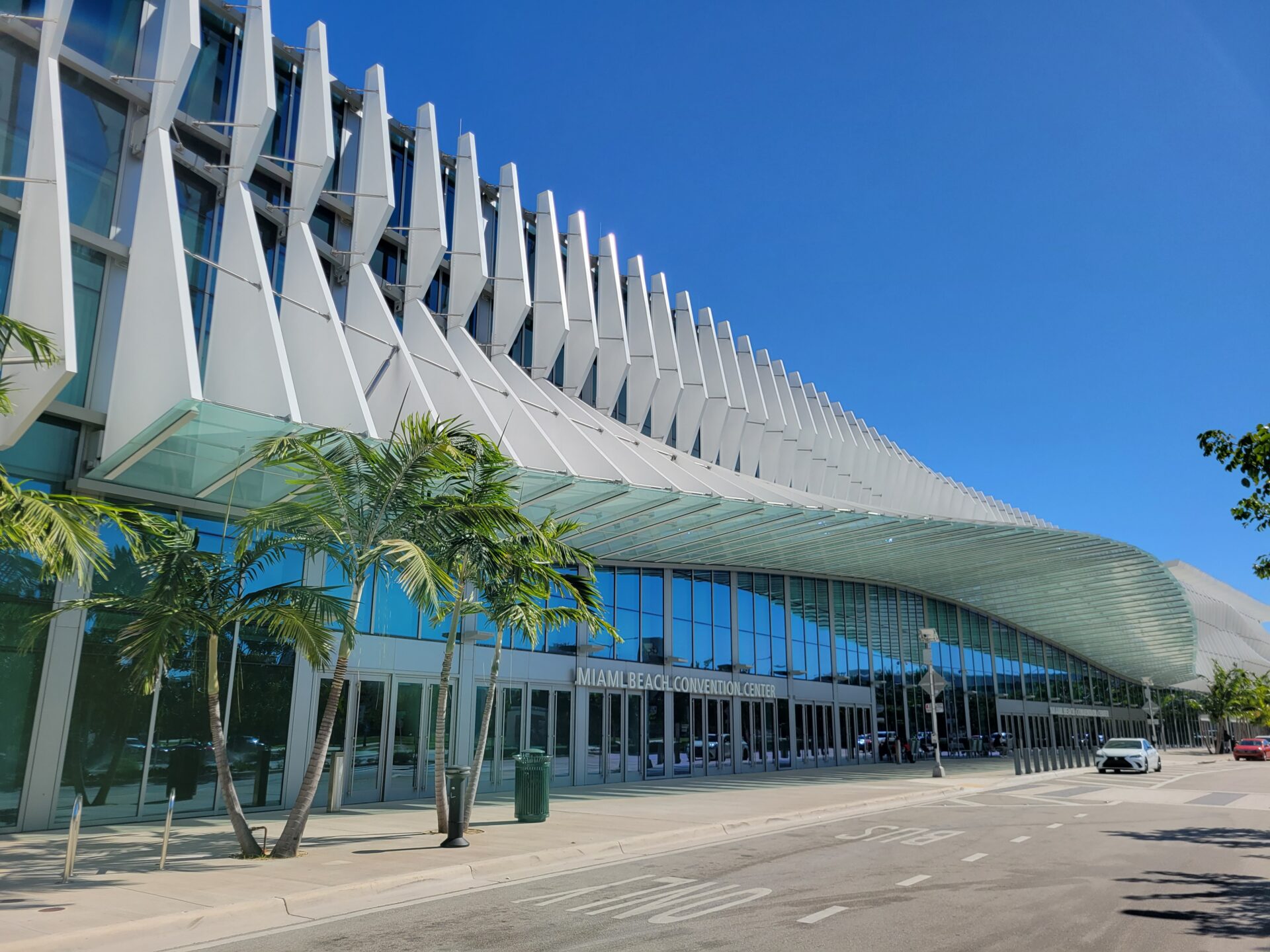
The Miami Beach Convention Center (MBCC) in Florida recently completed a $640 million full renovation and is now in the throes of building an 800-room Grand Hyatt headquarter hotel as part of the Miami Beach Convention Center District. The 17-floor hotel will provide approximately 90,000 square feet of indoor meeting and conference space, along with an additional 10,000 square feet of outdoor event space, complementing the convention center’s facilities.
“It’s a game changer,” says Freddie Peterson, General Manager MBCC. “It will unlock anywhere from 30% to 40% more business into the building, into the destination. The challenge most certainly has been the lack of a headquarters hotel and I think this is a tremendous opportunity to really go to the next level for the center.”
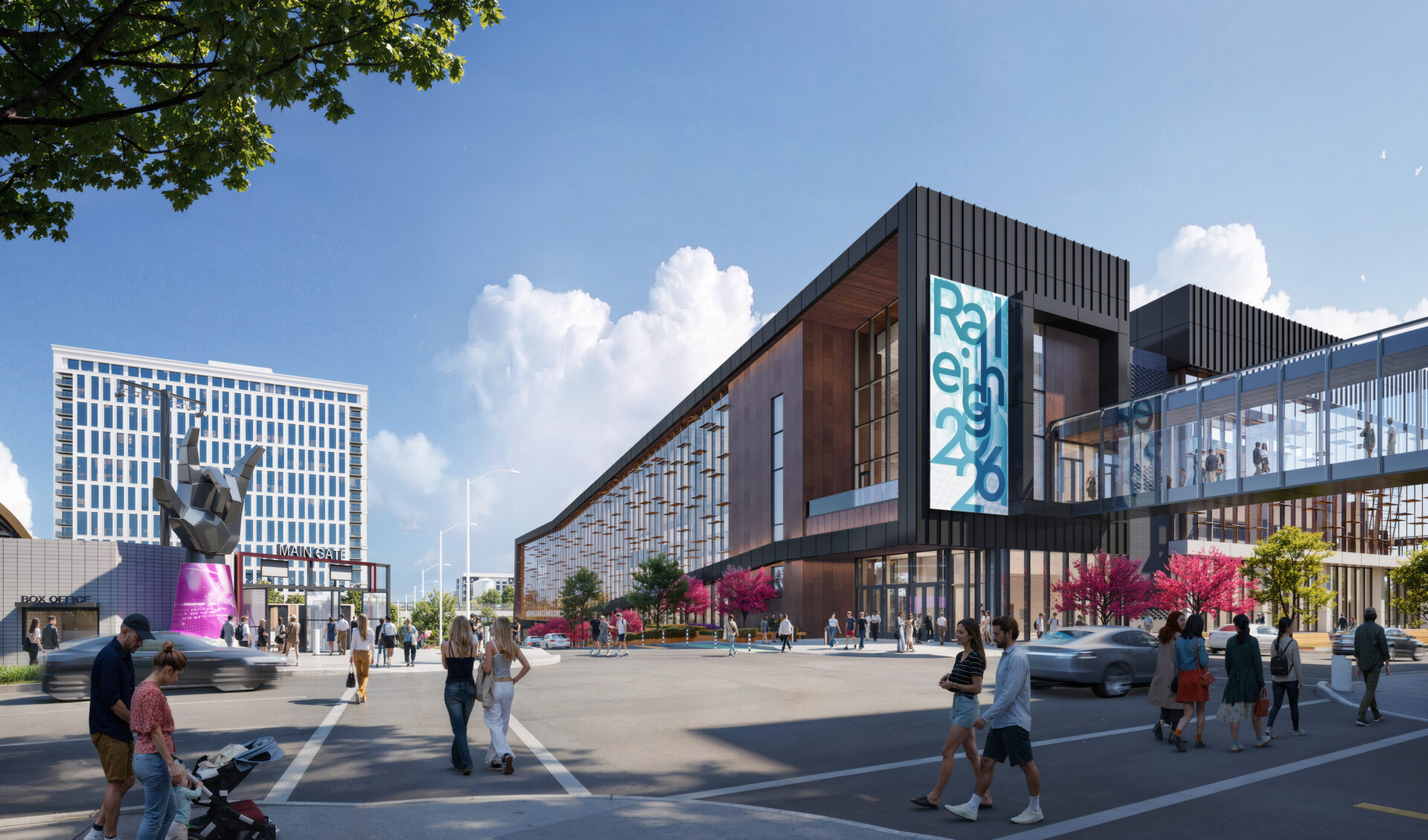
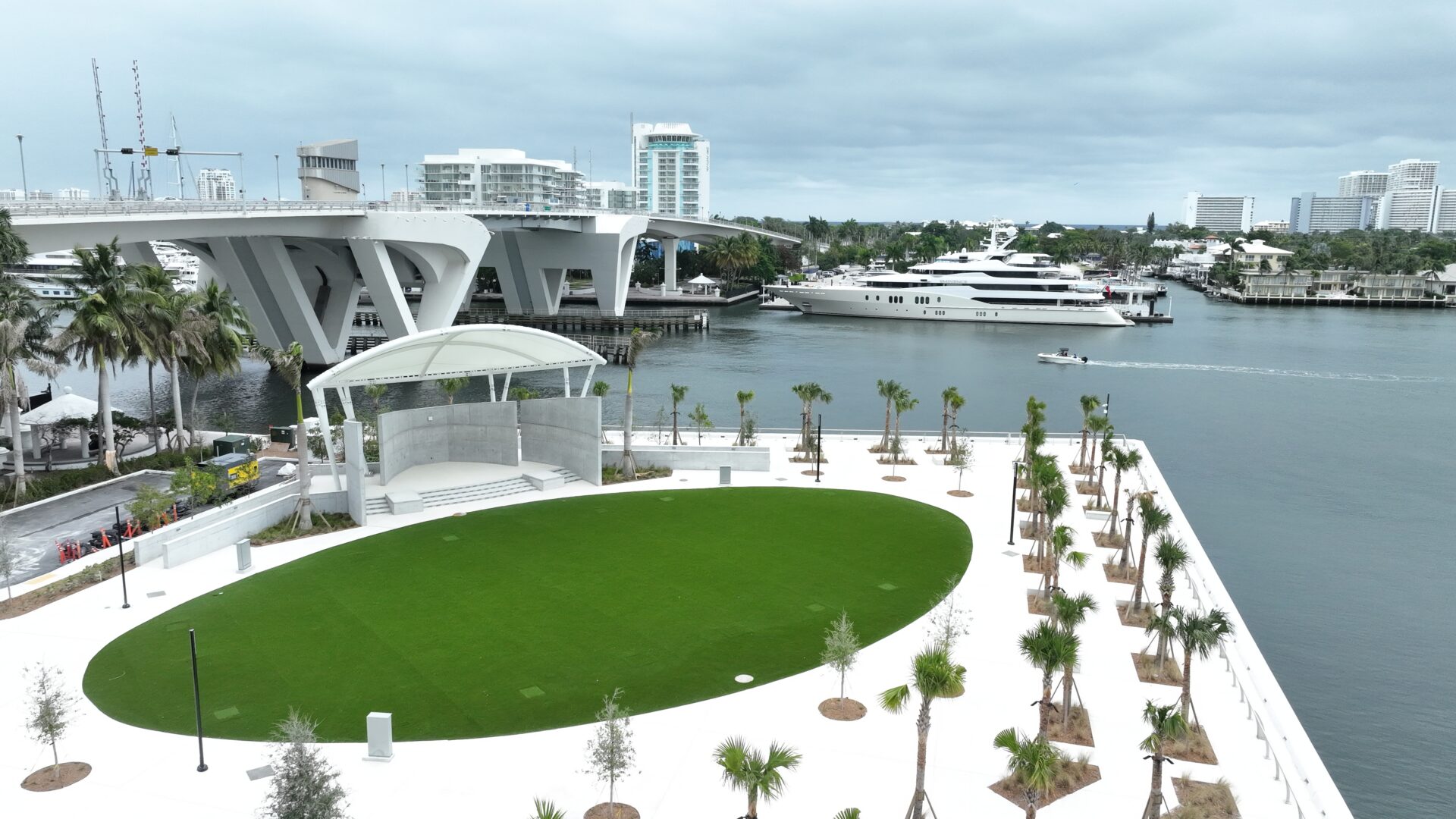
Staying competitive matters. Thirty miles north of MBCC, the Broward County Convention Center in Fort Lauderdale is a massive waterfront facility with an Omni headquarters hotel which opened in 2025 at a cost of up to $1+ billion. The Broward project includes sprawling public spaces and 1.2 million square feet of event space.
“In many ways your venue is the front porch of the community,” explains Kritzler. “So, there are ways to invest and monetize much differently than you would have seen even five years ago – 10 or 15 years ago.”
Modern convention center projects emphasize flexible meeting space, outdoor terraces, high-speed connectivity, sustainability, large ballroom inventory, natural light and simultaneous multi-event hosting capabilities to reduce the downtime of single event load in and load out. A recent development is the increased need for smaller networking spaces versus more exhibit hall space.
“Providing maximum flexibility and adaptability for planners and event designers to come in and make the space their own,” says Lockwood.
“We still need that giant square-foot ballroom, you need exhibition space,” adds Ross. “But now every space is networking space and networking space comes in all scales and sizes.”
Ongoing national developments include the $256 million renovation at America’s Center Convention Complex in Missouri; Duke Energy Convention Center in Cincinnati, which is approaching the end of a full $264 million modernization; along with the recently completed $233 million upgrade of the Colorado Convention Center in Denver and the $140 million renovation of the Greater Columbus Convention Center in Columbus, Ohio.
Modern technology is having an impact on renovations with built-in seating systems and partition wall technology. “There’s technology now that with the turn of the key, within 60 seconds to two minutes, your walls will drop down and configure the space completely different from what you have,” says O’Dell.
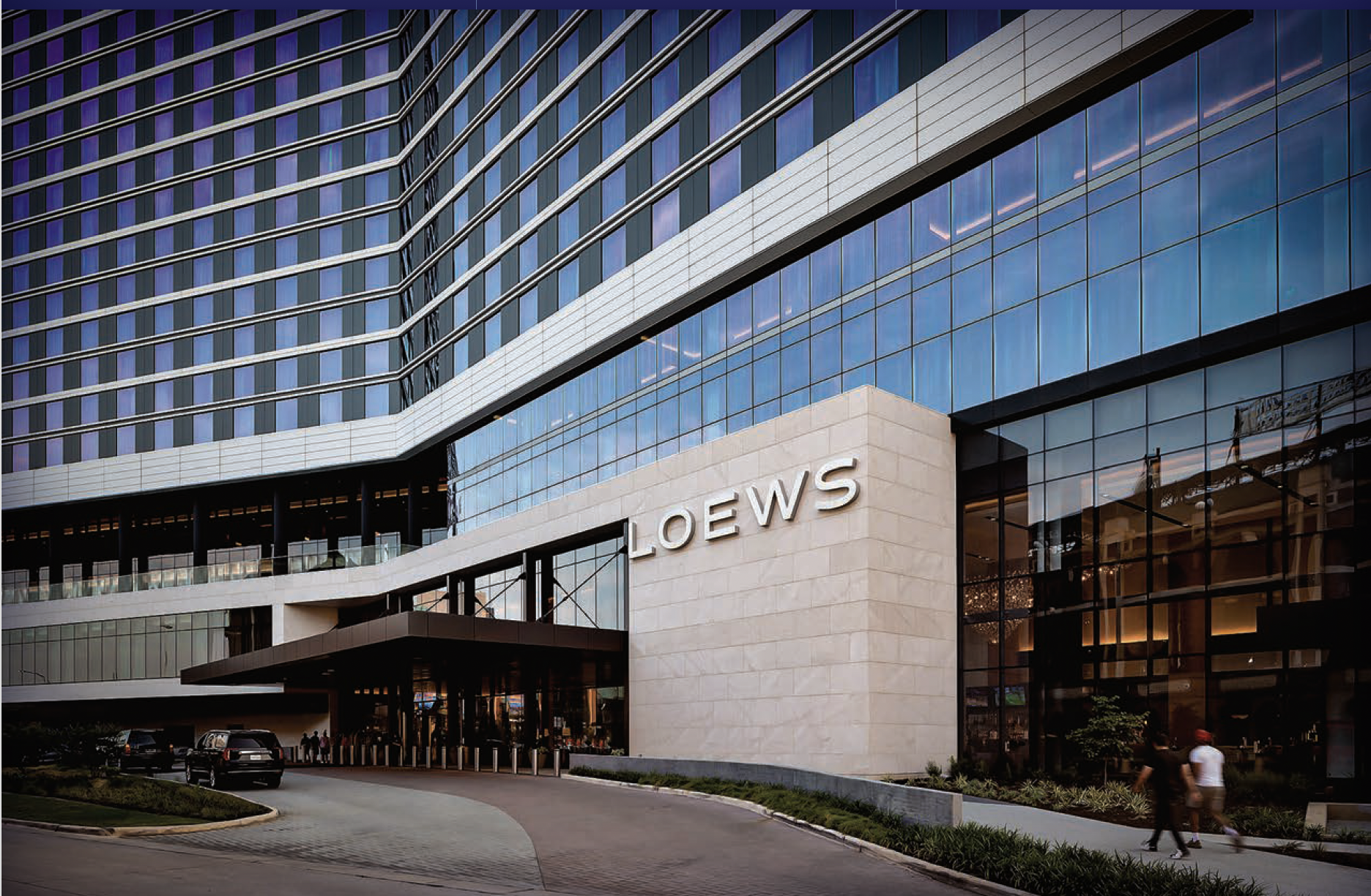
BIGGER IN TEXAS: Opened in February 2024, the Loews Arlington Hotel & Convention Center is a 22-story, 888-room luxury hotel, a $550 million project with 200,000 square feet of meeting space and a resort-style beach club.
Venues are embracing sustainability with energy management, green-event standards, onsite composting and rooftop gardens.
“It’s hugely important to the customers and to the meeting players,” says O’Dell, mentioning carbon neutrality, sustainable food and beverage options and LEED certification. These distinctions “are very important to them and in some cases factors into the selection criteria for choosing a destination and a building.”
As competition increases, it’s important to identify ways to stand out.
“There is real magic between a great piece of architecture, interior design, site design, district design and these meetings and events that take advantage of that,” continues Lockwood.
For convention center operators, playing a role in the evolution of the business model and overall experience makes the challenges of renovations worth the price.
“I think it’s underestimated how much business and how much thought leadership, and how much the world changes in these spaces that we take for granted,” says O’Dell. “There are lives being changed and there are different industries every day that come into our buildings – that fascinates me the most. It’s great to be a part of that, at least to be a repository or house those types of experiences in our buildings.”
FREE
 Daily Pulse
Subscribe
Daily Pulse
Subscribe
 Daily Pulse
Subscribe
Daily Pulse
Subscribe