
Busy, Dynamic & Maravilloso! Inside Spain’s Historically High Appetite For Live (2026 Spain Focus)
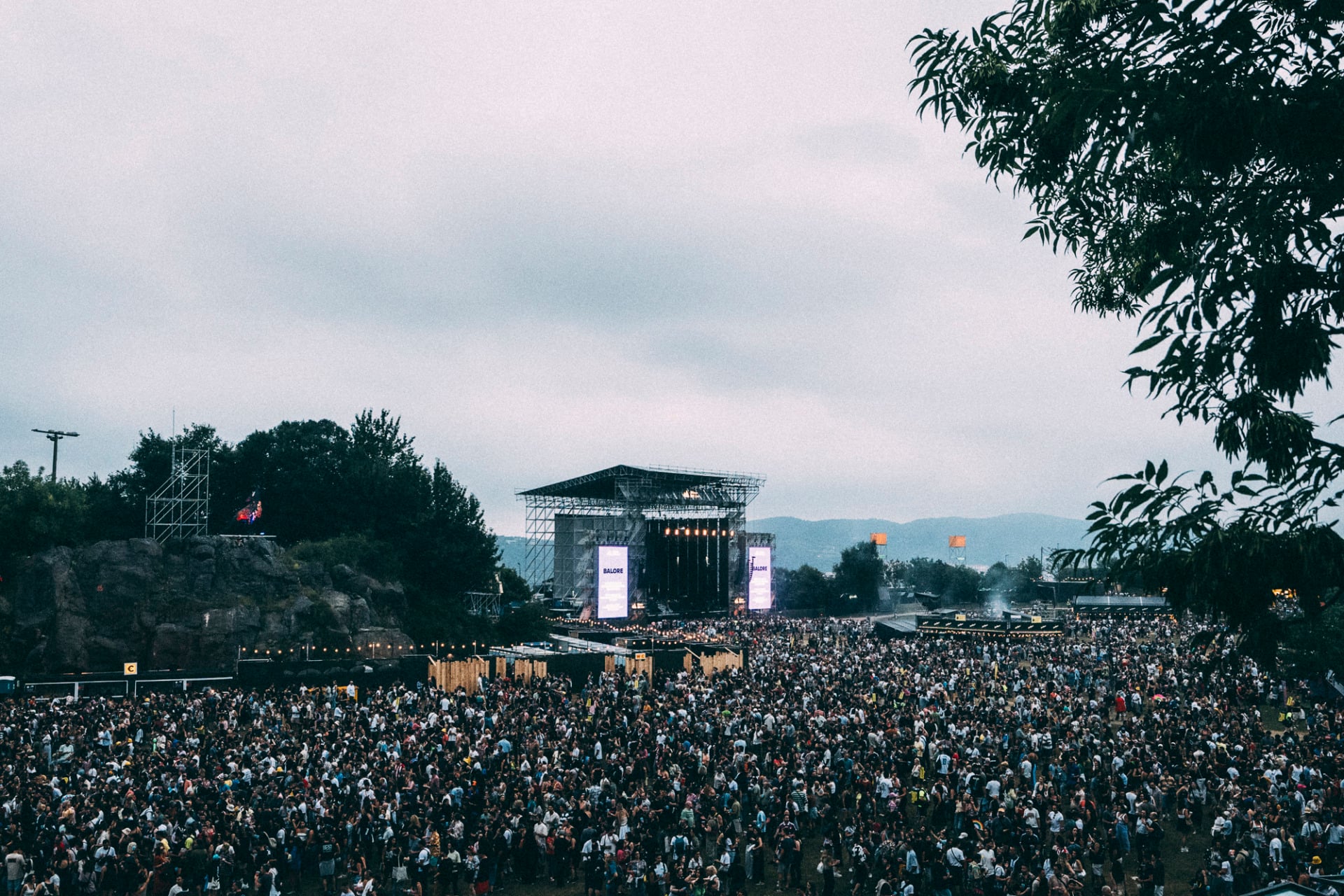
Spain is worth a trip. Its climate, food and natural beauty are the perfect backdrop for some of Europe’s best live entertainment experiences. Speaking to the country’s live professionals for Pollstar’s annual Spain Focus, it becomes clear that the market is robust. There are many reasons for this, but they’re all centered around one fact, summed up by Cindy Castillo, deputy director of Mad Cool Festival Madrid: “Live music has become increasingly valuable because it offers something genuinely irreplaceable: presence, connection and shared emotion. In a world that feels increasingly digital, fragmented and uncertain, people are craving moments that feel real.”
Nacho Córdoba, head promoter at Live Nation Spain, confirms, “The appetite for live experiences is stronger than ever, and that’s creating real momentum for growth and innovation. Last year reflected that clearly, with more than 300 shows and a record number of stadium events.” A selection of 2025 highlights from Pollstar Boxoffice include a sold-out Imagine Dragons show on June 28 at Madrid’s Metropolitano Stadium ($5,480,020 gross off 55,094 tickets); and a sold-out July 30 concert by Kendrick Lamar & SZA at Barcelona’s Olympic Stadium Lluís Companys ($5,779,468 off 45,584 tickets).
Ahead of this year’s stadium season, Rosalía has been doing incredible arena business, selling out residencies at Movistar Arena Madrid as well as Palau Sant Jordi in Barcelona in March and April. The independents are also thriving, including Clipper’s Music Group, the third-generation family business dealing in live, management, publishing and label services, which delivered one of Spain’s top tours of 2025 with Antonio Orozco, who celebrated his 25th career anniversary. “In addition,” says Clipper’s Music Group President Juli Guiu Marquina, “we produced Aitana’s concert at the Estadi Olímpic Lluís Companys in Barcelona and supported the delivery of Lola Índigo’s show at the same venue, milestones that highlight the group’s capability to handle large-scale productions and further reinforce the strength of our programming.”
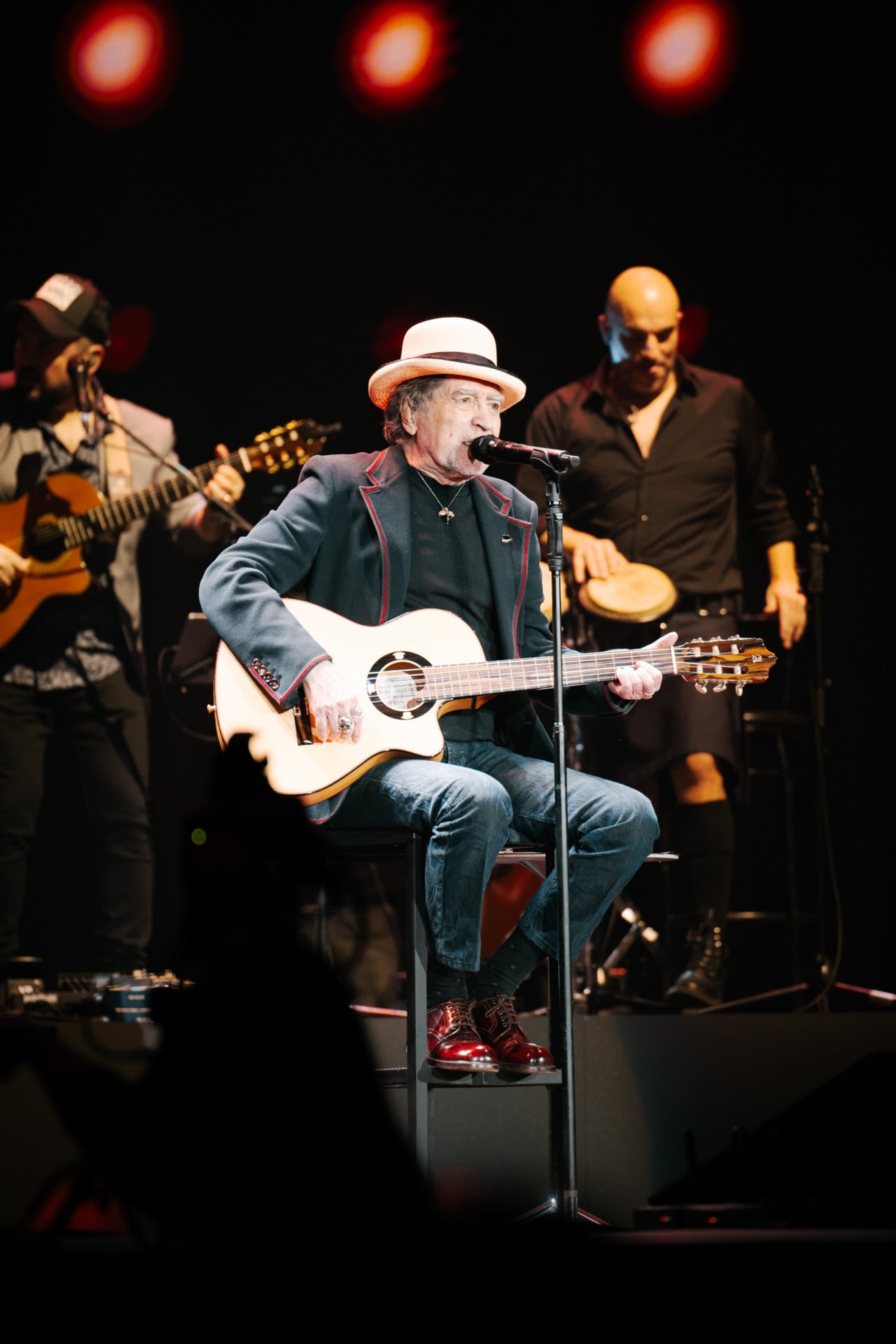
Chris Ortiz, president of another long-standing Spanish indie powerhouse, Riff Music, is “fortunately” busy as well. Manuel Carrasco is about to undertake a four‑stadium residency in Seville, and Melendi, who just released his new album Pop Rock, will launch a new tour in the fall. Both are Riff Music management clients. November also brought a “very emotional” moment to Ortiz and his team, when national treasure Joaquín Sabina concluded his farewell tour, Nov. 30, 2025, at Movistar Arena Madrid – the last of 10 shows at the arena which grossed $1,235,038 and moved 12,034 tickets. “It was the top‑selling Spanish tour of the year,” says Ortiz, adding that “after so many years working together, it was a very emotional final night.”
Some of the above mentioned talent, including Aitana and Lola Índigo, is managed by GTS, the live talent arm of Universal Music Group, which is also seeing sustained growth from artists like Chiara Oliver, Marlena, Juanjo Bona, Joaquina, Ela Taubert and TIMØ. Other “standout artistic milestones across the roster,” according to Executive Vice President Global at GTS, Rosa Lagarrigue, include Sara Baras, whose flamenco show “Vuela,” a heartfelt tribute to legendary guitarist Paco de Lucía, became “the most successful tour ever by a flamenco dancer. In Spain, Amaia has taken an important step forward with her first arena tour, presenting her third album Si abro los ojos no es real. Lola Índigo has also announced her festival tour following the success of her stadium tour, further consolidating her position as one of Spain’s most dynamic and influential pop artists.”

The strength of domestic talent in Spain not only stands out, but “is absolutely central,” according to Lagarrigue. “Our core business is focused on Spanish and Latin talent, and everything we do is built around identifying, developing and supporting artists globally.”
“SPAIN IS THE NATURAL ENTRY POINT INTO THE EUROPEAN MARKET FOR MANY LATIN AMERICAN
ARTISTS. IN MANY CASES, IT OPENS THE DOORS TO BROADER TOURING ACROSS THE CONTINENT.”
— Rosa Lagarrigue, GTS
GTS stands out as exemplary for the close connection between Spain and Latin America and the opportunities that relationship offers. What is more, according to Lagarrigue, “Spain is the natural entry point into the European market for many Latin American artists. In many cases, it opens the doors to broader touring across the continent. Both Spanish and Latin artists are incorporating European routing into their tour plans much more naturally and consistently than in the past.”
Nicolas Renna, managing director of Proactiv Entertainment, says, “Immigration from Latin American countries with a high disposable income has changed and increased the appetite for live music in the capital.” Macroeconomic developments like this, he says, “sustain a very healthy demand for shows across the country.”
Lagarrigue agrees, saying, “The Hispanic community is very strong and more visible than ever, with a deeper connection to its cultural roots. That cultural momentum is helping drive the international reach of the music we export.”
Aitana is a case in point. Launching her first American tour off the success of her latest album, Cuarto Azul, she sold out Movistar Arena in Buenos Aires and Auditorio Nacional in Mexico City within 24 hours, adding second dates in both markets. “Pablo Alborán’s global tour has also delivered excellent results across Chile, Argentina, Colombia, Brazil, Mexico, Portugal, and Spain,” says Largarrigue.
Riff Music took Melendi on a LATAM tour toward the end of last year. “A standout,” according to Ortiz. “We saw sold‑out shows across the region, including Movistar Arena in Buenos Aires, two nights in Santiago, Antel Arena in Uruguay, Movistar Arena in Bogotá, two nights at Kaseya Center in Miami and the Kia Center in Orlando.” The Nov. 16 show in Argentina, for instance, sold out 9,781 tickets, grossing $654,000; in Chile, Melendi moved 17,025 across two nights, Nov. 12-13, grossing $1,329,216; in Ecuador, where he performed at the Coliseo General Rumiñahui in Quito, 9,065 tickets sold out for a $590,878 gross, according to the box office reports submitted for the shows.
2026 is also a special year for Riff Music because it marks the 30th edition of BluesCazorla festival. “It’s where Riff started back in 1994 – 30 editions, accounting for the two pandemic years – and it feels very special,” says Ortiz. The lineup includes headliners Charlie Musselwhite and Eric Johnson.
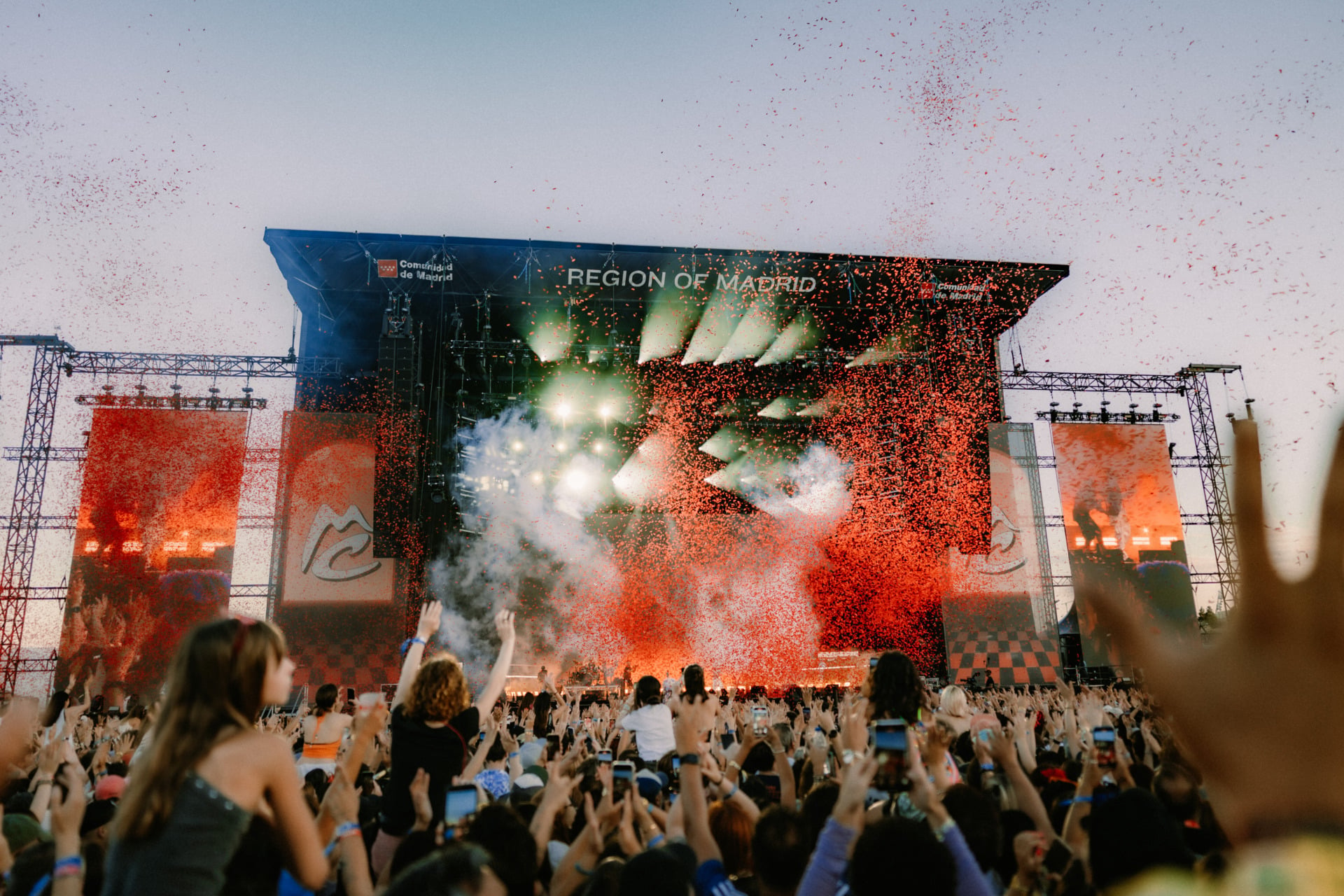
The number of Spanish festivals celebrating a big anniversary this year is remarkable. Madrid’s Mad Cool Festival turns 10 this year. For Castillo, “Festival season always brings a mix of excitement and intensity. There’s something very rewarding about working towards creating experiences that mean so much to so many people. As it’s an anniversary edition, naturally there is an added sense of responsibility and excitement.”
Bilbao BBK Live celebrates its 20th anniversary, July 9-11, and is promoted by Last Tour, which also runs Azkena Rock Festival in the Basque Country, which is moving toward its 25th edition next year.
Other notable anniversaries include the 25th anniversary of the much-loved Cap Roig Festival, owned and operated by Clipper’s Music Group, which also celebrated Occident Summerfest’s fifth in 2025. “We also renewed the tender for Les Nits Occident at Barcelona’s Pedralbes Palace Gardens for a further three years. This reinforces our position as a leading option for the management and development of this type of festival, supported by the consistency and quality of our work, and allows us to plan with a medium-term perspective,” says Marquina.
The festival promoters confirm the LATAM connection. According to Castillo, “Spain occupies a unique cultural position as a natural bridge between Europe and Latin America, and that exchange is very relevant to us. Latin America is an incredibly rich source of talent, creativity and audience engagement. Across recent editions, we’ve worked to reflect this by including some artists from across the Spanish-speaking world and by paying close attention to emerging talent with strong cross-market potential.”
Barcelona’s main event, Primavera Sound, stages sister editions not just in neighboring Portugal, but – for the first time since 2023 – in Buenos Aires, Argentina, and São Paulo, Brazil. Fra Soler, the festivals’ head of booking, confirms, “Spain and Portugal have always acted as natural bridges between Latin America and Europe, and this has also been organically reflected in our festival, as well as in Primavera Pro, which has historically connected the industries on both sides. Furthermore, in recent years this connection has been strengthened by our Latin American festivals, which are already gearing up for their third editions in Buenos Aires and São Paulo in November and December this year.”
He adds, “Primavera Sound’s identity is very distinct and is defined by Barcelona and its creative and open-minded Mediterranean character, but we are always attentive to everything happening in other major cultural hubs around the world. We wouldn’t hold a festival in Buenos Aires and São Paulo if we didn’t connect with both cities in every way. These two festivals are also a learning experience for us: they allow us to discover first-hand sounds that broaden the definition of Primavera Sound.”
Looking at Spain’s concert business, Last Tour’s Burgoa says touring patterns are becoming less predictable with “some tours now announced more than a year in advance, which was less common before, while others are confirmed and announced only three or four months before the show.”
The fluid landscape is largely a result of the way people consume music these days, and “trends can change significantly depending on the artist, the genre and the type of project. You may book an artist into a theater, they go viral, and suddenly arenas are a viable option.”
In today’s short-attention-span economy, it can go the other way around, too, of course, according to Burgoa. “Genre boundaries are becoming less rigid, especially at festivals, where audiences are more open to hybrid programming as long as the identity of the project remains clear,” Burgoa says. “There is also growing interest in territories where live music can connect strongly with local identity, tourism and cultural policy. Basque Country is a good example of a territory with a very active cultural ecosystem, together with Navarra and Aragón. We see a gradual broadening of the map when the right infrastructure, audience and local support come together.”
The role infrastructure plays cannot be overstated. Venues make the circuit, and Spain is no exception. As Ortiz explains, “Pamplona and Valencia have clearly moved into top‑tier positions in the Spanish market, directly linked to the opening of new venues. Both Navarra Arena and Roig Arena have proven that ‘if you build it, they will come.’ Their higher capacities and modern infrastructure make production much more efficient, putting them high on the routing list. In Valencia’s case, especially, the state‑of‑the‑art design and excellent acoustics have become a major draw, and we’re seeing noticeably stronger ticket sales driven by the appeal of the venue itself.”
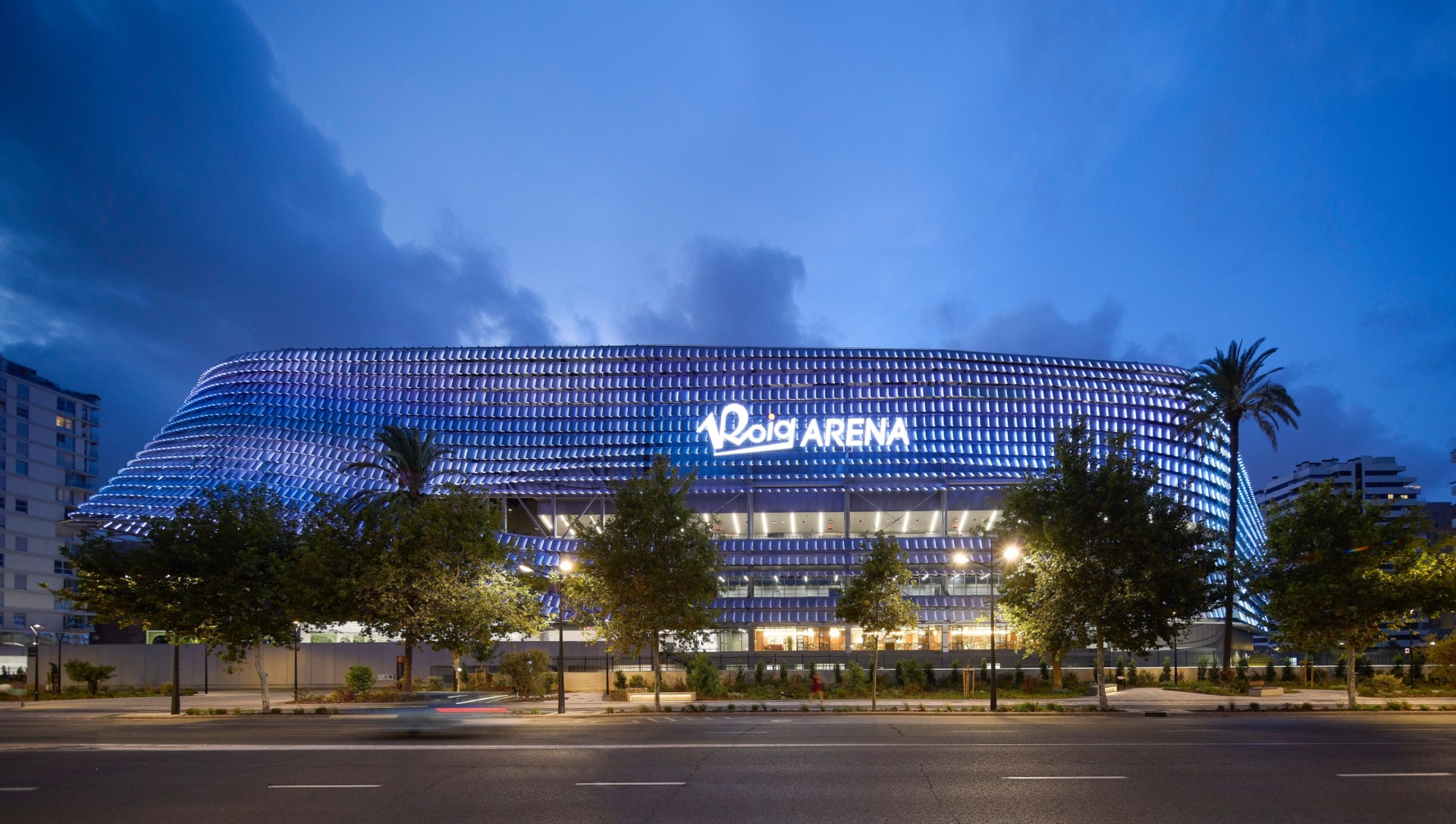
The Pollstar Boxoffice confirms this in impressive fashion: the most recent report submitted for Roig Arena at the time of this writing was Bad Gyal’s April 24 performance, which sold out 14,991 available tickets for a $746,702 gross. When Live Nation brought Fito Y Fitipaldis to the new arena Jan. 24, 16,162 tickets sold out for a $858,255 gross. The highest capacity reported to the Pollstar Boxoffice so far was the Oct. 25, 2025, performance by rapper Quevedo, who moved 19,031 tickets and grossed $1,430,926, promoted by The Music Republic. It’s more proof of the strength of domestic talent in Spain.
“BOTH NAVARRA ARENA AND ROIG ARENA HAVE PROVEN THAT ‘IF YOU BUILD IT, THEY
WILL COME.’”
— Chris Ortiz, Riff Music
In just six months, Roig Arena has hosted more than 200 events and welcomed more than 1 million visitors to the venue, according to general manager Víctor Sendra Peretó. Only two months into its opening, Roig Arena also hosted the LOS40 Music Awards, Spain’s most important music awards ceremony, Nov 7, 2025, featuring performances by Ed Sheeran, Myles Smith and Rosalía, who premiered the first single from her new album. Looking ahead, the international lineup includes Rod Stewart, Pet Shop Boys, and Bryan Adams.
Peretó says Roig Arena stands among the most technologically advanced venues in Europe, featuring “the continent’s highest‑resolution video cube, the longest indoor video wall in Europe, and a large‑scale immersive exterior screen that welcomes visitors upon arrival. In addition, the building’s façade—comprising 8,600 video‑illuminated ceramic panels—enables large‑scale video mapping, allowing the arena itself to become part of the live experience.”
What really sets it apart, though, according to its general manager, is “its exceptional adaptability. The venue has been designed to transform seamlessly and be precisely tailored to the specific requirements of each event, regardless of scale or format.” Other defining elements of Roig Arena are its sound design and acoustic performance featuring multiple layers of sound‑insulating materials, with each layer engineered to absorb different sound frequencies; and generous loading docks, allowing all loading/unloading operations to take place entirely inside the building.
A sure sign of Spain’s buoyant business is the fact that new buildings aren’t just opening in new territories, but established ones like Madrid, as well. Oak View Group (Pollstar’s parent company) has chosen the capital city as its first move in Spain, with the announcement of the opening of a 20,000-capacity music-first arena on the campus of the Riyadh Air Metropolitano Stadium, home to Atletico Madrid. It’s a project that’s realized in a joint venture with Live Nation and the tradition-rich soccer club Atlético de Madrid. Scheduled to be completed toward the end of 2030, it will transform the former Olympic Aquatic Center in the Spanish capital of Madrid into a multifunctional complex dedicated to sports, entertainment, culture and education.
“Music-first” means the arena will be built with the live performance at the forefront of all consideration, rather than a sports tenant. In that sense, it follows Manchester’s Co-op
Live, OVG’s first developed and operated arena project outside of North America. The arena in Madrid will be the second. The Spanish capital already boasts the 20,000-capacity Movistar Arena right in the heart of the city, but the data confirms that Madrid could do with another one.
Toni Ortega, VP, Southern Europe for OVG, tells Pollstar, “Madrid is probably the hottest live music market in continental Europe, a perfect combination of nice weather, international connections, and great gastronomy. It’s a combination that makes it really attractive for people to go and watch live experiences. Spanish culture has always been linked to music; every region has its own unique vibe.”
Co-op Live architects Populous received the commission to design it, and, like in Manchester, Madrid’s new arena will form the heart of a neighborhood that OVG envisions will become
“the center of the live entertainment in the city. You’re going to have theater downtown, of course, but with the arena, the Riyadh Air Metropolitano, which is hosting many concerts
each summer, and the shape of the wider district, which is going to allow for outdoor shows – the idea is that it becomes a proper music destination for the people.”
Madrid’s long-standing Movistar Arena, which recently upgraded its maximum concert capacity to 20,000 for in-the-round shows, isn’t concerned about the competition, according to GM Manuel Saucedo, who says, “As a venue, we welcome any initiative that strengthens Madrid as a major European music city.”
The arena’s 2026 schedule, he continues, “is almost fully finalized and will mark a new record for Movistar Arena, with more music events as well as sports and corporate events. We’re pleased that our venue continues to be chosen by artists on their international tours. Our greatest satisfaction is seeing that the experience at our venue is positive both for the performers and for the fans.”
“BOTH RESIDENCIES AND MINI-RESIDENCIES ARE BECOMING A TREND AT MOVISTAR ARENA,
AS WELL AS AT OTHER VENUES, BECAUSE THE FAN EXPERIENCE IS MUCH MORE REWARDING THAN IN LARGE STADIUMS.”
— Manuel Saucedo, Movistar Arena
Movistar Arena leads Pollstar’s Spanish arenas ranking (see page 86), with more than 2 million tickets sold for a $162,854,134 gross, reported between April 1, 2025, and March 31, 2026. Some of the most recent highlights include a sold-out Eros Ramazzotti concert, May 4, which moved 11,315 tickets at a $1,049,211 gross; and Rosalía’s fournight residency, March 30-April 4, which sold 16,668 tickets and grossed $1,746,709 on night one.
“Both residencies and mini-residencies are becoming a trend at Movistar Arena, as well as at other venues, because the fan experience is much more rewarding than in large stadiums,” says Saucedo. “It’s true that performing several consecutive days can require more effort from artists if they don’t get a day off, but it pays off for them. Promoters also find it more profitable when they run the numbers — multiple shows in a venue with controlled costs and revenues are more attractive than a large stadium, where everything is less predictable.”
But even stadiums are seeing more business than ever, including residencies. Proactiv Entertainment’s Renna says, “Live music doesn’t seem to have a ceiling right now. We’re seeing stadium residencies emerging; something that, not long ago, only a handful of artists could realistically pull off for a single night, let alone multiple dates.”
It’s clear why artists with sufficient appeal choose to let the audience come to them, rather than visiting their fans around the world: it’s convenient and cost-effective. However, this also creates issues. When it comes to sustainability, audience travel has the biggest negative impact on the environment. What is more, as Ortiz explains, “provincial markets, unfortunately, are often losing out, as we increasingly opt for multiple nights in major cities rather than long, extensive national runs.”
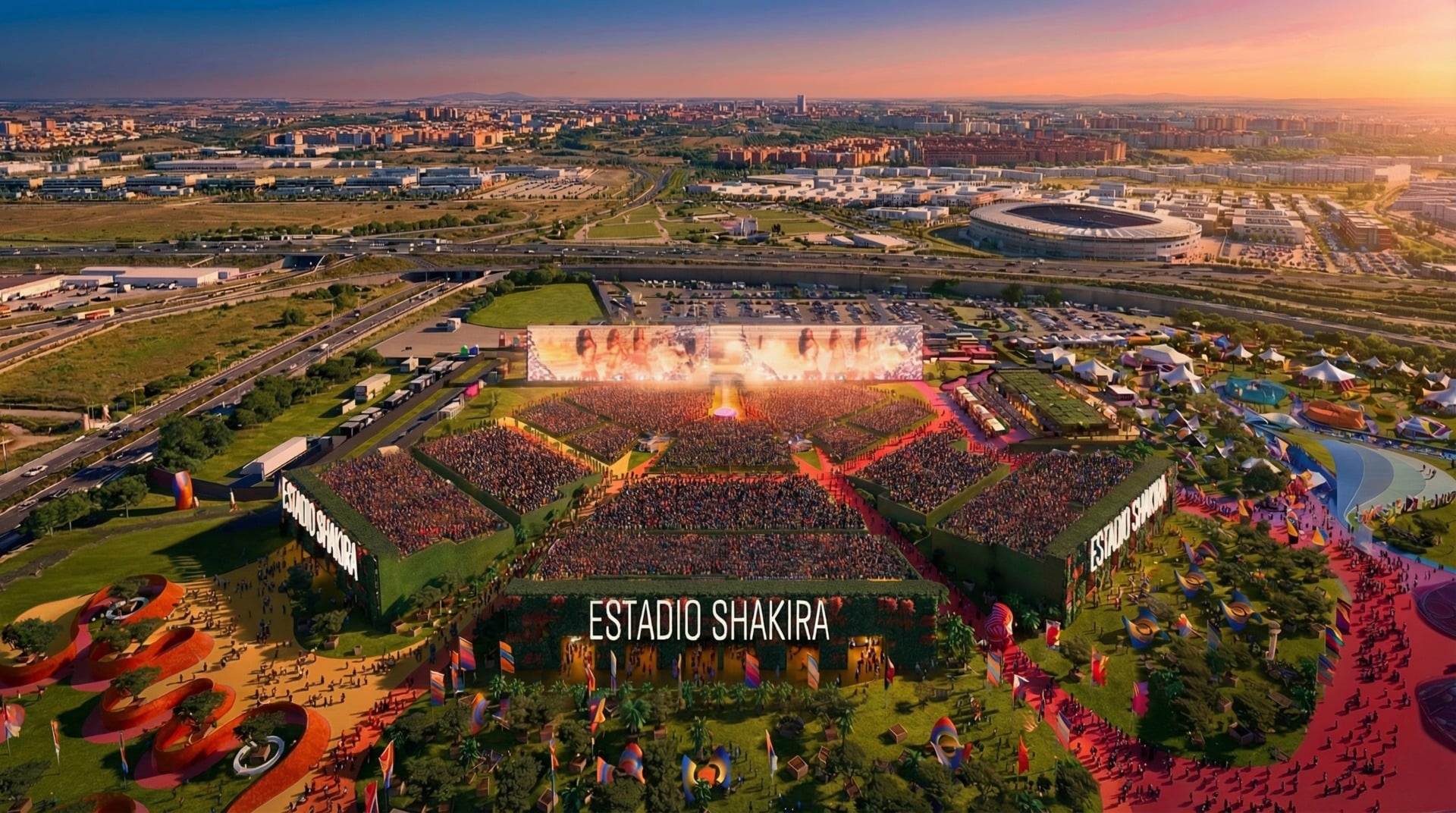
The positive way to look at the residency concept, according to Córdoba, is that “these formats allow artists to connect more deeply with fans, streamline production and turn concerts into destination events that draw audiences from across Spain and beyond.” Live Nation Spain is looking at several residencies in 2026, including 12 stadium shows from Bad Bunny, 10 of which will take place at the Riyadh Air Metropolitano Stadium, and a specially-built stadium project for Shakira in Madrid.

Challenges remain even in a market as healthy as Spain. According to Burgoa, the biggest one is “balance. Costs have increased significantly across production, logistics, artist fees and operations, while audiences are also more price-sensitive. The mid-range market is particularly delicate because it does not always benefit from the scale of larger events or the flexibility of smaller ones. Festivals also face pressure to keep improving the experience while maintaining financial sustainability. The geopolitical situation also affects purchasing decisions, and we must remain alert. It is a challenging environment, but it also pushes promoters to be more rigorous and more creative.”
Saucedo says, “Hopefully, conflicts will be resolved soon so people can continue spending on leisure. There are also signs of lower alcohol consumption among younger audiences, which could impact beverage sales. These and other factors are always present. At the same time, there is a clear trend toward higher demand for VIP seating and premium experiences, which requires venues to adapt. We’re also seeing more sponsors shifting from sports to music.”
“Opportunities,” says Clipper’s president Marquina, “lie in continuing to develop projects with a clear identity, strengthening audience loyalty and curating high-quality programming. It is also about adapting to evolving market dynamics while keeping long-term sustainability firmly in mind.”
That sentiment is echoed by Burgoa, who says, “We also see potential in venues, year-round programming and formats that go beyond the traditional festival calendar. Data, audience knowledge and international partnerships will also become increasingly important.”
Then there’s the unstable geopolitical situation, which has ramifications beyond increased energy costs. Soler says, “Against this global backdrop of tension and confusion, we feel that organizing an event bringing together artists from 37 different countries and an audience from 145 different places is to open a window onto inspiration, connection and community. Year after year, we see how concerts are a moment of spontaneous unity between strangers, and that is of incalculable value, especially at times like these.”
This chimes with Castillo’s sentiments about live music made right at the start of this story. With Mad Cool’s 10th anniversary around the corner, she concludes with a statement made with festivals in mind, but applicable to the entire live events business. According to Castillo, “Festivals today carry a greater responsibility than ever. We’re not just programming artists, we’re building temporary communities and shaping experiences people will remember for years. That’s a privilege we take seriously, and it continues to motivate us every year.”
FREE
 Daily Pulse
Subscribe
Daily Pulse
Subscribe
 Daily Pulse
Subscribe
Daily Pulse
Subscribe