
Freight & Cargo Keep On Truckin’ & Get The Show On The Road (Transportation Special 2026)
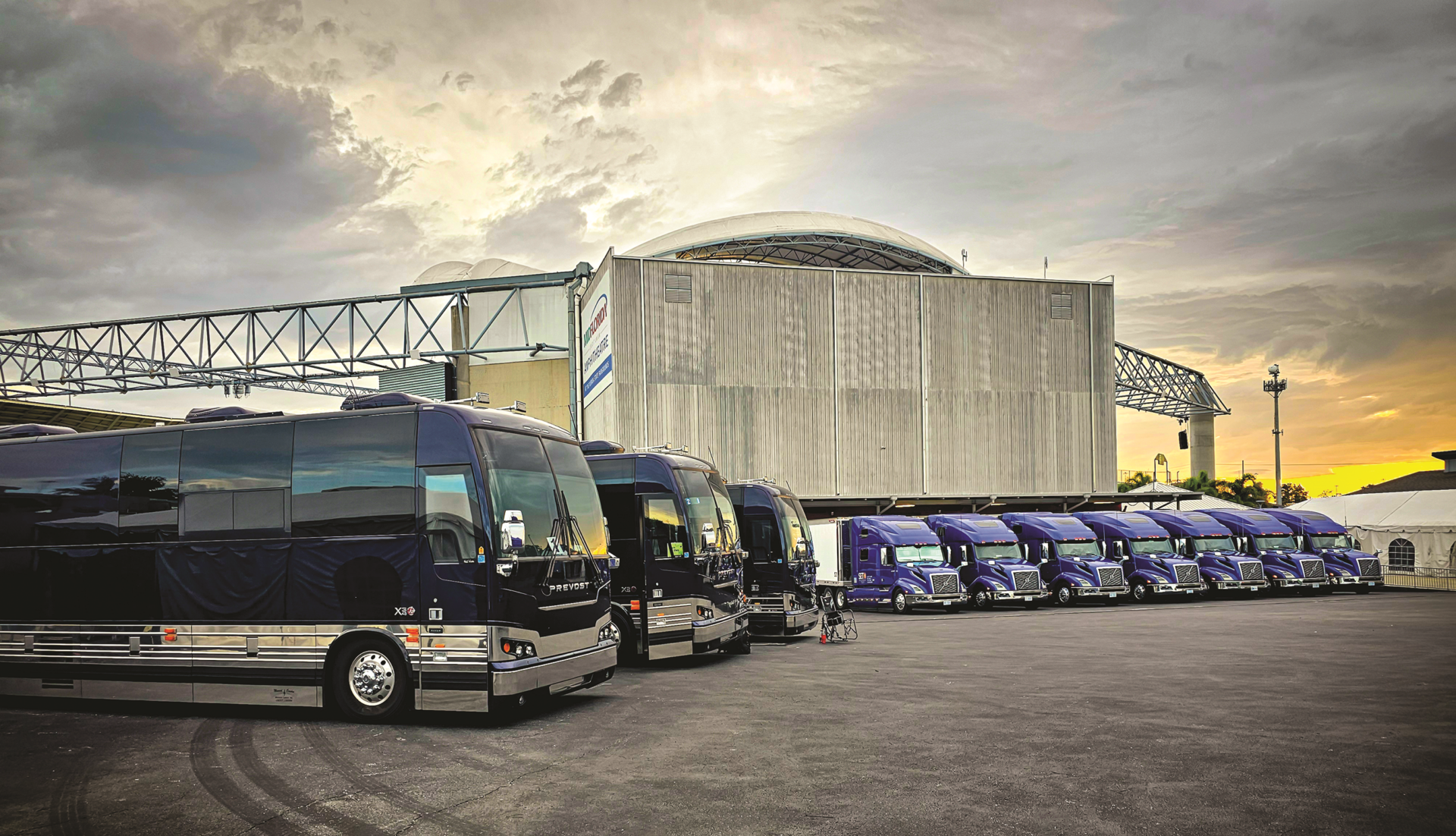
In the freight industry “Ride or die” is real with shows on the line and trucks on the move across the country.
Industry veteran Tom Moriarty, Transportation Director of Concert Stuff Group and CEO of Special Event Transportation, believes there are two major issues affecting the business – an influx of private equity and the consolidation of companies and the continued downward pressure on price in the market.
“There is still too much capacity from sub-par providers willing to operate at near cost, but that does not mean they can provide the level of service, safety, communication, or specialized care required in entertainment transportation,” adds Moriarty. “The challenge is helping clients understand the difference between a truck showing up and a professional touring transportation solution.”
With fuel prices on the rise, the transportation segment is adapting, often passing that expense to the client via a fuel surcharge.
“Nobody likes paying higher fuel costs or fuel surcharges, but fuel is part of the cost of doing trucking,” explains Moriarty. “Our quotes may anticipate fuel, but sudden 10% jumps still create pressure, even when the artist ultimately pays the fuel cost.”
One of the controllable issues is wasted fuel from unnecessary idling, poor driving habits, inefficient routing and avoidable repositioning. Technology is helpful including monitoring driving habits to help control costs: the difference between traveling 75 miles per hour vs. 60 can save one mile per gallon in fuel.
Driver buy-in, experience and job satisfaction are central to successful operations. Job satisfaction on the live side of the industry is higher than the national retention average. At Special Event Transportation, Moriarty has a 15% turnover rate compared to 40 to 60% for the national freight industry average.
“It is understood that the driver is a vital part of the tour and this really helps keep the driver engaged and happy,” says Moriarty. “Retention equals respect – and that goes both ways. Drivers will always respond to better pay, but they also need clear opportunities to earn more through professional behavior, fuel performance, safety, reliability and client-facing conduct.”
Tours depend on the gear showing up in one piece and on time. Moriarty strategically positions empty “ghost trucks” across the country as a failsafe for any potential breakdowns. Special Event Transportation has a fleet of 110 tractors and they use 40 to 60 owner/operators. It’s not uncommon for Moriarty to fly drivers out to meet trucks on the road to act as team drivers on long hauls.
According to the Department of Transportation, drivers can have 14 hours on-duty and they are allowed to drive up to 11 hours within that time frame with a 30-minute break.
“If I have a major tour in Philadelphia, another smaller tour in Boston, someone to head towards the Midwest, there’s a good chance I’m going to put a tractor trailer in Carlisle or Harrisburg, (PA) and they might sit there for three or four days, but it’s a loss leader for me,” offers Moriarty. “It’s all about the service. If I have a breakdown, I need somebody to quickly recover.”
Managing logistics happens onsite, as well. Maneuvering around busy venue schedules – particularly at the arena level – and back-to-back events presents numerous challenges for cargo companies.
“In some cases, parking or staging areas are sold, repurposed or reduced without fully considering the transportation impact – and the expectation becomes that the trucks will simply ‘Make it happen’” he says.
The real work is not just loading and unloading, it is coordinating around other productions or sporting events in the same venue, or nearby venues; limited dock space for enhanced productions requiring more than three trucks; local traffic restrictions including idling rules and city permits; venue curfews; security and VIP access.
Even with professional drivers and a backup plan, accidents happen – which makes having adequate insurance a necessity. “Insurance fraud, staged accidents and our current TORT system are a reality we have to deal with every day,” says Moriarty. “There are certain law firms that view a carrier as an ATM on wheels. Federal law requires a carrier to maintain a minimum of $750,000 in coverage – most of us carry much more than that – but that makes carriers an attractive target.”
FREE
 Daily Pulse
Subscribe
Daily Pulse
Subscribe
 Daily Pulse
Subscribe
Daily Pulse
Subscribe