
‘It’s An Inevitability:’ An Impartial Look At Open Ticketing In The UK While Price Caps Remain on Hold
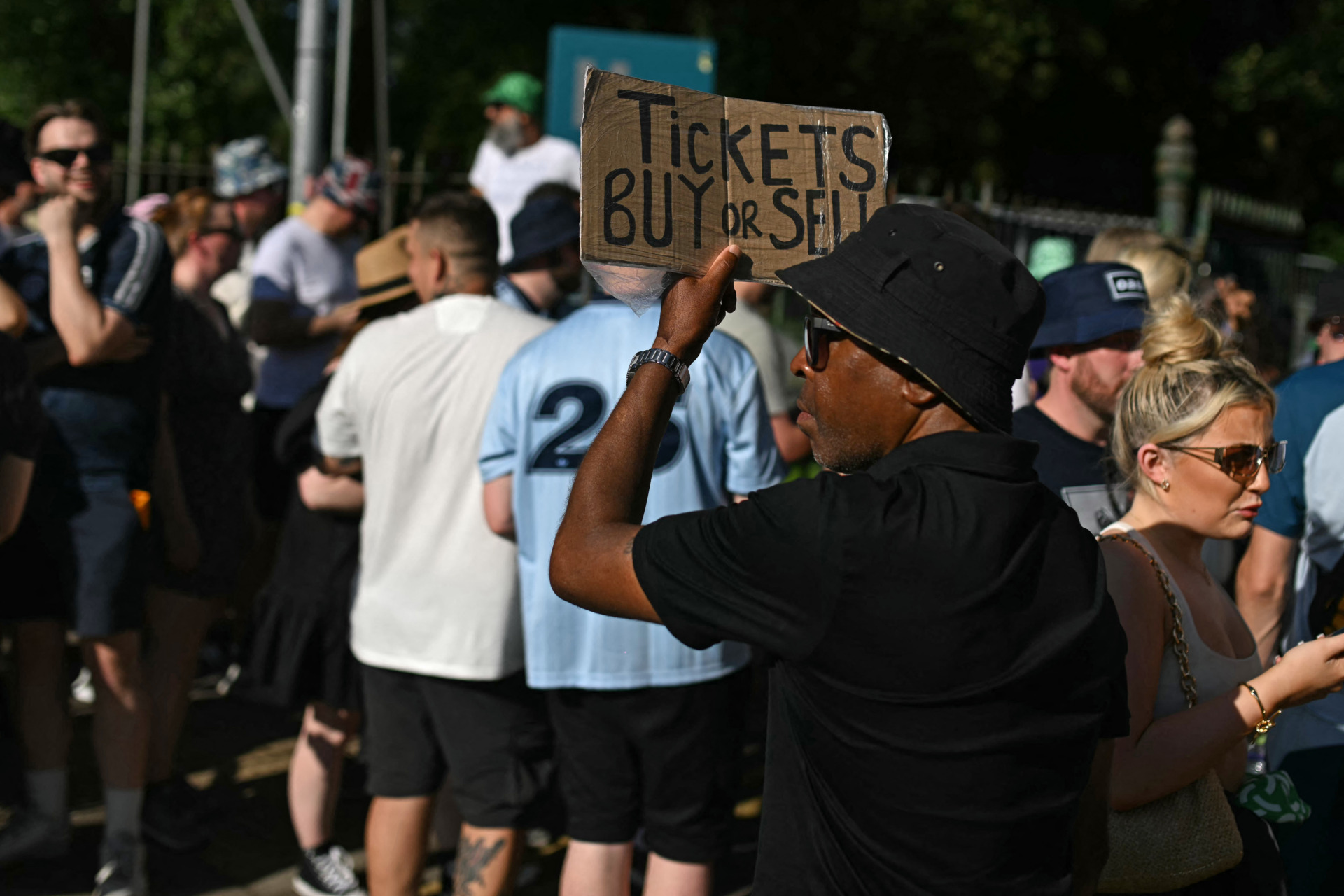
Last November, the UK government made its plans to ban ticket resale above face value official. Phil Harvey, manager of Coldplay, one of many bands in favor of such a price cap, said back then: “As long as this legislation is brought in quickly, it should be a game-changer that will transform fans’ experience of buying concert tickets.”
As it turns out, legislation was not brought in quickly. A government document released after the May 13 King’s Speech, which marked the opening of UK Parliament, outlined plans for a draft “ticket tout ban” bill. This means that the UK government hasn’t even yet drafted the bill, which is a precondition of the legislative process.
Naturally, most of the UK biz advocating and lobbying for a price cap on ticket resale for the past years, reacted with huge disappointment. Just as naturally, opponents of a price cap on ticket resale, are now doubling-down on their efforts to lobby government.
No Cap On Ticket Resale Mentioned In King’s Speech: UK Biz Reacts
At the forefront of that lobby is StubHub/viagogo, which is advocating an open ticketing system akin to the hotels or airlines industry. When Pollstar took a look at the issue of price caps vs. open ticketing last October, the reaction suggested we had opened Pandora’s box.
Yet, the times when one could simply dismiss StubHub/viagogo as the black sheep of the live biz are over. In the U.S., where StubHub controls about 50% of the secondary market by its own admission, ticket resale has always been far less scrutinized than on the other side of the Atlantic. StubHub for instance formed a U.S. partnership with AEG back in 2012, and with the New York Yankees in 2016. And Seatgeek, the ticketer for The Dallas Cowboys and AT&T Stadium, reportedly counts owner Jerry Jones among one of the company’s equity stake holders.

But even in the UK, partnerships with Formula One team Alpine and Manchester City were signed in 2025 – not only for ticket resale, but as a primary ticketing partner. ATG Entertainment (formerly known as the Ambassador Theatre Group), who run a range of venues in London’s West End as well as on Broadway in New York, or Ultra Europe are using viagogo as well. It’s clear that brands with that kind of clout wouldn’t sign a deal with a player that wasn’t legit.
None of this is meant to vindicate or castigate platforms that allow people with no stake in the staging of concerts to make a profit off a ticket; but rather to try and foster an open and honest discussion around what constitutes one the most opaque segments of the live industry: ticketing.
It’s important to note of that the vast majority of ticket sales in the UK occur on the primary market. According to StubHub/viagogo’s latest statement following the King’s Speech, “resale accounts for just 6% of the market, while primary platforms dominate at 94%” in the UK. And while the stories of fans being ripped off by touts are heartbreaking, so are the stories of fans feeling ripped off or left out during the primary on-sale.
A lot of traction on the secondary market only happens because the primary market has its deficiencies, too. What is more, nobody tends to talk much about the large portion of secondary tickets that get sold below face value, because there’s no headline in it.
Long story short: it’s important to analyze the ticketing landscape from all angles without looking through an ideological lens in trying to undertand what the heck is going on.
StubHub has come a long way since its founding in 2000, with its 2025 IPO marking a culmination of 25 years of growth and evolution. Viagogo acquired StubHub in 2019, and the business today operates as StubHub in North America, as well as viagogo internationally (for the sake of convenience, the business will only be referred to as StubHub).
If the old era of StubHub was rife with unaccountable brokers taking advantage of the platform to such an extent that it infuriated the live industry, the new era is defined by a partnership-driven approach, where the company is intent on providing a benefit to promoters, events, and venues, by giving them greater control over all aspects of ticketing.
One reason StubHub ended up in this position is the fact that it started out as a technology company, not a ticketing company. Even Ticketmaster placed a tech executive without any ticketing experience at its helm last October, because that’s what the ticketing business has become: a tech biz.
StubHub’s technological infrastructure, the ease of use, the reach, the ownership of data, are some of the reasons clients chose to work with the company.
“Ticketing, for many years, has been a very closed system,” said StubHub’s Chief Business Officer Raj Beri. “In most markets, it’s one player controlling not only ticketing systems, but the venues, the artists, etc. We don’t think that should be the case. We think there’s opportunities for venues and artists teams to work more closely with multiple players, and they shouldn’t be forced into having to work with one player. We’re not trying to be a primary. We don’t want to replace anyone. We just believe that there’s a democratized way that content rights holders can take back control of their tickets and find incremental opportunities by working with multiple players.”
People to some degree are already used to open ticketing from booking airline or hotel tickets. In a nutshell, it means ticket sellers can offer their tickets through any service they’d like, which can in turn be accessed by customers to make their purchase.
StubHub allows rights holders like venues, artists, teams, etc., to sell tickets through all channels that have a StubHub or viagogo integration, as well as StubHub’s own secondary marketplace. All of these services are competing for the booking fee charged on the ticket, and if a rights holder decides to use StubHub’s platform to sell through a StubHub competitor, so be it.
Shaun Stewart, Head of Global Partnerships based in the U.S., explains, “Our goal is to help the rights holder not only access our 140 million-plus monthly customers but also distribute globally across our competitors. If a rights holder would like to use StubHub’s platform to sell through a StubHub competitor, we support it.”
Beri confirms, “We’re putting our money where our mouth is here. If we think open distribution is better for the industry, then we should play a role in facilitating it, which we have done so far.”
StubHub has 25 years worth of data gathered and operates worldwide. Its audience reach is considerable. “You have millions of people searching on StubHub and viagogo every month. That’s one platform rights holders have been prohibited from accessing [due to exclusive agreements with primary players]. Now consider it across dozens of other platforms, they, in theory, could put their tickets on to get in front of customers. So far, due to exclusive agreements, they’ve been incapable of accessing them,” Beri explains, referring to the long-term nature of the contracts clients usually enter into when signing with Ticketmaster.
The second advantage he points to is the cost of distribution. “We charge the rights holders nothing, because we generate our revenue off of booking fees added on top of the price of the ticket, the rights holder keeps whatever the ticket proceeds are. No rev share, no lift share, no credit card processing fees, no cost of fraud, no cost of support. It’s arguably the cheapest form of distribution a rights holder can access, because even on their primary they’re going to pay to run credit cards and deal with fraud,” says Beri, adding, “it’s worth remembering that the biggest frustrations fans have with ticketing is around primary.”
Which gets overlooked just as easily as the fact that a large proportion of tickets on the secondary market sell below face value. It’s hard to come by exact figures. The Dutch government commissioned research in 2023, showing that 87.6% of resold tickets were sold at or below face value, while only 12.4% were sold at a premium. Ticket reseller TicketSwap, when providing evidence to the most recent UK government inquiry on ticketing, observed that 82% of UK-based transactions on TicketSwap have occurred at the original price or less, with most individuals seeming to value the opportunity to sell their spare tickets quickly and safely over making a small profit.
The majority of resales happen for benign reasons: someone can’t make a show or game, so they sell it for cheap or face value, happy to make at least a bit of money back on a missed opportunity.
StubHub claims less than 10% are those high-profile, above-face-value sales that grab all the attention, but, as Beri emphasizes, “the whole premise around open distribution is around the little guy. It’s about the fact that a lot of shows currently don’t get sold, because people don’t even know about them. It opens up opportunities for smaller, independent venues, the 1,000-cap theater, the independent artists that now have access to 120 million people, both within their market, as well as folks traveling from all the markets viagogo and StubHub serve, and who they can now access through open distribution.”
For certain artists, there’s always going to be more demand than supply, says Beri, “I don’t know if there’s super-structural things that are going to completely alleviate that dynamic. But I do think that if you believe in this vision of distributing across multiple platforms, free from imposed artificial queues or time limits, and you instead say, there’s no time limit, there’s no maximum quantity, there’s no countdown – all of that will naturally provide more price competitiveness.
“For the rest of the market, you will definitely see more tickets being sold at face value or below. Open ticketing will unlock that, just because of natural competitive dynamics that you’ll see. Artists will be able to distribute tickets directly to fans at the price they want, because they’re not locked into distributing to one place.”
When StubHub meets with rights holders, it offers two types of models depending on a client’s preference. The first is to replace the traditional intermediary, and the other is directly integrating with the rights holder’s primary seller.
As Shaun Stewart explains, “The New York Yankees, for instance, have consigned tickets or sold tickets to intermediaries for decades. That intermediary sells it on the secondary channels and keeps a portion of the lift or the revenue generated by the ticket.
“In those cases, we can step in, replace that intermediary and charge the client nothing. Instead of sharing the revenue with a third party, they can capture 100% of the revenue by working with us as the intermediary that helps distribute the tickets for them. We keep our fees. They keep all of their proceeds. It’s just a financially better structure for the team, the venue, that allows them to compensate artists better or athletes or drive down ticket prices – they’re fully in control of what they do with that financial upside.”
However, as he continues, “what we’re more excited about is the second set of options, which is that rights holders can directly integrate their primaries into StubHub. They can connect their primary to the StubHub system, and then, on a daily basis, with a few mouse clicks, they can send a ticket directly to StubHub exclusively, or they can mirror it, so it’s sold both on the primary and StubHub at the same time.”
In technical terms, when StubHub integrates with a primary seller, it’s usually via API integration. Some primaries already have these endpoints available, while others may need to reconfigure their back-end to enable the distribution. But once the pipeline between the manifest of the primary seller and StubHub has been established, the rights holder has the choice of how to use it, i.e., mirror the inventory or consign it exclusively to one platform.
“The rights holder is in control,” Stewart emphasizes, “they have the power. We’ve built a pipe for them to use, they decide how to use it, and then control all the tickets and pricing that those pipes lead back to.”
One example of this is ATG Entertainment (formerly known as the Ambassador Theatre Group), who run a range of venues in London’s West End as well as on Broadway in New York, including the Harry Potter play, Hamilton, Book of Mormon, and others. “We mirror their primary at all times, so if a ticket is on the primary, it’s also on StubHub and viagogo simultaneously,” Stewart explains, “they also come to us when a show is struggling to build demand. In those cases, they can consign inventory to us, and we build marketing campaigns to help drive demand and awareness of that specific show.”
Ultra Europe is the most recent large festival brand that chose to work with StubHub and viagogo for its flagship event that attracts some 160,000 fans each year to Split, Croatia. Joe Bašić, Promoter & Organizer for Ultra Europe, said, “By partnering with StubHub and viagogo, we’re focused on welcoming more international attendees, reaching new fan communities, and strengthening the overall ticketing experience for ULTRA Europe.”
“It’s exactly the kind of event that benefits from a marketplace built for cross-border demand,” said Adam Rapchik, Global Head of Festivals, Fairs and Expos at viagogo. “With StubHub in North America and viagogo internationally, we’re giving Ultra a unified way to reach new audiences, grow internationally, and better serve fans wherever they’re coming from.”
StubHub has been offering open distribution in the U.S. for the last 18 months or so. “It took a while for folks to realize we’re no longer a mere resale platform. It’s a little bit of a departure from what people know our brand for. In some ways, it’s contrary to our original business model, but we strongly believe in the fact that, if this is getting some tickets out of a broker’s hands so that team or artist or venue can work directly with the different platforms, it’s a good thing,” says Beri.
Teaching the market that StubHub/viagogo has changed will take some time, but Beri says with more content rights holders, venues, artists and teams wanting to take control of their ticketing, “we don’t have to push for anything, it’s the artist or venue saying, ‘we’ve had enough’. You saw the Live Nation employees celebrating their ability to exploit fans with higher pricing, bragging about robbing fans blind. Fans, artists and the venues, they see this as well, and they want to have more choice where they distribute.”
He says it’s no coincidence that the big brands like Ultra, Alpine F1 Team, or Manchester City, who are the first to take a chance on open distribution, because it’s them who are “powerful enough to push back against the system.”
Alex Bailey, Head of Ticketing and Event Sales at the BWT Alpine Formula One Team, commented, “Our fans follow BWT Alpine across continents and time zones. The partnership with viagogo puts race day tickets in front of those fans wherever they are, through a platform they can trust. For us, open distribution isn’t just a sales channel. It’s how we make sure the people who care most about this team can actually be there.”
Danny Wilson, Managing Director, Manchester City Operations, commented, “By working closely with viagogo throughout this partnership, we will be able to offer a secure, safe option for fans to purchase hospitality in this way, improving access and best practices along the way alongside our current ticketing infrastructure.”
And Beri concludes, “content right holders are demanding this, like we’ve seen in other industries. There’s no industry where exclusivities have stood the test of time, and I’ve worked in a bunch of them. So, I do think open ticketing is an inevitability. Even post-IPO, we are taking some big bets. And the biggest bet we are taking is on open distribution overall. We see us as providing the biggest disruption to the ticketing industry over the next few years.”
Pollstar reached out to Ticketmaster UK to get its take on open ticketing in general, as well as most of the points raised above. A company rep said, “In the UK, ticketing already operates as an open market, with all primary ticketing agents participating. Artists, venues and promoters distribute tickets across multiple primary platforms for sale to fans on their behalf – this accommodates the many ways in which the fan wants to access tickets. It is uncapped resale on unofficial sites that has long led to fans unnecessarily paying inflated prices, with profits going to touts rather than to those on stage.”
Ticketmaster has capped the resale price at face value through its own resale channel since 2018. So, while it welcomes the UK government’s plans to cap resale by law, the company has been a step ahead in that regard.
The spokesperson added, “a cap imposed by law would make it illegal to resell tickets above face value, reduce the incentive for touts and make unofficial channels far less attractive to the fan and viable to those seeking to profit at the expense of the fan and artist,” and emphasized that “ticket prices are set by artists, not ticket agents and should not be set by touts.”
FREE
 Daily Pulse
Subscribe
Daily Pulse
Subscribe
 Daily Pulse
Subscribe
Daily Pulse
Subscribe