
A Buzz-Worthy Topic: How Venues Are Supporting Biodiversity & Pollinators With On-Site Gardens
We’ve long heard about the importance of pollinators like bees. But what does that have to do with live entertainment venues? Turns out, plenty.
“The connection between sports, live events and nature is intrinsic. Behind every packed stadium, sold-out concert, and community festival are healthy ecosystems, and the pollinators that sustain them. By supporting natural systems that provide food, clean water, healthy soils, and green spaces, pollinators help create the places where sports and live events come to life,” says Claire Poole, founder and CEO of Sport Positive, an organization that helps support the global sports industry in using its influence to help tackle the climate, biodiversity and justice crises.
Poole explains, “Sports and live event venues can be powerful allies in tackling the biodiversity crisis in many ways, from turning even small underused spaces into habitats that support pollinators and native species, to ensuring ethical and sustainable sourcing of goods, and inspiring millions of fans to take action for nature. Sport and music unite people across cultures and generations, they have a unique opportunity to inspire awareness and action for nature at a scale few other sectors can achieve.”
To mark National Pollinator Week, which takes place the last full week of June, Pollstar checked in with a few venues who are leading the way when it comes to taking their sustainability efforts beyond the walls of their buildings.
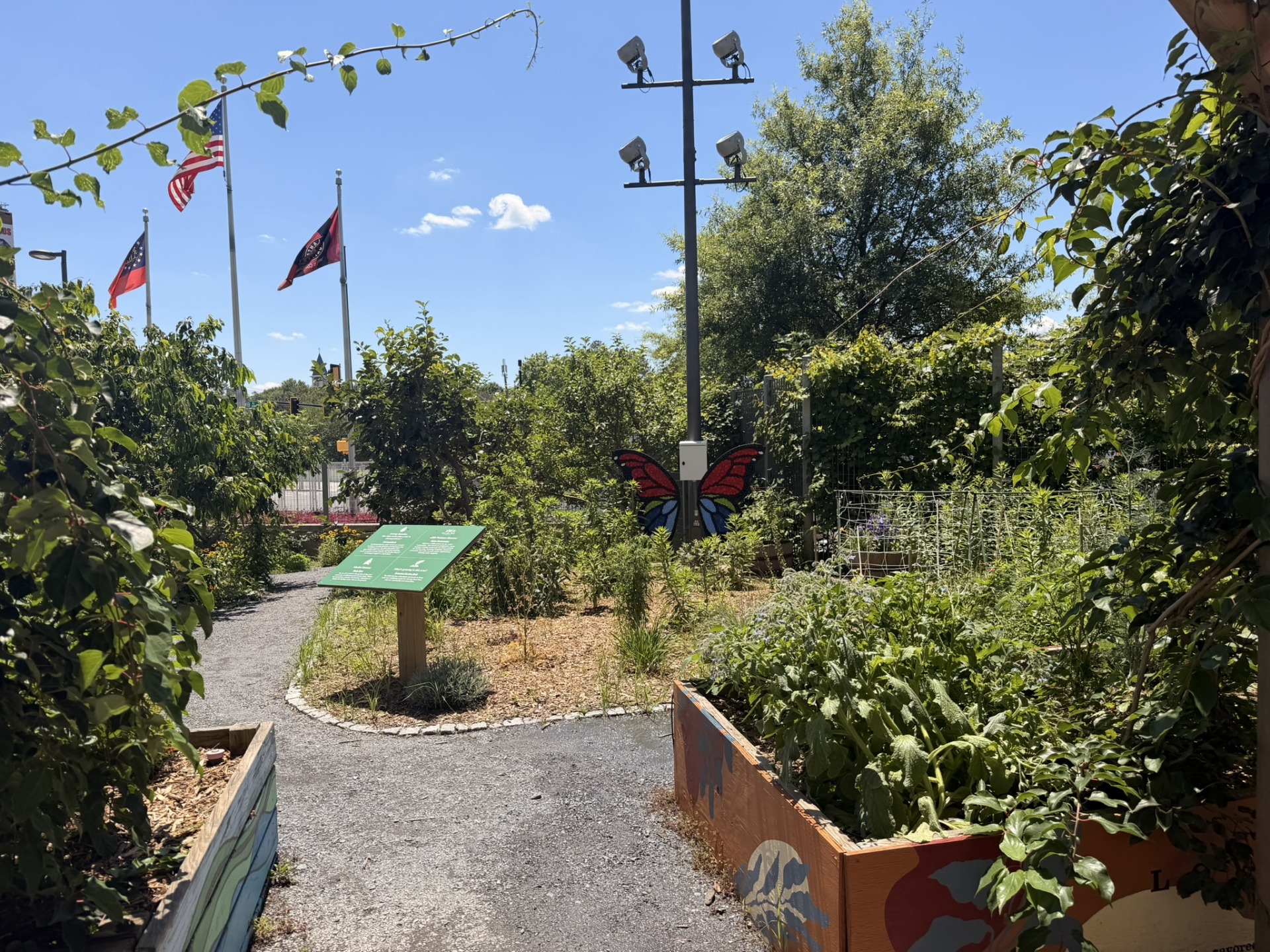
Mercedes-Benz Stadium in Atlanta opened in 2017 as the first professional sports stadium in the world to achieve LEED Platinum certification and as part of the LEED (Leadership in Energy and Environmental Design) design, the venue installed an urban garden that produces around 300 to 400 pounds of food annually.
Dawn Brown, Sr. Manager Stadium Tours & Education Programs and Sustainability, at Mercedes-Benz Stadium explains that after the venue had been opened for a handful of years, they set their eyes on what she calls “Garden 2.0,” with a focus on habitat growth and making the space multi-functional so it could be used for private events, concerts and associate events.
“We turned 20% of the site into a native pollinator habitat. … The next year, which was the end of 2025, our bees [in our] three beehives produced 500 pounds of honey and the year before they had only produced 249 pounds. We attribute that to all of the native plants that we put in,” Brown says.
Brown notes that Mercedes-Benz Stadium partnered with local SweetWater Brewery in Atlanta to brew four variations of honey brown ale, as well as using marigolds that were grown in the garden.
Mercedes-Benz Stadium’s garden is also used for school STEAM program tours and a workforce development program’s culinary class. Plus, venue employees get to enjoy the space during their lunch breaks or by harvesting produce as members of MBS’s garden club. Any excess food that is not utilized by employees or the culinary class is donated to a food bank in Atlanta.
“When you create a garden space, it’s for all living things. It’s for the bees, it’s for the butterflies, it’s for the humans, it’s for all things to coexist together. … Launching [an urban garden] becomes a wellness benefit for your associates in a way. Whether they’re going out there and engaging through planting or learning or just creating a new relationship with food. … ” Brown says.
She adds, “A big lesson that we [share] with our students and our associates is just rethinking how you can integrate a food system into your life. And maybe that is just planting a blueberry bush or growing a tomato plant. Creating and cultivating that relationship with food, I think, is a big lesson. And if that can be in your workplace or your place of worship or your home, we just love to see more food growing in funky places.”
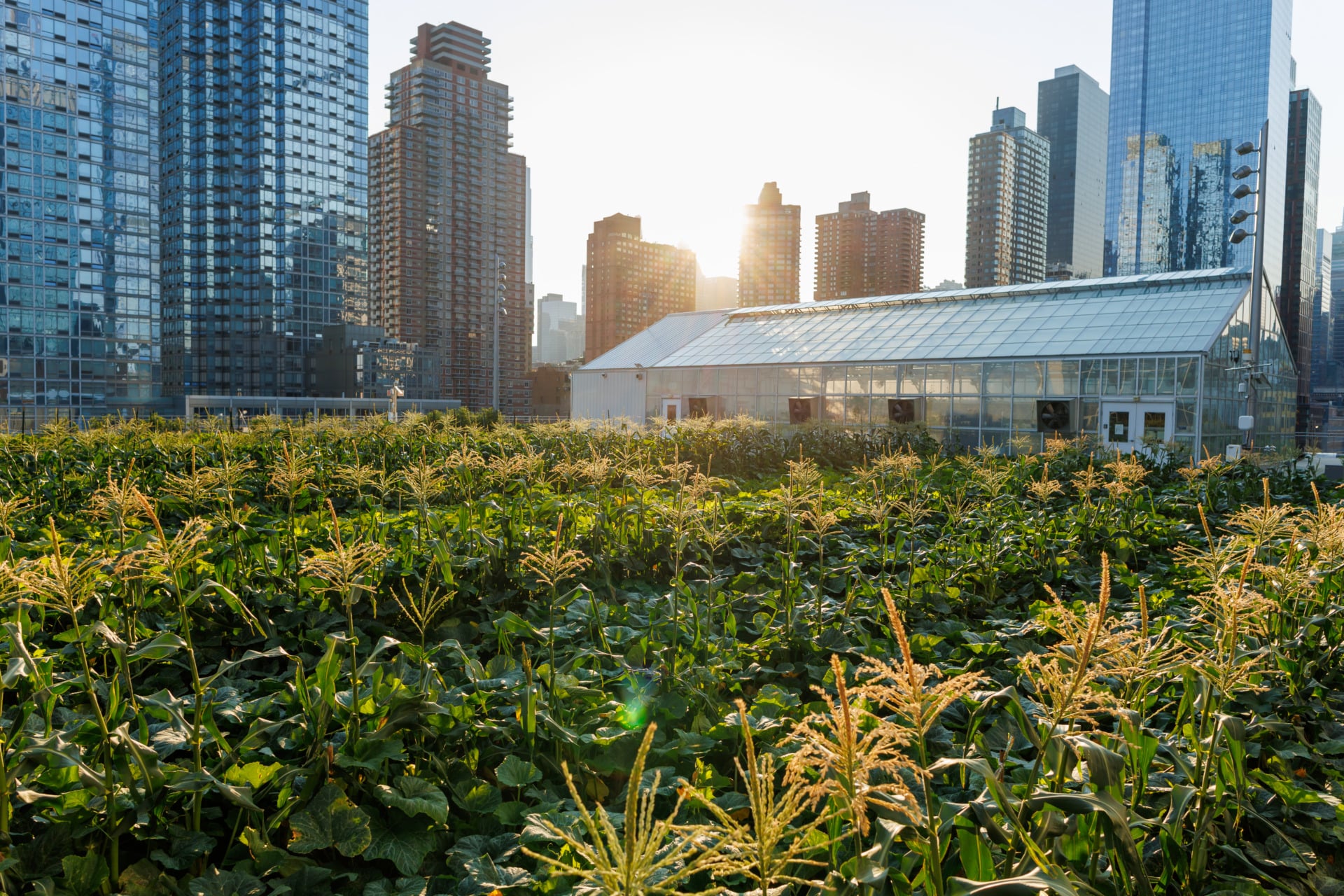
In Manhattan, the Jacob K. Javits Convention Center is doing its part to support pollinators and biodiversity with 1 acre of farmland located on the fourth floor of its expansion building, along with a 6.75 acre rooftop orchard.
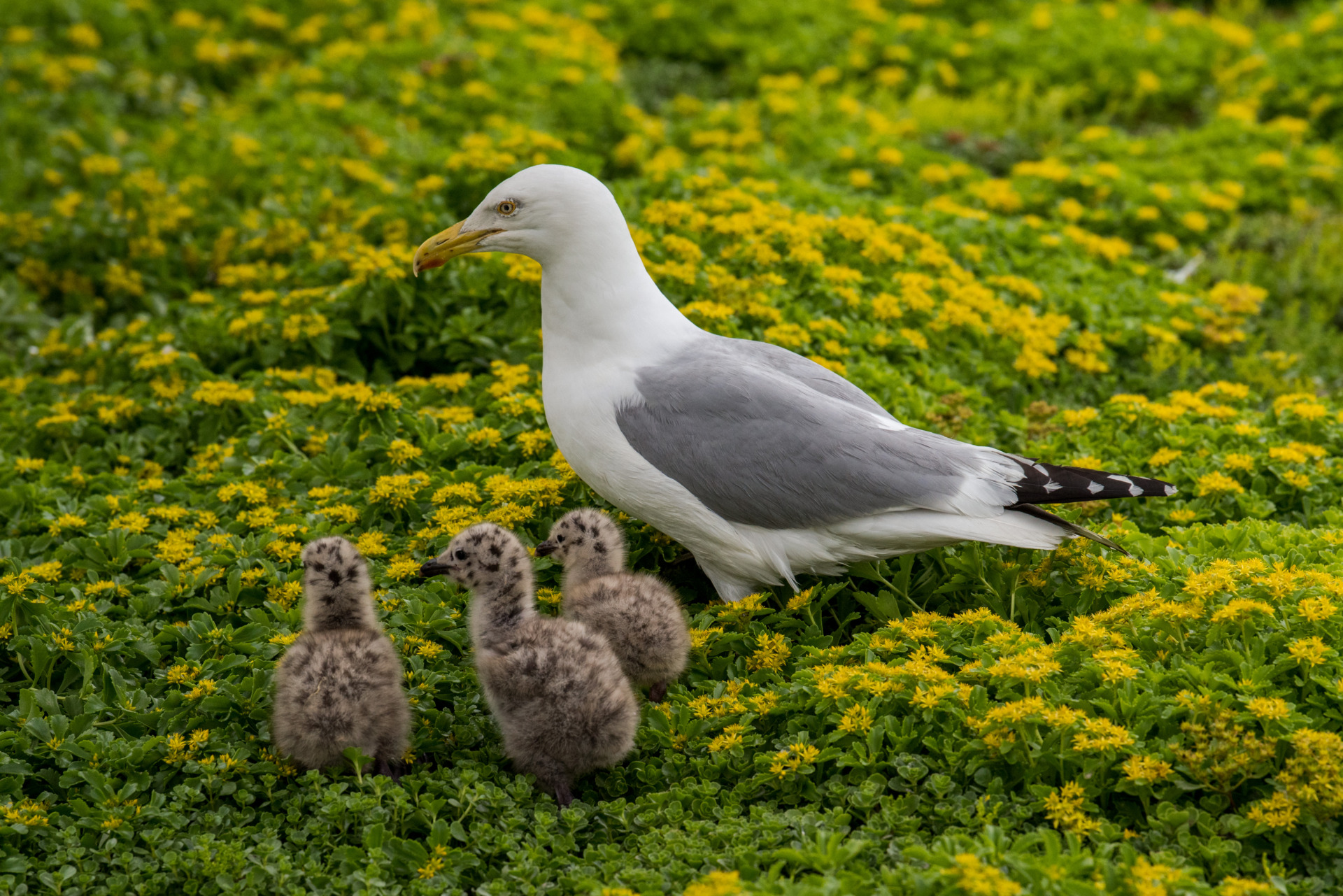
The green roof is a midway stop for migratory birds and has also become a habitat for herring gulls. Yashi Dadhich, Director of Energy and Sustainability, explains that the venue works closely with the New York City Bird Alliance to manage that population. More than 80 species have been identified using the Javits Center’s roof, along with five bat species.
Other pollinators that can be found at the venue include a ton of bees, with the center’s nine hives hosting around 100,000 bees each at season’s peak.
The rooftop orchard is sometimes referred to as a food forest because it was designed with the ecology of a forest with different layers of plants.
Dadhich points out that the rooftop garden features 11 different types of sedum, “a succulent, like a cactus. It absorbs water, which helps us in diverting storm water pollution and storm water in itself.” In addition to diverting approximately 7 million gallons of water annually, the roof has supported Javits Center’s energy conservation efforts as it’s helped “in reducing the entire area’s temperature by about 1.8 degrees Fahrenheit.”
On the fourth floor farm, which was established in 2021, Dadhich quips that they grow everything from arugula to zucchini, more than 60 different types of crops.
Produce from the farm is featured in the venue’s cafeteria, as well as offered to employees at a low rate. Dadhich added that the venue also donates a lot of produce to local food pantries to address food insecurity in the community, including collaborating with Rethink Foods and creating meals for Alliance for Positive Change.
“We also work with local schools and universities,” Dadhich says. “Many of the professors bring their classes here to demonstrate biodiversity, the food systems and what a sustainable building could look like.”
FREE
 Daily Pulse
Subscribe
Daily Pulse
Subscribe
 Daily Pulse
Subscribe
Daily Pulse
Subscribe