
Paladin Artists CEO Rick Levy Talks Joining The Agency & ‘The Intersection Between Business And Creativity’
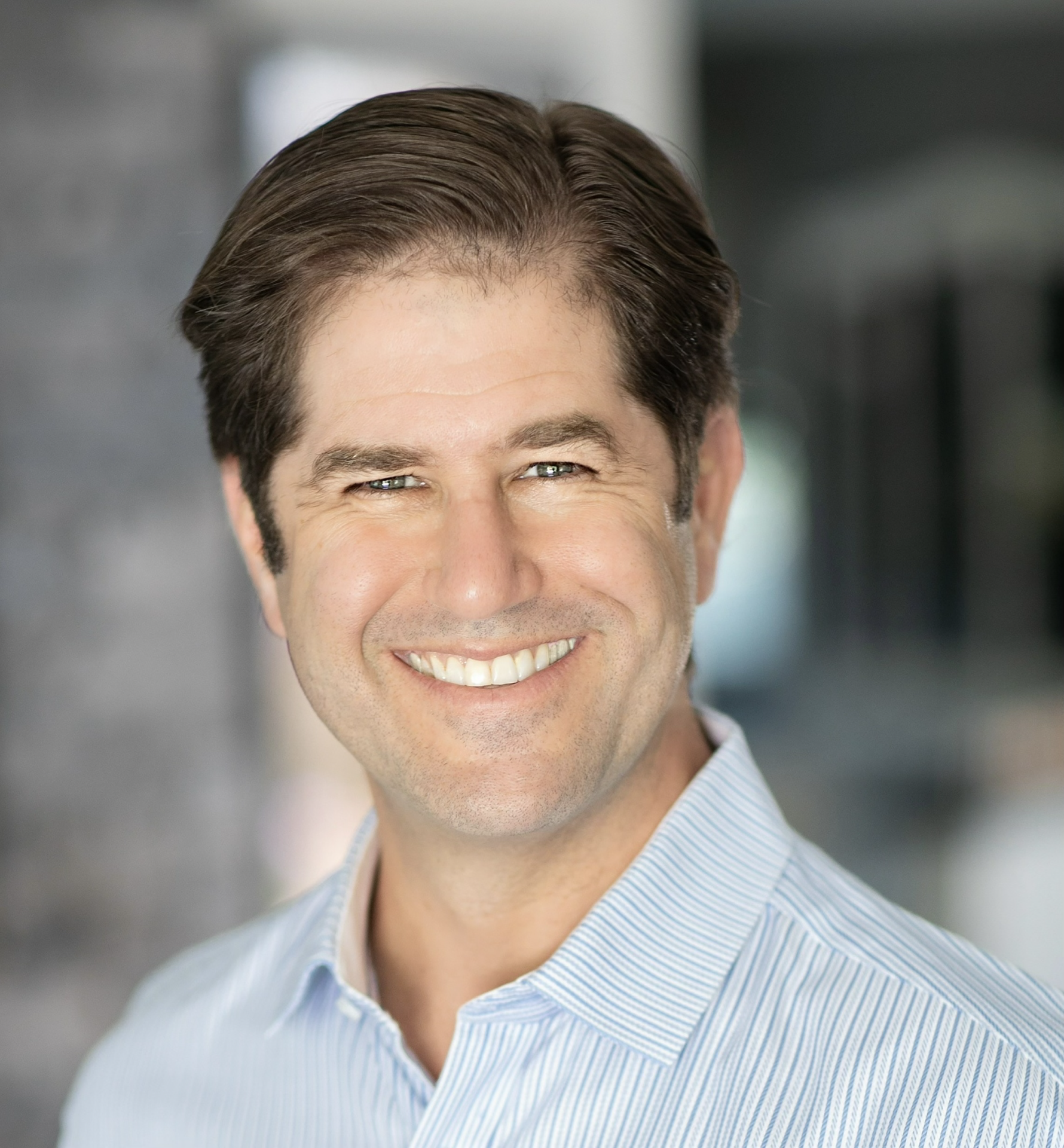
One of the latest moves in the indie agency world happened in May with an announcement that Paladin Artists was in advanced discussions to acquire Entourage Talent Associates. The update was revealed along with the news that Rick Levy had joined Paladin as Chief Executive Officer.
New York-based agency Entourage Talent Associates was founded by Wayne Forte. During Forte’s career he has represented some of the most iconic touring artists including David Bowie, The Cure, The Clash, Tedeschi Trucks Band, Joe Satriani (solo, the Satch Vai Band as well as G3), Joan Armatrading and Steve Hackett, among many others.
As previously reported, Levy has more than 25 years of senior leadership in the live industry, including serving as a founding partner, chief operating officer and general counsel of ICM Partners. During his time at the company he was instrumental in ICM’s growth and numerous mergers and acquisitions, including as part of the leadership team when ICM was sold to CAA in 2022.
Other highlights from his career include helping UK-based Primary Talent International in its 2023 deal to buy itself back from CAA and serving as interim CEO of Just For Laughs/Juste Pour Rire. Levy remains a partner at Primary Talent International.
Paladin Artists, which was founded by Andy Somers and Steve Martin, with Bruce Solar joining shortly after, has headquarters in Los Angeles and New York. The agency represents more than 400 acts including Blondie, Sublime, CAKE, War, Gipsy Kings, Nicotine Dolls, The Psychedelic Furs, Stevie Van Zandt and OMD. When the agency was first launched in 2021, it was announced as a strategic partnership with Wayne Forte of Entourage Talent Associates and Karrie Goldberg of The Kagency.
Pollstar caught up with Levy to learn more about his career journey and what’s next for the boutique agency.
Pollstar: What first inspired you to work in the music industry?
Rick Levy: I’ve been drawn to music as long as I can remember. … I remember even as a really young kid having an old-fashioned record player in my bedroom and listening to whatever records that I got my hands on. … And then I remember discovering my very first favorite artist, which was Jim Croce. And how important his music to me was. [This] was probably first grade, second grade, like really young.
My father ran a small advertising agency and his biggest accounts were record labels. He worked for Polydor and Mercury Records. And back in the early disco days, he was working on Gloria Gaynor and Alicia Bridges and some other artists like Atlanta Rhythm Section and Michael Bolton’s first rock band called Blackjack … So, I was exposed to it early on and then I spent my summers in summer camp in the Adirondack Mountains where I was influenced by all the counselors who were listening to the likes of Van Morrison and Pink Floyd and Grateful Dead. And then one summer a kind of a life-changing moment for me and my obsession with live music came from hearing a bootleg of a legendary 1978 Bruce Springsteen concert from the Agora Theater in Cleveland and it was like a lightning bolt hit me. That was it for me. It wasn’t just music. It was also the live concert experience.
I was too young to really go to a lot of them, but it was getting my hands on whatever I could listen to. It didn’t dawn on me till much later in life that I might be able to make a career out of anything to do with it. It’s come full circle for me at Paladin – we represent David Gilmore, we represent Jim Croce’s son, A.J. We represent the estate of Robert Hunter, who wrote so many of these amazing Grateful Dead songs and we represent three members of the E Street Band [Stevie Van Zandt, Jake Clemons, and Nils Lofgren]. We even represent a high school classmate of mine, Dar Williams, whose music I’ve always loved. So it’s really been a blessing to arrive here at Paladin.
How did you first get your foot in the door in the industry?
I grew up and went to law school in New York and then came out [to Los Angeles] kind of on a whim for one summer and fell in love with L.A. and the L.A. culture. I worked at a law firm called Gibson Dunn and Crutcher. … They didn’t have much of an entertainment group. But we did have entertainment clients because we were an L.A.-based firm. . . . ICM was a client of ours. I didn’t know what a talent agency was when I first started representing ICM. A few years afterwards I was just kind of at the right place at the right time and they offered me an opportunity to come in as general counsel and run their entire legal department. I jumped at that despite knowing that they maybe made a mistake taking a shot at a 28-year-old kid who didn’t really have any real entertainment [or] corporate background. But it gave me an opportunity and exposure in the business. And because I was in the C-suite, I had exposure to the business side, not just the legal side. I had this court-side view of the intersection between business and creativity in the entertainment field and that’s where I’ve spent most of my career.
I know that you played a central role in the 2012 management-led buyout from private equity and then you were part of the leadership team when ICM was sold to CAA. What are your biggest takeaways from your time at the company?
So much happened and changed both at the company and also in the industry. You know, when I first joined, [agencies] had no outside ownership. When we sold our business in 2005, it was the first time there was outside investment like private equity had ever invested in a talent agency and it really changed a lot of things as those agencies expanded into a lot of other business lines and diversified. One of the things I love is the opportunity to come back to the basics and focus on the business of representation. At Paladin we are focused on artists. We are completely agent owned and led and the beauty of that simplicity [is the ability to focus on] zealous representation of artists and nothing else.
Anything else you wanted to share about how you knew joining Paladin was the next right step in your career? Or what you’ve observed about the culture of the company since coming on board?
The [hiring] announcement came out about a month ago, but I started at the beginning of the year. I’ve known the principals for a number of years. I’ve been friends with Steve Martin for nearly 20 years. So for me looking at opportunities of where to work, a lot of it’s about with whom I’m going to work. I really respect not only the careers but also the culture that Steve and Andy and Bruce and others have built over the last five years or so at Paladin. So that was an important starting point for me … knowing how well respected they are as leaders, as agents – and the careers they built for their artists was really attractive to me. … You need sort of a momentum and a critical mass before you start to bring in professional operators and a lot of that hard work in the early stages was done by them. And now it’s my job to help them in the next phase of the journey.
Speaking of growth, when the news of your hire was revealed in May, the announcement also noted that Paladin was in advanced discussions to acquire Entourage Talent Associates. Any updates you can share?
Yeah, I mean, generally speaking, even commenting on the fact that we’re in advanced stages is unusual in a lot of ways but because Wayne [Forte, founder of Entourage] already is such an important part of the fabric of the business … We felt that we could make an exception to it. But in terms of the specifics we will let you know as soon as we can what the next phases are. But I’m just really super excited. Wayne sits on our board and just being able to interact with him on a regular basis has been a pleasure and an honor. Just like the other co-founders, he himself is kind of a legend in the business.
I moderated a panel last year at NIVA and he helped me prepare and gave me tips on moderating. He’s such a great guy.
Yeah, he’s amazing.
Anything else you wanted to comment on as far as goals for the future of Paladin?
Look, for me, my goals are the goals of the guys who have built it thus far, and that is really to make Paladin the leading independent music agency in the business. And it sounds like a really lofty goal, but there’s a spot that’s missing in the business with all of the outside investment that’s taken place and the way that the big full service agencies are run. I think Paladin is really well suited to meet that void in the marketplace. We’re off to a good start and we’re going to continue to grow and expand and stay truthful to our roots and our mission – which is to stay fiercely independent advocates for our clients, focus on the live entertainment space and not be distracted by other things. Having been at a full service agency, I understand how sometimes those other things can get in the way.
Just looking at your career journey, with over 25 years of senior leadership experience in the agency world, how have you seen the business change over the years?
… In some ways the artist has a lot more control over their career and in other ways it’s so much harder to break through and live music has become that much more essential. Performing live is the lifeblood for artists in terms of their economic life. They’re much more reliant on it. And so building a long-term career for live music is that much more critically important. You can’t sit back and just collect on royalties and rely on that. In the 25 years or so I’ve been part of [the industry], it’s changed where live music used to be sort of the promotional arm to recorded music and now it’s vice versa. With all those changes we are experiencing come lots of opportunities …. and not just for music, but for all aspects of our lives. We are seeing how live experiences are essential to connecting us with our friends, with our neighbors, with our community, with humanity. Music has always played a central role in our culture and I think it’s never been as important as it is now in a lot of ways.
It seems like since the pandemic and then with AI and everything, people are craving that human touch, that community even more so.
Yeah. You look at the recent watch parties for the Knicks in New York, right? Anyone can watch it on their screen in their home or even in a small bar. People wanted to be surrounded by the big crowds and the energy and all of that. And you can’t replicate that experience by just putting on a headset and being by yourself.
What do you see as the biggest challenges or opportunities facing the business?
I’m generally optimistic about where things stand in the industry. There are some economic challenges for emerging artists on the road because the economics can be tough and you see a lot of early stage bands and artists that are spending money to just build an audience on the road … it is definitely a challenge. And one that we’re aware of and it’s one that as an independent agency, we can be creative in finding solutions – packaging people up for the right tours, finding other ways to help them make ends meet. … Overall I think that this is an amazing time to be in the live music business.
Would you say optimism is part of the overall philosophy guiding your career? Any words you live by?
You know, I think one of the things I’ve really learned over the last stage of my career is growth happens when you push yourself outside of your comfort zone. … I think it’s really important to embrace change and to challenge yourself and to give yourself permission to get uncomfortable. And I think that’s important to do for your team, too. That is, to challenge them and push them outside their comfort zone. Most of the opportunities that I’ve had and that have shaped my career came from being willing to take on challenges that I felt were bigger than me at the time. And I haven’t always succeeded in those. But, you have to be able and willing to allow for failure at times, too. … Learning and growth often comes from failure more than from success.
And then what sort of goes along with that philosophy is valuing being a lifelong learner. Embrace the fact that you don’t know it all. Things are always changing around you and you have to be willing to learn from others, to go and seek knowledge and different points of view. A lot of times for me it hasn’t come from the people around me that are doing the same things as me, but from people with different sets of experiences outside the industry who may have a unique insight, a different point of view that causes you to unlock some creative solutions that really can help you personally or help your business move forward to the next level.
FREE
 Daily Pulse
Subscribe
Daily Pulse
Subscribe
 Daily Pulse
Subscribe
Daily Pulse
Subscribe