
Off To The Races In Kentucky With Major Venue, Hospitality Expansion
Lex and Lou are Kentucky siblings with an entertainment rivalry.
Despite having distinct history, traditions and attractions, Louisville and Lexington are often treated like a single entertainment region, situated 80 miles apart and connected by the I-64 corridor, with Frankfort and Shelby County communities in between. Not to mention their proximity to other major concert tour markets like Cincinnati, Nashville and Indianapolis.
Due largely to availability and population (about 2 million combined), many tours will play one city or the other, but rarely both because the distance between them – about 90 minutes with traffic.
The cities share portions of the same entertainment market, yet they are large enough to support their own major venues – each with a capacity of 20,000 or above and with storied university programs requiring large venues.
In Louisville, the primary arena is KFC Yum! Center, a roughly 22,000-seat downtown venue that serves as home to the Louisville Cardinals men’s and women’s basketball programs as well as hosting major concerts and family shows.
In Lexington, the main venue is Rupp Arena, a 20,000-seat facility within the Central Bank Center convention and entertainment district and home to the Kentucky Wildcats men’s basketball program.
In a competitive region, both sibs are seeking attention.
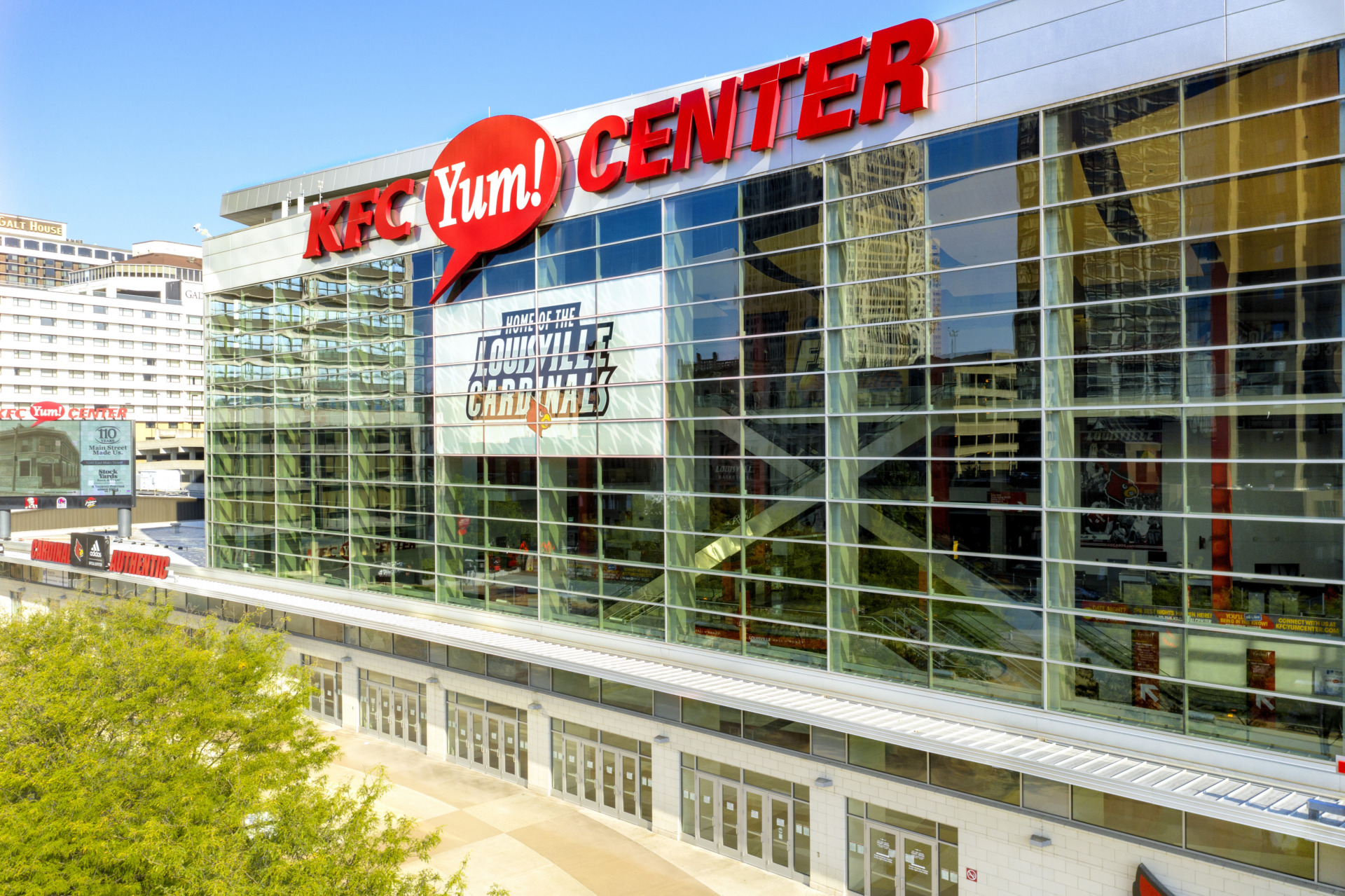
KFC Yum! Center, which opened in 2010, recently celebrated its 15th anniversary, but the venue is looking at the future with discussions underway about renovations that could cost up to $100 million over the next 15 years.
“One of the priorities for the owners of the facility, which is the Louisville Arena Authority, is to make sure the facility is always state of the art, well maintained and really is a centerpiece for live entertainment in the region,” says Eric Granger, General Manager of KFC Yum! Center for Legends Global.
The Arena Authority replaced the roof in 2025 and has a rigorous maintenance program, but they are also looking at how to reimagine spaces to meet the needs of ticket buyers and modern tours.
“We’re making sure we have that cap-ex program, but we’re also being strategic for the future,” says Granger. “What we’re looking at right now is that strategic plan, which is really reimagining certain spaces, potentially adding more premium, certainly having more of a frictionless concessions experience, but really meeting the needs and the desires of today’s customer.”
Being home court to both the University of Louisville men’s and women’s basketball programs, the venue has a full calendar to work around for any future renovations while trying to meet fan demands.
“What we have seen for both the sports world and the live entertainment ticket buyers, is that their desires have changed over the last 15, 20 years,” says Granger. “They want to see more value for their spend. The experience is just as important from the moment they leave their house to the moment they return to their house. Making sure we meet that whole experience is really where the priority lies.”
Operating in a competitive market isn’t new for Granger, who was GM at Nationwide Arena in Columbus, Ohio, which competed with the 20,000-cap Jerome Schottenstein Center (The Schott) on the campus of The Ohio State University, just 2 miles away.
“I’ve experienced it before and it is a lot of management, and what we want to do is always just position ourselves as the best play in the market, no offense to my friends at Rupp or any other venues,” says Granger.
KFC Yum! Center draws patrons from across Kentucky, southern Indiana, Cincinnati, northern part of Tennessee and as far as St. Louis. For non-basketball ticketed events, anywhere from 51% to 53% of tickets are purchased outside of Metro Louisville.
Tourism – dubbed “Bourbonism” because of the popularity of the state’s bourbon trade – is another audience driver as well as thoroughbred horse racing at Churchill Downs, which is undergoing a massive infield renovation, and the national reputation of two of Danny Wimmer Presents’ premier four-day festivals – Bourbon & Beyond and Louder Than Life.
The festivals “pull some artists, but they come back around at some point,” explains Granger of competing with festivals for talent. “So yes, we may miss out on an artist we might have had in a year, because they’re playing the festivals, but I don’t worry about that so much, as I appreciate what it does in terms of getting fans to come into Louisville for live concerts, especially. It strengthens the market and builds up our reputation.”
Recently comedy and faith-based concerts are on the rise at the venue. The Center will host the men’s NCAA Basketball Championship first and second rounds in 2027 and were just awarded the 2028 USA Gymnastics Olympic trials, which is a three-week rental in June.
“We’re a big building. We’re by far the largest arena in this region,” adds Granger. “And what I like to tell folks is that, ‘Yeah, we might have the most seats, but the most important thing is that we’re able to sell them.’ And that’s what we usually find, that we’re the top selling date of a lot of tours, because of our capacity and our ability to sell those tickets.”
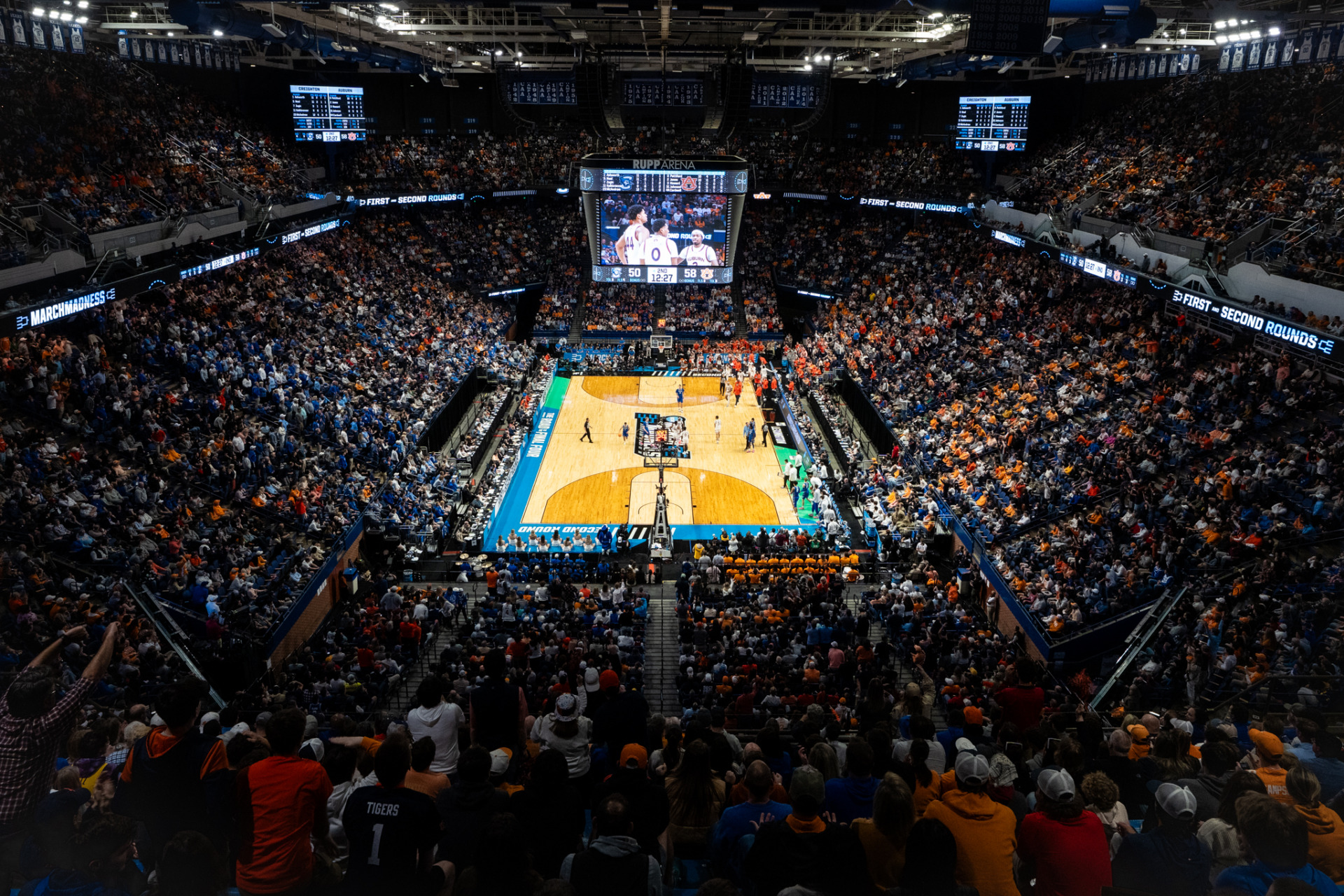
Like siblings, Lexington has a lot in common with Louisville including a high-profile collegiate basketball program, thoroughbred horse racing at Keeneland, the bourbon trail and a 20,000-cap arena.
“We have the UK basketball team and they have the University of Louisville,” explains Brian Sipe, General Manager of Rupp Arena, which is operated by Oak View Group, Pollstar’s parent company. “By market size they’re bigger than us, but because of our building size and the capacity that we have – which is very similar to theirs – we are able to attract big names. And we’ve been able to have situations where a lot of the acts will play one of us one year and the other the next, because there’s so much of a population in both areas.”
To get to Louisville, people in the eastern part of the state have to travel through Lexington.
“What we find is a lot of people from the eastern side of the state will come to Lexington for shows, whereas Louisville will obviously draw from their home base, they can draw from Indianapolis, and then we both can draw from Cincinnati if we need to because there’s an interstate direct to Louisville and direct to Lexington from Cincinnati. We have this triangle of a couple of million people that we can pull from.”
In 2022, the city completed a $310 million expansion and renovation of the Central Bank Center convention complex and Rupp Arena. One notable result was a reduction in capacity from roughly 23,500 seats to about 20,500 seats, trading seats for improved comfort and premium amenities.
“Most people probably think bigger is better, but in all honesty, when you want to sell out every show, or you want an artist looking at a full house that is huge,” explains Sipe, adding that the venue replaced bench seating on the upper level with regular seats with chair backs. “We get a higher price ticket for those seats and then it reduces your capacity, which actually helps you get to sell out more, so that was a net benefit for us.”
The arena, which opened in 1976, has been reinvigorated by the massive renovation, which was the largest in Lexington history.
“Rupp actually sits in the convention center space, and you have this beautiful exterior glass convention center that you’re looking at with an art sculpture out front, so it definitely changed the whole view of downtown,” says Sipe. “You honestly forget that you’re at a 50-year-old arena when you come in, because you’re walking through this brand new construction.”
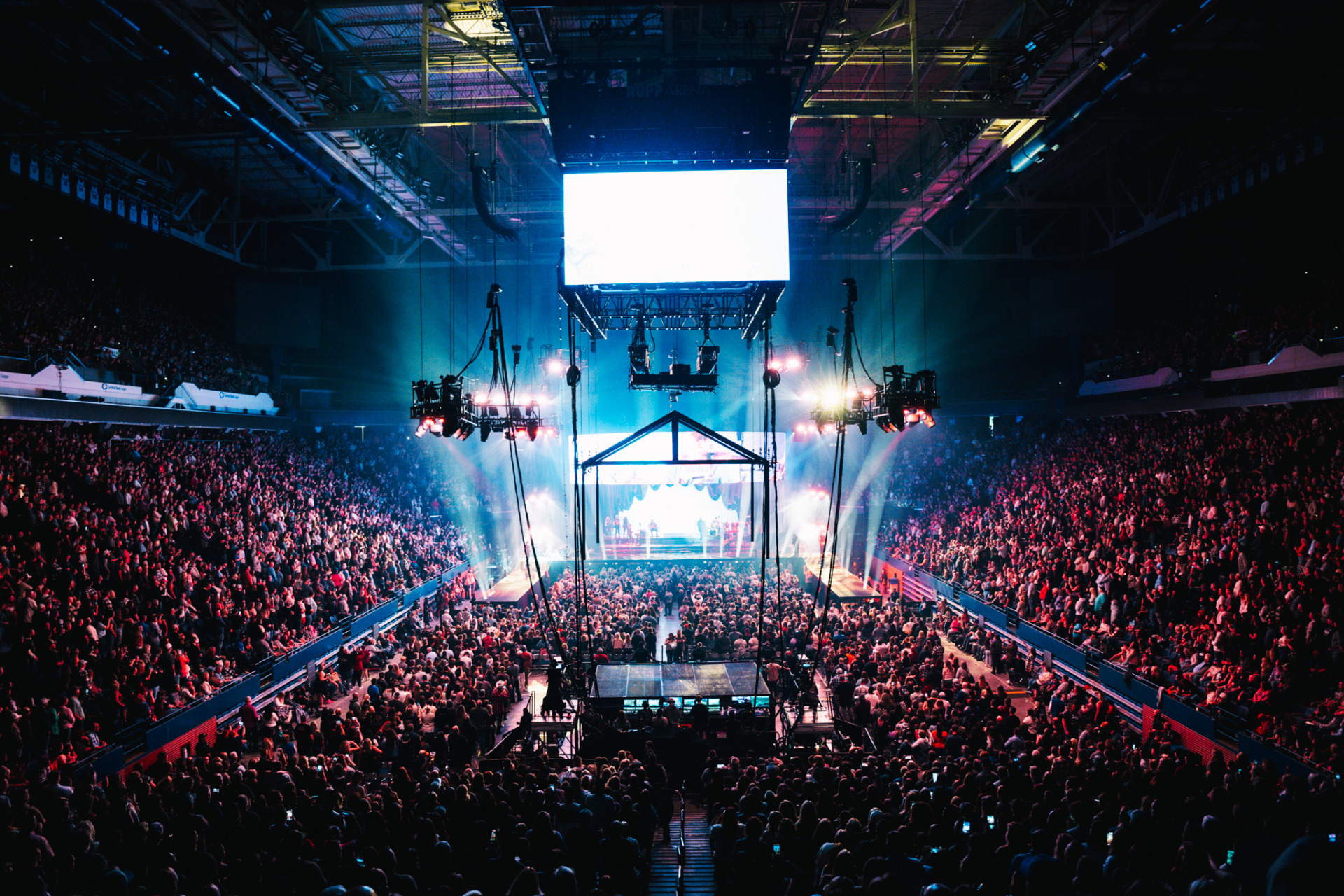
A new garage was part of the renovation so all parking for production trucks and buses is inside with 10 loading docks. And because it is all contained in the building there is no need for outside permitting.
The University of Kentucky has a vigorous basketball schedule but only the men’s team plays at Rupp. The women Wildcats have the recently renovated Memorial Coliseum, which means there are fewer games to work around on the calendar.
“Currently, how the SEC is structured is men only play on Tuesday, Wednesday or Saturdays during the SEC schedule,” explains Sipe. “It does allow us to have more flexibility when it comes to scheduling, whereas if we had both men and women’s teams we could play any day of the week. We do offer that to agents and promoters as we have a little more availability than other venues.”
Lincoln Property Company is partnered with The Webb Companies to develop 18 acres across from the arena with plans for a 200-room hotel, retail, restaurants, parking garages and condominiums.
“People just don’t understand the bourbon industry and the horse industry, how they’re great economic engines locally for Lexington and our market,” says Sipe. “There is money here. We can sell tickets. It’s not a depressed area, it’s affluent. The university is getting close to 40,000 students, so it’s a great university town. And it’s not one of these university towns that clears out. We’ve done plenty of concerts in the summer and sold them out.”
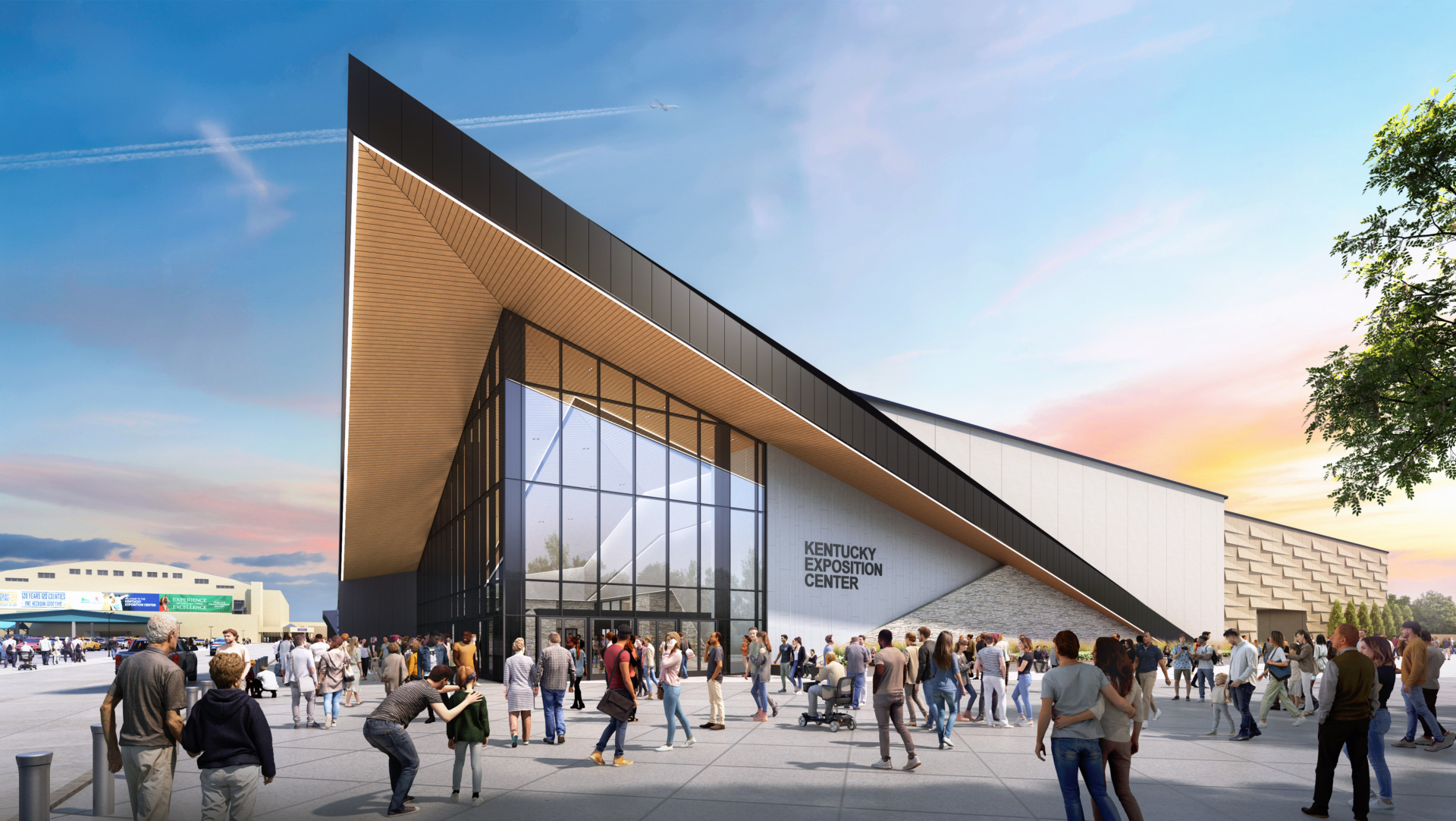
Another major investment is in phase one at the state-owned Kentucky Exposition Center (Expo Center) in Louisville with a multi-phase redevelopment project led by the Kentucky State Fair Board and Kentucky Venues that could total $560 million.
The redevelopment plan is scheduled to be completed in 2030 and is being led by Kentucky Venues. It includes both new construction and major reconfiguration meant to modernize the 1950s-1970s era buildings and make the Expo Center a Top-5 meeting facility in the U.S.
“The challenge was to not lose the historical foundation of the place, the cultural identity of the place, while being able to host the next generation of events,” says Anthony Montalto of architecture, design and engineering firm HKS.
The Expo Center sits on 300 acres near the Louisville Muhammad Ali International Airport next to the Kentucky Kingdom amusement park. The Highland Festival Grounds at The Expo is home to the popular Bourbon & Beyond festival.
“It has a deeply Kentucky story,” says Montalto. “The renovation was about organizing those assets better on the one hand and then modernizing the guests / planner experience to create spaces that can move seamlessly from a livestock event to equine events, to sports, to trade shows, festivals, conventions, banquets – fill in the blank. …We’re not designing a box. We’re designing a more powerful platform for Kentucky’s biggest moments.”
Civic Leaders Embrace Live Music,
Grow Infrastructure To Support Industry and Tourism

Louisville’s status as a destination thanks to its longstanding status as host of the Kentucky Derby (now more than 150 years) and as the home of American bourbon whiskey has long driven tourism and made the city a unique place to live and play. Adding live entertainment has been a catalyst to continue that trajectory.
“The entertainment scene in Louisville is great and getting even better,” says Louisville Mayor Craig Greenberg, who took office in 2023. A big part of that is thanks to festival producer Danny Wimmer Presents, which started the Louder Than Life rock and metal festival in the city in 2014, which along with sister multi-genre festival Bourbon & Beyond now draw big crowds over two full weekends to the conveniently located Kentucky Exposition Center in the city.
While Louder Than Life mostly caters to DWP’s core rock-oriented lineup, the pairing of music and bourbon, set in the historic city and offering other culinary delights along with a varied lineup catering to a slightly older and more affluent audience has been more than a hit, and a clear priority for the festival promoter.
“Those are our iconic hometown festivals that we’re incredibly proud of, that we are excited to help grow with Danny Wimmer and his team year over year,” says Greenberg, who along with attending the festivals regularly as a fan helped spearhead and participate in a year “Mayorthon” 5K race taking place during Bourbon & Beyond — although some attendees may be a little groggy when Saturday morning rolls around.
“It’s amazing what they have done for our city. Between Louder Than Life and Bourbon & Beyond, it’s over 450,000 people in just eight festival days over two weekends,” Greenberg says. “We’re used to the Kentucky Derby every year, and these festivals really rival Derby Week for our city. Seventy percent of the folks who attend come from out of state.”
This year’s events include 150-plus bands each on four main stages, topped by talent including Foo Fighters, Queens Of The Stage Age, Mumford & Sons, Chris Stapleton, Dave Matthews band and Red Clay Strays for Bourbon & Beyond on Sept. 24-27, while the heavy-leaning Louder Than Life features My Chemical Romance, Iron Maiden, Tool, Limp Bizkit, Pantera, Pierce The Veil, Gojira and many others Sept. 17-20.
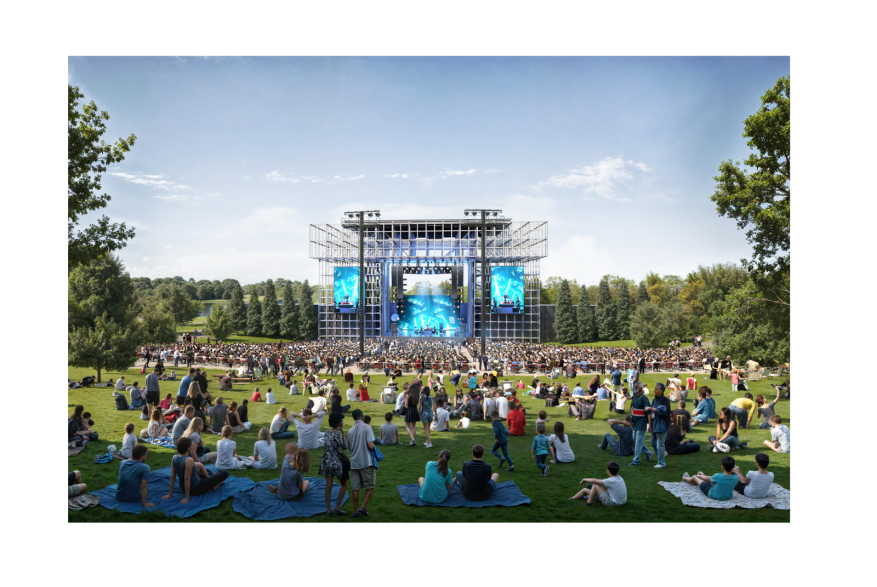
The now-long-running events appear set to remain in the city for the foreseeable future, with a 10-year agreement reached between the promoter and city, allowing both sides to operate with more certainty and plan ahead accordingly.
“Every state is represented, all 50 states, 27 countries,” Greenberg says of the events’ drawing power. “It’s great for local businesses, it’s great for the entire hospitality industry. We have used our experience in hosting the world in Louisville for the Kentucky Derby to support larger and growing events like these festivals. Now, we’re using that additional experience to get even more events to our city, not just music but also sporting events, too. Upcoming events include the Solheim Cup women’s golf tournament in 2028, USA gymnastics Olympics trials in 2028 as well. “There’s no better city to host an entertainment event than in Louisville, Kentucky.”
The city and major developers are looking to improve the city’s infrastructure and major construction projects are in the works to do just that, including a multi-phased, $460 million expansion of the Expo Center and at least two major downtown hotels, including one with 1,000 rooms.
“What you try to do when you’re a destination is position yourself where everyone feels like they can engage, regardless of what you’re here for — whether it’s our food, our bourbon,, some of our other attractions in town, there’s something that you can engage and enjoy the city through,” says Cleo Battle, CEO and president of Louisville Tourism, who has 35 years of experience in the tourism industry and has been in Louisville since 2013. “We’ve said we want to be like Napa and Sonoma (California wine country destination) but for bourbon. We haven’t had the official announcement yet, but we believe it’s going to be the fourth year for record tourism in the state, and DWP is a big part of that.”
The growth of the live music scene complements the city’s efforts to make its worldwide bourbon brands and distilleries an attraction of their own.
“What we’ve been able to do here in the last 10 years with the development of the distilleries, we basically have built out an attraction,” says Battle. “In 2013 there were zero distilleries for tasting rooms in downtown Louisville. Today, there are 26, you can walk between the distilleries on a tasting route. Every year we seem to open up another one or two facilities and demand for the tourism experience of bourbon continues to grow. That’s exciting for all our attractions. It’s an exciting time for tourism right now.” — Ryan Borba
FREE
 Daily Pulse
Subscribe
Daily Pulse
Subscribe
 Daily Pulse
Subscribe
Daily Pulse
Subscribe