
Relationships Over Transactions: Interstellar.plus Founder Matthew Hoag On Doing Business On A Different Value System
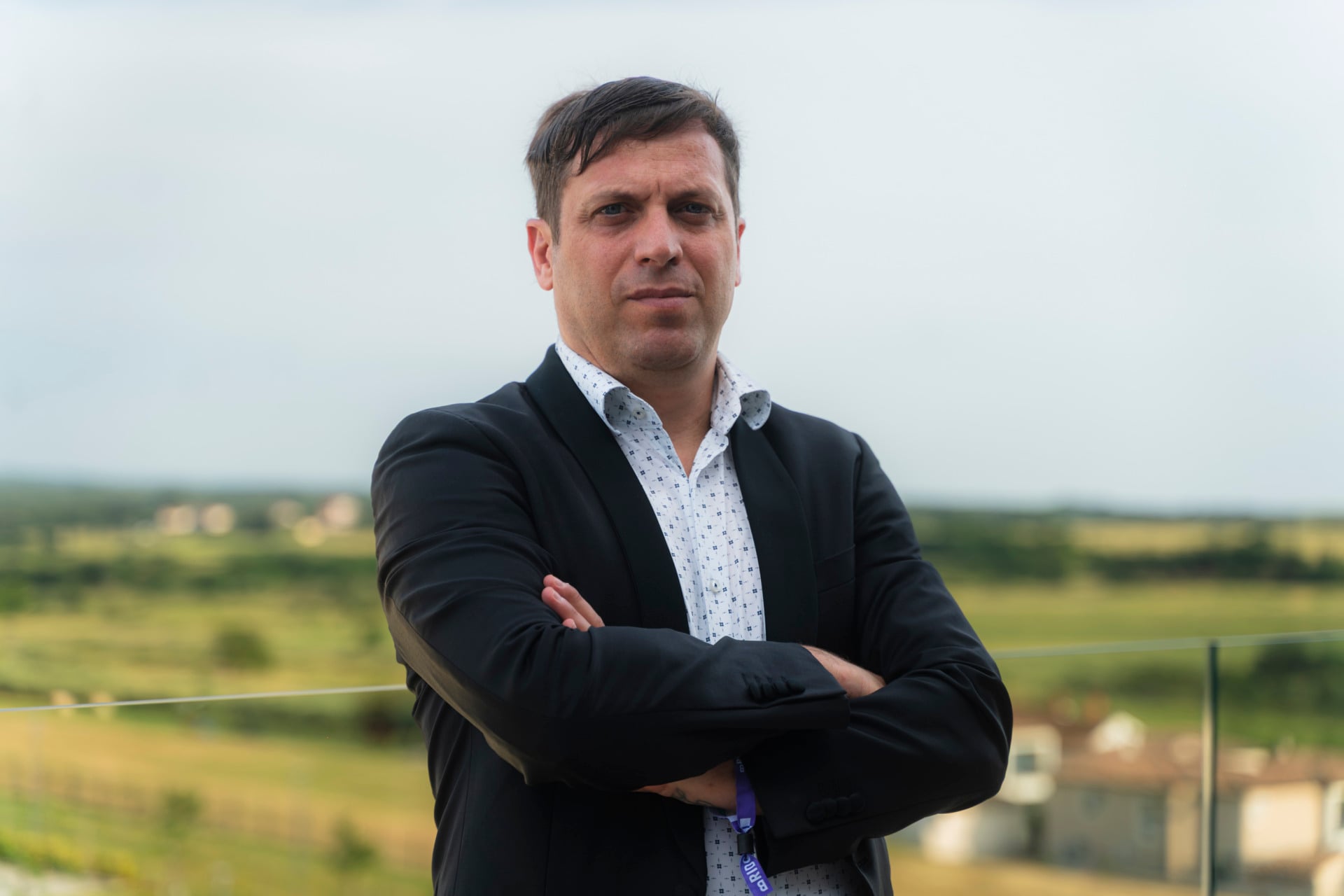
Pollstar speaks with Matthew Hoag, founder and CEO of Interstellar.plus — in his own words, “a growth consultancy company that partners up with projects that could use our expertise.”
The business currently works with 11 live entertainment, technology, and music-related clients-slash-partners from all over the world and holds equity in around 70% of them.
A lot of these partners are operating in so-called emerging markets, which has taught Hoag many things, but above all else that the time for doing business driven by numbers rather than values is over; that a collaborative and humble approach will be the only way of making deals in the future; and that a successful local scene has emerged in these places long before the West even considered to look beyond its own country borders.
“The entertainment sector is reflecting the worldwide market situation,” he explains, “we are seeing a big shift in power, globally speaking, a multipolar world emerging, and this will eventually be reflected in the entertainment industry. I respect myself, and I respect you, so how can we find a way to collaborate based on this new value system?”
It’s a value system in which people are no longer viewed as resources but as humans; as living, breathing beings instead of mere demographical statistics playing their part in the economy.
The reason live entertainment is even looking at new markets is simple: saturation in the established ones, “especially in the West,” says Hoag, “where we have these top-heavy, headliner-driven models, where everybody is fighting over a finite number of artists. This finite side of the business also inflates prices past what the audience can bear.
“While there is an over-concentration at the top, the grassroots is getting completely neglected and will eventually be lost. Even that mid-size level is struggling. Mid-size festivals are disappearing every year, and the rest feature the same 15 names on every poster.”
Hoag likens it to a pyramid, where everything is concentrated at the tip, while the lower parts that form the very basis of the entire construct are being eroded. The logic is as clear as it is simple: once the basis is gone completely, there’s nothing to support the top anymore.
“It’s a problem,” he says, because “the bottom and middle part of the pyramid used to be the talent development pipeline. As we increasingly lack that talent development pipeline inside our own scenes at home, extractive logic dictates that we now need to board a flight and go search for it elsewhere.”
When reading about the next great frontiers in live entertainment in Western media – like Mumbai, India; Jakarta, Indonesia; Bangkok, Thailand; Johannesburg, South Africa; Riyadh, Saudi Arabia; Lagos, Nigeria; etc. – one often gets the impression these are seen as blank spaces to be developed from scratch.
But, according to Hoag, it’s not like that at all. “While it is true that one era of the industry is ending, and the next one is being written, it is being written outside of London and Los Angeles. And it’s being written by the locals in those new markets,” he says, adding, “if we look at it from this perspective, we should be precise in the language that we are using: what we in the West like to call developing emerging markets is really just a prettier way of saying what anthropologists call cultural imperialism — centuries, millennia of old cultures viewed as blank, unfinished spaces that only become real once Western capital arrives.

“That’s not ever how it works, because those societies are not emerging. They were always there, long before the West decided to look into them. Their scene has always been there, and they have their own cultural economies.
“What is actually new,” says Hoag, “is that the old habit of arriving and harvesting is running out of road. Local operators own the audience, they understand the culture, and they increasingly have their own capital.
“The real question is not whether multinationals will move on to greener pastures; it’s whether they realize the era in which they could simply arrive and take is closing.”
The live biz has always valued the local promoter’s expertise. This entire industry was built on local independent promoters building a circuit for acts to tour. Then came Robert Francis Xavier Sillerman, who found a way to turn live into an investment opportunity. But even as the corporatization of the biz continued, the expertise of local promoters never lost its value.
Most local promoters have, of course, been bought up by the multinationals by now, and the question is whether that won’t also be the strategy in the so-called emerging markets. Some local players may want that expertise from mature markets to become part of their business. Others will simply sell to the highest bidder for a pay cheque.
“The answer probably lies in the middle,” says Hoag, “you will have cases that oblige to these sorts of mechanisms, and there will be others that will not. The big problem will remain cultural adoption, because even if you have the capital, and even if you buy out the local promoter, this doesn’t mean that you will necessarily know how to run it.
“The cultural component is extremely strong, and the differences between running a business in China and running a business in Europe or the U.S. are extreme. That’s why we see some cases that are successful, but also a lot of cases that are not, simply because the cultural chasm is so huge. So, I think you’ll see both: some cases will be prone to sell, others won’t.”
Just like one will probably see some Western businesses going into new markets simply to exploit them, while others have a genuine interest in learning, building and sustaining.
“Both exist,” Hoag continues. “The model where you fly in the show, take the premium money, fly home, build nothing — we don’t have to sugarcoat it, this is pure extraction out of the market.
“But the answer actually lies much deeper, and the infrastructure question will not be decided by whether the Western companies feel like building or not. As local promoters, local ticketing companies and festivals build their own scene, their own culture, their own institutions — because it’s theirs to build — they’ll also build their own venues.”
Hoag, through his business, has been especially involved in the Egyptian scene over the last two years. “I’ve seen incredible, remarkable movement: music business conferences starting up, new promoters coming in, incredible shows happening, and so on. You can really see things developing daily.
“And not only in Egypt and in the Arabic countries, but also in South Africa or India, where operators who don’t want to be anybody else’s distribution channel decided to take their fate and their future into their own hands and build the infrastructure that was not there before.”
Given his business outlook, it’s no wonder Hoag launched a company that architects growth for local entrepreneurs and businesses. But it goes deeper than simply putting his energy, time and money where his mouth is. Speaking to Hoag, one gets the sense that there’s a real philosophy behind every move he makes, and it’s less of a business philosophy than it is a human philosophy.
“The future will not be about simple transactions, where after the transaction the relationship is over,” he explains, “instead, if you really want to be successful in these markets, you need to have a model that’s based on collaboration. You need a partnership model where you respect the local culture, the local community and the local partner, and you are not opting to only extract. The term here really is co-creation — and then allowing the local promoters and the local tech companies to build their own infrastructure.”
Which way one chooses isn’t a matter of education, which business degree one holds, or which school of economics one follows. It’s a question of values — of businesses being operated on a different value system.
“In many of those markets,” Hoag continues, “relationships come before transactions. Community and family are the most important aspects of life, and these values also lie at the center of how business is done: time horizons are longer, relationships are entered into for the long term, trust is the actual currency, and a deal is merely the beginning of a relationship, not the end of one.

“This is a complete shift from what we are used to in the West, because here the deal is the end of it. Over there it’s the opposite; everything is turned on its head. And we have to learn and adapt if we want to be present. Personally, I do not see a lot of future in a mentality that’s driving society to extremes on every level. There is no future in this model, and the world is clearly showing us exactly that.”
About Matthew Hoag:
Matthew Hoag has spent more than two decades in the commercial engine of global entertainment, music and technology – as an artist, a manager, and a senior operator behind the international growth of some of dance music’s best-known brands.
He began in the Slovenian electronic scene, touring internationally as a DJ and producer with releases across European labels and festival appearances including Awakenings, before moving into artist management working closely with UMEK and Valentino Kanzyani, and large-format festival production at Kazantip Republic during its pre-2014 Crimean era. As European Director at The Bullitt Agency, he built his base in Barcelona and worked across early international activations for brands including elrow and Circoloco.
He is best known for his time as Global Commercial Director at elrow, where he held senior commercial leadership during the brand’s biggest period of international growth – overseeing well over 100 shows a year across dozens of cities and six continents. He later worked on the strategic and M&A side of the Swiss music-tech group Utopia Music, giving him direct, candid experience of how growth-stage companies scale, integrate and prepare for capital.
Today, through Interstellar.plus, Matthew advises and takes equity stakes in entertainment, music and creative-tech operators globally across the likes of Europe, MENA, India and Southern Africa. His thesis being the next decade of market-defining entertainment businesses will be built not in the established Western capitals, but in markets long underestimated.
Slovenian by origin, Hoag, who speaks six languages, is now based between Zurich and Sitges.
FREE
 Daily Pulse
Subscribe
Daily Pulse
Subscribe
 Daily Pulse
Subscribe
Daily Pulse
Subscribe