
Botany Class: Making Sense Of ‘Industry Plant’ Nonsense
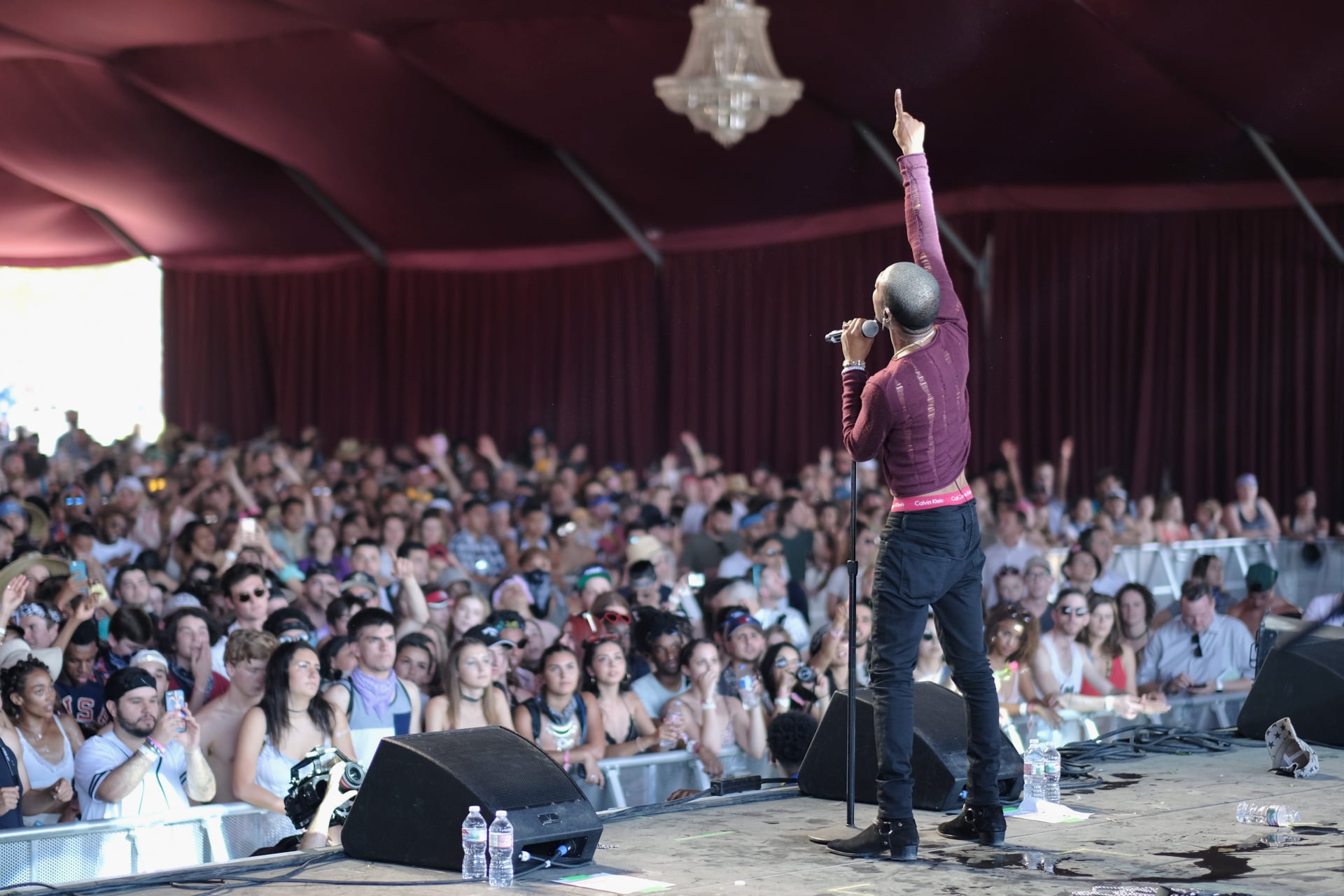
Raury, shown here performing at Coachella in 2017, is an early example of an artist tagged with the “industry plant” label when he broke out in 2014.
Photo by Matt Womle;,euer / Getty Images / Coachella
The main challenge in refuting accusations of being an industry plant — as this month’s Pollstar cover artist Yungblud has found himself having to contend with in recent weeks — is that the term has a rather amorphous definition.
The exact term grew out of hip-hop message board culture in the early years of the 20th century and gained prominence beyond that genre in the late 2010s. Perhaps those early posters had a firm definition but by 2020 it was so malleable that when Complex asked a dozen artists and industry figures for a definition, they got 12 wildly different responses.
So when an act is faced with the jab, there’s no logical riposte. You can’t push back against a term that has no clear meaning.
A particularly telling definition comes from a 2019 Chicago Reader piece: “A label (or anyone with deep pockets) plucks an act out of obscurity, invests time and resources to develop them, and then reaps the benefits when they finally release a song or album and it rockets to the top of the charts.”
Which is also a handy definition for what a label does with any artist and what every label has been doing forever.
Really, “industry plant” is just the 21st century version of the old “selling out” insult, just in a passive voice. Where an artist who sold out was accused of sacrificing their musical integrity for a buck — because, one supposes, a singer-songwriter shouldn’t be able to eat or own a home or engage in the market economy in any way — the industry plant – allegedly — has no authenticity to sacrifice and exists solely as a vehicle for remuneration.
Outside of the truly, deeply ideologically independent artist, every musician benefits from the superstructure of the industry. Labels, managers, agents, PR teams. It’s how an act moves from something being a hobby or a passion project to a profession.
As Clairo — another artist who faced industry plant accusations, in large part because her father was a powerful marketing executive (though for brands like Coca-Cola; making the connection between that and his daughter’s musical success requires some galaxy-brain conspiratorial thinking) — told the New York Times in 2019 “At the end of the day, when people say, ‘Oh, she’s an industry plant,’ I’m like, ‘No, I just have representation, like every single other artist you listen to.’ I’m not the first person to get a manager.”
The accusation is more endemic in certain genres, most especially those where authenticity is the coin of the realm (at least on a surface level): rap, metal, punk.
While authenticity is certainly a powerful draw in country music, Music Row’s modus operandi is so prevalent and pervasive that everyone seems to accept the role the industry plays.
“Most of the time, you move to Nashville, get a publishing deal or really, you work in a restaurant, then get a publishing deal, then get lucky and play some gigs, get a deal with the manager, get a record deal, get your teeth capped and then get a song released,” as UTA agent Curt Motley told Pollstar in 2023.
It’s also hardly seen in pop, likely for the same reason. No one accused Justin Timberlake of being a plant even though he (and a host of other stars) came out of the Disney machine.
Suspicion of an artist’s provenance seems a particularly modern problem, in no doubt fueled by the general distrust of legacy institutions that’s become far more common and is cultivated by powerful voices.
There’s also a strong whiff of racism and sexism in the accusation — wryly, it’s refreshing that Yungblud, a white male singer, is having to deal with it — as it is most frequently leveled at artists of color and women, particularly in genres that have lacked demographic diversity. A woman rapping? Corporate puppet masters must be behind it. A woman-fronted rock group? Can’t be organic. A Black country singer? Why is this being forced on us? You get the picture.
What “industry plant” really means is that the speaker just doesn’t like the act.
Those accusing Yungblud, for example, can’t square that this guy from Yorkshire earned the imprimatur of luminaries like Ozzy and Sharon and Steven Tyler or that the two young women from the Isle of Wight in Wet Leg could score two big hits out of the gate.
You can’t pick your fans and you can’t pick your haters and the latter are often far louder than the former.
What “industry plant” is really saying is “this artist doesn’t connect with me” and connection is an ineffable quality that can’t be manufactured. No matter how hard a label or an agency pushes (or how much they spend), if an artist doesn’t connect with an audience, the artist will fail. But clearly Yungblud and Wet Leg and Clairo and the rest are connecting with an audience and just because a subset of online hunt-and-peckers don’t like it doesn’t make it less authentic.
This, as is repeated constantly at every Pollstar Live!, is a relationship business. Sometimes those relationships come from family connections or wealth or privilege and sometimes they come from dumb luck and lots of times they come from talent and hard work and getting in front of the right people who, yes, operate inside an industry that supports and publicizes and develops an artist.
Everyone’s an industry plant and no one is.
FREE
 Daily Pulse
Subscribe
Daily Pulse
Subscribe
 Daily Pulse
Subscribe
Daily Pulse
Subscribe