
Live Est Belle: The French Biz Is Going Through An Exceptionally Dynamic Period (Annual France Focus 2026)
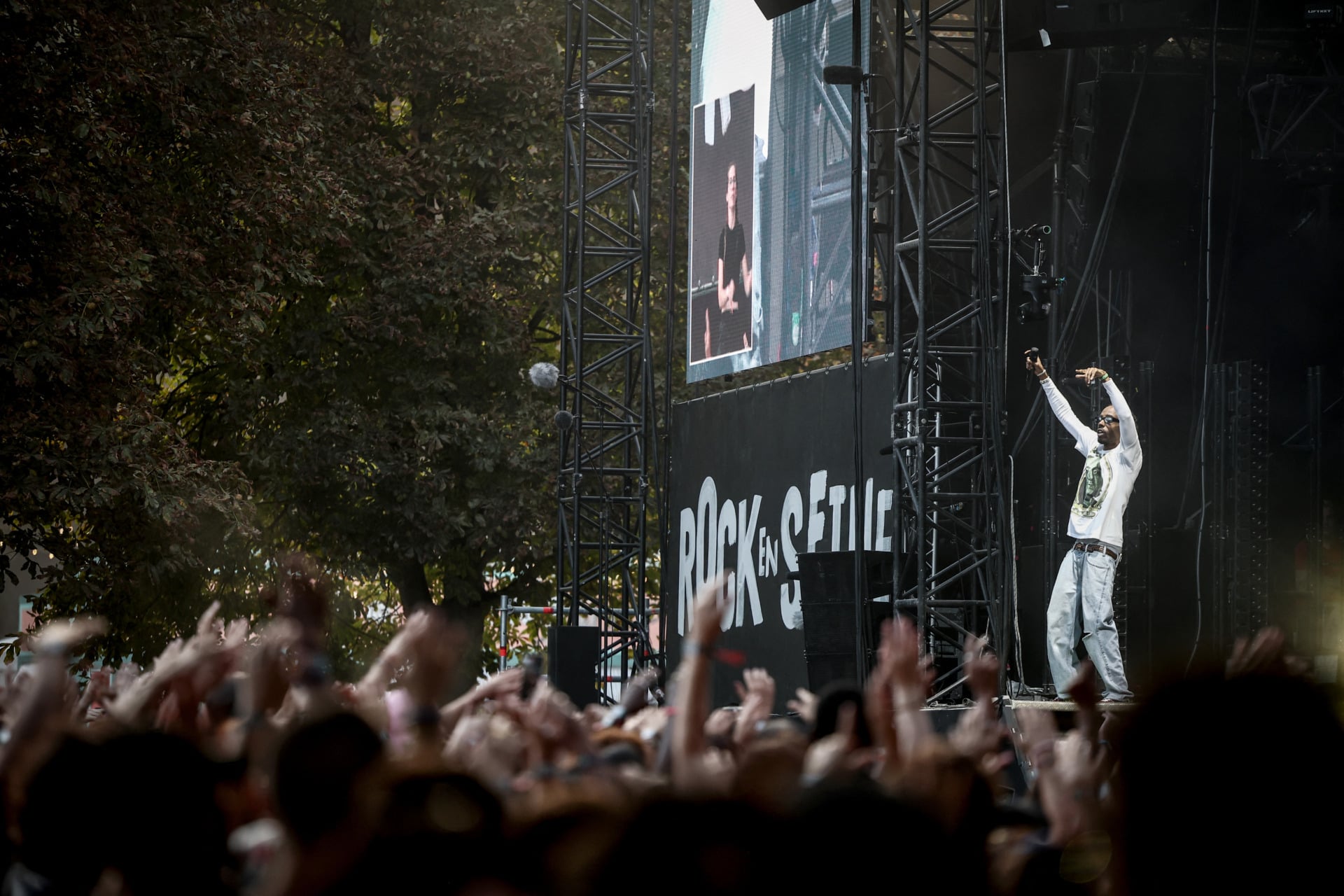
Dynamic is the word most commonly used by France’s live professionals when talking about the state of play in La Grande Nation. In a nutshell it means that while overall ticket demand remains strong, audiences have gotten more selective. Promoters and venue operators never had to be more refined in their offering in order to meet fans’ expectations.
Arnaud Meersseman, managing director, AEG Presents France, says, “demand for live entertainment remains strong, but the market has definitely entered a more mature phase after the exceptional post-pandemic rebound. Audiences are becoming more selective, choosing fewer events but expecting a higher-quality experience every time. Compared to 2025, I’d say the business feels healthier and more balanced. We continue to see strong performances from both international artists and French talent, while remaining very conscious of the economic environment. Production costs remain high and consumers are paying closer attention to how they spend their money, so every show has to justify its value.”
Live Nation France president Angelo Gopee confirms that wherever promoters meet the high standards audiences have in 2026, “fans are still turning out in huge numbers,” and observes “particularly strong demand for arena and stadium shows, alongside genres like Latin, urban and K-pop, driven by highly engaged fan communities and the growing influence of online fan platforms.”
And he continues, “while social media is accelerating discovery, building a live career still takes time. Through showcase events like Oberkampf Music Festival, where artists such as Lola Young, Cian Ducrot and Myles Smith were discovered, and by supporting talent at every stage of their journey, we’re helping build the next generation of headliners. In recent years we’ve seen artists including Joé Dwet Filé, Kalash and Franglish rapidly grow from emerging acts to selling out arenas.”
Developing local artists is also a “strategic priority for AEG Presents France,” according to Meersseman, who says, “we are committed to identifying talent early, supporting artists as they grow and helping them build sustainable careers over the long term. That means investing not only in established names but also in the next generation of French artists who have the potential to reach larger audiences both in France and internationally.”
He cites French artists Théodora, Polo & Pan or Ino Casablanca as “great examples of the diversity and creativity currently shaping the French scene.”
Matthieu Drouot, CEO of Gerard Drouot Productions, isn’t surprised by the dynamism of the French market. “Every year we’re surprised by shows doing better than expected, and we’re disappointed by shows doing worse.” But because ticket prices have generally risen over the past few years, both losses as well as profits are having a bigger impact.
“It’s weird,” he says, “’25 was maybe my best year ever, but it was also the year I got hit the most. Had I sold out everywhere, it would have been an even better year, by far.”
One of the big challenges in 2026, and this holds true for both the international as well as domestic artists GDP works with, is getting avails. “Fifteen years ago, you could easily call up venues and route a tour eight months ahead,” says Drouot, “nowadays, if you want to be able to pick the dates and venues within distances that make sense, you need to route two years ahead. I’m already holding dates in ’28, and I’m already checking routes in ’29.”
Festivals are in a unique position: they’re challenged by production costs a lot more due to their ephemeral nature, but they also have ways of building an offer for their audience that simply cannot be replicated in any other environment. For Live Nation France, festivals remain “a major pillar of our business, but the model is evolving as audiences look for more distinctive experiences with a clear identity and strong local roots. Main Square Festival, which sold out this year, is a great example of that.”
Meersseman confirms, “festivals remain an essential part of the live ecosystem, but they’re operating in a much more competitive environment than just a few years ago. Audiences look at the overall experience: comfort, accessibility, sustainability, the food offering and value for money. Festivals with a strong identity and a loyal community continue to thrive.”
Aside from AEG Presents’ own Rock En Seine, Hellfest in Clisson may serve as a case in point. Promoted by GDP, it is one of Europe’s most popular festivals for those seeking the complete heavy rock experience, and next year’s 20th anniversary (June 17-20, 2027) sold out 55,000 four-day tickets priced at €389 ($444) in an hour and without a single artist announced.
Understanding one’s audience is everything, and “the future belongs to those who can understand these communities authentically, not just market to them,” says Clotaire Buche, co-founder and head of booking and creative at Junzi Arts in Paris. He sees the biggest opportunities in diversity, “of audiences, formats, genres, and cultural communities. This is where independent companies like ours can still compete with the majors. We have built strong expertise in scenes such as burlesque, drag, and neoclassical music – worlds that may once have been considered niche, but now bring together highly engaged, loyal, and international audiences.”
The non-concert touring business is thriving as well, as Francois Pinard, director of Los Production, confirms. “One of our major successes has been the relaunch of the French tour of the legendary Holiday on Ice show, where attendance figures in 2026 increased by an average of 40% compared with the previous year. We have also launched the LEGO Jurassic World and Titanic exhibitions in Paris, as well as a major Cirque du Soleil arena tour across France. At the same time, together with FKP, we are operating the Minecraft Experience exhibition across Europe and continuing the PAW Patrol live tour in Europe.”
Los Production is also an expert on all things K-pop, and is about to host what Pinard described as the “largest K-pop event ever staged in Paris, K-Expo Inkigayo, in partnership with KOCCA (Korea Creative Content Agency), the South Korean government agency dedicated to promoting Korean cultural content and creative industries worldwide.”
K-pop is but one of many musical genres that have an audience in France, as the country’s venue operators confirm without exception. Marie Barsacq is CEO of Paris Entertainment Company, operator of the Bataclan, adidas arena, and Accor Arena, which are hosting everything from pop and K-pop to electronic music, metal, rap and French-language music this year. “We also regularly see new genres and subgenres emerge, which reflects the vitality of the market,” Barsacq says, adding that this “significant increase in the number of events” has created “greater competition between concerts themselves,” and warning that “smaller-scale projects, particularly in lower-capacity venues, can be more exposed to this growing supply.”
Paris Entertainment Company is expecting more than 2.4 million spectators this season and over 400 events scheduled, but Barsacq emphasizes, “the numbers tell only part of the story. Costs are rising, audience expectations are evolving, and competition is intensifying. Today, it is no longer enough simply to fill a venue. We must create a comprehensive, coherent and sustainable experience for artists, audiences, partners and the city itself.”

In France, venues that sit between theaters and arenas in terms of capacity are called Zéniths. The most famous one is the Zénith Paris – La Villette, located in the 19th arrondissement of the capital. At a maximum capacity of almost 7,000 the building is expected to host around 160 performances and welcome close to 700,000 spectators over the course of 2026. The program features everything from French chanson to K-pop, and it is this diversity of programming that “continues to be one of Le Zénith’s greatest strengths, attracting a wide variety of audiences and artistic propositions throughout the year,” according to venue director Lily Fisher.
Aside from the trends her colleagues have mentioned before, Fisher observes “a shift in seasonality. Historically, autumn was the strongest period for live music. Today, February, March, April and May are reaching activity levels comparable to those of October, November and early December. Programming is becoming denser throughout the year, and genuine off-peak periods are becoming increasingly rare outside of the summer closure.”
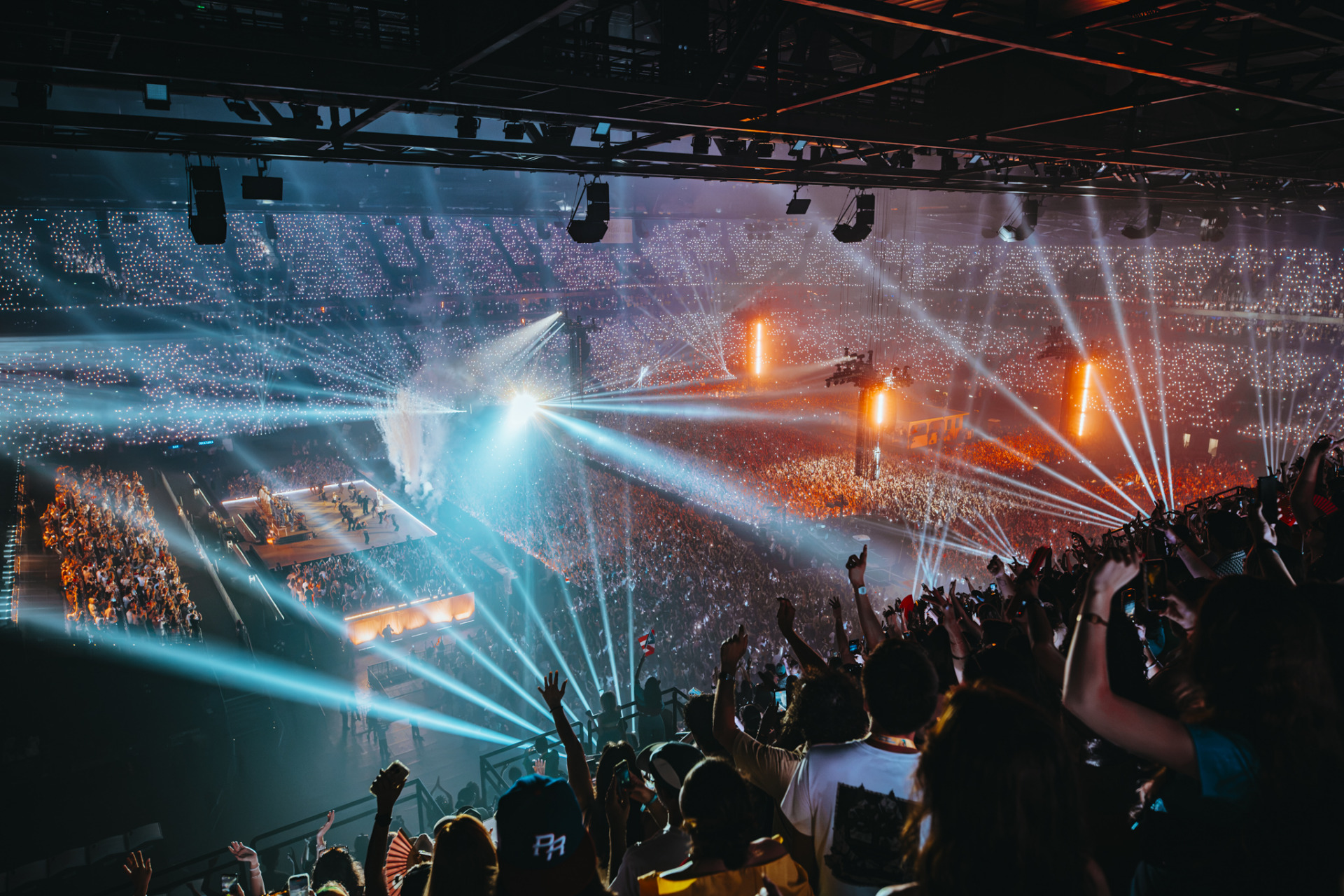
Moving up the capacities to Europe’s largest indoor stadium, Plenitude Arena, where “programming has grown steadily every year since the 2019/20 season, rising from 32 events to more than 90 events this season, making 2026 the strongest year in the Arena’s history, both in terms of volume and the diversity of formats hosted,” according to the building’s CEO Frédéric Longuépée.
The strong growth is driven by a diverse program that combines major international tours, a strong lineup of French-speaking artists, premium corporate events and world-class sporting competitions. Upcoming highlights at Plenitude Arena include performances by Muse, Olivia Rodgrigo, and Karol G, French-speaking stars Joé Dwèt Filé, Gims, and Kyo, as well as the much-anticipated residency by Céline Dion in September/October as well as May 2027.
For Longuépée, “the residency format is clearly the underlying trend reshaping the industry. After Las Vegas, this model is spreading to major European capitals, and Paris has a structural advantage no other city has: a venue able to hold up to 45,000 people and a destination the whole world wants to visit. Most comparable arenas across Europe cap out around 18,000 to 20,000 seats, which increasingly limits the gross revenue available to justify the biggest bookings. Capacity at our scale simply removes that ceiling.”
It’s incredible to see how this industry has been navigating the inflationary economy since COVID. It’s also easy to understand that it cannot keep this up forever. Building a business that is less concerned with perpetual growth than it is with sustainable success is possible, but it requires collaboration of the kind seen in the immediate aftermath of the pandemic.
Drouot, one of the country’s last remaining independent promoters, puts it this way: “I’ve grown up in a business that was all about relationships, and making sure everybody involved in a tour was on the same page. People tell me I’m old school, they say, ‘Matthieu, you may care about relationships, but when we deal with your corporate competitors, there is no relationship. It’s all about business, figures, paperwork.’ And I always ask them, ‘is this better?’ And no one ever says it is, they will just tell me it’s different. I try to learn, to not get stuck in the past, but it feels like the business is less fun now than it was 15, 20 years ago. What will it look like in 15 or 20 years? Because I can tell you that most of the people I work with won’t go on if this business stops being fun. So, I would advise everybody to work as one tribe, and to avoid short-term thinking about financial gains only.”
FREE
 Daily Pulse
Subscribe
Daily Pulse
Subscribe
 Daily Pulse
Subscribe
Daily Pulse
Subscribe