
The $2.1 Billion Bills Gambit: Why Buffalo Said No To A Roof
Over the past decade, NFL stadium construction has followed a relatively consistent playbook: sleek design, bigger screens, retractable or fixed roofs built to attract a Super Bowl bid, conventions and residencies for mega-star artists and, also, football.
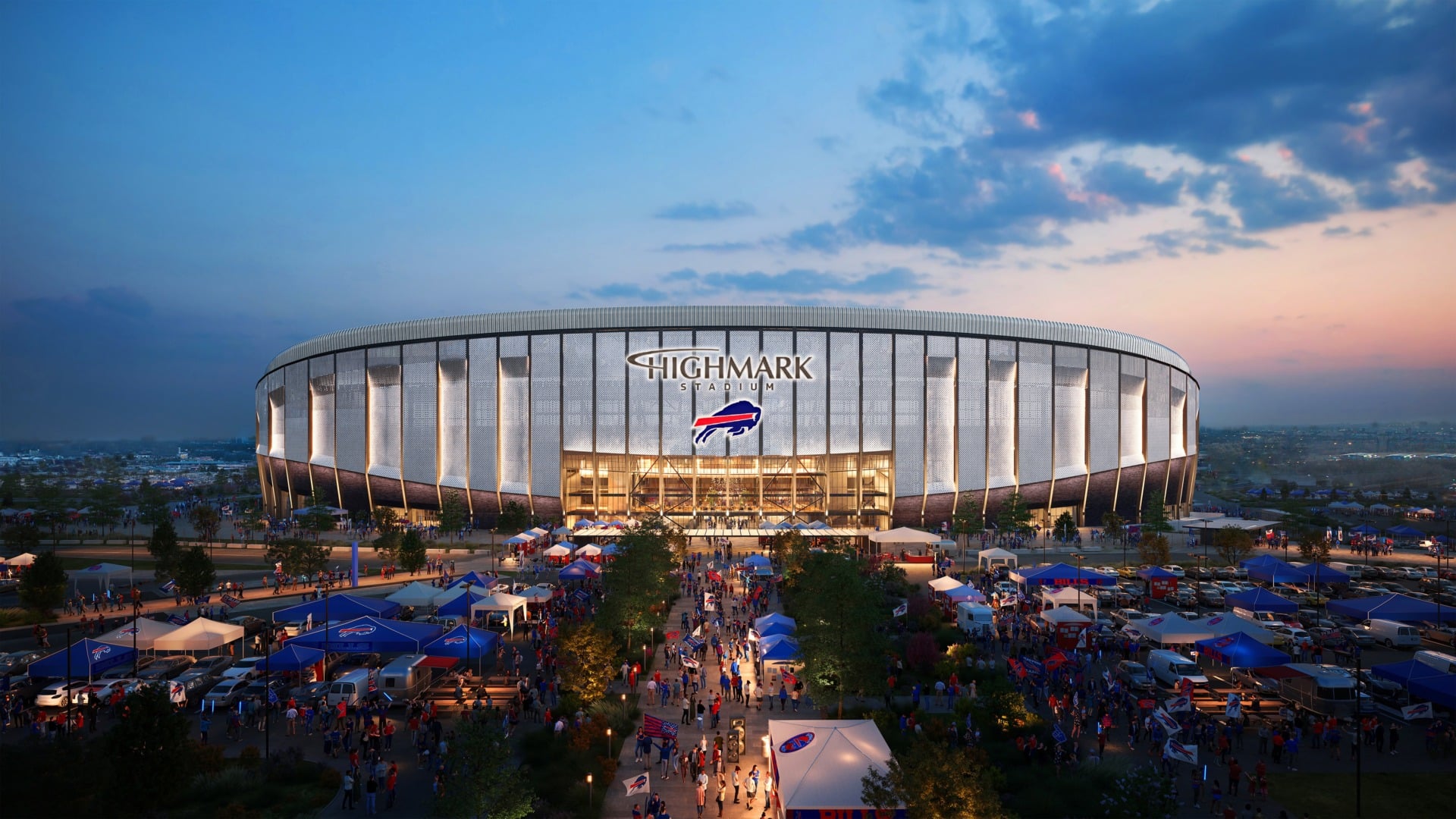
U.S. Bank Stadium, SoFi Stadium, Allegiant Stadium, AT&T Stadium and Mercedes-Benz Stadium were all planned and constructed, at least in part, around the idea that a modern NFL venue needs to be a climate-controlled spectacle that can be endlessly bookable. To put it bluntly, new NFL stadiums are designed to generate revenue regardless of whether the home team is on the field. There’s nothing necessarily wrong with that. But with the Buffalo Bills’ new Highmark Stadium, they’re bucking that trend.
“In the new era of stadiums, this one is going to be unique because it was purposely left open with no roof,” said Chad Estis, EVP & Chief Revenue Officer for Legends Global, who oversaw the owner’s rep, sales, and partnerships teams on the project. “And there, more than likely, are not going to be a lot more of those stadiums in our future.”
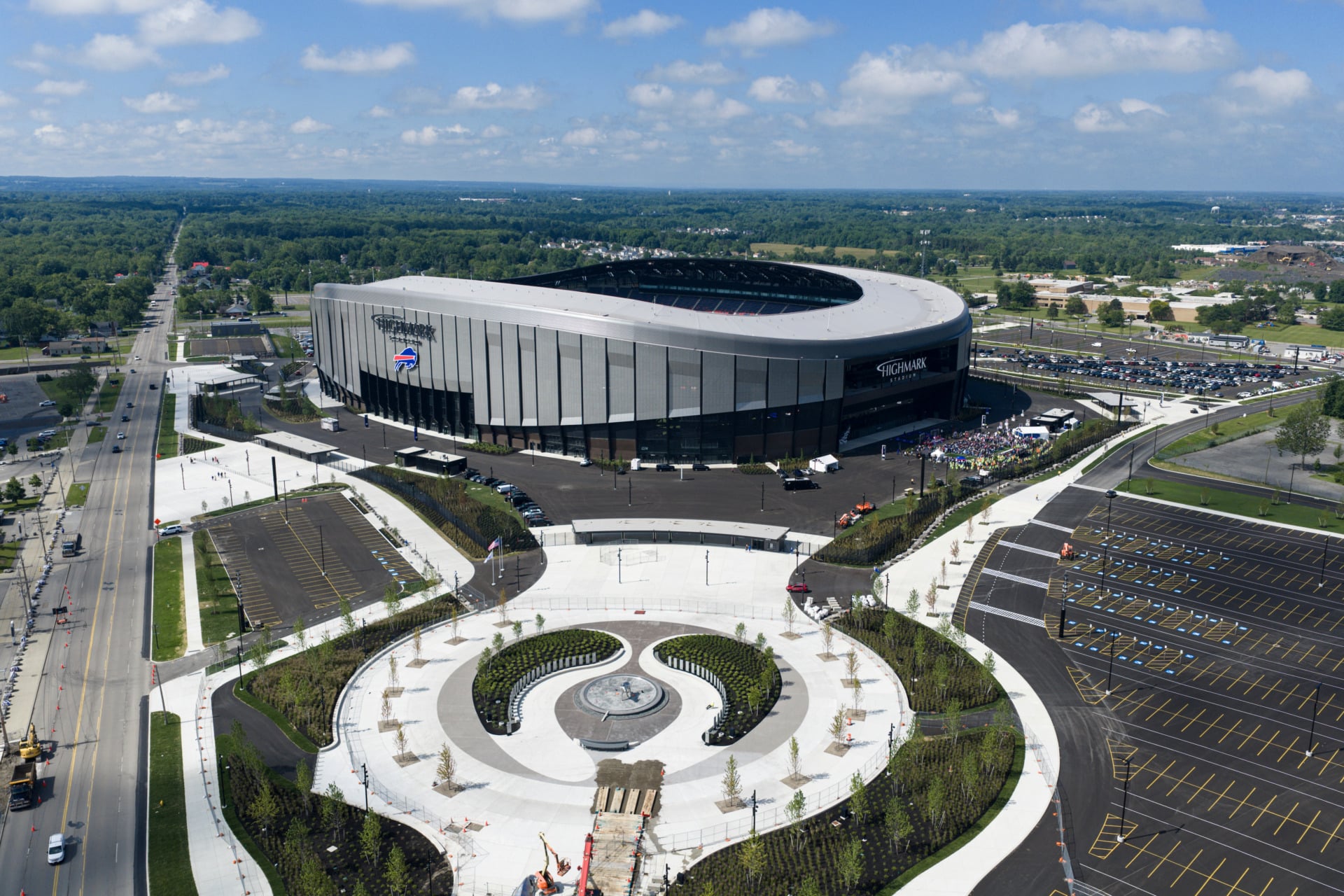
The new venue, seating roughly 60,000, opens this fall at a cost of about $2.1 billion. New York State and Erie County taxpayers contributed $850 million, with $263 million of that arriving via Bills Mafia, i.e the team’s wildly passionate, devoted, philanthropic, and globally recognized fanbase, through PSL purchases, per a statement from the Bills. The Pegulas, the family led by Terry and Kim who own the team, are funding the remaining balance, including all construction overruns.
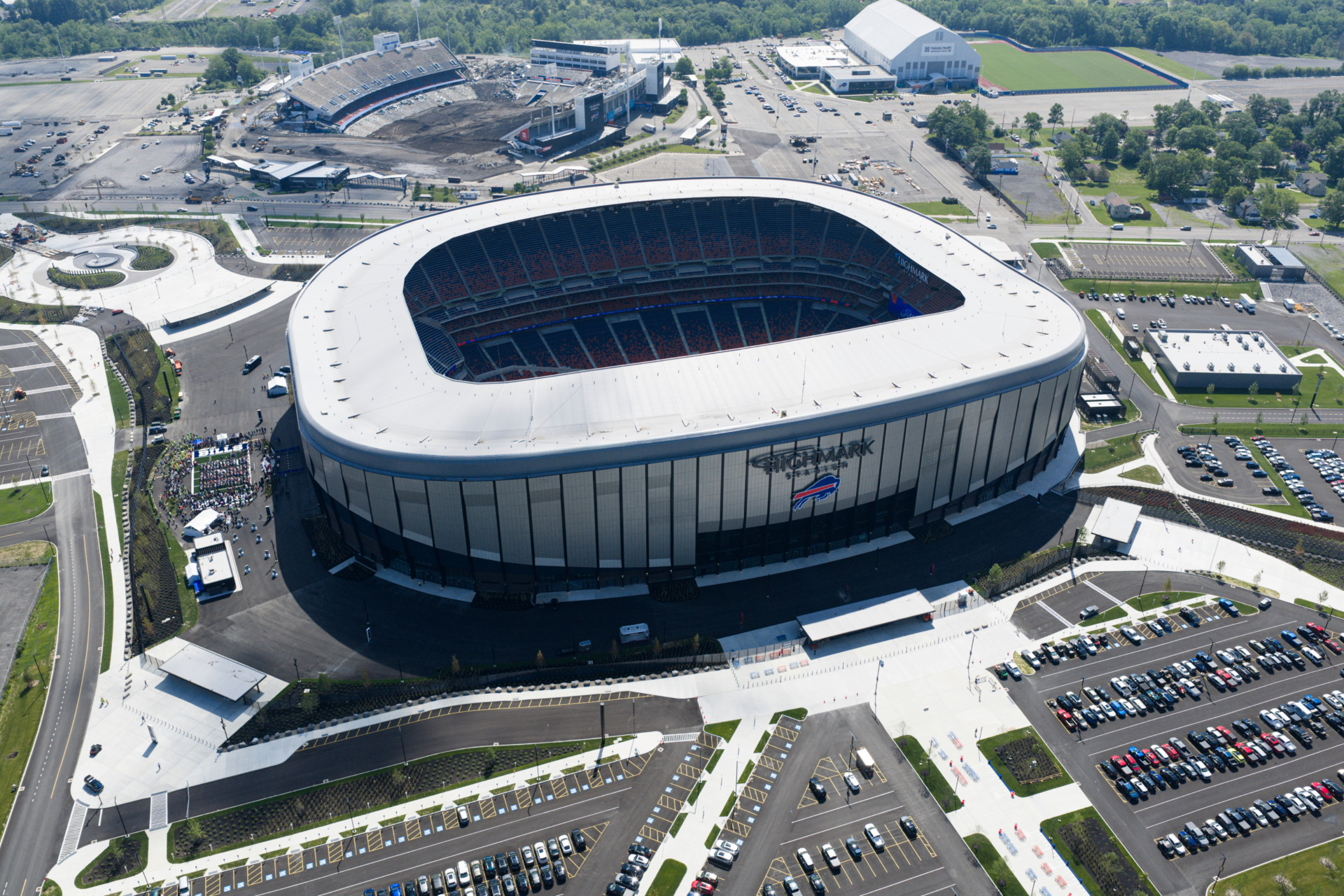
Highmark Stadium is an outlier — not for its cost or capacity, but for its bet that a new venue can still be a masterful “football-first” stadium. That bet traces back to the Bills’ owners and hinges on the elephant, or bison, in the room: a state-of- the-art stadium with no roof. Kim Pegula, who became the first female president of an NFL team when appointed to the role with the Bills, a position she held simultaneously with the NHL’s Buffalo Sabres, initially spearheaded the project. But after suffering a sudden health malady in 2022, she had to step back to recover, per the Buffalo News. During her time leading the charge, she was steadfast in her commitment to the open-air approach. According to Populous Global Director and Managing Director of the Americas, Jonathan Mallie, an enclosed roof was never seriously considered or presented to the owners “at any point.”
“Highmark Stadium is designed for outdoor football. Full-stop,” Mallie said. “It was always going to be designed for the team first and the fans first. Can you imagine a Bills game without the elements? It’s their identity. You don’t want to fight identity; you want to embrace it.”
And think about it: what would the Buffalo Bills be without embracing their identity? Think of the Bills without the infamous 1994 AFC Divisional playoff game against the Los Angeles Raiders at Rich Stadium, in 0 degrees with a wind chill of minus “-32,” the coldest game in franchise history. Or the 1993 showdown against the New York Jets on a frigid, bitter-cold Orchard Park afternoon, and the “Snow Globe” playoff win where the Western NY squad took down the Indianapolis Colts in Dec. 2017, led by a 21-yard walk- off touchdown by LeSean McCoy. Maybe you point to the Dec. 2022 game against the Miami Dolphins; Bills Mafia unleashed a flurry of snowballs at WR Tyreek Hill as he dropped a potential touchdown thrown by former Phins QB Tua Tagovailoa. Look, Green Bay may be famous for the “Ice Bowl,” but ask anybody from WNY, and they’ll tell you that winter football is who the Bills are.
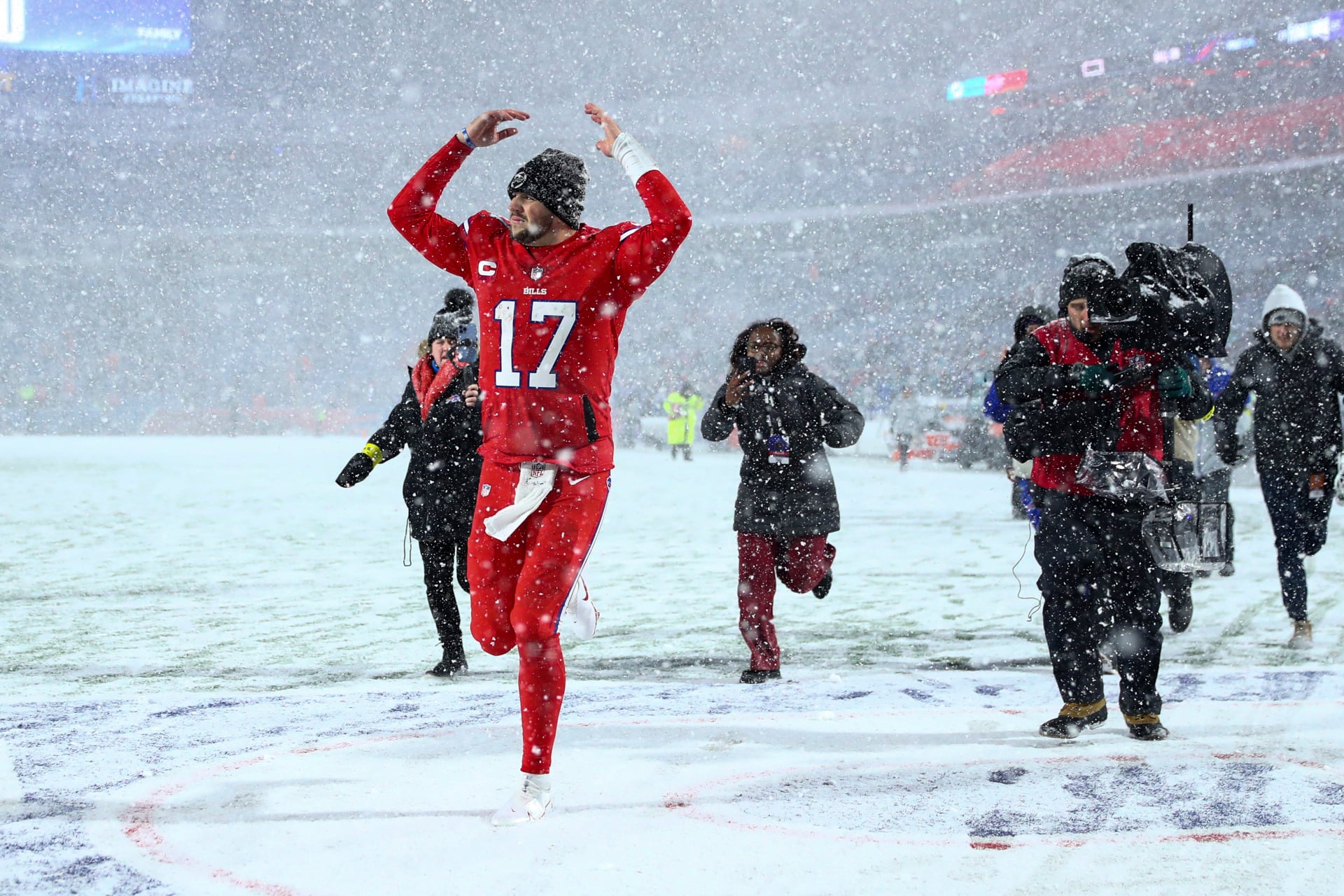
Leadership agrees. Mallie said the primary objective the Pegulas laid out was designing for December, hard-hitting, pre-playoff football, and that Populous “never ever wavered from that ideal.” Frank Cravotta, the Bills’ senior vice president of design, described the same mandate in nearly identical terms: football is meant to be played outdoors, and Buffalo’s brutal winters should be treated as a feature of the franchise’s identity rather than a problem to be engineered away.
That “football-first” philosophy became the nexus around which every other decision revolved. Unlike many stadium projects, which Mallie said often undergo major conceptual pivots, Highmark held a remarkably “linear” construction plan from its first ownership visioning session in February 2022 onward. Still, the commitment created engineering complications that became some of the building’s most distinctive features.
“A Wall of Sound”
The open-air decision was driven by Buffalo’s weather, but Cravotta also cites London’s Tottenham Hotspur Stadium, also designed by Populous, as a muse. “We took a trip to Tottenham…it was about 40% Bills fans, and we were like, ‘Wow, this roof is spectacular,'” Cravotta said, describing its cantilevered roof reverberating with crowd noise. “So that part of the building’s architecture will make Highmark, already known as a loud stadium, even louder and harder to play in.”
“You merge the state-of-the-art sound system, featuring the most and biggest subwoofers of any stadium in the country, with the roof canopy, which is a metal deck that is going to reverberate the sound down into the stadium; this will be one of the loudest stadiums in the NFL,” Cravotta added.
The building has 32 speaker arrays with subwoofers, augmented by 700 auxiliary speakers positioned to create a “wall of sound,” a feature Cravotta believes “has a chance to become what this building’s most known for.”
The cantilevered, metal-skinned roof covers more than 64% of seats and funnels snow toward the center, where it’s melted by what Cravotta calls “the largest snow-melt system in sports,” then pumped across the street into a nearby creek. So while Highmark isn’t the dome some fans wanted, the roof’s core job is to cover, protect from and melt the snow when needed.
Wind is managed through the roof ‘s rolled profile, letting gusts pass up and over the bowl, according to Mallie, combined with a perforated metal exterior whose openings are custom-sized to bleed off pressure before it reaches the field. Those perforations are cut in the shape of the Bills’ “charge” logo, baking Buffalo pride into a wind-reduction solution.
The “Stacked” Seating Concept
Old Highmark used what Mallie called a “relaxed” bowl, open, sprawling, and far from the field. The new stadium compresses the seating pitch into a steep, stacked bowl pulled tight against the field, creating intimacy and intimidation. That, too, traces back to Tottenham. “I told the gentleman giving us the tour, ‘I want you to take me to the three worst seats in the stadium,'” Terry Pegula recalled at the June 23 ribbon cutting. “The first seat he took me to, I said, ‘Wow, I wouldn’t mind sitting here.’ So we tried to duplicate that, and I think we did a pretty good job.”
The stacked design also solves a fan-comfort problem from Old Highmark: miserably cold seats. Infrared heating elements built into the underside of each tier now warm fans in the open concourses below, letting them stay near the action without retreating indoors. Heating even plays a role on the field. Beneath the natural grass sits a heating, irrigation, and moisture-management system built to keep the surface playable from the 80s down to freezing single digits, a technical challenge Cravotta said only one other cold-weather stadium, Empower Field at Mile High in Denver, has attempted at this scale.
Natural Grass Over Turf
For Brandon Beane, the Bills’ nine-year general manager and newly promoted president of football operations, heated natural grass was about competitive edge. Beane calls the decision “player-centric,” prioritizing on-field performance and safety above all else. With the price climbing from an initial $1.4 billion estimate to a final $2.1 billion, cheaper options like turf were never viable if the goal was sustaining a winning culture.
Over the years, turf has been on the decline after making a splash in the late ‘60s. Franklin Field, which was the home stadium of the University of Pennsylvania and the Philadelphia Eagles, was technically the first NFL stadium to use artificial turf after it replaced its natural-grass field with astroturf in 1969. Soon after, the Buffalo Bills moved from their home on the East Side, War Memorial Stadium, also known as “The Rockpile,” at 285 Dodge Street, to Rich Stadium, where the team officially joined the NFL as part of the historic AFL–NFL merger in 1973. At Rich Stadium, the Bills installed turf. As the ‘90s arrived, sports reached the peak of the “Astrodome Era,” with about 68% of NFL stadiums using artificial playing surfaces. However, towards the end of the ’90s and into the 2000s, turf use began to decline due to an uptick in severe injuries on turf compared to natural grass.
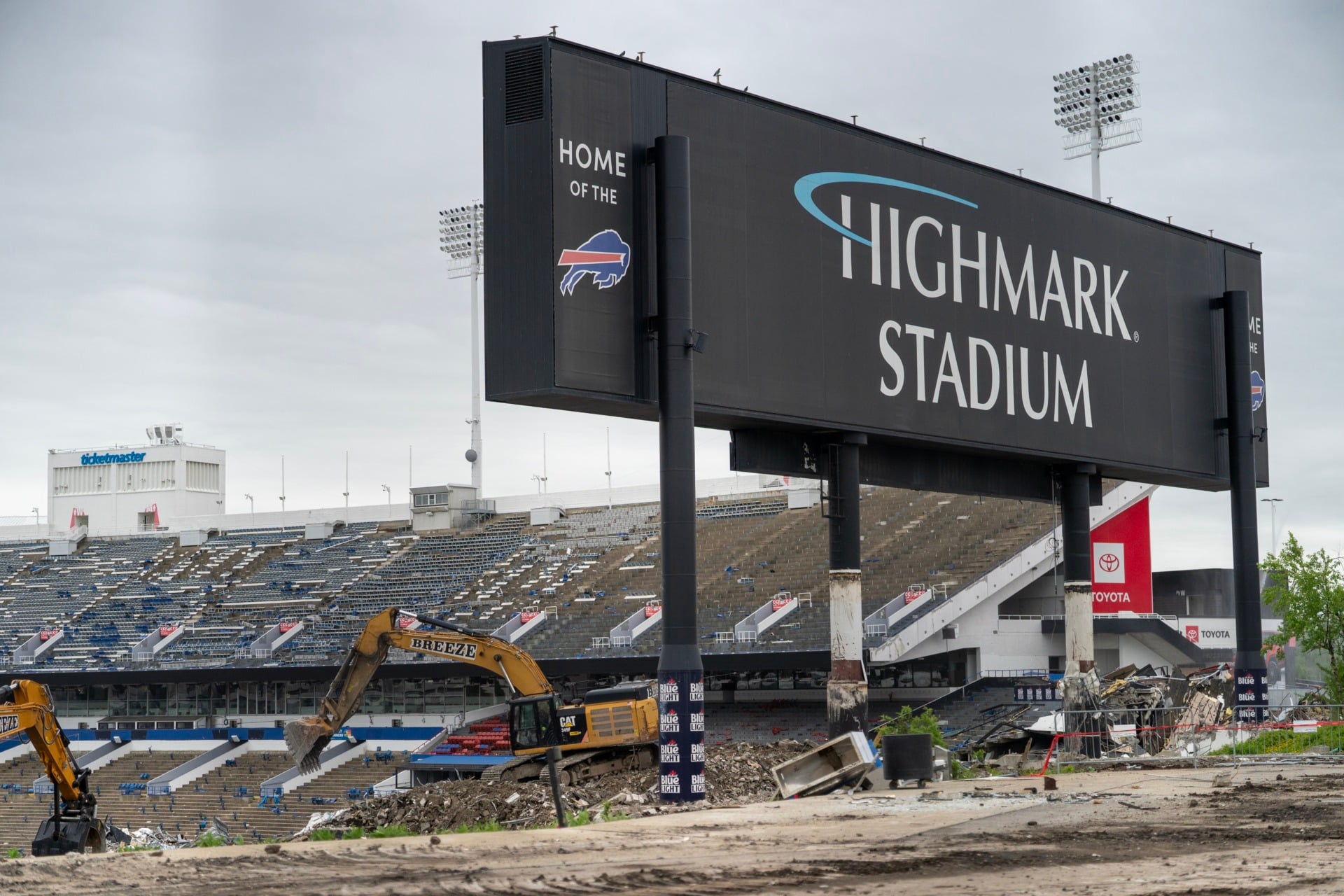
A study in the American Journal of Sports Medicine found that major injuries among college players increased from 2004/2005 to 2013/2014, with posterior cruciate ligament tears three times more likely on turf than grass across all three college levels. A 2022 systematic review in the same journal confirmed lower-extremity injury rates remain consistently higher on artificial turf.
It all came to a head in 2023, when the Buffalo Bills faced off against the Jets at MetLife Stadium to kick off the season. Aaron Rodgers, quarterback for the Jets, only took four snaps before suffering a season-ending torn Achilles injury on MetLife Stadium’s turf field. After the game, Bills quarterback Josh Allen spoke out against turf, echoing Beane’s “player-centric” mentality.
“The way our bodies feel after turf games, after turf practices for that matter, it’s significantly different than on grass,” Allen said during the press conference. “You can bring up all the statistics for this and that, but as players we feel it, and we know it…Our new stadium is going to have grass, and we are looking forward to that day.”
Former Bills safety Micah Hyde added that turf works well for concerts and other stadium events but said he’s “been an advocate for grass fields for a long time” when it comes to football. The Bills played on turf from Rich Stadium’s 1973 opening onward, but that era is ending.
“Buffalo, it’s not 1973 anymore,” Beane told USA Today Sports. “We’re in [2026]. You’ve seen places like Green Bay, Pittsburgh, Kansas City, and Chicago using technology, which helped us put together a plan to handle the weather here. We feel we have the right grass people and field turf people to help us manage this.”
Live Music
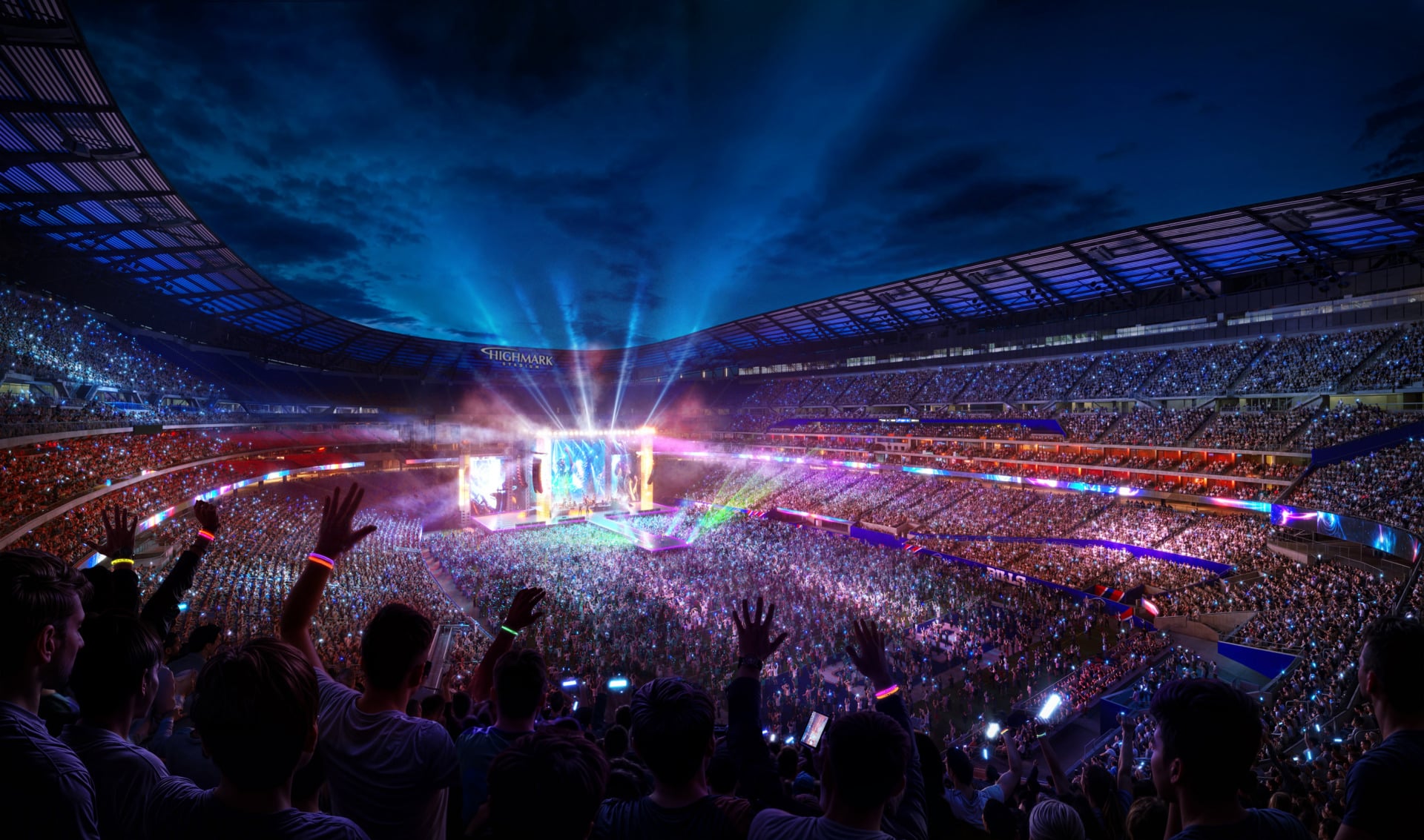
The football-first focus comes with a tradeoff for concerts and other events. Highmark’s in-house audio system is tuned for football, not for touring productions, and Cravotta doesn’t expect concerts to use the building’s system, since some major tours bring their own rigs.
Estis was direct about the broader cost: going open-air with natural grass forgoes some of the bookings enclosed stadiums can chase year-round. Instead, Bills leadership sees the building’s long-term value elsewhere, in new club spaces designed for year-round rentals, weddings, and corporate events. The 425-capacity Founders Club offers all-inclusive food, beverages, and whiskey lockers; the 1,400-capacity Field Club overlooks the players’ tunnel; and the 50,000-square-foot East Club features radiant heaters, overhead coverage, and wider, cushioned seats. A surrounding “Highmark Trail” adds gathering areas and art installations.
Still, Mallie made clear that the venue can host concerts and large events when needed. Loading docks, truck access, backstage power, and a dedicated substation for green rooms were all built in from the start, spaces meant to serve double duty for players and touring crews alike. In other words: Highmark isn’t closed to the live-entertainment business so much as built to treat it as secondary to NFL Sundays, Mondays, and/or Thursdays.
Even so, no stadium concerts are currently scheduled at Highmark in 2026; the docket is all Bills football, starting with the Aug. 8 “Return of the Blue & Red” practice for season-ticket holders, a public open practice Aug. 18, and the season opener against the Detroit Lions on Sept. 17.
A Gamble or a Gambit?
Whether the $2.1 billion bet pays off will play out over the stadium’s 30-year lease. But early signals look strong. Legends handled premium seating and sponsorship sales, and Estis said the Bills retained roughly 70% to 75% of their existing season-ticket base through the transition to PSL pricing, the highest conversion rate his company has tracked on any new NFL stadium build. Club seats were priced in a range between $8,000 and $50,000 per PSL; some lower-level, higher-end seats were priced between $5,000 and $10,000 for a PSL; while seats in the 400 level began at $2,500 (closer to the 50-yard line) to $1,000 for seats closer to the 400s corner section; and PSLs in the 400-level end zones as low as $750, which would be the most affordable starting price in the entire stadium.
Highmark’s naming-rights deal never hit the open market; Highmark wanted to stay, and the Bills wanted to keep them, so both sides simply resigned. Overall sponsorship revenue is expected to more than double in the new building. “There was good energy from both sides to get that done, for the stadium and for the city,” Estis said.
Architecturally, Populous wove in quieter nods to the city: vertical indentations on the east and west facades reference the old Buffalo Memorial Auditorium; an arching exterior colonnade echoes Kleinhans Music Hall, a historic city venue opened in 1940; and a street-level brick base nods to Buffalo’s Louis Sullivan Guaranty Building, another city landmark built in 1896. “Above that is the metal skin, and that’s the part that essentially floats above that grounded aspect of brick,” Mallie said. “One’s reaching back to the past. And the other is propelling the team into the future.”
As the rest of the league trends toward domes, multipurpose capability and bids for the biggest possible events, Highmark Stadium is staking its identity on the opposite bet: that in Buffalo, being unashamedly a football stadium is the whole point — and that if done well, the opportunities will follow.
FREE
 Daily Pulse
Subscribe
Daily Pulse
Subscribe
 Daily Pulse
Subscribe
Daily Pulse
Subscribe