
‘I’m Independent, I Like The Stress’: Q’s With Matthieu Drouot, CEO, Gérard Drouot Productions
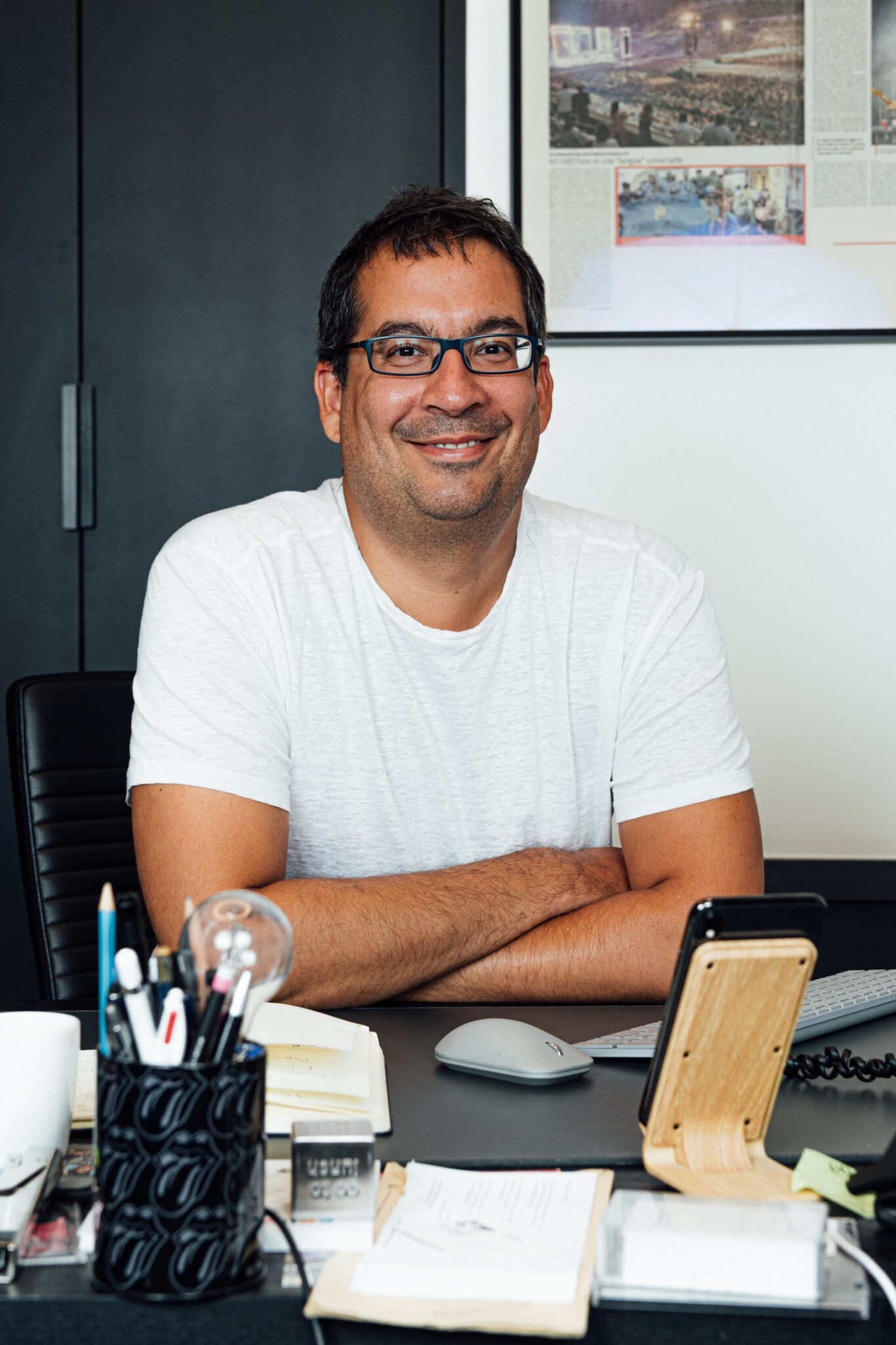
Gérard Drouot Productions is the last independent promoter operating at a major scale in France. There’s several independent promoters that are doing great business in the country, of course, but non have a portfolio the size of GDP, especially when it comes to major international tours.
It’s a lot of work to keep up with the pace of the multinational businesses GDP is competing with, but Matthieu Drouot, who today runs the business his father created in 1986, doesn’t mind. He loves his job, including the stress it places you under. He does wonder, though, if the business has become less fun than it used to be 10 to 15 years ago, and observes some of its current developments with skepticism.
But he also sees a lot of opportunities spread around all of France, and found the time amidst his busy schedule to talk about all of it.
Pollstar: Can you please sum up the state of business as GDP at the halfway mark of 2026, and maybe also talk a bit about how it compares to last year?
Matthieu Drouto: Maybe this year is a bit slower because there are less big acts touring compared to last year, but I still expect 26 to be a good year. Not a great year, but it should be a good year.
People buy tickets, and, of course, like every year we have shows which are doing well and some which are not. But overall, we should be okay.
Any success stories you’d like to share?
Hellfest [2027] went on sale this afternoon and sold out in an hour, like every year. It’s amazing. 55,000 tickets for four days at €389 each, and it sold out before we even announced the lineup.
What are the reasons some festivals can do that: sell out before announcing the lineup? Why is Hellfest able to do that?
The site is perfect and the experience is the best. It’s never perfect, of course, but as people travel from festival to festival, they can easily compare, which one has the best facilities and overall offer.
Next year will be the 20th edition, and throughout the years, people have realized that Hellfest is the best at what they do, and that they can trust both the organization and the lineup.
You also launched Heavy Week End a few years back. How’s that coming along?
It’s a completely different proposition to Hellfest: four acts per evening, and each act can do their full show with the full production. It’s in Nancy in the east of France. This company is very much linked to the east of France because my father was born in Arles, in the Champagne, and started there in the 1970s. I was born in Strasbourg, Alsace, when he created the company. So, for me to do something in the east, which was maybe an area that has been been dropping off the map in recent years, is very important.
And we’ve been getting great feedback. The festival takes place in an amphitheater, which is quite unique in France. But I noticed that festival goers very much like the idea to sit down sometimes, to watch one show, and have the choice to fight their way to the front of the barricade for the following show, and then sit back again after. It’s a proper venue, including power and concrete floors, and fans seem to like it. I usually say it takes five years to create a festival and find a model that works. Next year will be the fourth year for Heavy Week End, and it’s one of these long-term projects I like to commit to.
What’s the capacity of Heavy Week End?
Right now it’s 15,000 but it can go as high as 25,000. Once I sell out 25,000, though, I will have a problem because I will need to wonder how to expand. With a capacity like that, I obviously cannot have a stadium act, but I try to create a lineup that makes sense. We are investing a lot of time and energy into it. You cannot launch a festival anymore in Paris, there’s too many, plus it’s very difficult to make money because you have the competition from stadiums and arenas. But when you go deep into the provinces, into territories where live shows are rare, there’s an audience that’s really waiting for the festival to return each year. So, I’m trying to find areas in France, where we can still create new opportunities.
Sounds like business as usual for GDP, or are there shows, trends, artists that surprised you? Anything out the ordinary about your business in 2026?
Well, we are always surprised. The only thing we can be sure of is that every year we get surprises. Every year, we’re surprised with shows doing better than expected, and we’re disappointed with shows doing worse than expected.
I just think it’s more difficult to make money because the tickets you don’t sell are priced so high, that you make big losses when you don’t sell, but are able to swallow big losses when you do sell.
The weird thing is that ’25 was maybe my best year ever, but also the year where I got hit the most by the shows that didn’t sell as expected. Had I sold out everywhere it would have been by far, very far, the best year in company history.
Everything is more expensive now.
Hotel bills, venue bills, production bills. We’ve always had to deal with production people talking to the artists about the latest trends and standards in lighting or audio, but it’s only now becoming a challenge because of the incredibly high costs everywhere.
If more artists scaled back their production and took it back to the essence, it would change the entire economics, wouldn’t it, in many cases at least?
I agree. So, it’s really about sitting down and and looking at the best way forward.
For me, the difficult part for a promoter going forward will be to stay in control, because the artist wants more control, the venue wants more control, the festival wants more control…sometimes nowadays, a festival will issue an artwork, without you ever having laid eyes on it.
I’ve grown up in a business where it was all about relationships, about creating working habits and making sure everyone involved in a tour was on the same page before going out there.
People tell me I’m old school, they say, ‘Matthieu, you may care about relationships, but when we deal with your corporate competitors, there is no relationship. It’s all about business, figures, paperwork.’ And I always ask them, ‘is this better?’ And no one ever says it is, they will just tell me it’s different.
I try to learn, to not get stuck in the past, but it feels like the business is less fun now than it was 15, 20 years ago. What will it look like in 15 or 20 years? Because I can tell you that most of the people I work with won’t go on if this business stops being fun. So, I would advise everybody to work as one tribe, and to avoid short-term thinking about financial gains only.
I am, of course, a bit stuck in my own business, but I still have the feeling that the issues I’m mentioning are the same other people have in other businesses. Maybe it’s the world changing more so than our business. Still, I cannot witness that and just accept it. I think everybody can easily acknowledge that the business is less fun now than it was 20 years ago. Do we want it to be fun again, or let these changes just wash over us? We control our industry and we control our companies, and we have the choice of what we want this industry to become.

What’s your impression of the French grassroots scene? You always hear how well-subsidized clubs in France are…
But the clubs are losing subsidies every year, so it’s becoming increasingly challenging. Not impossible, but it’s true that to grow an artist in clubs is more challenging than ever. Some acts grow from clubs to arenas quite quickly because of their popularity on streaming and social media. The flip side is that if you don’t have these platforms pushing your music, it becomes difficult to grow.
In the past you would do 300 tickets in a club, and you just knew that you would do 500 on the next show, and grow organically. I have the feeling it’s not that certain anymore. You can do 300 people in a club and deliver a great show, and on the next tour you only do 100, because you just got drowned out by the online competition, or because fans spent too much money on stadium shows or festivals, and have not enough left to go out and see a club show.
So, while it has always been difficult to grow talent from grassroots venues to bigger ones, it’s even harder now. Not just in France but in other European territories as well. It used to be that I would hear about something growing in the UK or Holland or Spain, an considered bringing it over to France, but I hear that less and less. Instead, I see acts on the bill of a festival or arena, that didn’t have a career two years ago. It has a lot to do with how the algorithm pushes artists at the expense of others who are being pushed less. Maybe it’s more than algorithm, maybe TikTok or Spotify elect who they push and who they don’t.
Has local talent become more important to your business in recent years?
It’s always been important. It’s not the majority of what I do, but it’s the majority of what most festivals deal in with the exception of the biggest ones. Last weekend I was at a festival called La Nuit de l’Erdre, which is half an hour north of Nantes. I had Lenny Kravitz headline and deliver a great show, but most of the festival relies on domestic talent.
They make it easier to promote the festivals because those are the artists who are on French radio all the time, who are on the television, who are more accessible than international acts, some of whom come to Paris to promote their music only once every three years. And then they do two days of interviews and that’s it, because they need to move on to promote their music in all these territories worldwide. In that sense, domestic talent is huge for festivals and venues.
For a company like mine, it’s also important, but it’s our conscious decision. Maybe the company would still do well without it, I don’t know, but I still elect to do it because it’s a different relationship. You talk to the artist more, your can establish a more direct relationship, which makes things easier sometimes. You usually get a quick response on offers, and it’s much easier to put a tour together even when the artist is on a budget. The overall cost of the show will be so much lower because you don’t have to fly an entire touring party all around the world.
So, yes, the domestic market has always been huge and still is. Despite that, the international market has grown as well. When you look at the shows taking place at Stade de France, Accor Arena, at the new LDLC Arena in Lyon, or even theaters like the Olympia, it’s clear that the international business is big as well. The difficult part is to get a avails for all these people.
Can you elaborate?
15 years ago, you could call up venues and easily route a tour eight months ahead. It’s July of 2026. Nowadays, if you want a good tour, where you can pick the venues and dates, with distances that make sense, you need to route two years ahead. I’m already holding dates in 28, and I’m already checking dates in 29. This is how crazy it’s becoming. And it’s a big challenge to remember everything that is said between now and three years later: all the details about the event, the offer, the marketing and announcement plans, the pre-sale plan and VIP packages, everything. In the past you could remember everything in your head, now you need to come back and check your notes regularly.
Sounds very stressful.
I’m independent and I like the stress. For some people, it’s more stressful to be independent, and less stress if you’re part of Live Nation or AEG. I think everybody has a different view on stress.
Well, you don’t look stressed.
I think life is too short for stress. We can control a lot of things, maybe this is why I look relaxed. There are always challenges and problems and issues, but when you control things, you can fix them in 24 to 48 hours. You know what I mean?
It’s very rare that I get to face an issue I cannot control, that I cannot do anything about. The beauty of our business is that everybody wants our shows. So, when you have an issue with a venue or a festival or with the police or with a transportation service or anyone else putting up challenges for your show, most of the time, with one phone call, you can resolve a lots of issues. We have to enjoy these times.
Those would be the perfect closing words, but I was hoping, just because you touched on the fact that the business is less fun now than it was 15 years ago, you could talk about a recent show that just encapsulated why this is still such an amazing business to work in?
I did some shows with an act from Congo, Fally Ipupa. To be honest, when Rob Hallett called me the first time five years ago about Fally, I didn’t know who he was because I’m not an expert in Congolese rumba. We did two shows at Stade de France, selling 100,000 ticket across both shows. The audience was made up of 30% coming from Paris and its suburbs, and 70% from other regions. Nearly 30% of the audience came from other countries, including Belgium, Germany, and even Canada or the U.S.
Putting a massive show like that together is not always fun because there are a lot of challenges, but when you walk into the stadium and you see that audience, it’s very special. It’s very special because you become a real fan. When you see that you can bring together that many people, who are fans of somebody you had never even heard before, and that leads you to discover the music, learn about the depth of its origins, appreciate its quality, and especially the artist’s live performance – that’s a very special emotion, and this was really a highlight this year.
Another one that comes to mind: I did a tour last winter with French metalheads Gojira. They’re a French band that’s been together since 30 years. And for the first time in 30 years they were able to tour France’s Zéniths. Every French artist understands what it means to headline a Zénith tour, which is what you’d call arenas in the U.S. It was a big accomplishment, we sold 100,000 tickets across 12 amphitheaters and arenas across France.
To pull that off, and to witness the proudness and the happiness of fans, some of whom have been following the band for 30 years since they played clubs and now got to see them on a proper tour with full production, was very emotional as well. You could almost sense that the fans as well as the band themselves doubted this was possible, especially for an act that’s French but has built its legacy internationally, mostly in the UK and U.S.. For them to come back and do France and get such great feedback and results was very special as well.
We all, the band, management, myself, everybody, we we all agreed that it was a very unique and special tour. In some years I do 700 shows, so I cannot attend all of them. But I can tell you the difference between shows and unique nights, and this was quite unique. Sometimes you think you’re going to sell out and you don’t, you expect the best show and the best crowd, and you don’t get it. But sometimes you get so much more than what you expected.
FREE
 Daily Pulse
Subscribe
Daily Pulse
Subscribe
 Daily Pulse
Subscribe
Daily Pulse
Subscribe