
Jay Sweet On Newport Festivals’ Legacy, The Music Odyssey Of Sea To Shining Sea Project
Starting a music festival is a herculean task these days, and maintaining one is even more difficult for myriad reasons, from rising production costs to artists opting to headline a solo show instead of testing other circuits to the ever-evolving habits of fans. But there are a few whose name alone is enough to not only draw the fans and artists but also leave a cultural footprint year in and year out.
For nearly 70 years, the Newport Folk Festival in Rhode Island, Maine, has been a cultural touchstone, a playground for artists to find their voice and a space or fans to hear poignant music that has something to say.
Founded by the late George Wein, manager Albert Grossman and artists Pete Seeger, Theodore Bikle and Oscar Brand in 1959, the Newport Folk Festival has featured artists like Joan Baez, Bob Dylan, Muddy Waters, Pheobe Bridgers, Johnny Cash, Hozier, Joni Mitchell, Brandi Carlile and many more who not only shaped folk music but also blues, rock, country and just about every other genre.
This year’s event promises to deliver three days of bliss to music fans with Hayley Williams, Lauryn Hill, The Lumineers, Nathaniel Rateliff, Brandon Flowers of The Killers and many more across five stages at Fort Adams Park. And the Newport Jazz Festival takes place the following weekend, July 31-Aug. 2, with Vulfpeck, Kamasi Washington, Robert Glasper, Leon Thomas, John Batiste Trio, Gary Clark Jr. and many more.
But the folk festival’s spirit has grown beyond the confines of its site to connect with music fans across the country and deliver his own message: in a time of great divide, music is the one art form that has the power to unite thousands of fans and spark a conversation between two people from different backgrounds.
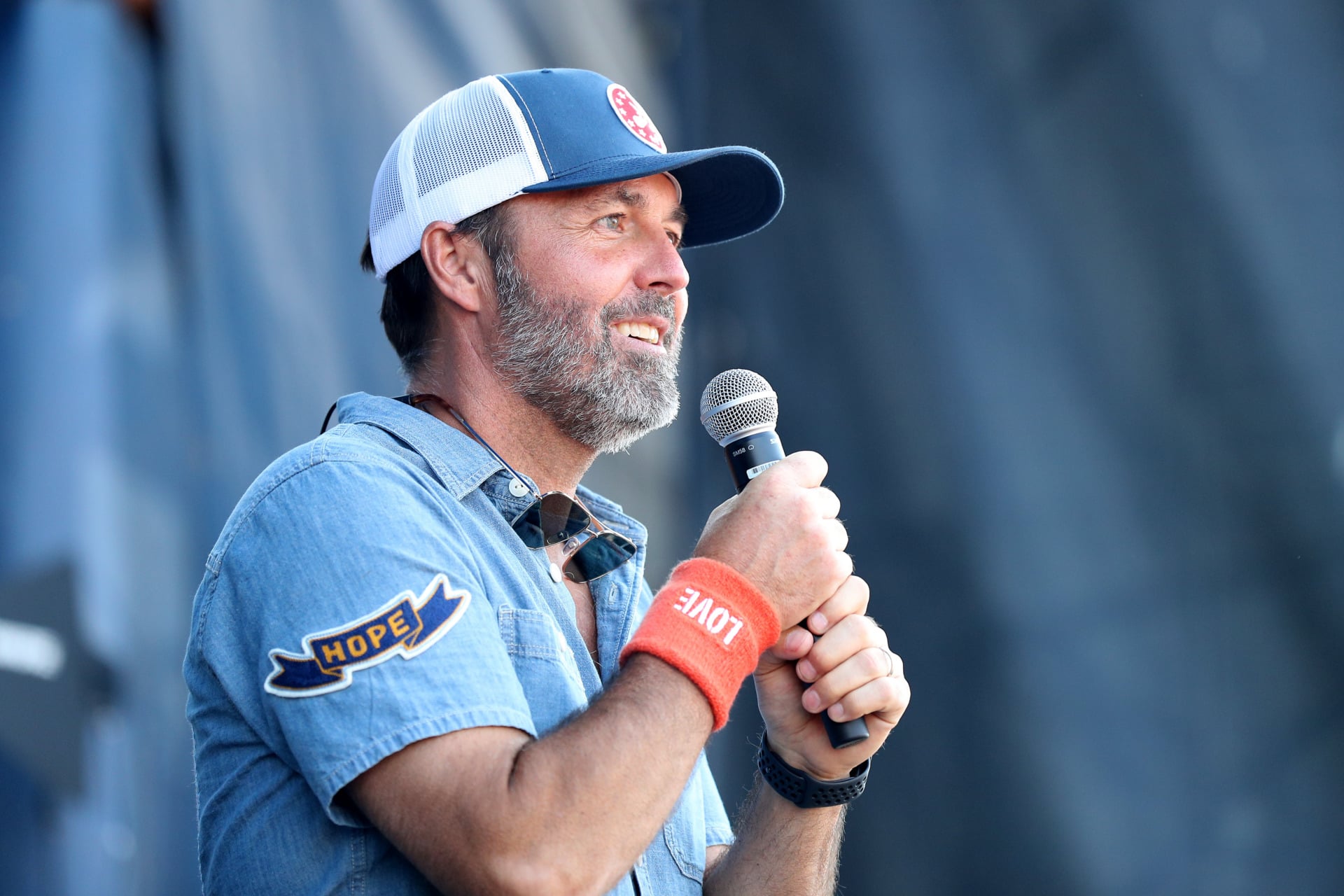
Jay Sweet, executive director of the Newport Festival Foundation, which puts on the popular folk and jazz festivals in the Rhode Island town, opened up to Pollstar about this summer’s events as well as his “Sea To Shining Sea” interview project supported by The Hearthland Foundation that involved him and a team, including musician Devon Gilfillian, traveling across the country to rediscover America by talking music with locals in various cities and artists like Bruce Springsteen, Joan Baez, Jackson Brown, Chuck D., Tyler Childers and many more.
Pollstar: This weekend’s Folk Festival has an impressive lineup. It’s not easy to preserve the history of the festival while trying to offer something new to fans. With all the challenges festivals face today, what’s your approach when it comes to booking?
Jay Sweet: I’ve been doing it for 18 years, and I’ve learned a lot. I’ve built a lot of relationships, but it’s really just listening to my community and the artists. Our tickets sell out in 15 seconds without a lineup every year for over a decade—without anybody knowing who’s on the lineup.
That’s obviously a testament to the work of your team and your ability to maintain good relationships with artists and fans.
I’d say for the last decade, most of it has been word of mouth from other artists, and last year, we asked Nathaniel Rateliff to be the first Newport Folk steward. He’s the first person since Pete Seeger to have that role. What a lot about that is trying to remind the artistic community of not only historical legacy of Newport, but also to remind that it’s such a respite from the normal circuit that a lot of artists have to do throughout the summer months and say, “Hey, this is the place where a lot of artists just come for the whole weekend,” people like Hayley Williams, who came as a guest last year of Jack Antonoff. She immediately called and said, “I want to come back,” and now she’s not only headlining Friday, but she’s also hanging for the weekend.
What’s truly incredible about selling out without a lineup is that the fans are feeling ownership of the festival, because we really are all equal parts: it’s the artists, the fans and the team. We live in a liminal space between those two, but it’s a triangle.
A lot of artists love to come to Newport. I mean, Luke Combs came last year. I’d say 30% of the entire lineup that’s coming could play a show larger than our audience, like The Lumineers and even Lucy Dacus, and she’s playing the show.
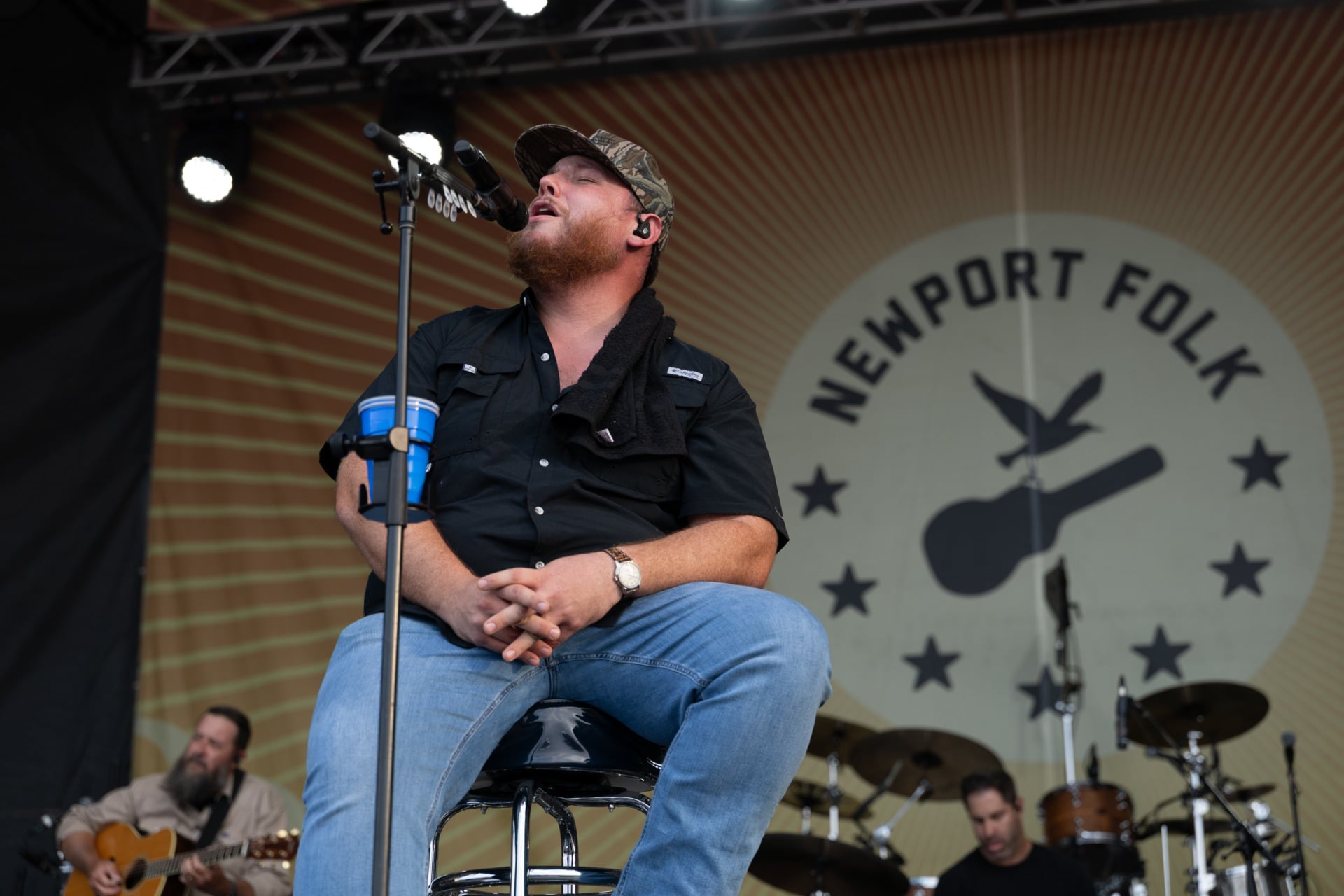
I have such great respect for the artists who know they’re going to play where the people may not be singing back to them. If you go to a Luke Combs concert knowing you’re going to see him, he could probably turn the microphone and have the audience sing every single word to every song. Well, at Newport, he sat on a stool—no big videos or backdrops or pyrotechnics. You just have to bring it. And there are artists who see that, become vulnerable and take that challenge. From Frank Sinatra to Led Zeppelin to Joni Mitchell to Bob Dylan, it’s the oldest festival, and thousands of artists have played it. With that kind of historical aspect, it’s about having a place that’s like an oasis of summer festivals.
The Newport Folk Festival has been at the forefront of culture and has been reflective of society and where things are going. When you look at this year’s lineup, what do you think it says about culture?
The reality is that we are very sharp-elbowed and focused and concerned about providing a safe space where artists can say what they feel needs to be said. We, as a festival, have never taken a side. Our job is to support and provide a literal and figurative platform. And it’s a good point because it’s truly a criteria point for our booking process: do you have something to say? Most of the artists that we bring have something to say. They really want to make an impression. They really want to mirror the human condition, the American condition of where we are currently. I was just at Hayley Williams’ rehearsal, and she’s going to say quite a bit. I think people like Lauryn Hill will have something to say. I’m continuously respectful of the artists who take the opportunity to go out on a limb at Newport where they might not at other places because they feel comfortable to be able to say something. That’s extremely valuable to artists at this juncture in our history, as in the country.
With so many sold-out events, it’s obviously a safe space for fans, too.
The fans’ willingness to listen is amazing. I mean, there’s a likelihood that fans might not have heard of who you are, but they will go, and they will listen. Artists very rarely see Newport fans pulling out their phones. If you can win them over, you’ve got them for life. This audience is so smart, and they know these artists are coming for one-tenth of their normal fee to be part of something bigger than themselves. Any artist that’s come here has checked their ego.
When artists ask me, “What should I do?” I always say the smartest thing you can do is let that audience know where you are, that you’re playing Newport because what that audience wants is to support people who understand the context of where they’re playing. Once the festival is sold out, we announce the lineup one day at a time. When the artist shows up, what I love watching is their faces, thinking, “Oh, no one knows who I am. So by the time the artist gets up on that stage, and when you earn applause or a standing ovation, it’s so well-earned. It’s like when you watch movie stars do Broadway.
The fact that you guys are a nonprofit, thriving in a business that has gotten so expensive to produce music festivals, is impressive.
I have people working here for over 35 years who take their two-week vacations from working at a bank to work security at the gate. These are not festival people that work here. We all live in the duopoly that currently exists in the live music space. I don’t think I’m being incendiary by saying that I sometimes feel that we are alone. We aren’t supported by AEG or Live Nation or some big underwriter. It’s not like we’re playing in front of the “Coca-Cola stage.”
How are we even existing? It’s a miracle to me. And to be honest, this is where it’s the biggest financial challenge we’ve had this year. Without question. Even with the great support, it’s getting so difficult financially and politically. I try to be hopeful for all of us. I think festivals are so vitally important because they create those shared common experiences we need as Americans to feel connected to each other. We become more isolated in our own two inches of our world, meaning our phones. The more we dive into that, the more we feel we are losing out on the collective experiences we need. Shared experiences on a large scale allow us to step outside the myopic path that we have all started to go down, where it’s about you and maybe your closest loved ones. But if you’re not thinking about your community, you’re not thinking about the greater good, the country.
I do feel anxiety about people not getting the opportunity to talk about music, which is what Sea To Shining Sea is about.
Those conversations are great.
My mentor was Pete Seeger, whose mentor was Woody Guthrie. And you have to remember, when Pete was working the festival, he had to go see the music. There was no Instagram. No algorithm. No internet. Not even national radio or Casey Kasem’s Top 40. It was hyper-regional, and to build the first festivals, Pete had to go with his friends and do road trips to find the music. I felt I was getting lackadaisical, that I stopped looking under rocks. What I realized was not to just go and find artists to bring them to Newport, which we did, but it was more about literally going from sea to sea.
We literally went from Venice Beach to New Jersey and up again to Newport, talking to everybody, not just musicians. I pulled over to the side of the road, and a guy on his Harley-Davidson doing the Devil’s Backbone in Virginia was blasting Creedence Clearwater Revival while they were filling up the gas tank. I walked right up to him and asked him for five minutes. So I was like, “Tell me, why are you listening to Creedence? What do you think about it?” And he said it was the most American music in the world. It’s funny because that particular person didn’t hear Creedence through the eyes of “Fortunate Son,” which was a protest song. He was just listening because he thought it kicked ass and it fucking rocks.
Within 10 minutes, I knew this person, and I had very little [in common]. If we were to look us up, on paper, our chosen identities or brand politics or labels, we would never talk or even make eye contact. But here we were, and we ended up hanging out for 15 minutes. Through music, we bypassed all those identity politics and defensive walls. Music was this weird stream or fog that could sift up and over or through without hitting the wall.
If I saw someone with a Red Sox shirt, and I’m a Red Sox fan, I’d be like, “Hey, go Sox!” But then we’d get into the Yankees, and it becomes adversarial. It’s like someone has to win or they suck this year. But no one really says that about a band. It’s not like you see someone wear a band shirt and say, “Your band sucks, and my band is going to kick your band’s ass.” It doesn’t work that way. Even if I wasn’t a huge fan of a band that someone was playing or repping, I could clearly see their passion and access that same emotional thing from my own band.
The very first thing that every mother, the minute a child is born, they are humming or singing lullabies to make the child feel calm. The very first thing we’re conditioned to do as humans is, when we hear a song, to start to allow ourselves to be more vulnerable, feel safer, and express ourselves. It’s just so fucking powerful. I was out there for one and off for about six weeks and was re-awakened to the power of it.
What’s great about the Sea To Shining Sea project is how everyone has equal billing, from the guy with the Harley to Bruce Springsteen. It serves as a preservation of sorts but reminds people of what music can do and still does for people, regardless of age or background. It’s not just an extension of the festival, but it shares the spirit.
We’re talking to people who may never come to the Newport Folk Festival or may never play the festival. But they were no less. Some of the most amazing people were people who played music for their community, not for the sense of trying to become famous. They were doing it after their day job. Think of the third spaces. We used to have libraries, churches, Little League, all these spaces that weren’t work or home or school. I think that live music is that space, a communal space.
FREE
 Daily Pulse
Subscribe
Daily Pulse
Subscribe
 Daily Pulse
Subscribe
Daily Pulse
Subscribe