
Plastic Free July: How Venues, Tours & Festivals Are Embracing Alternatives To Save The Planet
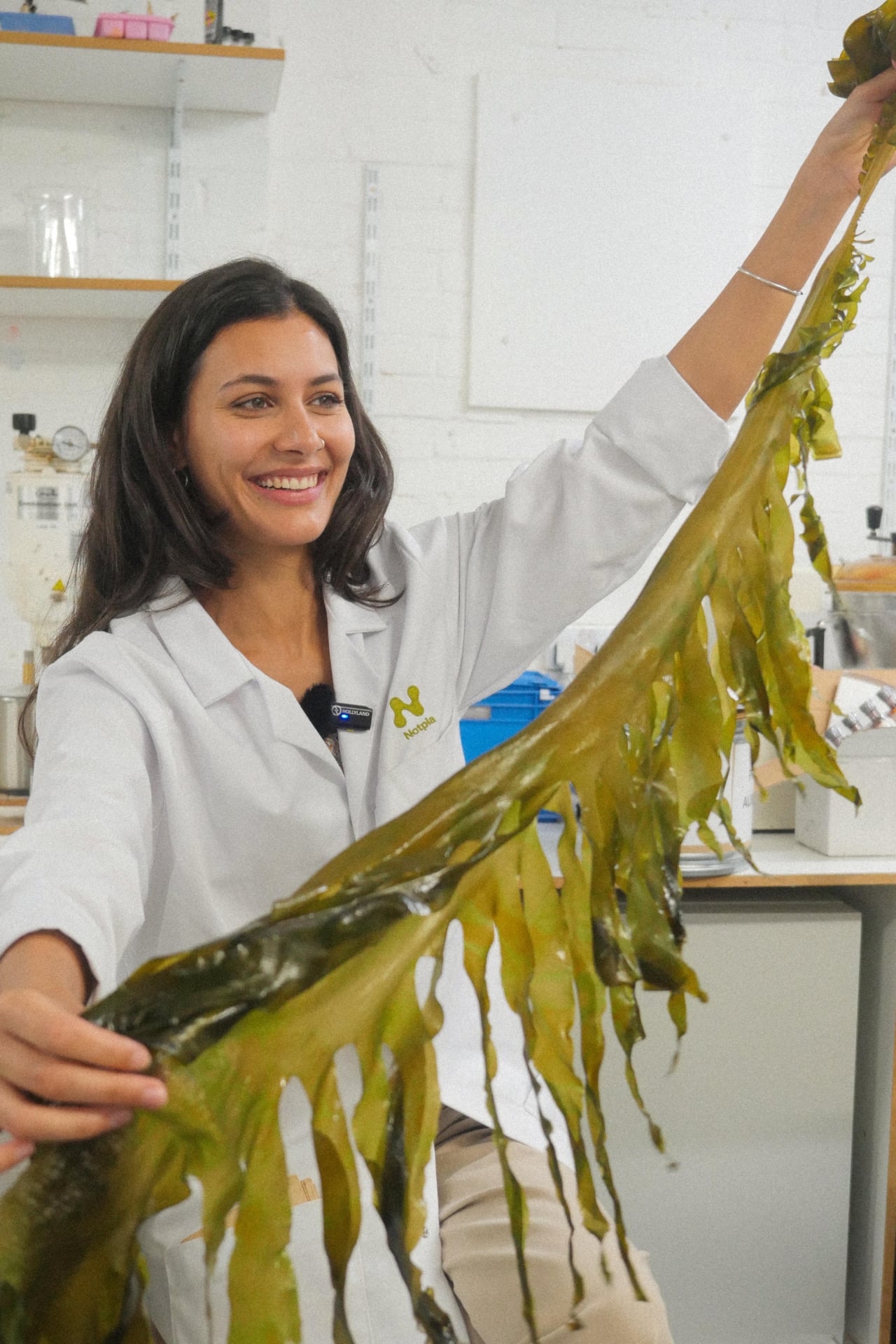
Courtesy Notpla
Before co-creating an innovative product made out of seaweed that would help fight plastic waste at major venues around the globe dedicated to prioritizing sustainability, Notpla co-founder and co-CEO Pierre Paslier was working as a plastic packaging engineer for the cosmetic company L’Oreal. Inspired to make a career change as he felt that “plastic was a problematic material” because of the environmental impact, he quit his job and moved to London to study innovation. There he met his Notpla co-founder, Rodrigo Garcia Gonzalez, and they started a student project focused on using natural materials to create packaging.
“We actually started in our own kitchen because we didn’t have access to a lab. And so we could only use materials that were safe [and] food grade because we had to cook our next meal without poisoning ourselves … Through that exploration, we [landed on] seaweed. Seaweed was actually used since the 1940s for making fake caviar. If you’ve ever had these little fake fish eggs, those are actually made from an extract from seaweed,” Paslier says. “And we’re like, ‘Wow, such a cool technology. What if we could take this … and use it for making packaging?”
Initially, Notpla’s customer base was focused on marathons, including replacing plastic bottles at the London Marathon. After COVID-19 hit and mass gatherings were canceled, Notpla’s founders pondered what else they could do with this seaweed technology and were inspired by the explosion of takeout restaurant orders. Paslier notes “that in most of those takeaway food boxes, even if the outside is paper or cardboard, there’s a thin layer of plastic on the inside to hold the moisture. We realized we could use seaweed as a substitute for this thin layer of plastic.”
Along with working with restaurants, Notpla’s customer base expanded to include big event organizations for sports, festivals and concerts. Notpla now works with major concessionaires including Levy, Aramark, Oak View Group (Pollstar’s parent company) and Sodexo, with its products found in venues from Intuit Dome in Inglewood, California, to The O2 in London. In 2024, Notpla signed a contract with Levy to bring the eco-friendly packaging to more than 50 sporting and event venues in Europe.
Though there has been some political polarization of climate change, Paslier points out that “microplastic and health cuts across the full political spectrum, from the Make America Healthy Again movement as well as the most leftist groups that are all agreeing that we don’t want to eat tiny little particles of indestructible chemicals that wreak havoc in our fertility and our general health.”
And on top of going plastic-free being a plus for one’s health and the environment, it can also be good for business. Paslier says, “That’s actually become a bit of a selling point for The O2 because now more and more artists have green riders and they’re asking and expecting sustainable options [including] … reduction of single-use plastics.”
Another plastic-free, innovative product that can be found at hundreds of live venues is VerTerra Dinnerware. Founder Michael Dwork was inspired to launch the company after exploring a local market in India and seeing a woman pressing palm leaves into plates using a simple screw press. Since founding VerTerra nearly two decades ago, the company has expanded its products from its eco-friendly plates made out of fallen palm leaves to offering disposable plates made out of white birch wood, along with disposable utensils and a wide variety of concessions, as well as compostable containers and cups.
“It started in the luxury and suites, high-end catering, four- or five-star property part of the food service world and now we’ve built out the capability to do a lot of lower-priced items so that we can help in your general concession areas, grab-and-go,” Dwork says.
Dwork explains that the wood products are providing the same quality of product as the palm versions with one-sixth the shipping impact. He says, “While the materials and the design are key drivers for us, making sure that the products are affordable is also critically important. … There’s a general misperception – and this has always been true for eco-friendly products – that they are twice the price and half as good. And at least in our case that is not true.”
Of note, Dwork says the products are sourced from tree farms in Indonesia that are constantly replanted and actively managed – and that VerTerra works with a few groups that will pull the stumps out of the ground to make sure no part of the tree is going to waste.
When it comes to reducing plastic waste at venues, water is a very easy place to start. Just look at the grounds after a festival has wrapped, which are often littered with plastic water bottles fans have left behind.
Open Water, which is packaged in aluminum bottles and cans (on average 73% of the aluminum used is recycled), is one brand with sustainability at its core. Niki Mazaroli, Director of Sustainability & Community Engagement, says, “Every Open Water purchase helps support ocean conservation efforts. Through our Sea Change Grants program, we fund grassroots nonprofit organizations working to restore and protect oceans, rivers, lakes, wetlands, and coastlines, while also supporting plastic pollution cleanup, habitat restoration, and environmental education.”
Open Water has supported touring artists through backstage and hospitality programs, including Rüfüs Du Sol, Zach Bryan, and Dave Matthews Band and has also worked with venues such as Intuit Dome to extend its mission via the LA Clippers’ Threes for the Seas program, in which “every three-pointer made at home games helps fund ocean conservation.”
And then there’s REVERB’s Rock and Refill program, which was started 11 years ago in partnership with reusable water bottle company Nalgene, and has eliminated almost 5 million single-use water bottles.
“We work with the venues to allow fans to bring their own empty reusable water bottles, so they can fill up the water stations for free. If they want a special tour bottle through Nalgene, they can make a donation for that special limited edition bottle. And through those donations, we’ve raised over $6.4 million for environmental and social causes,” says Adam Gardner, guitarist/vocalist for Guster and co-founder of nonprofit REVERB.
When it comes to campaigns like “Plastic-Free July,” Gardner says it’s important to get people’s attention who may not be thinking about it year-round and emphasizes that “It’s always about how do we do this in bite-sized ways that people can just get started?”
He adds, “Because I’m a touring artist myself, my role is talking to artists and their managers. Like, ‘Look, you don’t have to do everything. If you want to do everything, we’re here for it. But where can we get you started?” Our philosophy is if you offer people all or nothing, more people choose nothing. And having a few people do everything isn’t going to have as much impact as having everyone do something.”
FREE
 Daily Pulse
Subscribe
Daily Pulse
Subscribe
 Daily Pulse
Subscribe
Daily Pulse
Subscribe