
Osheaga Preps For ‘Best Ticket Sales In History’ In Festival’s 19th Year
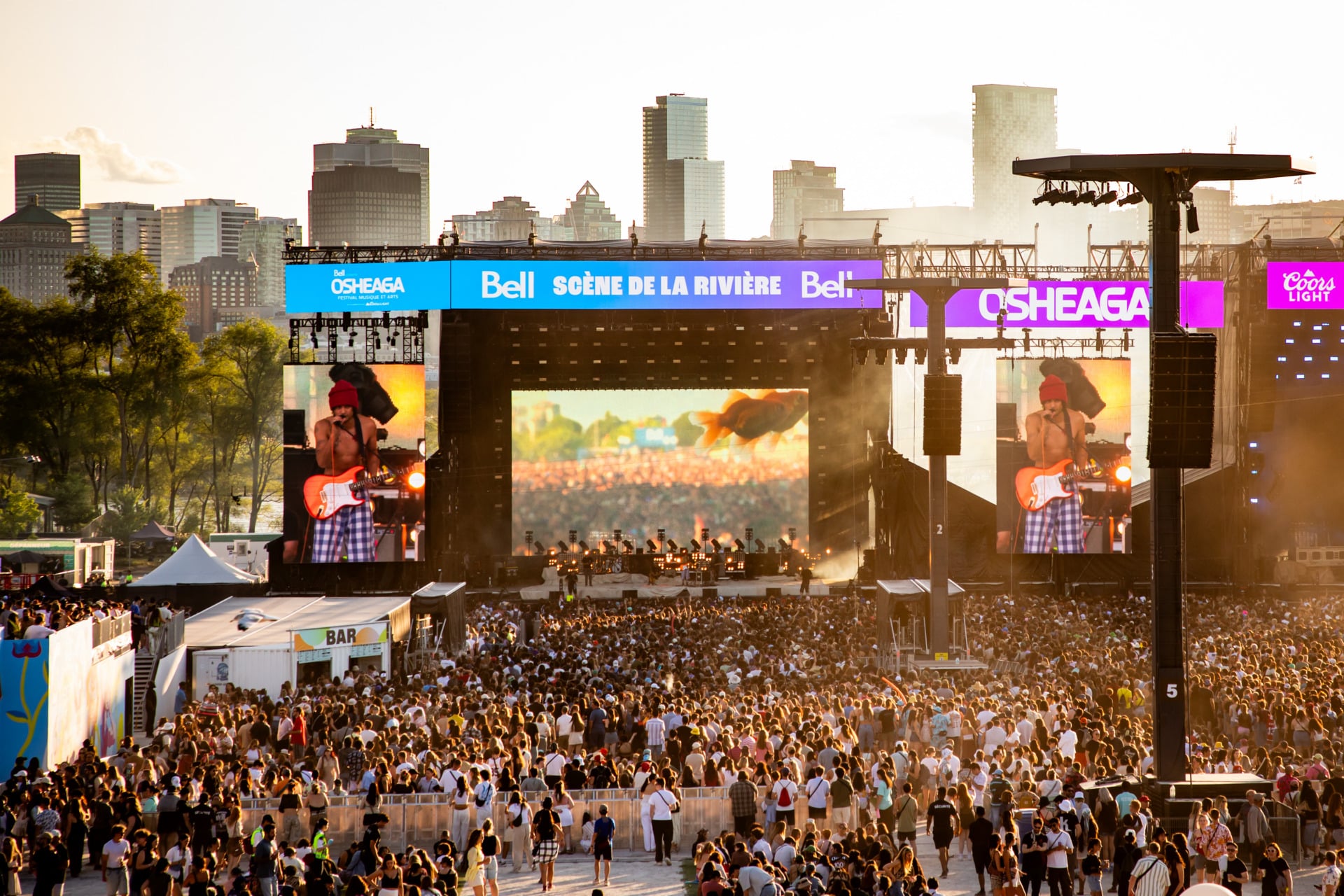
Osheaga festival returns to Montreal’s picturesque Parc Jean-Drapeau July 31 to Aug. 2 for its 19th year, which co-founder and Evenko SVP Nick Farkas says is its best-selling event yet, with 50,000 people per day expected at Saint Helen’s Island to see a lineup topped by Lorde, Tate McRae and Twenty One Pilots.
“I’m really happy with this lineup,” says Farkas, noting later bookings like Turnstile adding to a strong bill that includes The XX, Sombr, Gunna, Geese, Zara Larsson, Subtronics and many others. “We’re having our best sales in the history of the festival in terms of where we’re at at this point. So it feels good hanging in there going into 20 years of doing the festival. It blows my mind we’re still able to do this.”
Building on additional events that take place before or after Osheaga, including popular Lasso country music festival and the IlleSoniq EDM festival, Farkas says the multi-genre, 50,000-capacity Osheaga continues to offer something unique in the festival landscape and evolve with the times. Evenko in 2019 entered a strategic partnership with Live Nation.
Pollstar: What makes Osheaga stand out among the other large multi-genre music festivals in North America?
Nick Farkas: We’ve always known that we have the advantage of our site, one of the best sites in North America and of the best cities in North America. The original plan was to take what makes Montreal great and try to put it on the island – food, music, art, culture. Let’s just try to take like a microcosm of Montreal. It’s always been our goal is to make it feel very Montreal. We know just from tourism numbers that people come on average five days, and that’s fantastic because they get to experience the city. It’s unique that it’s an urban festival and that it’s in a city, but it’s also not actually in the city.
Utilizing the infrastructure makes doing additional festivals, like the country-themed Lasso or electronic IlleSoniq, possible.
You’re building a city, bathrooms, stages, food, security — everything you need in a city, you’re building it. If you only use that city once,, that’s the cost of doing it. This year we’re up to four, then we have the Vans Warped Tour for two days. So we are out for four weekends in a row, and then we keep the site up for like two more weeks for AC/DC.
What we do on Lasso is courtesy of what we built for Osheaga. We have a tremendously awesome country festival because we’re able to use the same infrastructure that we used. So it’s given us this really fun opportunity. I remember doing Osheaga the first year we did, we did Heavy MTL, which was our metal festival, but we did them like a month and a half apart because that’s just the way the timing worked. I had an epiphany standing at this stage watching us lose a lot of money and I was like, we gotta do these things back to back (laughs).
Q: While not quite as big as your Chicago sibling in Lollapalooza, 50,000 per day is nothing to sneeze at.
Our sellout is 50,000 and that creates its own challenges because like it or not, It’s great to be compared to the bigger American festivals but at the same time, it’s we’re collecting all the revenue in Canadian dollars, paying the bands the American dollars and paying taxes and everything else that we have to pay. A Canadian dollar is worth, depending on the year, a lot less than the American dollar or just less than the American dollar. It creates a whole other bunch of challenges to put together a, a really good lineup that people are going to compare to Lollapalooza in Chicago on the same weekend, but you don’t have anywhere near the revenue to work with.
We are a destination festival. In 2022, coming out of COVID, our numbers were way down from the rest of Canada and down from America. It was the worst year we had in a long time. But, thank God, the tourism numbers have gone back up and I don’t think the current situation in America is impacting us in terms of people still wanting to come to one of the greatest cities in North America, in the summer especially,
Along with multiple festivals, Evenko puts on stadium-sized shows at the Parc Jean-Drapeau. How many of those do you do in a normal year?
Nick Farkas: It really depends. We have five this year. We had two Luke Combs, we’ve got Rufus du Sol. We have the Vans Warped tour coming back for the first time in many, many, many years. We have an AC/DC show and we have Iron Maiden. Last year we had just two nights with The Weeknd. We don’t have a stadium right now (in Montreal), so we can make it work out there sometimes, depending on the production.
Booking music festivals a year or longer out is still the norm, but the music cycle and fans’ tastes move quickly. Is it faster than it used to be?
We definitely move faster. We always try to stay in a few spots till the very end in case something blows up or something exciting comes along that we weren’t anticipating. We’re always trying to factor in the fact that something might go from zero to 100 in three months. With TikTok and Instagram, all these platforms that just multiply things, you will see artists that all of a sudden are so much bigger than they were.
Everybody goes back to Chappell Roan, how crazy that was to have her at 3:20 or something in the afternoon on the main stage. And then, you know, I think we had like 85% of the people in at that time, which we had never seen before. We saw her in a club in Nashville in the fall, and we booked her, and then she was huge. When you do get those acts that catapult to the top, it really helps. Like Sombr, there’s artists on there that just come out had huge, huge years already. Zara Larsson is having a moment now.
There are plenty of other non-artist-related factors you can’t control when producing a music festival, too.
Good festivals control as much as they possibly can, and bad festivals do not. If you can harness the things that are controllable. We had Luke Combs on Friday night and we had a meteorologist on site and he is like, “it’s gonna get ugly between 9:00 and 9:30, so if you can get the show done by then…” We spoke to his camp and he wanted to play two hours, so we ended up having to cut the two opening acts out of four. It wasn’t ideal, but I think back to early in my career, we did not have a meteorologist. We didn’t have evacuation plans and we didn’t have all the stuff that we need now, but we should have probably had that. We were good at what we did but it wasn’t at the level that we need to be, and that the world is at now.
What is the festival’s current philosophy on VIP and premium ticketing experiences? Not the most punk-rock aspect of a music festival, but there is clearly demand for it.
Very much in the beginning, i was like, “I don’t want to do any of that stuff. We’re all together in this,” and then I realized as people that I knew were getting older, you’re creating a different experience with people that can afford that experience. I want that experience. I like the idea that you can go and be in the gold section or whatever and have that experience, but then you can go out in the field be with everybody else.
So, over the years, our teams have evolved the experience to be really high end, really well done, really well. Every ear they get better and better. The way we work as a company and as a team and as an producer is we are always trying to evolve and change. We change on the fly. We listen to what people are telling us. It’s 90 degrees outside, it’s three days straight, and we have to figure out a way to get more water. There’s always an evolution onsite and how we treat people.
FREE
 Daily Pulse
Subscribe
Daily Pulse
Subscribe
 Daily Pulse
Subscribe
Daily Pulse
Subscribe