
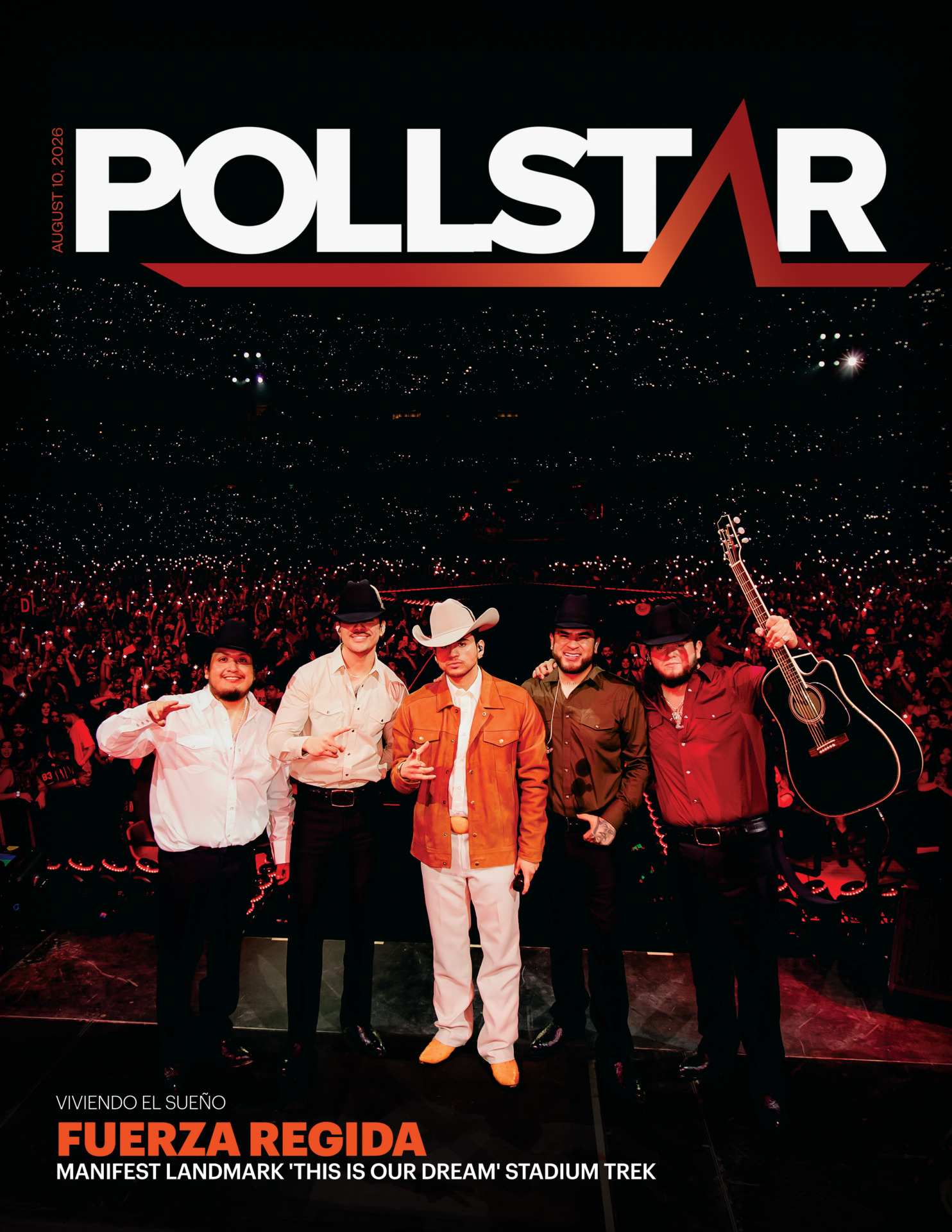
Viviendo El Sueño: Fuerza Regida Manifest Landmark ‘This Is Our Dream’ Stadium Trek (Cover)
When French philosopher Jean-Paul Sartre said, “Words are loaded pistols,” he meant it as a warning about the immense influence words carry.
Jesús Ortiz Paz, lead singer of Mexican music quintet Fuerza Regida who also goes by the acronym JOP, is well aware of that power, intrepidly wielding it, but more like a wand than a sword, openly expressing his feelings and ambition through his music and in conversation.
Since its formation in 2015, Fuerza Regida hasn’t been afraid to shoot their shot at the music gods, wishing to not only break into the industry but also revolutionize it by performing música Mexicana in the biggest venues across the globe.
After years of grinding as a cover band and performing at local parties in San Bernardino, California, and rising through the SoCal live music ecosystem, Fuerza Regida can officially say that dream has been realized.
This summer, Fuerza Regida’s aptly named “This Is Our Dream Tour,” promoted by Live Nation, is one of the most successful runs by a Mexican music act, with eight sold-out stadium concerts in markets like Los Angeles, Las Vegas and Houston. They have grossed a whopping $47,198,246 off 330,228 tickets sold, according to Pollstar Boxoffice, and the first leg of the trek wrapped up Aug. 7 at Citi Field in Queens, New York.
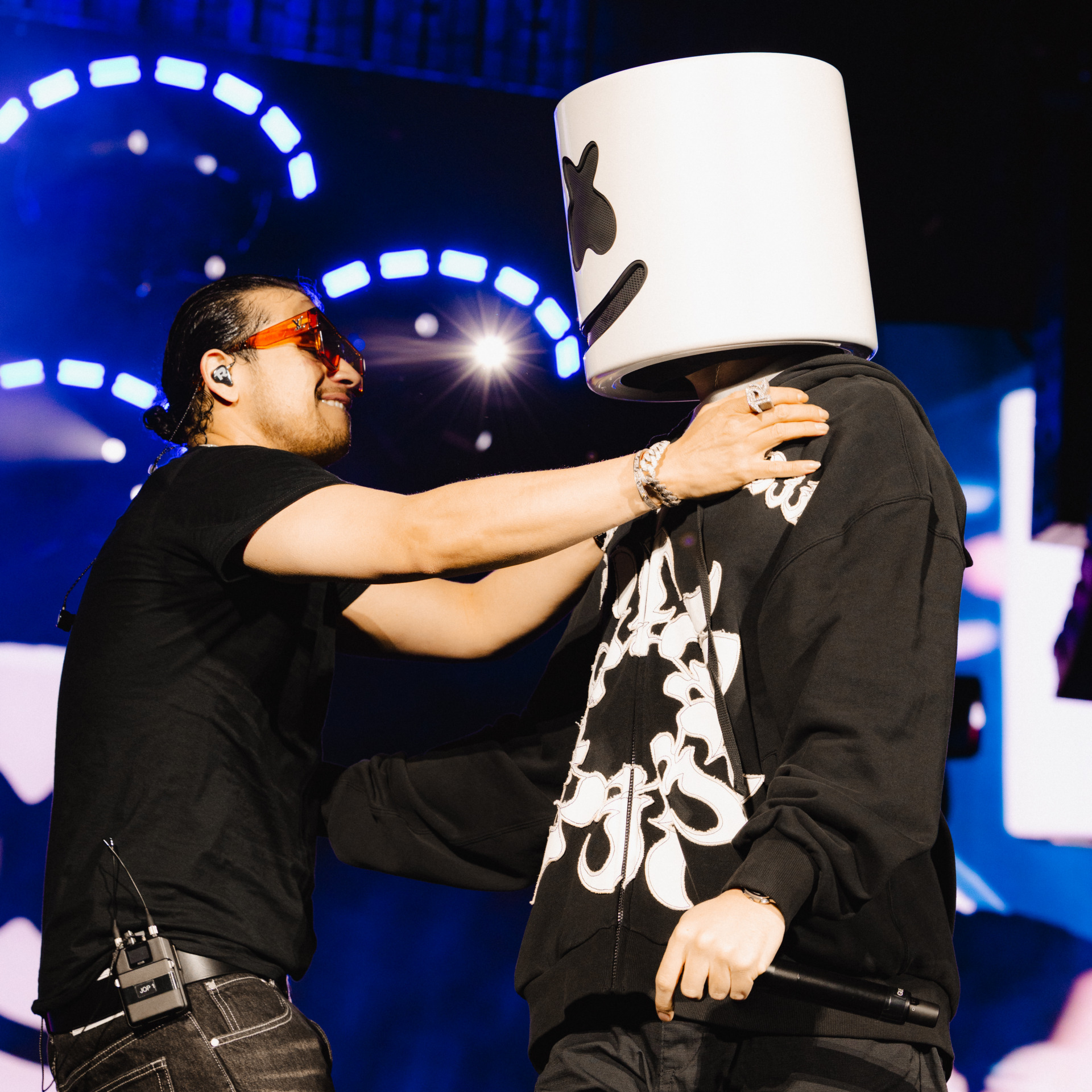
Fuerza Regida went all out to make the New York concert memorable with special guests including J Balvin, 50 Cent and Bobby Shmurda. Building off the sold-out show, the band announced Monday a second leg to the tour in arenas and amphitheaters.
“For a long time, we’ve always wanted to do this,” JOP tells Pollstar days ahead of Fuerza’s New York show. “We’ve been manifesting since we started our career to do stadiums, to do bigger things in our career. And we’ve been accomplishing them.”
JOP expressed a similar sentiment to Pollstar three years ago after Fuerza Regida played a sold-out show at BMO Stadium in Los Angeles, which was the band’s first stadium concert and moved 22,392 tickets.
“We went from Crypto.com Arena to BMO, and hopefully next year we go to a bigger venue: SoFi Stadium. It’s all about manifestation. That’s all I believe in,” JOP told Pollstar in July 2023.
That conviction and drive may not have led Fuerza Regida to SoFi Stadium (yet), but it got them into one of the most iconic baseball stadiums in the world. The band sold out Dodger Stadium on July 18 and grossed a gargantuan $9,237,664 off 49,784 tickets sold, making it the most successful headline show in Fuerza’s stellar career.
They join legends such as the Beatles, who played their second-to-last formal concert at Dodger Stadium in 1966, and Elton John in selling out the storied venue.
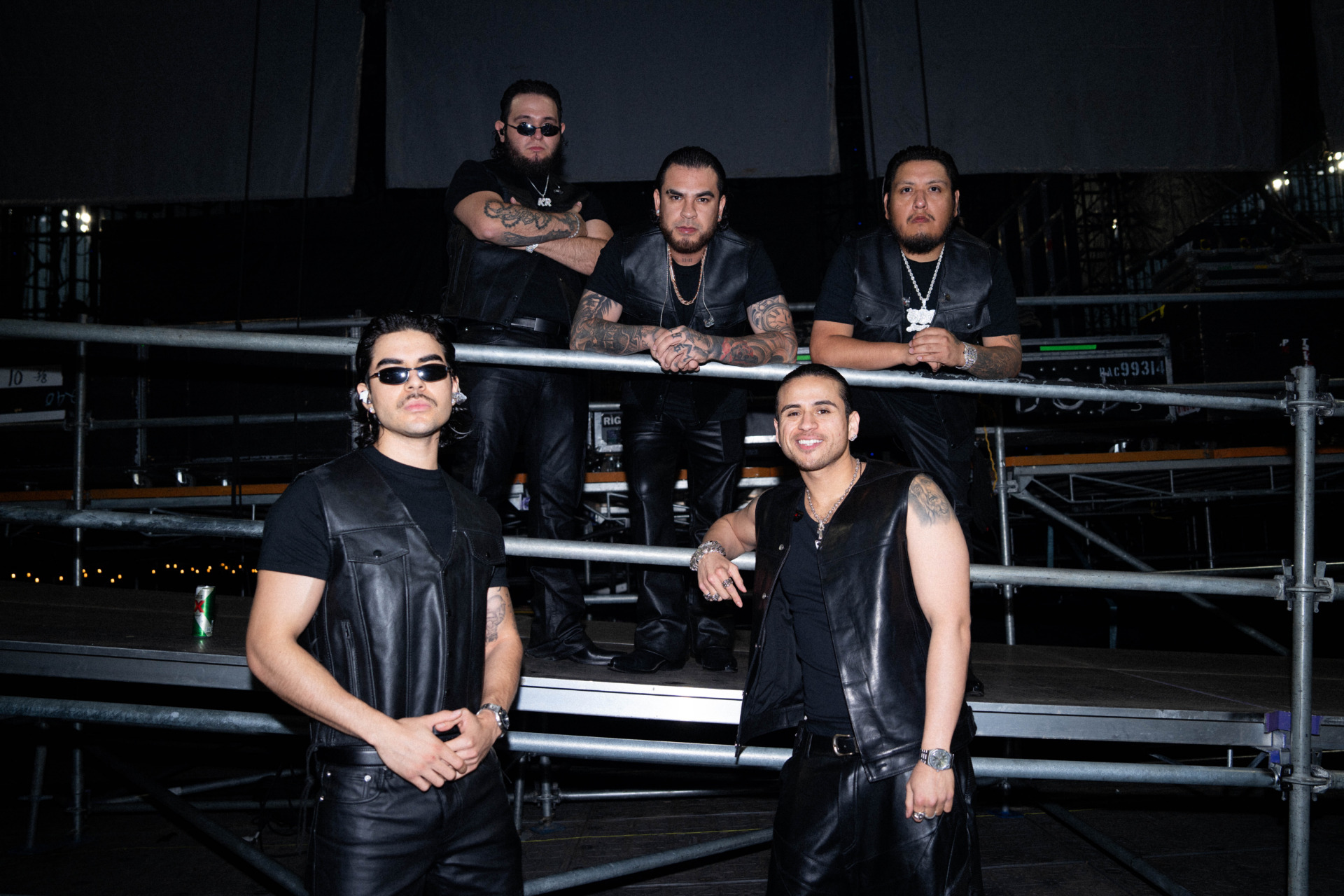
Though Fuerza Regida has had success on the arena and amphitheater circuit the past few years, jumping into stadiums wasn’t a guaranteed home run, but as tololoche (the Mexican upright double bass) player Moisés López tells Pollstar: “If you don’t do it now, you’ll never do it. That’s why we decided to just do it.”
Now’s as good a time to go for it, with Latin music dominating global music charts, especially that from the regional Mexican scene. Fuerza Regida—which also comprises Samuel Jáimez, Khrystian Ramos and José García—has shown staying power on Pollstar’s Artist Power Index and LIVE75 charts this summer, a testament to their talent and the movement they’ve spearheaded over the past decade.
The term regional Mexican is now outdated thanks to young artists like Fuerza Regida and Peso Pluma, who have helped the genre grow beyond North American borders with platforms like Spotify, Apple Music and YouTube. Both aforementioned acts are associated with the Latin subgenre known as corridos tumbados, aka corridos bélicos, which incorporate elements of trap and hip-hop, and it’s made Mexican music a major influence in the global live music industry.
“We have a lot of colleagues that helped us build this ship, to get where this genre is,” JOP says. “We do consider ourselves one of the pioneers since the music started going more global.”
Modern corridos resonated with young audiences with their audacious, unique sounds and rhythms usually associated with urbano and hip-hop but done with classic regional instruments like the requinto guitar, tuba and tololoche bass.
Fuerza Regida formed a decade ago and played quinceñeras and other backyard gigs in San Bernardino, which is in the Inland Empire east of Los Angeles near the mountains. They mostly played covers then, and it helped them refine their Spanish and grow an appreciation for Latin classics that their parents and grandparents grew up with.
That experience also allowed them to hone their craft, but it didn’t take long for Fuerza to be recognized and become local celebrities. Quickly after they began writing their own music, they became local legends with the sierreño corrido titled “Radicamos En South Central,” which translates to “We Settled In South Central.” The independently released sierreño track is a favorite among fans with lyrics that draw inspiration from the Southern California anthem “Straight Outta Compton” by N.W.A.
The boldness and ambition of “Radicamos En South Central” could only come from a group of Mexican American musicians who grew up in Southern California and consumed hip-hop with friends and listened to Mexican folk ballads at home. Having that kind of diverse musical palette and being born to immigrant parents in the States can be a blessing and a curse, with pressures from various cultures and sometimes not being accepted by one or the other.
“It’s not easy. Of course it’s not easy,” JOP says. “To this day, we still have a little bit of problems with that. Showing the truth, showing your true colors and showing your true self, that takes you a long way. We’re not here faking anything. We have Mexican parents; we’re Mexican. We love Mexican culture. We love Mexico, and we’re born in the States. We love the States. We love the food. We love everything. We got two cultures in our blood.”
Fuerza Regida’s authenticity and genuine admiration for San Bernardino and Mexican music showed in their breakout hit, and it caught the attention of Ramon Ruiz from Legado 7, an Orange County band that similarly blended urban culture with regional Mexican. Ruiz got Fuerza signed to his label Lumbre Music and Rancho Humilde, and the SoCal band quickly rose up the regional Mexican charts with the release of their 2019 debut studio album Del Barrio Hasta Aquí.
After signing a deal with Sony Music Latin in 2022, the band ascended to yet another level with their fifth studio album Pa Que Hablen, which featured collaborations with stars from the modern corridos movement like Natanael Cano, Junior H, Peso Pluma and Eslabon Armado.
Their music, along with the reggaeton and urbano movement led by artists like Bad Bunny and Karol G, helped make Latin music a mainstay rather than a trend. For decades, the various subgenres within Latin music struggled to maintain their moment in the spotlight, which forced many artists to crossover into English-language pop to expand their reach.
That changed in 2017 with Luis Fonsi’s “Despacito,” a global sensation that also featured Daddy Yankee and Justin Bieber and launched Latin music into the mainstream stratosphere, giving the genre so much momentum that it never looked back.
In 2025, two Latin artists made Spotify’s Top 10 Artists Globally chart: Bad Bunny was No. 1 ahead of Taylor Swift, and No. 10 was Fuerza Regida, who have expanded their reach by taking the same bold swings they took when singing in the streets of San Bernardino. (Both Latin acts recognized by the streamer predominantly sing in Spanish, paving the way for a new normal when it comes to pop music.)
As the band became more global, amassing nearly 50 million monthly listeners on Spotify, they began embracing other genres. In 2023’s Pa Las Baby’s y Belikeada, Fuerza Regida dabbled with EDM and even explored drill rap in “Dafuk,” the band’s first English-language track. It was maximalism at its finest, sending listeners into an Odyssean journey through underground parties.
“We’re pushing the boundaries, expanding the sound, always changing it up, always innovating, bringing new things to the genre that have never been seen before,” López says. “We just keep moving forward, globalizing the genre.”
That creativity was evident in the band’s latest album, 111XPANTIA, released in 2025. The album was considered something of a return to the band’s Mexican music roots, with a more subtle approach to experimentation. There are hints of folk and country in some tracks, especially in the hypnotic and catchy single “TU SANCHO,” which features a sample of Ellie Goulding’s “Don’t Say a Word,” but the music never strays too far from Fuerza’s sierreño sound.
But for a band that grew up in Southern California, a diverse region full of vibrant music scenes, there is no such thing as pushing boundaries “too far” when it comes to music, JOP says.
“We love every type of music. We come from a Mexican family and listened to a bunch of old mariachi and regional Mexican music,” JOP adds. “We were born in the U.S., so we listen to hip-hop, rock, EDM. I wouldn’t say there’s a limit. We don’t just have a genre. We’re a generation.”
With 111XPANTIA, the band aimed to create a landmark album that cements their place in Mexican music and pushes the genre through new doors. The title itself was a loaded pistol—as Sartre would put it—utilizing the indigenous language of Nahuatl. “Ixpantia” is the Nahuatl word for manifestation, and the number 111 is known as an angel number that signifies a new beginning and spiritual fulfillment.
Fuerza Regida’s work—and words—sent them down a divine path that led them to “This Is Our Dream Tour,” a trek that could only be done in venues as big as their ambitions. The quintet has been known to throw shows that resemble house parties, but they wanted to encapsulate their journey with a cinematic production that included multiple wardrobes and sets.
“We wanted to show that everything is possible,” JOP says. “All your dreams are possible. Live them and accomplish them. It was possible for us. The show is about two hours and 15 minutes, so we wanted to show our story.
“We just wanted to take it to the next level. We’ve never had a show where we switched outfits that many times and not just do a concert but also have a storyline—like a movie,” he adds.
Elevating the live experience and taking production to another level is something the band took away from watching other notable stadium acts, including Bad Bunny.
“We were going to already do a lot of work, but it made us push a little further because he’s a Latin artist, and he probably has had the same obstacles as us,” JOP says. “Just seeing him thrive and his concert, that was amazing. It really put something in me that made me want to do amazing as well.”
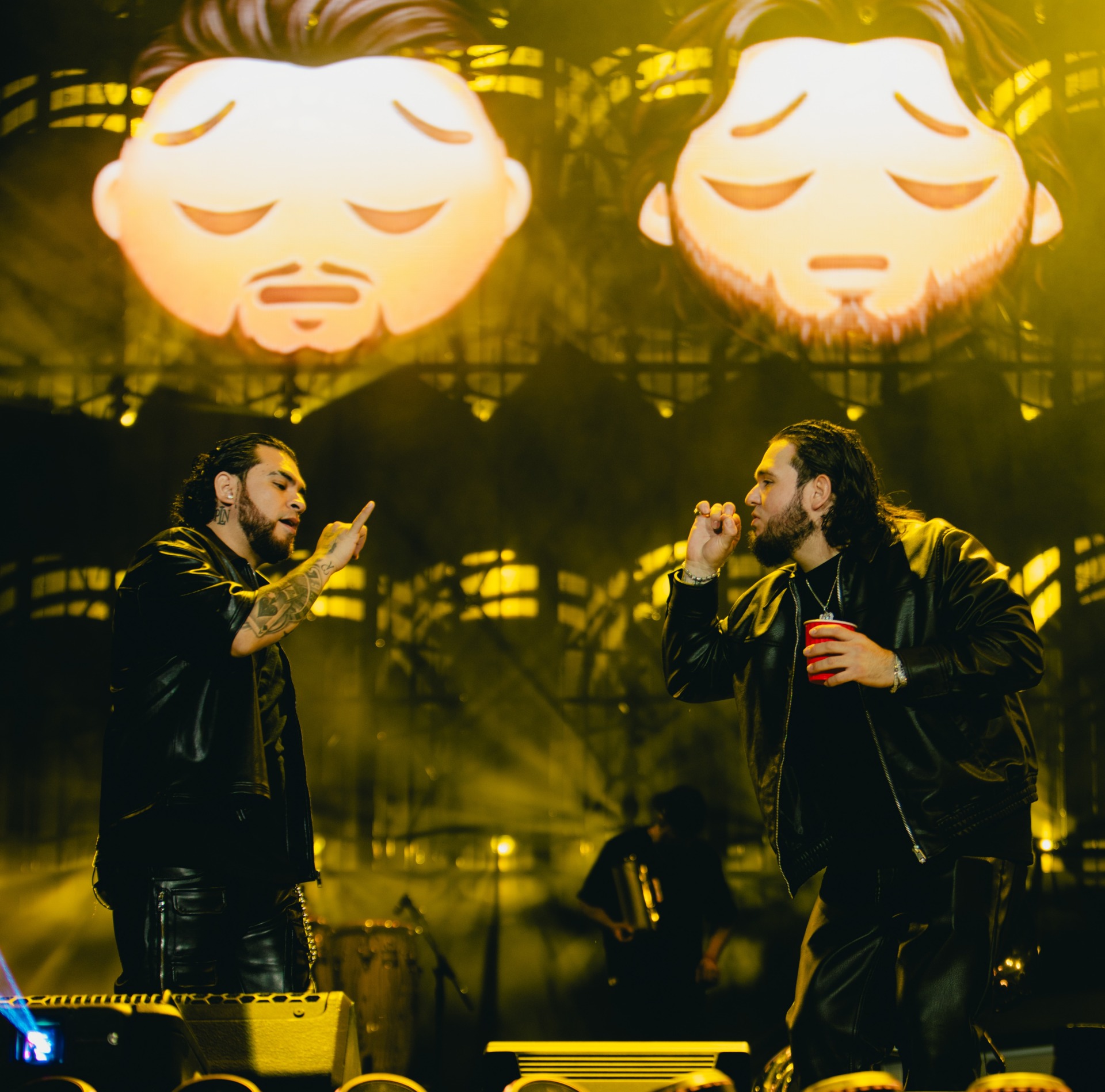
López echoed his bandmate and mentioned shows beyond the Latin genre, saying concerts from Taylor Swift, Beyoncé and Drake inspired them to deliver a new experience that matches their album’s message as well as the work that went into producing it. Swift’s ability to transport fans through time, or eras, fascinated Fuerza, and they wanted to deliver a similar immersive journey to their fans.
“We looked at Taylor Swift’s show and got inspired by how big her tours are,” JOP says. “We knew we had to manifest it and try to get on that level.”
For a band playing música Mexicana in multiple U.S. stadiums, it’s safe to say Fuerza Regida has reached that level. They have cracked Pollstar’s Top 200 Worldwide Tours chart the past three years, and they will likely make it four in a row by the end of 2026 with this year’s tour, which may end up being their most successful one yet.
Nine sold-out stadium shows and being the only Mexican music act on Spotify’s most recent year-end top 10 artists list is more than enough to solidify Fuerza Regida’s placement in the música Mexicana movement and its history, but a competitive JOP feels like they have yet to reach the top of the mountain, with many more genres and territories to conquer.
“We’re gonna scout, man, like we always do, and figure out the next move and try to be the best, until we are No. 1,” JOP says. “We’re almost there.”
FREE
 Daily Pulse
Subscribe
Daily Pulse
Subscribe
 Daily Pulse
Subscribe
Daily Pulse
Subscribe