
‘We See Emerging Artists As Entrepreneurs & Creatives’: How Play One We Know Wants To Help Grassroots Artists & Venues
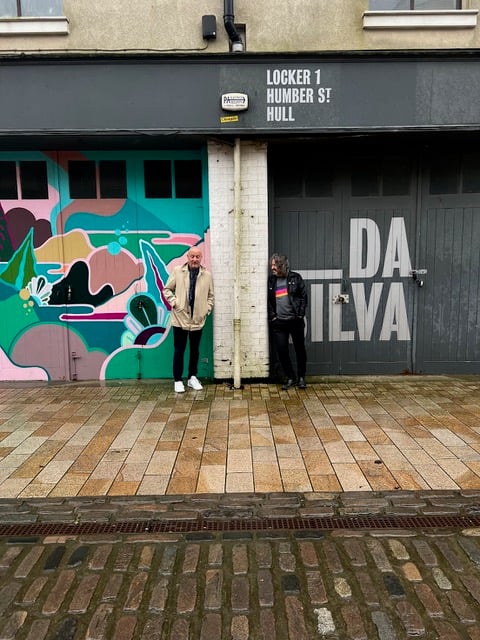
The struggle of the grassroots scene, whether that’s festivals, venues or artists, is real. The conversations Pollstar has been having with venue operators, independent promoters and grassroots artists over the years expose the main issues like rising costs and excessive bureaucracy, which make it incredibly hard for up-and-coming artists to tour sustainably in the early stages of their careers – just as it makes it hard for the operators of small venues to run a sustainable business.
The latest company aiming to improve the situation for this industry’s most vulnerable participants is called Play One We Know (POWK). It was co-founded by technology entrepreneur Gerard Toplass and Gerard Gibbons, board director at The New Adelphi, an iconic 200-capacity venue in Hull, England.
Both men have been supporting the grassroots music scene together for a long time, attending some 100 live shows each year across Hull, Yorkshire, and the wider UK, gaining first-hand insight into the challenges facing artists and venues.
The new platform, according to the official wording, “aims to turn music discovery into meaningful support by helping artists, bands and venues make money, save money and strengthen connections with fans.”
Pollstar reached out to Toplass and Gibbons to find out, what exactly that means.
The model of POWK is built on the realization that streaming can be brilliant at creating reach, but that reach is meaningless if it cannot be turned into a relationship, ideally one that generated sustainable income further down the line.
Seeing that streaming is still failing at providing the majority of artists out there with a sustainable income, both men believe that “there needs to be a bit of a mindset shift,” as Toplass puts it.
“We increasingly see emerging artists as micro-businesses and entrepreneurs as well as creatives. That business side can understandably get overlooked, but if you want to build a sustainable career, you have to think about how you develop an audience and then create different ways for that audience to support you,” he explains, adding that “streaming is part of that ecosystem, and we’re certainly not saying artists should abandon it. It is incredibly important for discovery, reach and building an audience. The problem is expecting streaming alone to provide a sustainable income for an early-stage artist.”
Gibbons confirms that the economics of streaming become much more effective once you have significant scale. “For an emerging artist generating hundreds or a few thousand streams,” he explains, “the direct revenue is inevitably very small. That matters because 43% of professional UK musicians earn less than £14,000 a year from music. So our view is that the answer isn’t necessarily to monetize each stream slightly better. It’s to help artists think beyond the stream itself. Streaming can build the audience. The opportunity is then to create more direct relationships between the artist and the people in that audience.”
The live show is still the most rewarding direct relationship between artists and their fans, not just during the show, but after as well, when merch and direct music sales are a way to interact with the fanbase. Beyond that, there are fan club memberships and various services that allow someone who values an artist to support them more directly.
POWK wants to add one other simple yet effective option of direct fan support to the mix. Says Toplass, “a $30 or $35 T-shirt isn’t affordable — or wanted — by every fan. But somebody might happily put $2, $3 or $5 directly towards an artist they’ve just seen and enjoyed.”
One way of achieving this is a QR code that fans can scan right at the gig, find the artist, and support them in seconds. But the QR code is neither the product nor the only route, as Toplass continues, “it’s simply one easy way of connecting the physical experience of seeing an artist with a digital relationship afterwards. The wider idea is to make it easier for grassroots artists to convert audience and appreciation into direct support, at whatever level a fan can afford.”
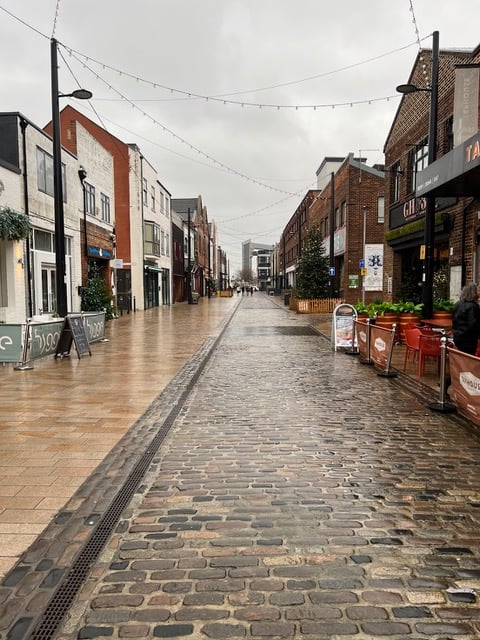
POWK is developing technology around three problems that are all connected: “audience intelligence, direct financial support and social value,” as Gibbons puts it.
He continues, “For artists, it is a subscription platform that brings together some of the key data they need to understand their audience and progress without requiring them to jump between lots of different services. We also give them access to our directories of venues and music-industry organizations, because one of the things we’ve learned is that emerging artists don’t just need data—they need visibility, connections and opportunities.
“Alongside that, we’ve developed the POWK Artist Social Value Estimate. It uses regularly refreshed audience and engagement data and our proprietary methodology to give an indicative £ estimate of the value associated with an artist’s reach and engagement.
“The approach is informed by recognized UK social-value principles, but we are deliberately conservative about what we claim: it isn’t an artist’s earnings and it isn’t a formal SROI or Green Book assessment. It is another way of helping artists evidence a dimension of their value that conventional financial metrics don’t show.”
Last but not least, there is the fintech side: making it easier to create a more direct financial relationship between artists and the people who want to support them, for instance through the aforementioned QR codes.
Gibbons says “the grassroots experience has been fundamental to all of this. Working directly around grassroots venues and artists has shown us that the problem isn’t a lack of creativity or ambition. It’s that the infrastructure around emerging artists is incredibly fragmented.
“They need income. They need audiences. They need data. They need contacts. They need opportunities. And increasingly they need credible evidence of the value and impact they’re creating.
“So, rather than sitting outside the sector and deciding what technology we think it needs, we’re using what we learn from grassroots music to build the tools around the problems we’re actually seeing.”
FREE
 Daily Pulse
Subscribe
Daily Pulse
Subscribe
 Daily Pulse
Subscribe
Daily Pulse
Subscribe