
Las Vegas Stadium Authority Approves Up To $75 Million For Allegiant Stadium Renovation
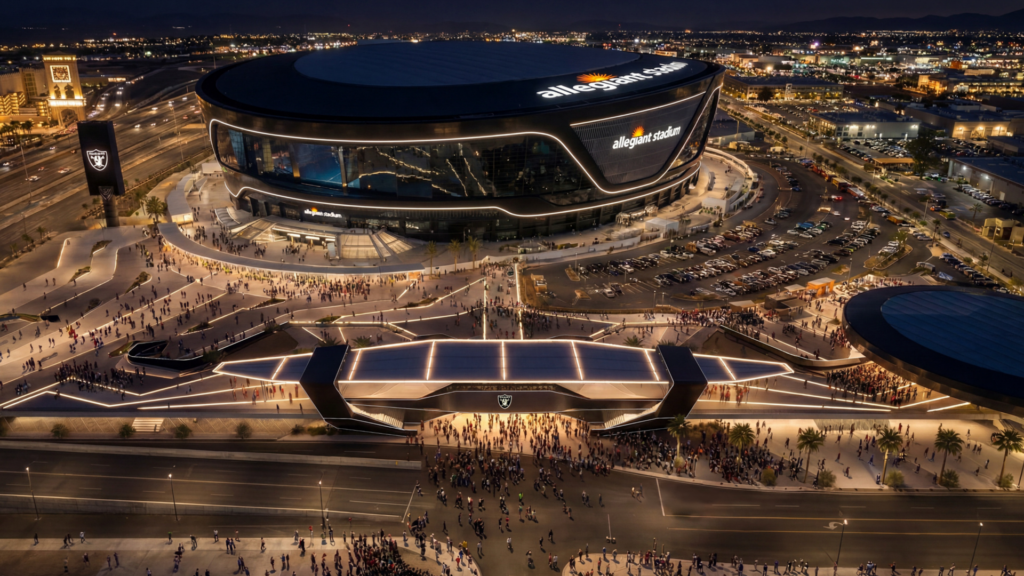
The Las Vegas Stadium Authority unanimously approved the use of up to $75 million toward the Las Vegas Raiders’ proposed renovation project at Allegiant Stadium that will overhaul the venue’s North Entry area.
The project, estimated to cost approximately $158 million, is aimed at improving one of the stadium’s busiest access points and will address congestion challenges as the stadium continues to attract premier sporting including the Super Bowl in 2029.
The funding approved by the Stadium Authority does not involve a new tax or an additional allocation of general public dollars. The money will come from the Waterfall Residual Fund, a component of the stadium financing structure established under Senate Bill 1 that allows funds to be used for early stadium debt retirement, capital improvements to the stadium or infrastructure required on or around the stadium. The Raiders will fund the remaining project costs outside of the Waterfall Residual Fund.
“Today’s vote represents another important investment in the future of Allegiant Stadium and our continued commitment to ensuring it remains the premier sports and entertainment venues in the world,” stated Raiders President Sandra Douglass Morgan following the approval. “From the beginning, the Raiders have been focused on delivering an exceptional experience for everyone who visits Allegiant Stadium, and that begins before fans walk through the gates. These improvements will enhance access to and from the stadium, improve traffic flow and rideshare operations, and ultimately create a better overall experience for our fans and the community.”
Allegiant Stadium has established itself as a premier sports and entertainment destination, hosting Super Bowl LVIII, WrestleMania, international soccer, championship boxing and major concerts. Allegiant Stadium also serves as a community hub as a designated election day voting site, hosting U.S. naturalization ceremonies and Nevada’s high school football state championships.
“Allegiant Stadium is a critical community asset, and it is driving tourism right now, at this critical time for our industry,” added Steve Hill, CEO of the Las Vegas Convention and Visitors Authority. “We all know that tourism drives the economy, not only of Las Vegas, but of all Nevada. Many cities are copying our model and building new stadiums, bringing new competition. Keeping Allegiant Stadium the No. 1 stadium in the country is a priority for all of us.”
Since it opened in July 2020, the 71,000-cap stadium has hosted 151 major ticketed events, welcomed more than 7 million attendees and totaled $10.6 billion in economic activity.
During that time, the North Entry has emerged as one of the stadium’s busiest operational areas. A significant portion of visitors arriving at the stadium travel via Hacienda Bridge from the Las Vegas Strip, which can create bottlenecks during large events. The proposed redesign, led by architecture firm Grimshaw, includes pedestrian and event decks, a plaza and transportation enhancements.
The raised pedestrian deck will extend from the West Hacienda Avenue overpass to the stadium’s northern gate, creating a more direct connection between Allegiant Stadium and the Strip, which will improve pedestrian movement before and after events.
Transportation upgrades will be made under the pedestrian deck including a dedicated pick-up and drop-off area aimed at improving vehicle circulation. Plans also include a future station connecting to The Boring Company’s tunnel network, which will provide another transportation option for event attendees.
A central feature is a large canopy spanning the entry plaza. In addition to providing shade for guests waiting to enter the stadium, the structure is expected to function as a venue for smaller concerts, activations and other community programming.
Preliminary design is already underway. Construction is expected to begin in the third quarter of 2027 with completion by the end of calendar year 2028.
FREE
 Daily Pulse
Subscribe
Daily Pulse
Subscribe
 Daily Pulse
Subscribe
Daily Pulse
Subscribe