
Stadium & Arenas Use Global Technology & Redesigns To Deepen Fan Loyalty (Australia/New Zealand Special 2026)
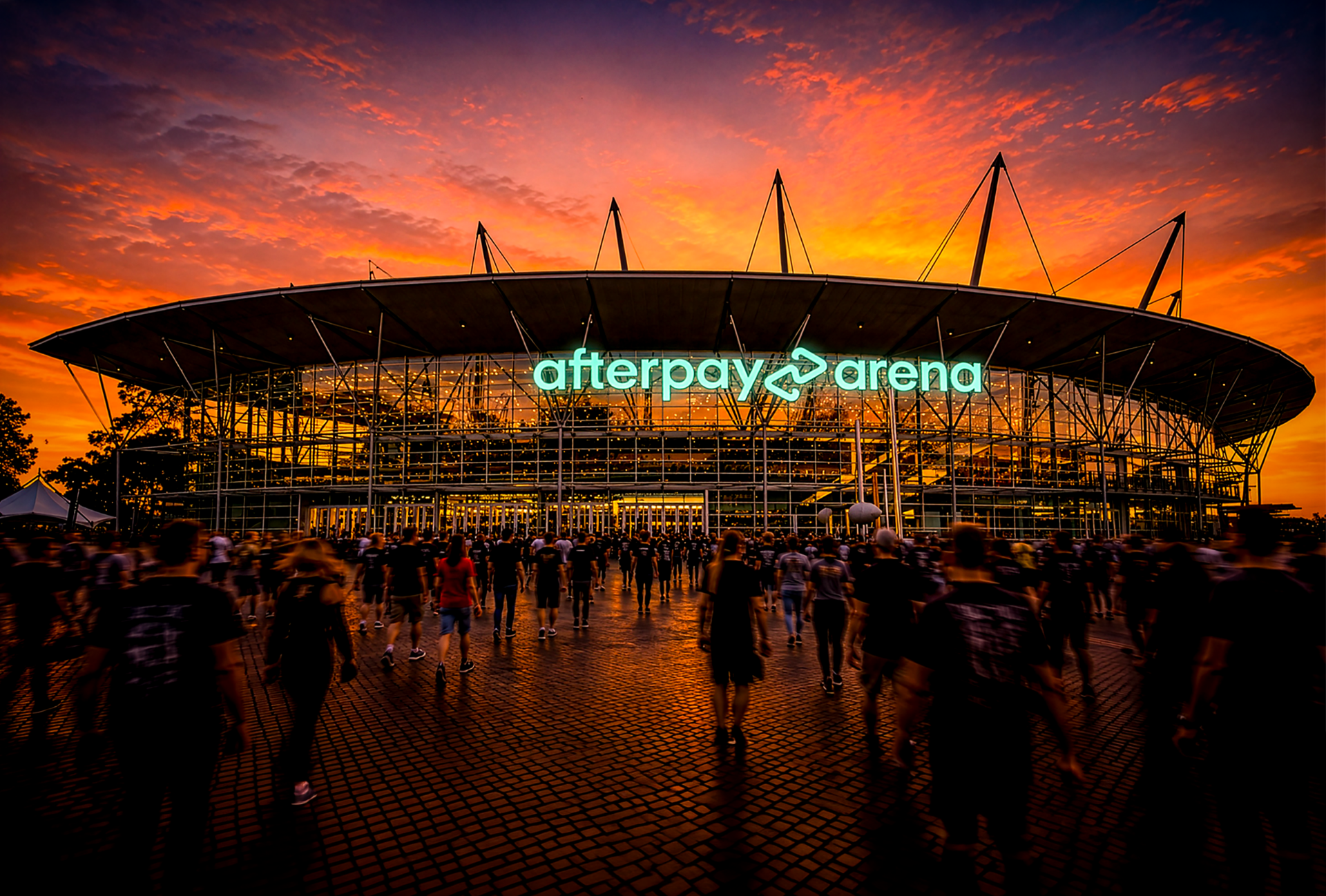
since the naming rights deal was announced last year. Photo courtesy Qudos Bank
When Aussie split-payment scheme Afterpay signed a five-year naming rights deal with the 18,500-capacity arena at Sydney Olympic Park, it was about more than a name change and split payments for patrons when it took over in July.
To mark the end of the venue’s decade-long run as Qudos Bank Arena, it underwent a technological and design transformation.
“Through the investment from our naming rights partner and other enhancements, the live entertainment experience has received a significant upgrade over the next 12 months at Afterpay Arena,” says General Manager Matthew Lazarus-Hall, appointed to the role in July.
The redesign and a “time well spent in the venue” strategy tapped creative agency BUCK, architect the Studio Collaborative and technology and signage specialists Beyond Media.
Greeting visitors at the newly upgraded foyer, suspended from the ceiling, are what is being described as the world’s largest transparent holographic LED installations. Their 92% transparency allows them to provide the artwork of a gallery rather than billboard ads.
Among upgrades are new digital wayfinding systems that let visitors more speedily locate seats, food and beverage outlets, merchandise stores and amenities.
A venue-wide payments system powered by Square technology includes 150 point-of-sale terminals and 65 handheld devices across bars, concession outlets, premium hospitality spaces and merchandise locations to reduce transaction times and lessen time away from the action.
The sports and entertainment indoor venue is owned by TEG Live, and operated by Legends Global. Afterpay’s parent company has been U.S. digital payments company Block Inc. since 2022.
Lazarus-Hall says the changes to the arena set it up for “an incredible variety of events over the next 12 months made possible by the versatility of Afterpay Arena to adjust its capacity and configuration to meet differing event and fan requirements.”
He adds, “I think there is a continued growth for live entertainment. We are social animals and sometimes the more we are disconnected through social media, the more we want to be connected.”
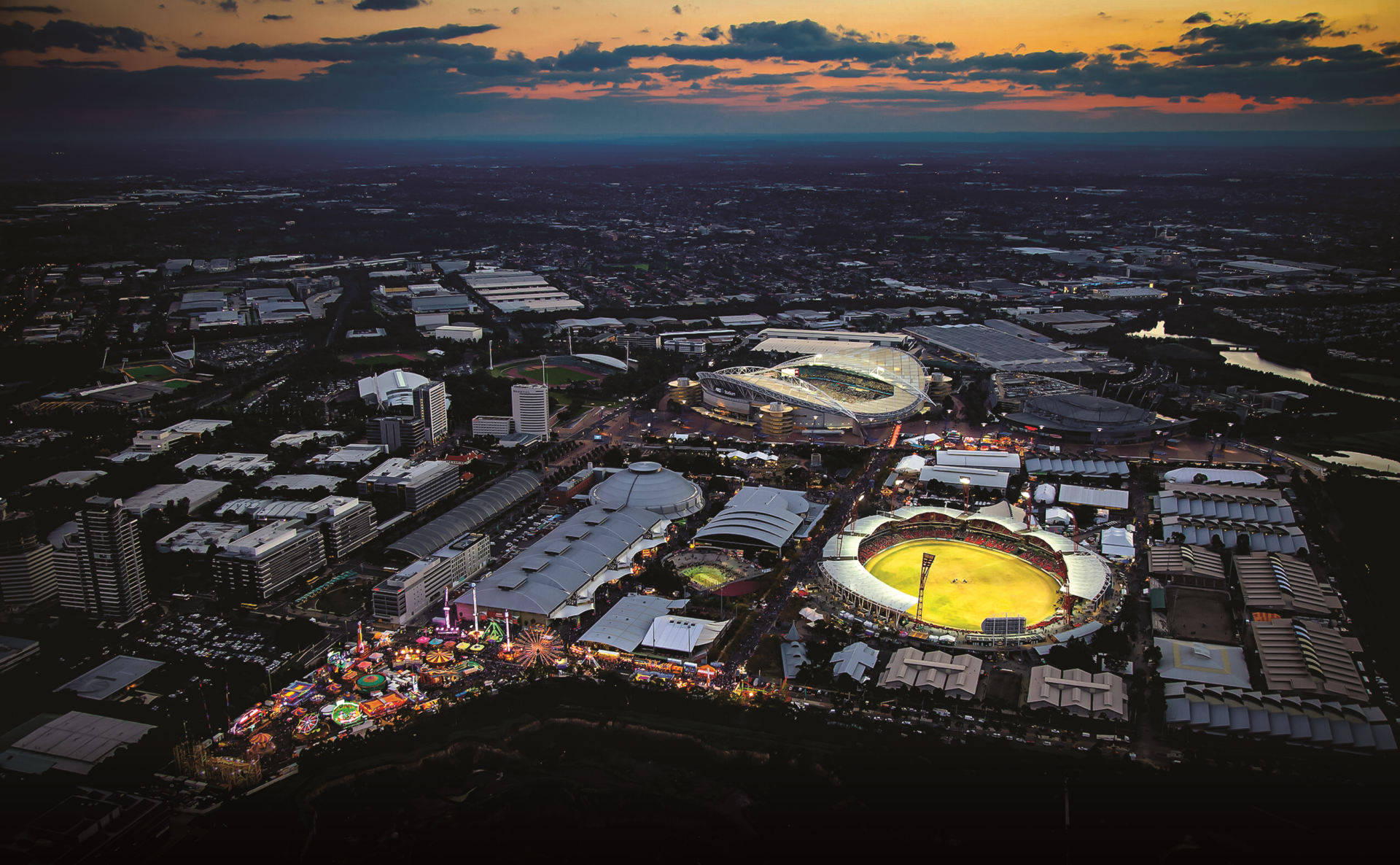
Courtesy Suncorp Stadium
ICC Sydney invested $A2.09 million ($1.47 million) in audio-visual, LED screen and lighting inventory to give promoters and show designers greater creative flexibility and technical efficiency.
It doubled its LED screen inventory, with an additional 154 square meters of Vuepix Infiled AR Series LED — a world-class system known for its ultra-bright output and fine pixel pitch of 2.9 millimeters.
CEO Adam Mather-Brown explained at the time, “Our ‘More Than A Venue’ team strives to anticipate the future event demands of our clients and attendees. Our latest investment in LED technology allows us to shape environments that attract, entertain and engage attendees.”
In August, the six venues in Melbourne Park took a massive technology leap when the precinct went into partnership with AEG’s ticketing and data analytics business AXS.
The result includes speedier ticketing, expected to grow on the precinct’s annual 10% to 15% revenue growth and attendance of 5% to 10%.
OUT WEST
VenuesWest is installing new entry technology in RAC Arena after taking management on July 1 from Legends Global after 13 years.
The company operates 14 sports and entertainment venues on behalf of the Western Australian government.
Of the decision to bring RAC Arena – capacity of 15,500 for concerts – into its direct operations, VenuesWest CEO Janis Carren says it strengthened alignment “to be Australia’s leading provider of sport and entertainment venues and precincts” and support promoters with a more connected and streamlined venue portfolio and coordinated event delivery.”
2026 has been one of VenuesWest’s most successful, with a record 6.8 million attendance. Optus Stadium, which can hold up to 70,000 for concerts, broke its annual turnout record, with 2.2 million sports and entertainment customers.
“We hosted 132 national sporting competitions, 34 international sporting competitions and 97 world-class entertainment events,” Carren said. “By the end of the third quarter alone, we had already surpassed the number of world-class events hosted in the previous year, reflecting that the demand for sport and entertainment in our state is only growing.”
The continued demand for Optus Stadium rests partly on its holistic LED stadium lighting system. It includes 22,000 controllable LED fittings managed through the Interact Sports software. Carren says, “We are entering 2027 with strong momentum and confidence. Forward bookings across our portfolio are at record levels.”
Two years ago, multi-purpose 24,000-capacity ENGIE Stadium inside Sydney Olympic Park made itself attractive to promoters, festivals and fans with a $4 million ($2.82 million) LED lighting upgrade.
It involved installing 348 specialized sports LED fixtures enabling programmable multi-coloured capabilities and broadcast-standard lighting while cutting power consumption by half.
Sydney Showground plays up the flexibility of the precinct.
“Few venues in Australia can offer a stadium, outdoor festival spaces and large-scale indoor venues within a single integrated destination,” says General Manager Darryl Jeffrey. “That allows promoters to choose the configuration that best suits each production rather than asking the production to adapt to the venue.”
For Jeffrey, the past 12 months reinforced a number of moves in the live sector. They included the continued strength of international touring and one-time niche genres selling out big spaces.
“It reflects the confidence international promoters have in Australian audiences and the willingness of those audiences to embrace new artists and experiences,” he remarks.
“Australia is no longer just a destination at the end of a tour. It has become an important stop in its own right, and that’s creating fantastic opportunities for venues, promoters and fans alike.” The precinct’s operational capability is enhanced as productions become larger and complex.
“At Sydney Showground / ENGIE Stadium we’ve continued to invest in our people, planning and event delivery, working closely with promoters to deliver major international productions safely, efficiently and to a consistently high standard,” he says. “That collaborative approach has become one of our greatest strengths.”
The outlook for Sydney Showground and ENGIE Stadium in 2027 is “very positive,” he adds. “Australia continues to attract some of the biggest tours in the world, and there is every indication that will continue. Capacity is important, but so is flexibility, operational expertise and having a venue partner that understands the demands of modern touring.”
A two-year trial was set to begin mid-2026 of the Optical Tracking Technology at Marvel Stadium in Melbourne, which will begin with Australian Football League games, but could extend to concerts. Leading telco Telstra increased network capability at the stadium, converging 4G, 5G and Wi-Fi infrastructure to provide the high-speed connectivity critical to monitoring the rapid movement from cameras during play.
“The trial will enhance our capability as a venue not just for AFL games but for other sports, major events and concerts,” said Marvel Stadium general manager Scott Fitzgerald.
SUNCORP RECORD
Suncorp Stadium in Brisbane is on track to hold its most attended year in 2026, reaching more than 1 million patrons in the first six months.
“During the year, Suncorp Stadium also reached a milestone of the venue’s 25 millionth patron since the last major renovation in 2003,” says Darren Burden, general manager of Suncorp Stadium and senior vice president, stadiums, for APAC/Middle East, Legends Global.
“[The venue] hosted its largest summer concert series from November 2025 to February 2026, including Metallica, Lady Gaga, two AC/DC shows, four Royal Edinburgh Military Tattoo and three Ed Sheeran concert, with four more shows through to the end of 2026, showing a continued appetite for stadium tours.”
Construction work begins late 2026 on the biggest refurbishment in its 23-year history.
Patrons get supersized scoreboards and an Australian-first 360-degree LED ribbon board suspended from the roof, new bars behind the goals, new entertainment zones, and a boost in capacity from 52,500 to nudge 54,000. This comes in the wake of the stadium elevating and modernizing its premium facility offering.
It included a refurbishment of the main hirer’s suite and a 600-meters-squared renovation of one of the stadium members’ facilities to include an upgraded space called the Greenhouse.
“The Greenhouse was designed to deliver a comfortable retreat from the concourse and grandstand with the flexibility of serving as a 400-patron hospitality area that can be used for non-Suncorp stadium membership-included events,” Burden says.
Sydney’s City Recital Hall is entering a busy period following trials using the venue in new ways, improvements in its MarTix services and CEO Kate Wickett’s year-round events strategy.
Marketing and Ticketing Director Scott Dawkins explains, “In the past couple of years, we’ve been trialing different event modes, including the option for seats-out on the auditorium ground floor, multi-room party events and standalone events in our street-level foyer and bar. Now that these hire modes are available to promoters, I’m excited to see what the industry comes up with.”
It follows the installation of d&b Soundscape-enabled 360-degree sound, diffused to audience members in all three seating tiers.
“I know we put on a good show – 91% of visitors rated our venue as good or excellent last year,” Dawkins said, noting buying trends aside from late buying and bargain-hunting.
“This year the importance of a successful on-sale to avoid ‘blue dot fever’ has come to the fore,” Dawkins adds. “As a city venue, we’re noticing Thursday is the new Friday for foot traffic, and people are open to hanging around for a show after work Monday to Wednesday but want an earlier show time.”
FLEXIBLE
In Aotearoa New Zealand, venues are responding to selective consumers with a more flexible approach. Jennifer de Montalk, performance events manager at Venues Wellington, says a highlight for TSB Arena – which can fit up to 6,000 at concerts – includes hosting a diverse program of concerts, sporting events and exhibitions such as World of WearableArt in its 20th year, along with two sold-out shows each for Nick Cave and Split Enz. “We’re optimistic about 2027,” she says.
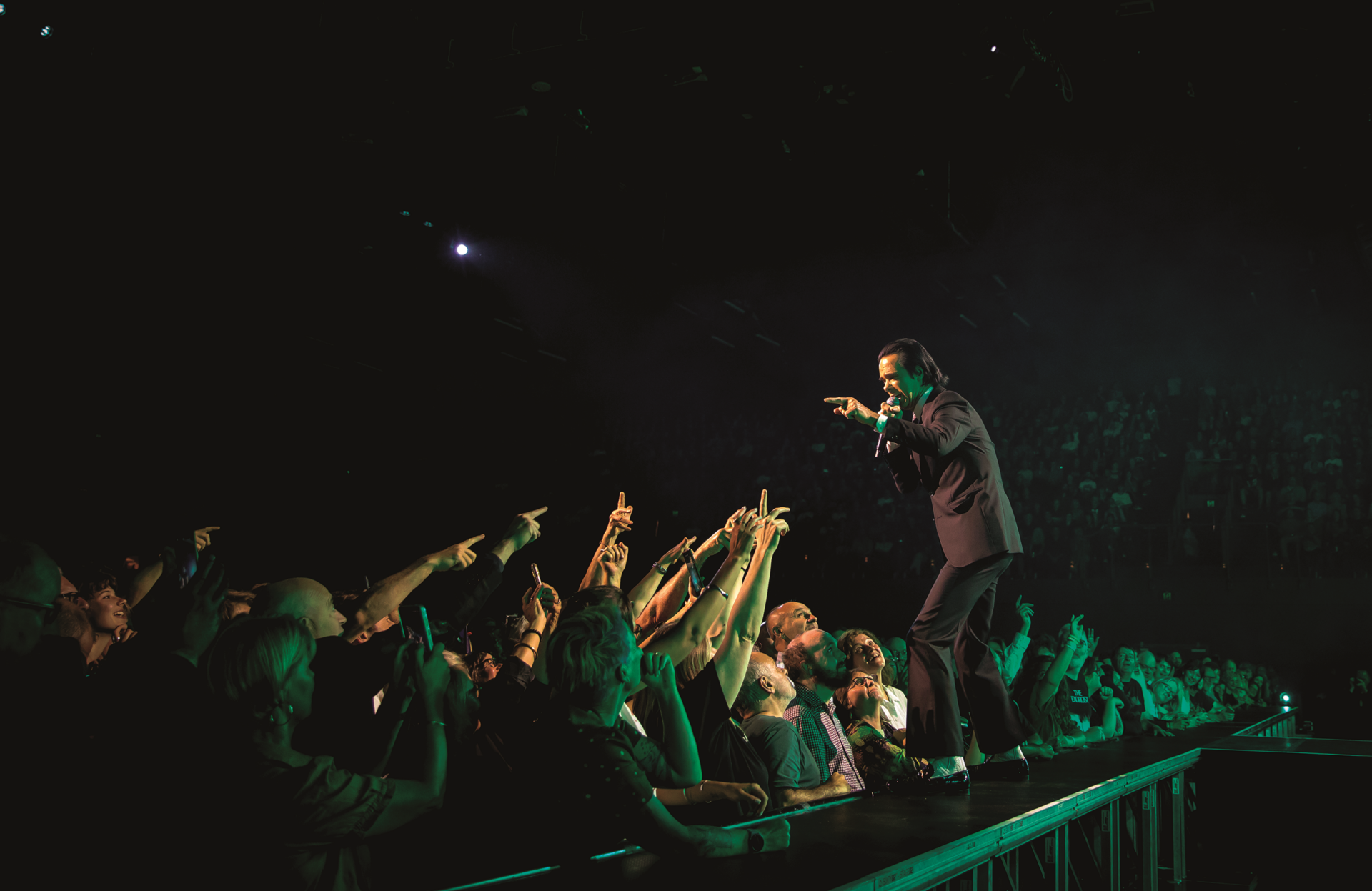
Photo by Stella Gardiner / WireImage
For Eden Park CEO Nick Sautner, “Our scale and location are also our greatest challenges.
“International tours carry substantial freight, production and travel costs, and New Zealand can be treated as an optional addition to an Australian itinerary rather than a market in its own right.”
He adds, “We are competing directly with cities and states on Australia’s east coast that have long recognized major events as economic development tools and are prepared to invest accordingly. This is why certainty is particularly important. Promoters need confidence in venue availability, operating conditions, infrastructure and public-sector support.”
He calls for a permanent, long-term major events fund that “would allow New Zealand to plan strategically, build enduring relationships with rights-holders and compete more effectively for global content.”
Technology improvements are a priority throughout the country, including at Auckland Stadiums, Tātaki Auckland Unlimited, where “the installation of 1,650 solar panels on the roof at Go Media Stadium has changed the way that we are able to deliver events,” says Director James Parkinson. He adds the first-of-its-kind New Zealand installation will cut emissions by over 36 tonnes and save more than NZ$100,000 ($58,994) in energy costs annually.
A new interactive venue map transformed wayfinding at Go Media Stadium, also operated by Auckland Unlimited, including at Ed Sheeran’s concerts in January, where the map was used by one in three patrons, over 20,000 times in total.
An advantage for Auckland Stadiums, according to Head of Commercial Scott Crouch, is that, “Across our venues, we’re fortunate to be able to cater to different types of events.”
The groundbreaking Afrosoul festival, which debuted last year with an international lineup and 25,000 guests, returns in October. At Western Springs, Laneway and RÜFÜS DU SOL provided local acts exposure alongside overseas headliners.
“Our micro-venue Lilyworld has proved to be a great platform for intimate music events and for local talent to cut their teeth,” Crouch says.
FREE
 Daily Pulse
Subscribe
Daily Pulse
Subscribe
 Daily Pulse
Subscribe
Daily Pulse
Subscribe