
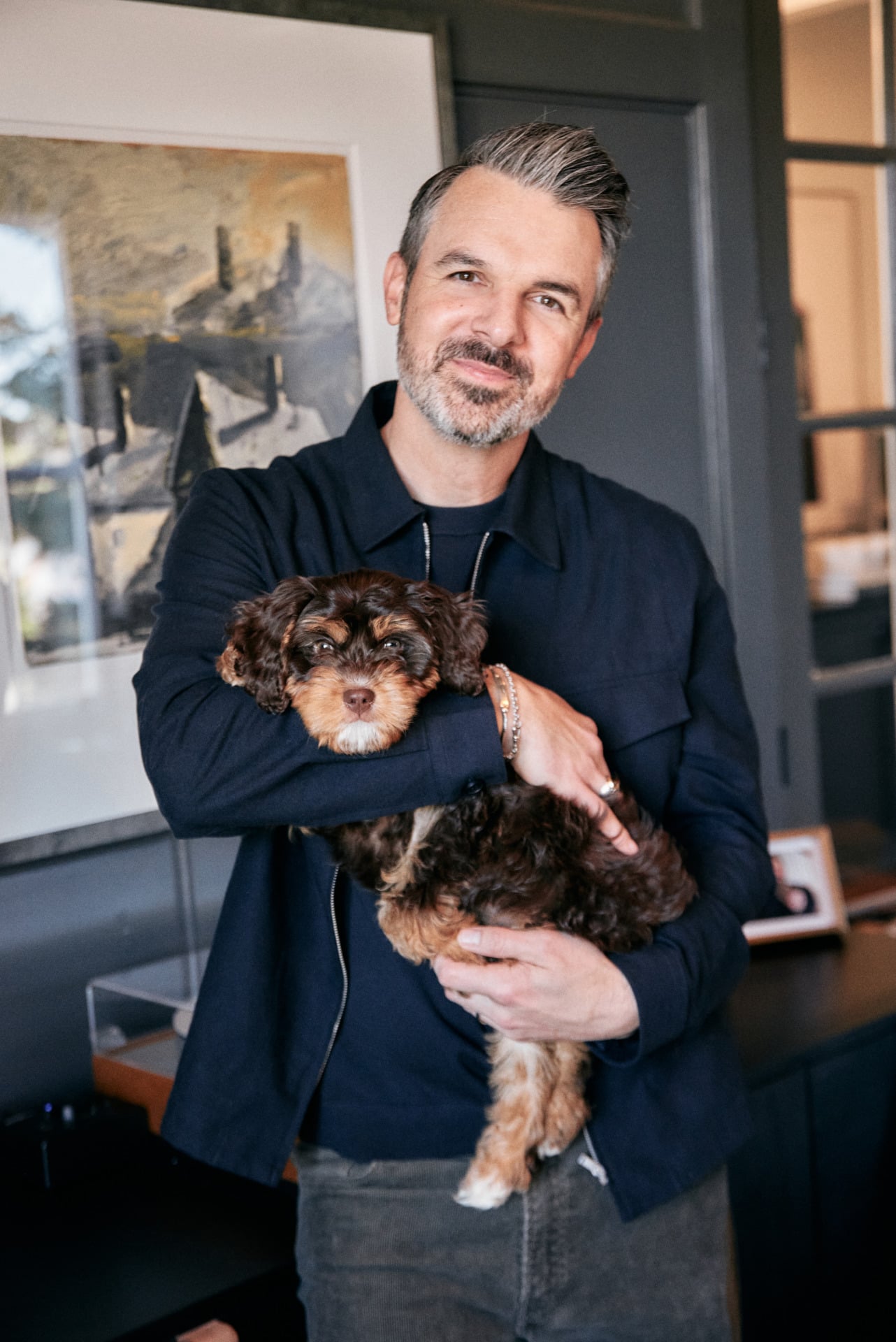
Executive Profile: Drew Simmons, Manager For Noah Kahan, Chappell Roan; Partner, Foundations

(This interview originally appeared in Pollstar’s 2026 Management Directory in March and is being published here for the first time online. Pick-up your copy here)
Drew Simmons, a partner at Foundations, should be freaking out. He’s on the cusp of announcing a major campaign for one of the megastars he manages, Noah Kahan, whose full-length song will be featured in a Grammys commercial teasing his upcoming baseball stadium tour (which will sell 1 million tickets and employ three different anti-scalping measures). Not long after we speak, he’ll be at the Grammys with another of his clients, Chappell Roan whose song “The Subway” received two nominations. Then her envelope-smashing “Visions of Damsels & Other Dangerous Things Tour” hits Oceania and South America. There’s also a new mental health hotline for the music industry he’s working on with Backline; a Kahan Netflix documentary in the works, not to mention the week before, he was in Mexico for Kahan’s “Out Of The Blue Festival.” Somewhere in between, Simmons himself was named as a nominee for the prestigious peer-nominated Pollstar Award for Personal Manager of the Year.
Over the course of an hour-plus conversation, it becomes clear that the 44-year-old Buffalo native is nothing if not calm, collected, down-to-earth, pragmatic and candid — essential traits for any successful manager. It makes sense. Simmons has worked across nearly every corner of the business and absorbed management best practices from some of the industry’s legends. His résumé includes an internship at Ani DiFranco’s Righteous Babe Records; stints in security and as a runner for regional promoter Don Law’s Tea Party Presents; a college artist management class taught by Howie Day’s manager; time working with James Brown; and later, a formative run at Coran Capshaw’s Red Light Management. After signing Young the Giant, he made his way to Foundations, where he now oversees two of today’s most dynamic and successful artists in Kahan and Roan.
Simmons discovered Kahan on SoundCloud when the singer-songwriter was still attending high school in Vermont; Roan was already something of a supernova when he became her manager last year. Yet, his approach to both artists is strikingly similar. “It’s a delicate dance of commerce and art, schedules and timelines and human energy and emotion,” he says. “One of the unsaid aspects of the manager’s role is to bring calm to the chaos and shield the artist from day-to-day stress and concerns.”
That Simmons does in spades — but there’s far more to being a manager in today’s rapidly evolving management world. He also helps oversee two philanthropic initiatives: Kahan’s Busyhead Project, which supports mental health causes, and The Midwest Princess Project, which benefits queer and trans communities — work he takes immense pride in. Here, Simmons discusses how he came up in the industry, his management philosophy, and the bright future he sees ahead for his clients and Foundations.
Pollstar What’s your to-do list like, does it ever end?
Drew Simmons: The most challenging part of the job is the constant barrage of needs within the business, but also having the necessary time to research, evaluate and form thoughts and opinions and talk to people and gather insight. All that results in being able to provide sound advice and look at things from multiple perspectives. And juggling it is a challenge.
I just met Jalen on your team and she had a Noah Kahan bobblehead behind her desk. How does that get done?
I have an amazing team. Management is a team sport. An artist’s career is a team sport. One of the constant needs is communicating throughout a global team and when we’re making bobbleheads in Boston or doing some promo in Germany, it all requires coordination. Having a team is critical and people who can delegate, stay on top of things and be in it with their artists are the best managers.
I tried to manage someone once, it didn’t go well. Management may be the most difficult job in the music ecosystem. Making sure an artist is healthy, creative, has a business plan, has time for themselves, etc. is intense. Their list is your list. They’re humans, and humans contain infinite multitudes. It’s very difficult.
I agree. It’s more complicated than most jobs. It’s a delicate dance of commerce and art, schedules and timelines and human energy and emotion. One of the unsaid aspects of the manager’s role is to bring calm to the chaos and shield the artist from day-to-day stress and concerns. The artists will have their own stress, their own evaluation, their own perception of everything as they should, and they should be fully informed. But there’s an aspect of the job that’s making sure that when time is needed, they can focus on being an artist and expressing themselves and letting everything else be handled by the team. It’s about asking, “Is this fulfilling? Are you happy? Let’s talk about what we don’t want to do.” And that tailors our ability to act on their behalf. As long as we can keep an artist happy and healthy and avoiding the majority of the stress of this business, then we’re doing our jobs.
So you’re originally from Buffalo?
It’s an awesome community. I fell in love with music early, grew up in a household where my dad loved collecting records, was an audiophile and had great speaker systems. So a lot of listening happening in the house. I never played instruments. I got a general curiosity by going to shows as to “how does this all work? Who does what? This is an operation.”
What were your passion points for music that made you love it?
I grew up on blues, jazz, pop, classic rock, had a hip-hop phase and got into alternative rock. The first artist I really fell in love with was Ani DiFranco. She was a staunchly independent feminist poet. I loved the movement and her unwavering independence. She was from Buffalo and ran a small label there called Righteous Babe Records. I was influenced by the region and grew up with the Tragically Hip from across the river in Toronto who were massive.
After seeing a number of Ani’s shows, I went to my best friend’s father who owned the building in Buffalo she rented for her office. My only in in the music industry was begging my friend’s dad to put a word in for me to get an internship.
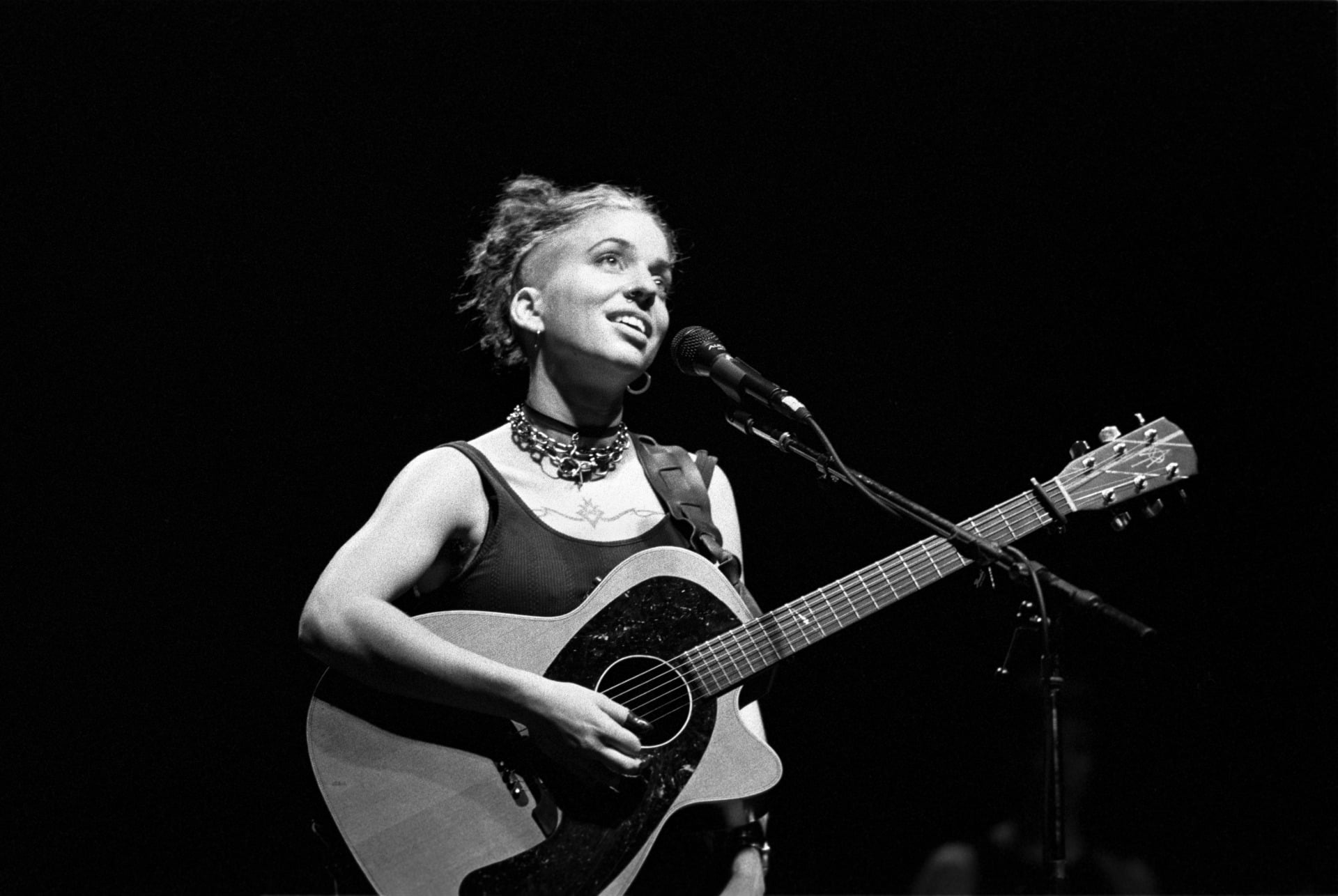
Help From A Righteous Babe: Simmons first got started in music interning at Ani DiFranco’s independent label Righteous Babe Records where he helped with e-commerce. Here, DiFranco performs at NYC’s Beacon Theatre in New York City on Nov. 21, 1996. Photo by Ebet Roberts / Redferns
Was that high school or college?
This was high school.
She embraced the independent spirit early. There’s something about her artist-run independent label that really made an impact. What did you see and touch in your internship?
I asked a million questions and poked around everyone’s office and tried to figure out what they did. It turned me on to artist management because her label was under the same roof as her manager Scot Fisher who ran her label. I was really curious about the idea of him being the manager. That tipped me off to being an interesting job that existed. She also had a radio plugging team, people working retail, there were maybe 12 people in total.
What did you do?
Most of my days were spent in her e-commerce store in the same building. I was stuffing envelopes with merch and mailing them. That was the main function of the internship until I started to ask enough questions where people started to take me up on offering my help. I met Ani’s tour manager who introduced me to her dad when I was going to college in Boston. He ran a security company in Boston. That got me into working five shows a week throughout New England for Don Law’s company, which I did all through college.
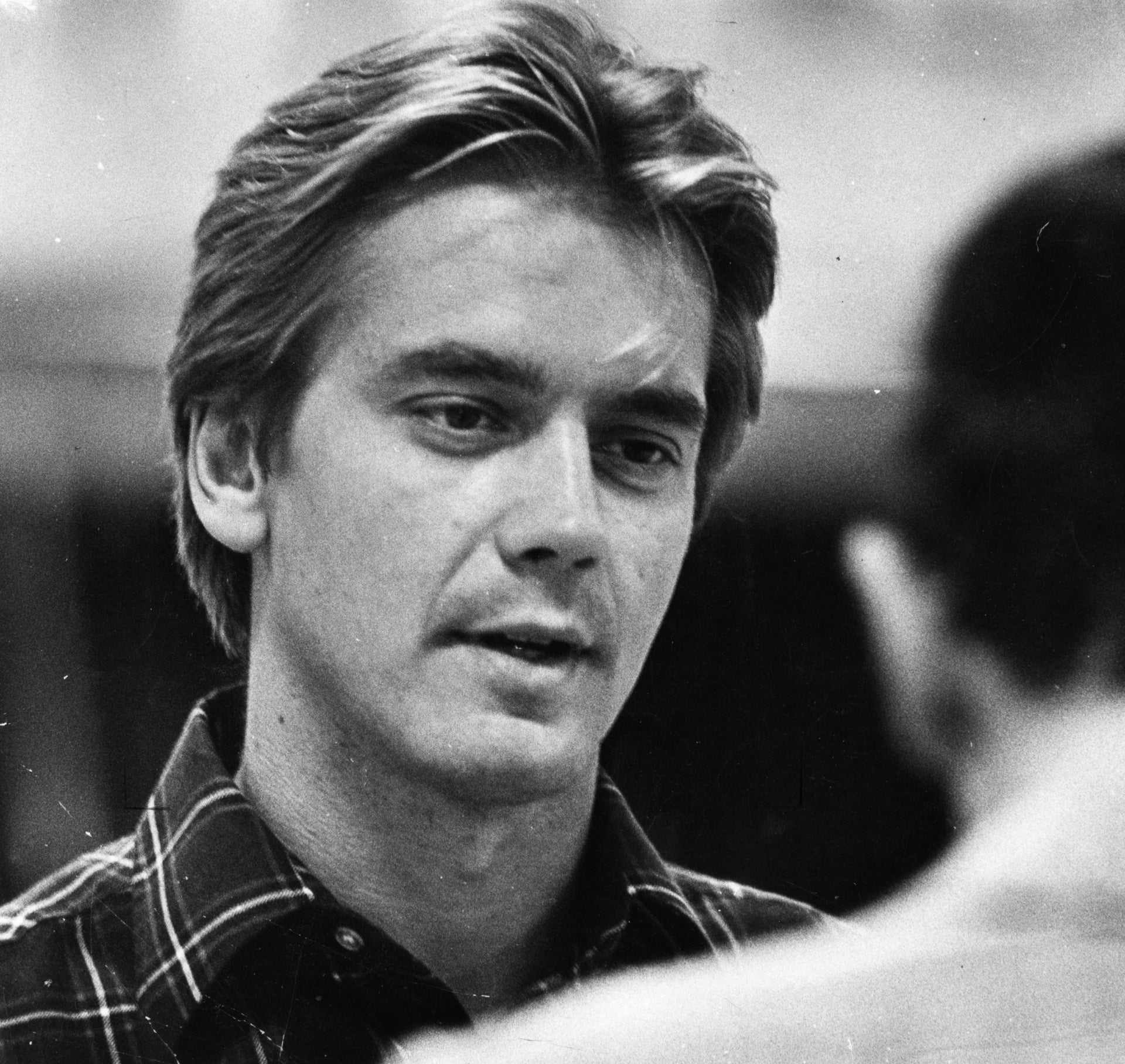
(Photo Don Preston/The Boston Globe via Getty Images)
Don Law? He’s a legend. Which venues?
I worked the majority of the Orpheum shows, The Avalon, now House of Blues, Boston Garden, venues in Portland, Maine and Providence. I drove all over New England.
I would think security would give you great insight into the business?
It’s funny. I don’t fit any quintessential security person. But I had to diffuse a lot of situations. More than anything, I had to manage a lot of people. Pretty quickly, I was managing staff. It opened my eyes to what concert production is and who was working at the time. It was for Tea Party Presents that became SFX, Clear Channel and then Live Nation.
That was the major inflection point for this industry.
I came into the business when it all changed and the bottom fell out. I graduated college in 2004 when Napster was running rampant. File sharing was this uncontrolled Wild West destroying the industry. The recording music industry literally fell off a cliff. Navigating that was very interesting. But all the collaboration, whether on the management side or the promoter side, was happening since I got involved in the music industry.
Doing concert security, I met folks working on the production side, started picking up shifts as a runner and production assistant. My introduction was on the live side. I ended up getting a job working at Don Law’s as the office runner, running errands and whenever they needed me. I would assist in the marketing department. I got a sense of promoters and the jobs there.
I was at Northeastern University for the music industry program and had an artist management class run by Shawn Radley. At the time, he managed Howie Day. I got a chance to learn what Shawn was going through as a manager in real time with Howie Day who was literally growing while I was in class. That helped me with managing a band. I came across one in Boston who were open to me helping them out. I started managing them. They played 30 or 40 college shows a year and would sell 1,000 tickets in five or six markets around the northeast. They were called Parker House And Theory. They were a post-Dave Matthews-era college jam band with a harmonica soloist, much like John Popper. They sold tickets, didn’t sell records. They let me cut my teeth managing them and getting in a van and selling merch and getting out on the road.
Were you booking their shows?
We had a college agent, but besides that, I was booking their shows.
So you’re basically an agent and tour manager.
And a merch person. I would walk around Boston putting stickers on light posts and be the street team. I would nudge Don Law’s office whenever they had a national act that needed an opener and try to get my band on the bill. It happened once or twice. Then I graduated college and the band took a hiatus. I got a job working for Mark Kates at Fenway Recordings. He had moved back to Boston from L.A. after being at Grand Royal and prior to that, Geffen. He was going to start a label and it was a bad time to start a label independently. He quickly pivoted after signing a few artists to becoming a management shop and label.
How did you segue to NYC?
I had met Steve Bursky, who is now my current partner at Foundations. There’s four partners in total, Brian Winton, Max Gredinger, Steve Bursky, and myself. Steve started Foundations out of his dorm room at Penn, and I started my own management company out of my dorm room at Northeastern. We had a lot in common and I worked all of Dispatch’s shows when they came through Boston. He and I were the same age and became friends. When it came time for me to look beyond Boston, I called him up. He was renting office space — a desk in the corner of James Brown’s management team’s office.
What?!
On the west side of New York, 11th and 26th. I was like, “Steve, we should work together.” At the time, I didn’t have any clients because the band I worked with had broken up. And he’s like, “I can’t hire you, you don’t have a client. But I just heard that James Brown’s team were hiring a day-to-day.”
I applied, got the job, moved to New York, and got a crash course on global superstardom with the James Brown team. After about a year, I finally was integrated into the team. I got a call, and James Brown passed away. That was 2006.
Did you work with him?
I was there about a year and a half. I also did day-to-day for a rock band called Voicst based in Amsterdam. So I had my indie rock side and learned by proximity what that world was about. James Brown had a full calendar of dates booked the year he passed away. He was still grinding. The last thing I did with that company was attend his funeral at the Apollo Theater.
I was there, too. I stood in line with my kid and walked by the open casket.
And the white horse-drawn carriage through Harlem leading up to it.
He really was The King.
He was the main client for the company. Once that happened, it changed everything. Afterwards I went to Red Light for four and a half years. This was when Coran was building out Red Light. He had just opened the New York office and was expanding into LA and Nashville. When I started, there were about 30 artists. When I left, there were 150. It was entering a new era of large management companies.
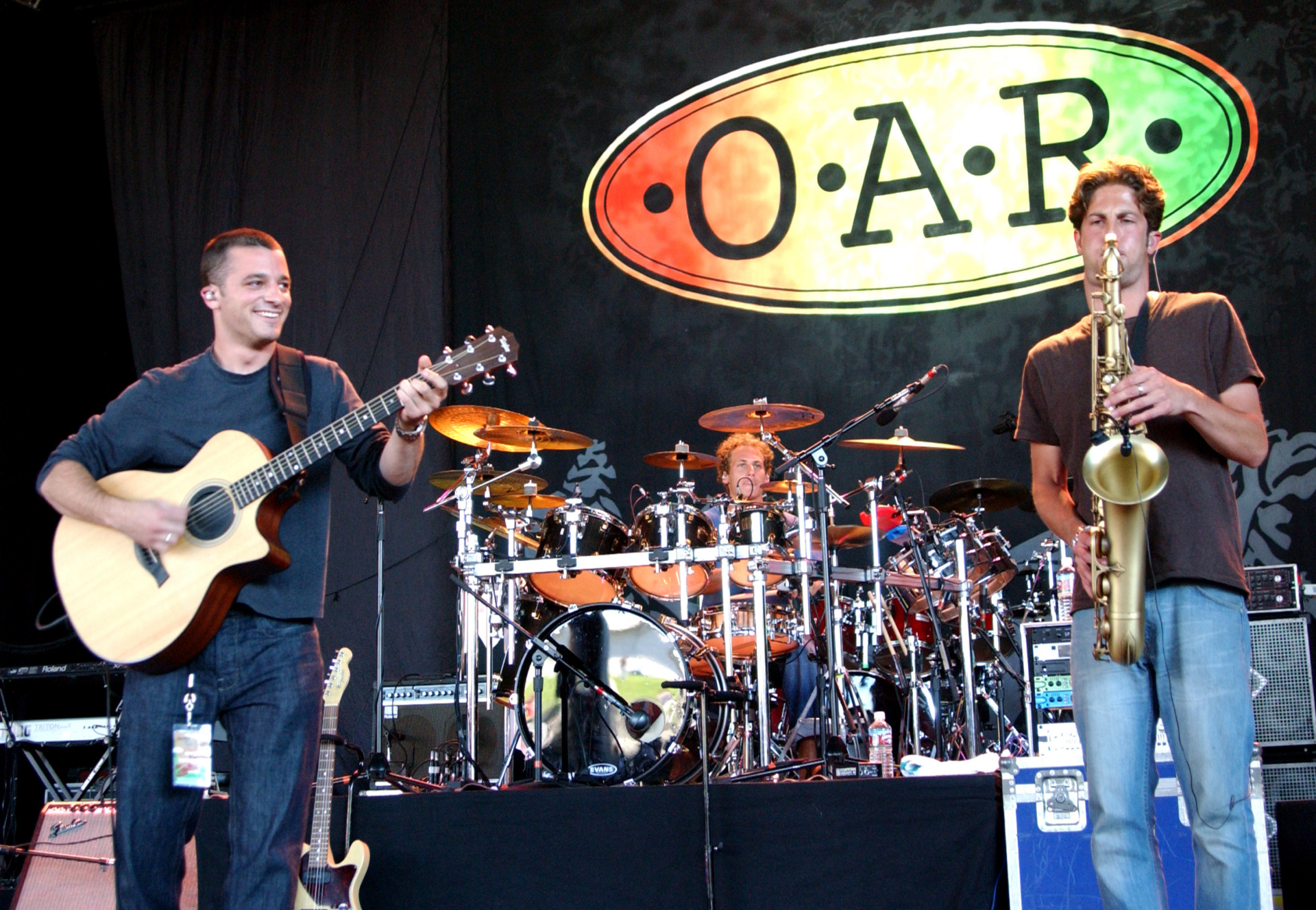
I worked on O.A.R. an independent grassroots jam band who had just signed their first major label deal with Atlantic and had their first hit with “Shattered.” I worked day-to-day for O.A.R., with the intention of signing my own stuff when I got to Red Light. The first band I signed was Young The Giant.
They’re great.
At the time, they were called The Jakes. Not many people knew them. It became clear to me that I was going to try to work at Foundations with Steve again. So I went to Foundations with Young the Giant and managed them for 13 years.
They’re still out there.
We had an amazing run together, and I learned a ton. It gave me the opportunity to build a career in a way that didn’t previously exist. I’m forever grateful to those guys and to the experience I had at Red Light. I’ve been at Foundations since 2010. Partnering with and building the company with my partners since. As of recently, focusing on Noah Kahan and Chappell Roan and trying to enter a new chapter.
Are you Forrest Gump?
There’s a lot of layers to that question, in what context?
Your life is a box of chocolates — Ani DiFranco, Don Law, James Brown, Red Light, O.A.R., Steve Bursky, Young The Giant, Noah and Chappell. How does that happen?
It’s like anything in this business. You follow your curiosities and passion and find good people. You end up being exposed to opportunities. Some of its strategic, some of its luck, some of its being in the right place at the right time. I feel fortunate I was exposed to a lot of those people.
Being a manager, you have to know enough about everything in the music industry that you can form an opinion and educate yourself. That requires a lot of listening, being open to not having the answer, learning the answer and forming an opinion. The best managers are the ones that are exposed to the most people and ask the most questions. I feel lucky I was exposed to a lot of different sides of the business before I got too far into being a manager.
What was it like working for Don Law?
I would describe it as being closer to the team he employed than him. The learnings I had were based off the culture established by him and the respect that people had for the growth of his operation and being a pioneer along with the Bill Grahams of the world, and being very much a New England figure. I’ve always loved this sweet spot, which I find our company currently in — small enough to be nimble, but big enough to have an impact. That’s how his office operated. They handled a ton of volume. They had premier venues. They handled an entire region. He had a say in how business was growing. I’ve sought that throughout my career — a place that feels collaborative and has a friendly vibe, but also is great at what it does. Looking back, that’s my biggest takeaway from that era, seeing that growth.
What did you see after they were acquired by SFX?
It was early in my experiences. I just saw an entrepreneur, and I love that. That’s parallel to my existence — maneuvering through changing landscapes and trends, forecasting and predicting, working alongside art. I take pride in being an artist advocate. That doesn’t just apply to the music. It applies to the culture and the lifestyle and the mindset and the various mediums that art can be communicated through. I’ve largely been a manager since college. That’s been my job for 20-plus years. I take a lot of fulfillment around the fact that every day I get up and I support the arts and fight for artists. I love that.
And you make bobbleheads of Noah Kahan.
Bobbleheads one day and in a variety of conversations every day. It’s never dull.
What was your experience like at Red Light with O.A.R., who did you work for?
At the time Tom Ennis was GM and Will Botwin was president. Will’s still there, he had come from the label side and tasked with growing the operation while Coran was attracting other managers and building the roster. I have a ton of respect for everything Coran built. He’s an unbelievable businessperson. I also learned a lot about what I didn’t want. The sheer scale was something that didn’t appeal to me. I wanted to work closely with a group of people and I don’t care about being the biggest, I care about being the best. Coran has been a pillar of this business and clearly has built an unbelievable tree with a variety of branches with amazing people. I have a lot of respect for it.
So you’re expanding your roster and helping grow Foundations. Do you have equity in the business?
Pretty immediately after coming over from Red Light, I joined the first year as a manager, I was figuring out if Young the Giant was going to be sustainable as a manager with one client. About a year in, I officially became partner with Steve and Brian Whitton. The process of evolving with them was really natural. I was in my 20s, living in New York City, I was taking this calculated risk to join the company. Young the Giant was a gamble, and it was starting to pay off. It was encouraging and exciting. We had a chance to grow a business in a style which we all felt was our version of management. That was requiring a lot of very hands-on attention with our clients. It grew at a very natural and intentional pace. Taking the intuition you have to have as a manager to evaluate trends, but also to evaluate the room and guide an artist, is one that allowed us to take the same vantage point with our company.
What clients were already there?
Steve was managing Dispatch and Owl City, who had a huge hit and Brian Winton was managing Dr. Dog. He still does. And Steve still manages Dispatch. He’s now co-managing them with Dalton Sim, who’s a dear friend and a mentor from my Boston days. And Young the Giant. So there was a couple of other artists. I signed a band called Ko Ko who became Pacific Air and were on Republic Records. It was fairly short-lived. Then I signed a band called Lewis Del Mar, an alternative rock band on Columbia who had a great short run, and started managing a producer/writer named Gabe Simon, who I am co-managing with Dan Petel at This Is Noise Mgmt. And I came across Noah Kahan 12 years ago, when I was just moving to Nashville. He was a senior in high school living in rural Vermont.
That was off SoundCloud?
This was SoundCloud, yeah.
What kind of music was he playing then?
A little more pop version of what he’s playing now, a high school rendition of it. I was in Boston for something Lewis Del Mar related and had come across Noah’s music and talked to him. I had to reach out on Facebook Messenger because he didn’t have any information online outside of his Facebook page. I went to Vermont and met him and his parents and was like, “Do I really want to manage a high school singer-songwriter?” But I kept being drawn to the quality of his songwriting and his vocal tone. I was curious about it. It was a gut instinct, this guy’s either going to be a songwriter or an artist, and probably both.
So we decided to defer college and guided him through his first exposure to producers and writers. Pretty immediately, when he got in the room, they were all like, “Whoa, what’s going on with this kid? He says things in ways that people don’t say things.” They were enamored by him, which made it easy to get repeat sessions. It was his talent and it was his unique perspective. But he was still young. We signed a record deal at Republic Records. Ben Adelson was A&R, still is, and did showcases, including for Monte and Avery (Lipman) who gave him an offer the next day. We decided to take our time, about a year-and-a-half to two years of just songwriting, development, life experience, being able to, I don’t know, grow facial hair, those kind of things.
I don’t know a thing about that …
Then we put an EP out, and it started doing pretty well. We methodically grew his career into theaters. Then the pandemic hit and he had a quasi-hit with “Hurt Somebody.” Julia Michaels had just come off her big hit “Issues” on the same label. She heard “Hurt Somebody,” and asked to be on the song after it was already out. We were blown away. We cut a version with her and it helped propel everything. It actually blew up in Australia and we were like, “Well, we got to get to Australia.” Went there like five times in a year, and it was the number one song of the year, beating out Drake and Post Malone. We’re like, “Oh, wow, this actually can go.” It never really quite connected as big over here. But it gave him enough of a boost to go from clubs to theaters.
Then the pandemic hit and with a couple of albums out he’s like, “Do I want to keep doing this? What’s the end game here?” And the whole world stopped. He went home to Vermont and wrote Stick Season while living in his dad’s barn. It’s like a 100-acre property. We intentionally made this choice that this other style wasn’t quite serving him anymore and he wasn’t as fulfilled by it. Let’s pivot to something that’s a little more folky and something a little closer to what he grew up listening to and loving. He made Stick Season. We tried a producer to record a song and it wasn’t right. Then brought in Gabe Simon, who I was managing, and they hit it off really well. They went up to the woods in Vermont and made a record together and it quite literally changed his life.
We had a whole runway leading up to it where we had experiences and learned what he wanted and didn’t want. And then the pandemic hit, if that hadn’t happened he wouldn’t have gone home and wouldn’t have been faced with the question of, “what am I doing?”
Hearing SoundCloud and driving to Vermont, that’s a big risk and a lot of time. Is that typical?
I think it’s typical for managers or anyone in A&R to just believe in something blindly. You hear it, and you’re just like, “I don’t know what this is going to be, but I love it, and I need to be part of it.” I was mainly driven by that.
Were there others in the hunt or were you so early?
No, there were maybe 2,000 streams on a SoundCloud page.
So you captured lightning in a bottle. It’s crazy what’s happening now with social media platforms and how an artist like Noah, Chappell, Geese/Cameron Winter’s careers can take flight so quickly. It’s such a rare thing to have that happen. Had you had an artist like that? Young the Giant did really well.
They actually were freshmen and sophomores in college. At the time, their development seemed fast. We put a song out, it went to radio, and it exploded. They were originally on Road Runner which was partially bought by Fueled By Ramen and Atlantic. The second record came out on Fueled under the Atlantic umbrella. For the era, it happened fast. Within the first year, we were on the VMAs and performing live. We were selling tickets almost immediately.
You fast forward now and have the aid of different social media tools and the acceleration of discovery. Take the discovery of Noah early on or other artists in the height of the blog days, then TikTok made things go 10 times faster than previously happened with Instagram. And that was 10 times faster than what was happening previously with Facebook or MySpace. Part of the adaptation that the industry is making as a whole, and us as managers and artists have to make, is navigating how best to use those tools for better or worse. We thought Noah’s explosion around Stick Season was fast. And it was unprecedented. Like, “Oh my God, an album is taking this kid from theaters to outselling the headliner at festivals.”
Then all of a sudden, Chappell came around a year later — I can’t take any credit for that initial blow up, I got hired this past year — but I witnessed her making those same moves at the same speed until all of a sudden it double timed and just exploded. And that’s difficult. It’s hard for the infrastructure to grow quickly from every angle, the management side, the touring crews, production, the artist’s ability to catch up to it. But the audience demand is there because the discovery portals are so accessible.
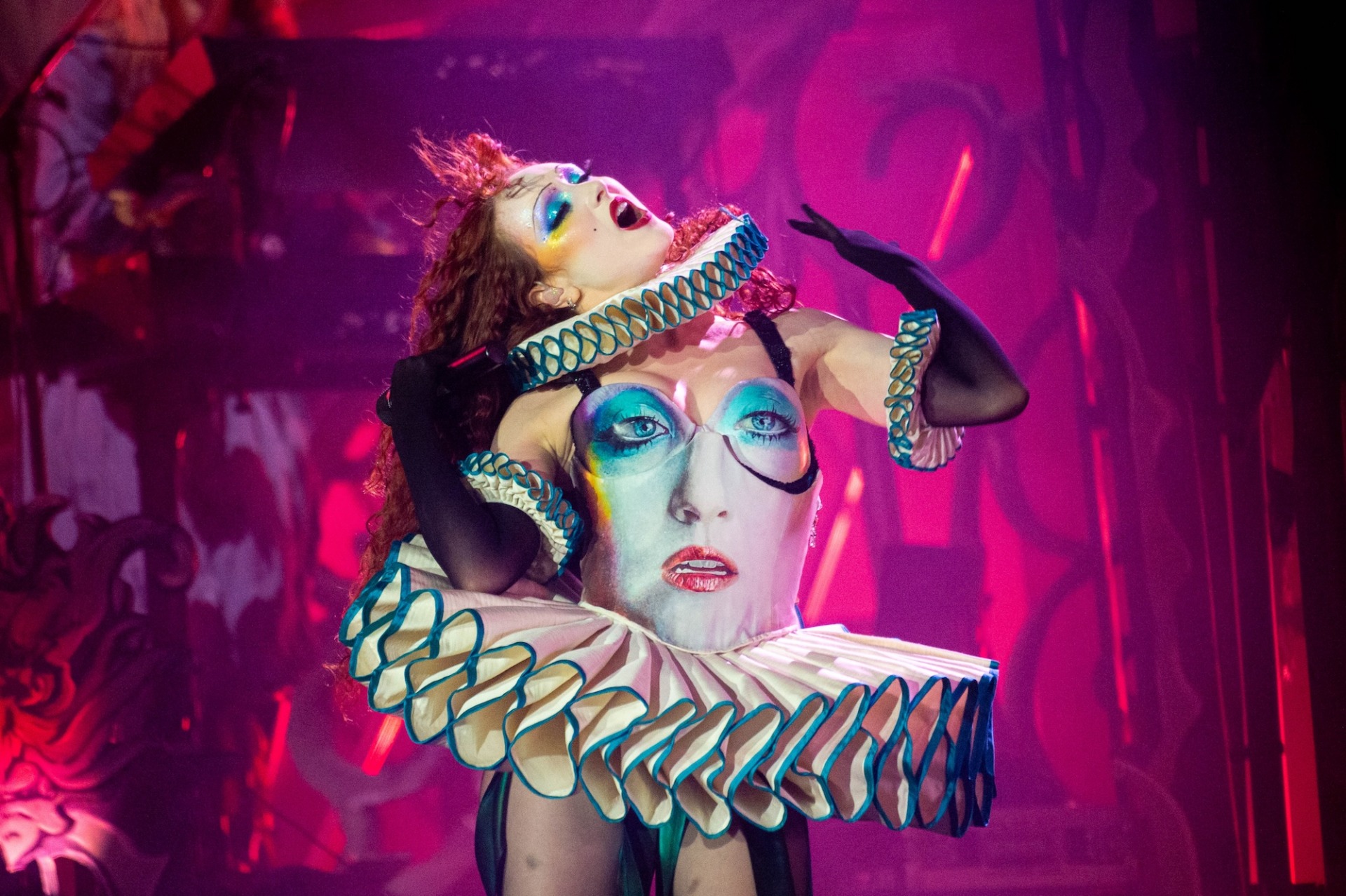
It’s also really hard for the artist’s mental health. The demand placed on an individual or a group of individuals to be everywhere in the world at once is that much harder than it ever was before. I was very fortunate to experience and learn from Stick Season with Noah and then bring those learnings to Chappell’s experience, we just made all those moves the year before. It’s funny to think how entirely different this existence is from my street team days!
When you were putting up stickers on a light pole.
Literally thinking to myself, how many hours was I trimming flyers and handing them out at shows?
This industry used to speak about artists not skipping steps up the venue ladder, but it’s incredible how quickly an artist can explode now whether its Geese, Sombr or Chappell. In just a few months every one of her festival plays on a side stage became a vast underplay. I know she had some cancellations then. So why did she choose you? There must have been a crazy management feeding frenzy. Her voice, oh my God, it’s just so ridiculously amazing.
She’s unbelievable. When you see her live, it’s even more unbelievable. After being hired, I went to a rehearsal and I walked in and she was singing one of her songs and sitting on a road case. It couldn’t have been more casual. All of a sudden, I literally couldn’t take another step forward. I had to stop in my tracks and I just thought to myself, “Holy shit. She’s so good.”
I feel lucky that an artist like her and an artist like Noah have trusted me to guide them. I love what they individually stand for. At this stage of my career, I want to work with artists that have an opinion, have a perspective, which could be anything, but something that they have is a unique relationship with their audience, and it revolves around something that’s based on their personality and that comes through in the music. The talent for both those artists is undeniable. They are uniquely their own things. Another artist I don’t work on personally, but is at our company in a similar vein of individuality is Laufey.
Wow. Her year is bananas, too.
Her year is the same trajectory where she’s making jazz music for Gen-Z and bringing that to arenas. It’s like when have we had a jazz artist develop into arenas? Not in decades. And also a jazz artist who’s considered pop? To answer your question, though, Chappell was very intentional about her management search. I appreciated the opportunity to develop trust over a period of time. I wanted to prove to her that I respect her intuition and that I will provide my opinion but ultimately make sure she knows she is being heard and respected. I enjoy the opportunity to work with artists who are allowing the genre and pop culture to come to them. They’re going to do their thing. We’re going to collectively take some risks in that and hopefully, the audience is going to see the individuality of what the artist is saying and what they’re doing and be able to not have to bend to any sort of expectations, but instead everyone acknowledging that they’re doing what’s fulfilling for them as an artist. That’s the goal.
You seem to exude this quality of being down to earth, grounded and cool-headed, is that part of the value proposition? You have experience, know the business, worked with some major execs and can take care of and shield artists from the insanity and let them be them. That’s very different than a flashy, like “Listen, kid, we can get you $6 million this year if we just do this, this, this and this….”
I’m not good at bullshitting. I don’t have that ability. I don’t know if it’s the blue-collar Buffalo in me or what the nurture versus nature elements are, but I’m just committed to being who I am. An artist will identify with whoever feels comfortable to them. Some artists are seeking a very different experience than my energy and my attitude. You know pretty quickly when it clicks. I can’t speak for anything about what Chappell or Noah saw in me, but I think I just promised to be real with her all the time. That’s all I can do.
So Chappell put out two singles, a country-ish single and a ballad and had these really interesting pop-up festival plays. How were those derived and approached? She didn’t really have the year off in any way, but she seemed to pull back from the grind.
“The Giver” came out just before Chappell hired me. Then we put out “The Subway” together and announced the European shows and US pop-up shows. It was a real intentional conversation about why and when. There was so much enthusiasm around the Midwest Princess record cycle, and she had played a number of festivals. Her slots were earlier in the day, and the supply was far, far below the demand. But there was something amazing about that because it was her design, and this is what she wanted to do. It taught me a lot about the importance of restraint. I believe in her instincts and her intuition. She’s incredibly intelligent and a complete visionary and we built the style of touring that was going to serve her. It was going to be something that felt fresh and different. That didn’t necessarily mean it had to be everywhere all the time.
The design of it started with her agents Kiely and Jackie. When I came on board, there were a few variations of a touring concept, but we collectively worked together as a team to build it and tested the show a bit in Europe and then brought it to the States. The “Visions of Damsels & Other Dangerous Things Tour” ended up being these celebratory, joyous moments of community and culture and everything she stands for. People really relished in them because they knew there was going to be scarcity. For her, the demand forced a bit of skipping of steps, but it was super intentional and she didn’t want to jump into football stadiums.
She could do stadiums at this point?
Without a doubt.
What was so interesting about her “Visions of Damsels Tour” was she played Brookside at the Rose Bowl, Forest Hills and in Kansas City, right?
We turned the museum field in downtown Kansas City into a venue for two shows. Basically built a festival site for two shows.
It’s an interesting model, very DIY and customized to each market. Do you think that’s a model you may keep touring or do you think you may go more traditional, or is it still in discussion?
I don’t know what will come next. She is going to take time to live and enjoy life and write and record. But yes, her fall 2025 touring concept was DIY across these eight shows and three U.S. markets we played. It was West Coast, Midwest, and East Coast. And Kansas City is because she’s from Missouri and wanted to return to the state that she holds dear. I loved it because it was a challenge, it taught me a lot, it taught all of us a lot. It spoke to my independent DIY existence, everything back to the Ani DiFranco days and the small labels and what O.A.R. built when they had Everfine (label) and even Dispatch who did three nights at Madison Square Garden without a record label and fully independent. I just love that ethos and I love a challenge. At this scale, the risk is a lot greater. You can screw it up easily, but we had awesome partners. We worked with both AEG and Live Nation and everyone was fully in on it. She’s a unique talent and everyone gave their best. We had my Director of Touring Nate Futral at Foundations and her Tour Director Joel Eriksson and the day-to-day team of Lauren McKinney, Kyle Goold and Caroline Scofield. We had a lot of experience behind it, so it was a huge success.
How close to a heart attack were you with the pop-up festivals? What was the most challenging parts and most gratifying?
It’s always gratifying when you look around at what you’ve built with a small team of people and the impact it has on the fans’ lives and their experience. You look around and watch them cry or jump for joy and know that if it weren’t for the work this small group of people did together, it wouldn’t have provided that for a community.
We also tapped a handful of local restaurants and coffee shops and identified in advance mom-and-pop shops to see the response those proprietors had from fans visiting them. It made it a real community experience. And that was surprising. I didn’t think I would go into that with a strong takeaway of like, “Oh, wow.” Not only is her audience an incredibly emotional and powerful group of people but also how we impacted the local economy and the responses we got were super rewarding. I know she felt that, too. The hardest part was building venues out of lawns. There are tons of complications when it comes to that.
Yes, like insurance, weather, security, food & beverage, sponsors.
All of that and more. Thankfully, we didn’t have any bad weather. We had a couple nights of off and on rain showers in New York, but we had great weather. The challenge, particularly in Kansas City, was the venue site hadn’t been used as a concert venue in over 10-15 years. And just the traffic flow of people, parking, logistics, ADA considerations and the information people needed to have. All in all it was a lot of fun and super rewarding
What’s going on with Noah these days?
By the time you publish this, we’ll have announced a 28-show tour for Noah in baseball stadiums. It’s not unique to be in baseball stadiums, but it’s pretty unique to do a full tour of them to that extent. It came out of our experience at Fenway for Noah. Fenway is such a mecca for New England and an iconic sports stadium in general. It was such a great experience. When we put the live record out and Noah became a bit synonymous with it. So we’re going to bring that out this summer as this tour.
When are you announcing?
We’re announcing next Sunday during the Grammys. We have his first song of the next record cycle out on the 30th. Then we have a huge Mastercard campaign that we’re debuting the full-length music video on the CBS Grammy broadcast for “The Great Divide.” And we teased the tour in the ad spot. It’s three minutes and 45 seconds of air-time.
Talk about going big …
Gaga did it last year with “Abracadabra,” and it was a huge moment for them. They came to us for this. So that’s going to serve as a kickoff to this campaign, but also is going to announce the tour.
With the Grammys, Chappell had an incredible performance last year. And she’s incredibly smart and you never know what she’s going to say. When she gets up there or puts something out on her Instagram, that’s all her, right? Are you part of that process?
Last year, I wasn’t. Yeah, I mean look, I don’t want to be blindsided. We see ourselves as arm-in-arm with our clients. We want to be able to be prepared for all that comes, good and bad, from things that are said and are not said. That was just before my time of being hired.
I loved what she said about healthcare for all artists at The Grammys. It’s such an important thing to say. Then came a million headlines and people writing some really stupid shit about her being selfish or something. It made no sense. Do you remember that?
Oh yeah. I lived it. We got hired just after the Grammys. At the time, I was hoping we’d be working together. I was at the show in real time watching her perform and crush it, receive her award for Best New Artist and make those statements. I was thinking to myself, “Fuck yes.” Not only does this align perfectly with who I am and my soul, but I also love that she took that forum and she said it in the way she said it. She was provocative in a way that was so necessary.
And she wasn’t making it up. She didn’t have health insurance for a while coming up, it was 1,000% authentic.
That’s what I loved about it. I knew what she had been through, and I saw her say those things, and knew this was coming from her heart. I’ve been working for the last year and a half with the platform we’re working on with Noah to make contributions towards, not specifically what Chappell was saying, but in general supporting mental health efforts in the music industry and the greater fan community. So when that came up, I was watching some of the executives around me cringe knowing that we had established a partnership with Backline to provide mental health services for free to Noah’s band and crew made me realize how aligned I was with Chappell on the matter.
Eventually, in response to some of the things said and written after the Grammys, Kiely created a fund with Backline, too. It was this serendipitous alignment of the stars. I very quietly in my mind was jumping for joy seeing her say those things. Now, living it afterwards and being in the hub with her so to speak, I’ve seen the impact that short statement had and how it’s benefited the likes of Backline, MHA and SAG-AFTRA. We’re seeing the ripple effect of someone standing up for artists. It’s not totally unified and it’s still in development, but it is one step further down the road towards making a better environment for artists. We’ve got to look at success in those terms, as a long view on evolutionary growth in a positive direction in support of artists and the artist community. It’s not on Chappell Roan or Noah Kahan to be the singular answer to that, but they’re definitely both interested in contributing their voices.
Are you involved in setting up their philanthropies?
Mental health is a lifelong journey for Noah, and his music speaks about it very vividly. It is super important to him. The arts, and music in general, has a magnetism for philanthropic endeavors because you’re hosting a charity dinner. You need hours to play to entertain everybody. There’s an immediate natural symmetry there with the philanthropic space. I’ve found, over my career, that all of a sudden artists become known and get pulled in every which direction philanthropically because people are reaching out randomly to have them contribute to their cause.
I start with the question of what’s important to the artist and then let’s make it career long. For Noah, it was mental health. We created the Busyhead Project together.
We brought in a company called SailWorks run by Jeb Gutelius that aids in the philanthropic effort of artists. That’s their niche and sole function. They come in as counselors and advisors. We have weekly calls with them. Our staff is fully integrated. I don’t know a percentage of my day, but I would say the equivalent of a client’s worth of time is spent on philanthropic efforts. That started with the Busyhead Project.
Then, when we got involved with Chappell, she had the same desires and interests to support the LGBTQ+ community and particularly the trans community. We launched The Midwest Princess Project together. For both artists, everything they do in their career has a tie-in with their philanthropic interests. A portion of ticket sales, certain merch sales, brand deals. We want anyone that’s working with us to know that this cause is important to us. We want the community we’re serving to understand that this is not a one-off. We’re here. We’re going to keep raising money, keep expanding our efforts alongside the artist’s career growth and make sure this very fulfilling aspect of our day is one that is known. I’ve been really fortunate to help raise millions of dollars across both efforts and meet some amazing people and have an ongoing endeavor that’s really prideful and fulfilling.
Who are Noah and Chappell’s day-to-days?
Lauren McKinney is my day-to-day on Chappell and has been at Foundations for 10 years. Ryan Langlois is Noah’s and his official title is manager of operations.
Who else is on your team should get a shout out?
We have another day-to-day on Chappell who was formerly her assistant, Kyle Goold, he works really closely with me and Lauren in creative capacities. I have Caroline Schofield, who is a day-to-day on both Chappell and Noah. So it’s me Ryan, and then Caroline on Noah; and then me, Lauren and Kyle and Caroline on Chappell. Ellie Hockings is our marketing lead at Foundations. And Nate Futral is our senior director of touring operations, a former tour manager who’s been with us in-house on the touring side. Izzy Newwirth is director of digital and Brooks Dawson is director of tour marketing at Foundations. My assistants are Jalen Gregory and Andy Cook.
Outside of that, it’s working with our agents, Joe Atamian and Paige Maloney on Noah in the Americas and Bilge Morden at CAA for ROW, and Kiely Mosiman and Jackie Nalpant who are incredible for Chappell in the Americas and Adele Slater and Anna Bewers for ROW. And then the labels, Noah at Mercury works with Ben Adelson and Alex Coslov, and Chappell is Island, with Imran Majid, Justin Eshak and Marshall Nolan.
So being a manager now with the constant asks, decisions and questions and the 24/7 nature of social media, your to-do list must grow every day. How are you able to move forward and do what’s best for your artists with so much going on?
It’s constantly changing and constantly moving. Any given day, you have best intentions of getting 15 things done, and you get totally diverted by something that pops up and you get one thing done. No matter how hard you try, you’re never in full control of your schedule. That includes travel that pops up or something unexpected. I do feel that having a certain sense of groundedness and sense of process, expectations and reliability that your team can get to understand how they also need to ebb and flow with me as a manager, but also, most importantly, with the artist and their needs.
Everything is tailored to what the artist’s needs are, how they want to communicate, when they want to communicate. Make it as comfortable for them as possible. They want to talk to two of us, they want to talk to 10 of us—it’s up to them. We listen and try to be told things once — not twice — and go do for them. That doesn’t change the millions of inquiries and requests for our time and the busyness that comes with this business and all the tertiary things that come with that. You just got to prioritize and get to a place of realizing that people around you can be trusted just as much as an artist is trusting you as a manager.
Looking ahead and even further beyond, what do you see for Foundations? Today it’s AI and tomorrow, who knows what? The curveballs keep coming.
At its core, we want to keep managing artists that have a cultural impact. That’s our number one priority. The ability to do that with more sophistication and deeper resources is something we’re always striving for. The opportunity to grow in different directions with an artist is something that’s really exciting. Philanthropic being one direction, other offshoots of their brand and their business, too.
We launched a festival in Mexico with Noah three years ago and just got back from that last week—it was incredible. It’s not the biggest thing we do every year, but it’s one of the best moments we have for the artist community to come together. Artists come to Mexico and are in the same resort for five days together. They collaborate on each other’s songs and end the show with a huge all-stars and friends type of jam. It creates community.
Our goal is to avoid working with assholes and deepen our community. Moving forward, I’m excited about the ability to affect change. I don’t say that with any expectation that we’re doing that solely. I love the idea of the community we are communicating with every day and question, “Why are we doing it this way? Why is the secondary ticketing market so complicated in America?” We can go on and on and on about other issues in our business. There’s a lot of problems to solve and a lot of imperfect elements of the music industry. As an entrepreneur, you want to try to solve problems. You want to try to create a better and more just environment. Having the opportunity to be one of many voices in those matters is super exciting. We want to do more of that. We want to have a roster of artists that are really impactful, that people love and believe in.
This was your best year yet, right, by far?
Yeah.
Congratulations on that. It’s amazing what you’ve accomplished. And it’s not like it was an overnight success. This is a 20-30 year career, you’ve gone far past the 10,000-hour rule. Now it’s just more of it. You don’t want to have too much or become too corporate, right?
We want to remain selective. But it’s interesting. I feel like I’ve just been who I’ve been, and you get more acknowledgment when your artists have success, but it doesn’t necessarily mean you’re doing anything fundamentally different. I want to tell myself from 15 years ago, “You’re good. Just because the acknowledgment hasn’t come yet doesn’t mean that you’re doing anything less than.” I’m excited to see other generations of managers and artists and thought leaders coming into this business and have different approaches. I’m excited to be a witness to that.
What else do you have coming up?
We’re announcing something we worked on with Backline. It came out of the relationship we built offering mental health services to Noah’s band and crew for free and the need for more access to mental health resources in the music industry. So Backline, all credit to them, built a hotline they launched to serve the music industry. It’s built off of the same platform of 988, the Suicide Prevention Hotline. It’s funded by a couple of companies to start, Spotify, Live Nation, AEG, Red Light.
The number is 855-BLINE or text 254-639. The idea is that we are launching a long-term resource for the music. That applies to artists, producers, engineers—anyone that works within the music business. It can just be the entry point for the question of, “What do I do?” Call this number, 24-hour access to someone who’s been trained and is a mental health expert and can point you in the right direction to find therapy and other resources to offset the cost if you need it. Really proud and excited about that and that it’s meant to serve the entire industry.
Your story is great, Ani DiFranco, Don Law, Coran Capshaw, James Brown, Young The Giant, Noah, Chappell — I can’t wait for the film.
We just finished making a documentary on Netflix about Noah’s life. Having done that, I’m pretty sure I’ll never do one.
FREE
 Daily Pulse
Subscribe
Daily Pulse
Subscribe
 Daily Pulse
Subscribe
Daily Pulse
Subscribe