
How The Ed Sheeran-Macklemore Controversy Can Foment Positive Change Via The Live Biz: Q&A With Emily White Of #iVoted, Impact Data & Events
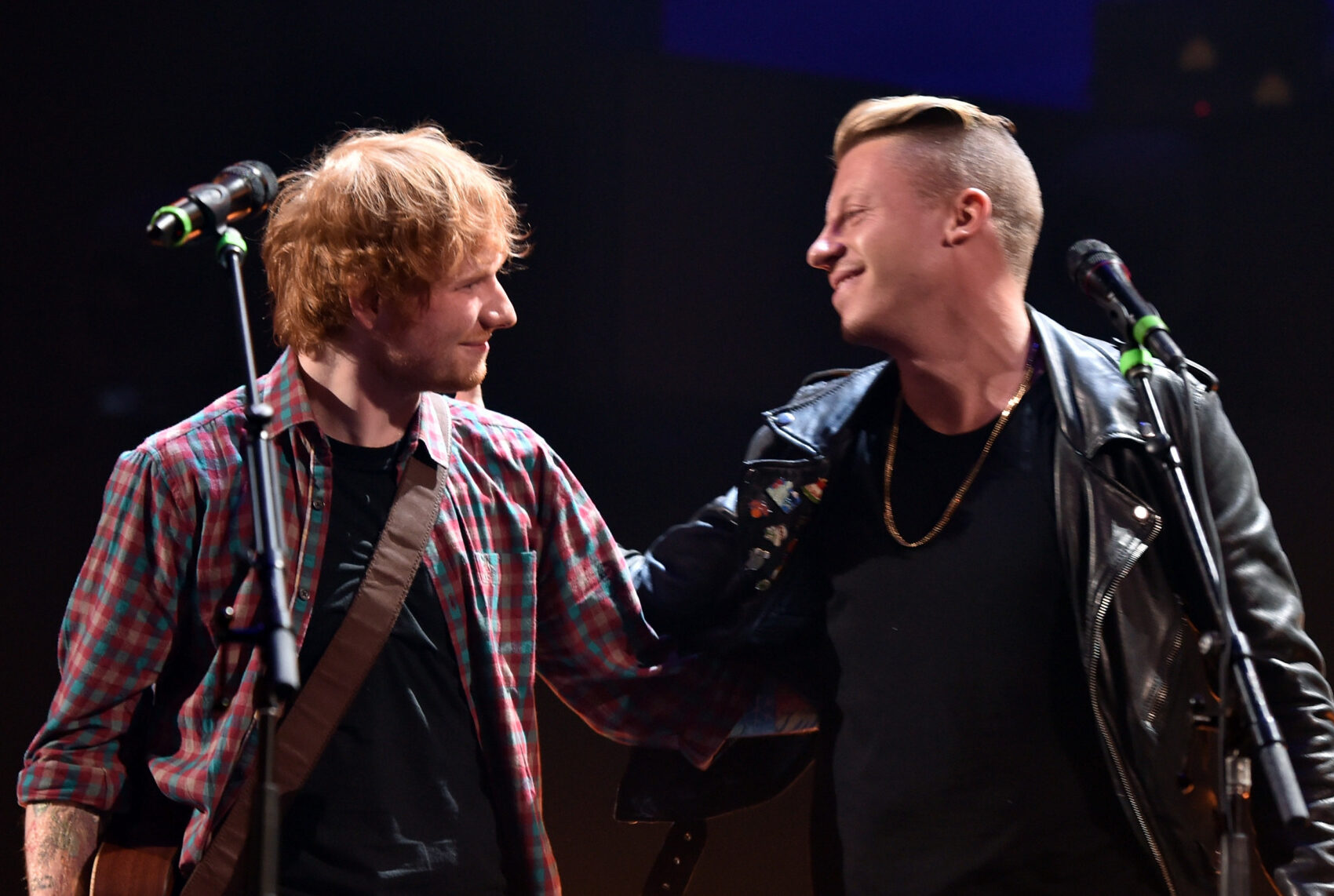
It was the live performance controversy heard around the world. When Macklemore expressed his support for the Palestinian cause at MetLife Stadium on Sept. 4-5 during his opening sets for Ed Sheeran’s “Loop Tour,” it ignited a tempest and made national and international headlines This came after the rapper was removed from the tour as building owners, promoter, artists, their teams, fans and the public at large expressed an array of differing—and often quite strident—opinions on such matters of importance as freedom of speech, Middle-East policies, human rights, bigotry and whether or not a pop artist’s show is an appropriate forum for these discussions.
Thankfully, politics are not part of Pollstar’s purview, though live events are. One non-partisan organization Impact Data & Events (formerly #iVoted Concerts), founded by Emily White, is a non-profit org that can help transform political controversies into alignments with live events and fandom toward helping create political solutions. Sheeran and Macklemore could be a case study of sorts, which led Pollstar to speak with White about how data research and political issues can align with fans and live performances to help foster greater community, awareness, activism and positive change.
(*Note: This conversation took place before Sheeran candidly addressed this matter at his Sept. 19 show at Philadelphia’s Lincoln Financial Field and before Macklemore this week announced his “Free Palestine Tour.” )
Pollstar: The Ed Sheeran-Macklemore situation raised many political issues, freedom of speech, power dynamics in the live business, human rights, bigotry and more while dominating the news in a way I don’t think we’ve seen before. Can you think of a precedent?
Emily White: Well, the Dixie Chicks faced a huge backlash and show cancellations in 2003 after speaking out against the Iraq War. But you don’t see this often in the United States, definitely in other countries. It’s pretty remarkable, to say the least.
It left a lot of people scratching their heads. Some feel alienated, hurt and/or angry—there’s a whole range of emotions, especially in these divisive times where people have very strong opinions. I’m sure with what you’re doing, divisive issues must come up all the time.
Not necessarily. First, I want to comment on what you said about people feeling hurt or feeling a certain way. You also don’t have to go to the concert. I don’t want to invalidate anyone’s feelings. We have freedom of speech to respond to things people say on stage and things people disagree with. That, at least for me, is the fundamental issue. People can say whatever they want, and then it’s up to the audience to decide if that’s something they are into or not. We expanded our nonprofit to be called Impact Data & Events. We are no longer #IVoted and for us, that lets us live a little bit more behind the scenes and have it be about what our industry is actually all about: the authentic connection between artists and fans.

The shows we’ve announced for this fall, that we’re continuing to roll out, are free concerts. We’re announcing a free concert on Monday in Southern California’s Imperial Valley and you check your voter registration to get in. But that’s not on the artwork, that’s not necessarily advertised. That’s the model we’re going towards. We feel very strongly about tangible action. But that way, the artist inherently endorses the concept, but it’s up to them how much they want to say or not say. We’re pretty lucky and we’re also a 501(c)(3) nonpartisan nonprofit. We feel very strongly about activating fans to take tangible action and doing it in a data-booked way supporting the artists, but leaving it up to them how they want to approach it.
It would seem there’s an opportunity with the Sheeran-Macklemore issue to activate fans who feel different ways about it, whether they agree with what was said or disagree or if they feel that freedom of speech was stifled or they didn’t or perhaps just want to learn more about the issue. How can you take a fan who is not feeling aligned to with what happened, how can that be used in a positive way to get fans involved in an issue they want to know more about and/or want to help foment positive change?
We vote with our dollars. So if an artist is saying something that you really like, or maybe they just got kicked off a tour, you could go buy from their Bandcamp. There’s ways to support that way. And of course, go to the show or don’t go to the show.
We’ll see if the Ed Sheeran show happens on Saturday.
We’ll know by the time this conversation comes out. But that’s really why I’ve dedicated my life to voter turnout, because it affects everything. No matter how you feel about an issue. You have a say in it, and it could be exactly what we’re talking about right now. Genocide, antisemitism, very big, deep, old and present issues. Or it could be, you care about ticketing reform. Voting matters,.
I’m excited we’re producing shows and running digital campaigns that directly impact issues. We’re doing that in addition to voting, but that’s mostly because people have asked us to do that and I’m excited about that. But that’s why I’m so obsessed with non-partisan voter turnout, because no matter the issue, we have a say. Elections are determined by the size of concert venues. So our industry and artists, even though I know some are more fearful than ever to speak out, have massive power.
It comes back to voting in your community. The number one determining factor historically on someone voting is if their family votes, their friends vote, their religious affiliation votes. You and I know the power of fan community and how meaningful that is. So to answer your question, it comes down to voting, but then you can take it a step further. Pay attention to politicians that care about the issues that you care about. Check out the Music Votes coalition’s website, 50 of the leading nonprofits in the music industry, find your cause on there and get involved that way. I’ve personally experienced this, and this is a well-known fact: getting involved reduces anxiety, too. I’m on social media, and it’s one thing to be a keyboard warrior; it’s one thing to feel frustrated, but it’s another to take action in any way that you can.
So if I’m a 19-year-old Ed Sheeran fan. I go to the concert at MetLife, and the opening act says something very political, and it causes a reaction, and it leads to a big hubbub and a lineup change, and I’m confused. It’s an issue I have paid half attention to but it’s obviousl important and it’s caused the people around me to have intense discussion and reactions, what do you think the best practices are for a young person who is confused by this and doesn’t know where they stand on the issue?
I would agree with you that they might be confused on most issues. And with this particular issue, but again so many issues, we all have our own algorithms and news feeds, right? This is why we also need trusted sources. This actually goes back to the fundamental issue. It’s why free speech is so important. So when that kid goes home and Googles or ChatGPTs or whatever, there are legitimate journalists and legitimate publications providing facts, providing this information,
So where should they go? What are the trusted sources they should look at? Isn’t there factcheck.org or certain news that tries to be non-partisan and fact-checks all of the things the post, do you know of anything like that?
You could definitely go to factcheck.org for sure. I think that’s a great place to start. To me, it’s reputable journalism—not factcheck.org—that has become a divisive issue for some. That’s why it feels wild to say brave, but it’s brave when an artist does speak out about something they’re passionate about. It’s an interesting place to start because most artists are speaking out are also pointing to nonprofits and pointing to resources. And if it allows that 19-year-old to think about these issues for a moment, that’s a good start.
It really is an opportunity for self-education, knowledge and action. And there may be an opportunity, as you find out about an issue, whatever side you come down on, to find community, help educate others and affect change through political means.
I will say this about that 19-year-old: The most powerful voting block, the largest voting block are non-voters, and they also tend to be younger voters. So no matter how that 19-year-old at the Ed Sheeran concert feels about the issue, even if it’s like, “Oh, this is new to me,” or “I’ve heard some friends say some things about this,” or “I saw some things on social media,” they start to think about that. Maybe they’ll do some research, which can get scary as what we’re saying is a wild, wild West, let alone in AI world. But that can be a great way to turn it into action. Because they are the ones who aren’t voting. We built this data model with Johns Hopkins that shows which artists have the most unregistered and non-voting fans, the most low-propensity-to-vote fans. So, That’s actually what makes the largest impact on the election, and that’s why we’re reaching out to them.
I won’t name artists, but we know who the activist artists are, who have activist fan bases. Those fans are well informed.. They are voting. They are recruiting people, but it goes back to that 19-year-old who is actually part of the most powerful potential voting block, which is non-voters. So maybe for that 19-year-old it’s sparking thought if it’s not something they’d thought about before or they’re not engaged about and does spur them to do some more research and maybe get involved or take action, but at minimum vote.
Is Ed Sheeran in your database?
I have to look, but when we built this, people in the industry in 2024 were saying to me, “You got to get Taylor involved.” And when we built this data model, I built it with these Johns Hopkins students, these geniuses doing calculations that I certainly could never do. When we presented it, it was so cool to hear it through their 19-year-old voices. They said that although Taylor Swift has the most listeners in Atlanta, for example, Drake, 21 Savage, and Future can turn out way more voters.
I will say about Ed Sheeran, and I’m generalizing, but these stadium concerts have all sorts of fans. And people at Ed Sheeran’s stadium concert can afford those tickets, so that would be more of a high propensity voter who might be a little bit more educated, might have access to more resources and education.
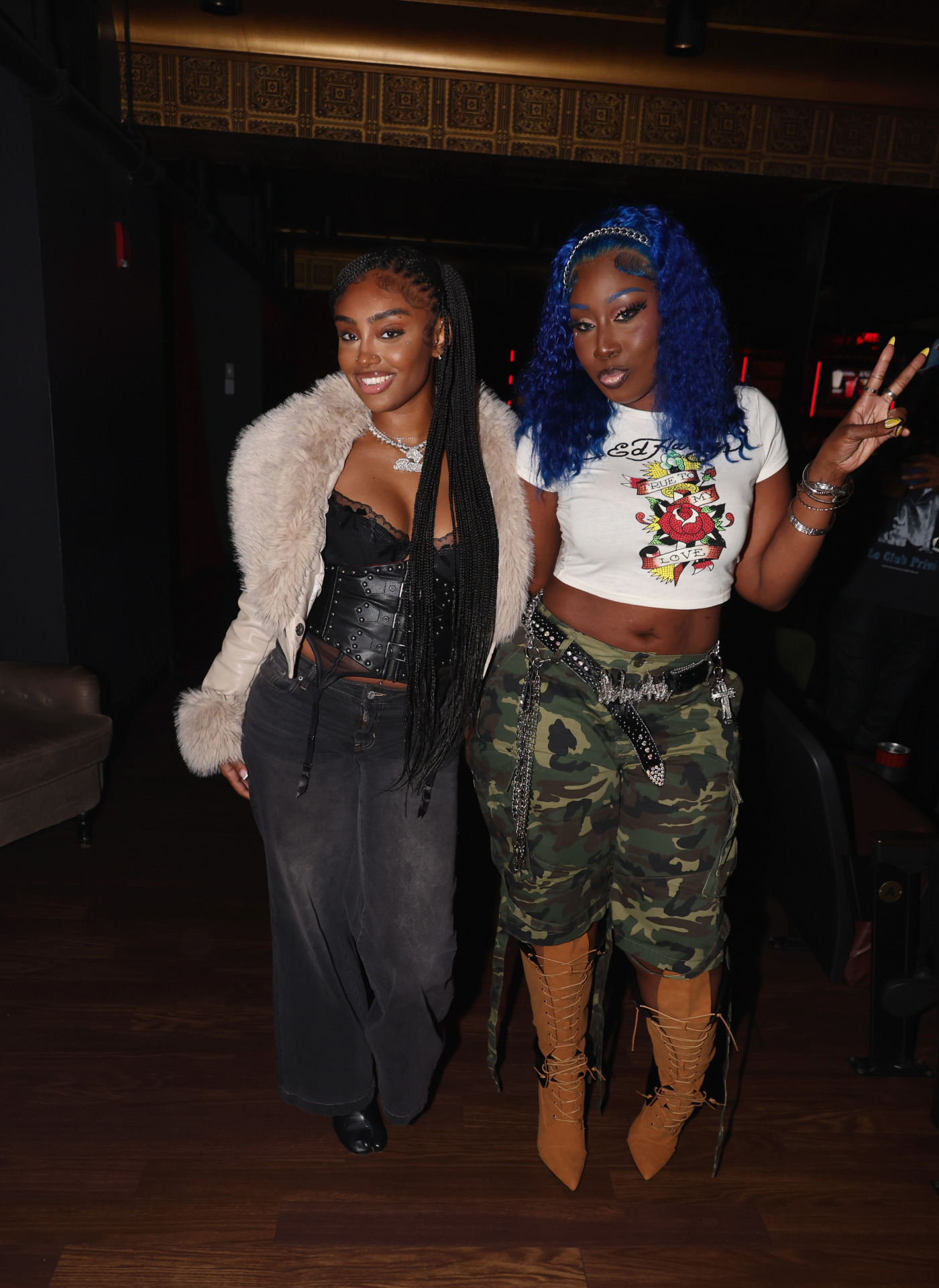
The last show we produced was last year for New York City’s Mayoral election, and we were overwhelmed with comments saying, “This is my first time voting. But it’s also my first ever concert because I can’t afford tickets and I can’t believe you booked Connie Diiamond, my favorite artist. So I’m bringing my sister and I’m bringing my cousin. I’m bringing my kids, and I’m so excited.” The joy was palpable. So that’s what we’re focused on: that massive untapped voting block that feels like their voice doesn’t matter, and showing that, “Hey, if we all get together, it actually really does.”
That brings up an important point in regard to issues closer to home that may impact your community, economic opportunity, social well-being, safety, health issues, etc. more directly.
If I’m going to generalize, I would like to think the average person is anti-genocide and anti-Semitism, if that makes sense. So I’m reminded of those close-to-home issues constantly by the young people around me, whether they have student debt, can’t afford healthcare, AI is everywhere, sustainability—all these things. A lot of this came out of the Music Votes coalition and our industry. I’ve been approached by partners saying, “Wait, you can get targeted demographics to take tangible mass action,” and what that has resulted in.
For example, we have what’s going to be a sold-out show in Chicago next month headlined by BabyChiefDoit. Folks get in for free by opting in to learn about high-paid clean energy jobs. 96% of the people who have filled out a survey, and you have to put a little effort into it. Most of those who have RSVP’d are Gen-Z or millennial, 20% of who are unemployed, which is obviously significantly higher than the national unemployment. 48% are looking for jobs, and you can make six figures without a college degree with these clean energy jobs.
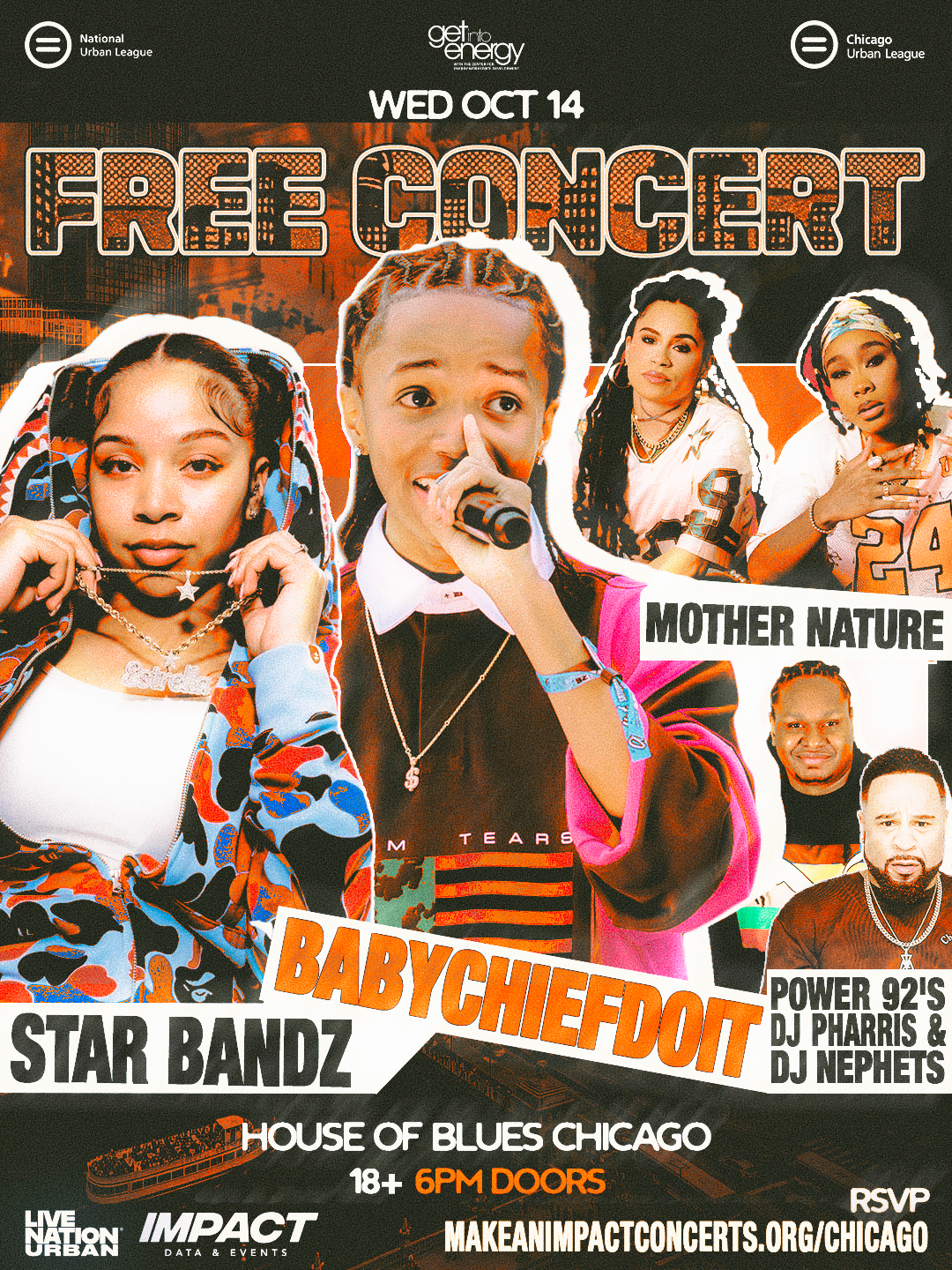
I am not an expert in that; it was Climate Partners from the Music Votes coalition that approached me and said, “Hey, we’re really interested in your model and applying it to this issue.” It’s gone so well that they now want to apply it to some of the other issues I just touched on. Concerts where people take action for AI regulation, for canceling student debt, canceling medical debt, for mental health legislation. I am always going to be the voter turnout lady; that is fundamentally what we’re doing. That is what we’re focused on, but it’s great to be reminded by both my team and our partners that issues matter.
The word data gets thrown around a lot everywhere, but certainly in the music industry, now we know exactly what people are listening to. I’m originally from Milwaukee. What people are listening to in Milwaukee is different from Madison is different from Chicago, even though geographically those places are not very far apart in a world where there are over a million songs released a week. My background is in indie rock; I could never know all the indie rock artists. As you know, I have an extraordinary board. I co-founded this org with Mike Luba and Pat Sansone of Wilco. Our board has Kevin Lyman, John Boyle, Lawrence Peryer, John Harper, Dana Meyerson, Kathryn Frazier, Amaechi Uzoigwe, Steve Ferguson and more. I also have Scotty Nichols and STN Collective handling our production. Even with all of them and my young and diverse team of music industry professionals, we don’t sit around and say like, “Let’s get this artist; let’s get that artist.” Music industry, music and culture and activism, that’s happened since the 1960s, but now we can harness that power to get fans to take mass action with precision, which I think we’re just getting started on. We’re very excited.
Are there specific initiatives that are getting people more involved?
Yeah, definitely. We piloted a couple of these in 2024. Free concerts that you get by opting in to learn about high-paid clean energy jobs. We did a little tech show in Michigan and we did a Big Freedia and Ani DeFranco concert in New Orleans that went extraordinarily well. So on one hand, it’s pretty simple because the artist is just playing a show and the fan opts in and the artist is inherently endorsing it and it’s been really exciting. As I’ve gotten to know people in the nonprofit space, they don’t have our music industry experience. So it’s basically just taking all the tactics—and by the way, there’s a million things in the world I don’t know how to do—but this is what I know how to do. All we’re doing is taking tactics from the music industry and applying it to solving these issues.
Also with voting. When we book Tee Grizzley for a couple of our shows, as we did in 2024. Then we have the fans’ mobile phone numbers and email addresses, and they are, per our data, low-propensity voters and fans that the voting world admits they don’t really know how to reach otherwise. Then we can text them. “Hey, thanks so much for coming to the Tee Grizzley concert. Did you know that early voting has started? You checked your registration, so you’re good to go. Here’s your polling place.” And then take them all the way through the finish line of voting through to Election Day, which is no different than when Beyoncé takes us to a merch drop or an artist texts or emails about a tour or whatever.
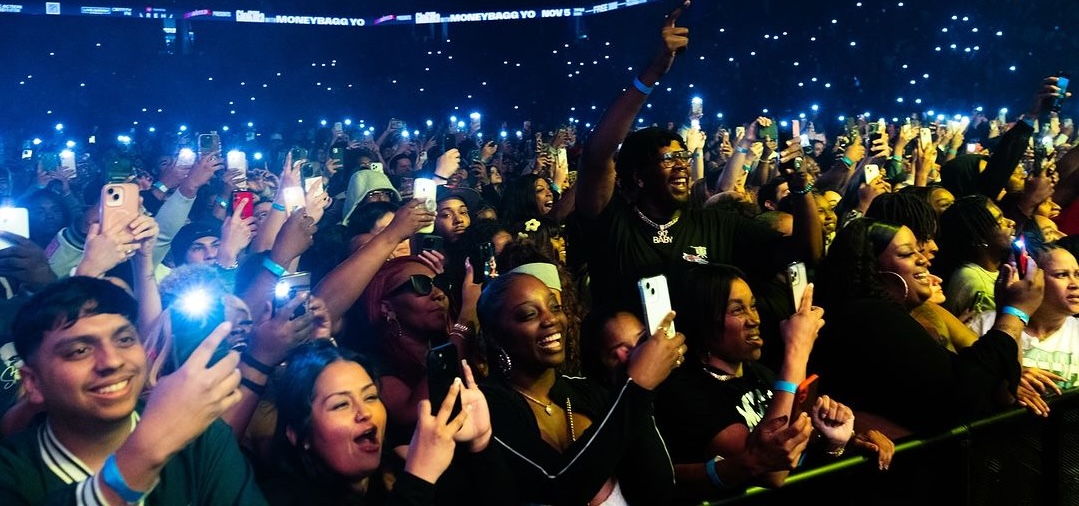
I’ve also brought in Bryan Calhoun, as our CMO, who runs all the marketing for Questlove of The Roots, Jill Scott, Lil Wayne; it is no different. It’s direct-to-fan marketing with voting. With the artist, they opt in, which is way different than just picking an artist- a needle in the haystack out of a million- which is exactly what we know how to do. We also have Live Nation Urban working with us as our talent buyer. Please & Thank You have built us a custom ticketing and RSVP platform. The other reason we’re just getting this started is people constantly say to me, “What about after voting?” I’m like, let’s keep going. We still have their info. They can opt out when they’re sick of hearing from us or the artist.
Do you have artists, per se, who are active in the Israel-Palestinian issue that fans can be part of that community, attend events that further the cause, and perhaps go deeper on that issue with an artist?
It hasn’t come directly to us yet, but you certainly can pay attention to Macklemore. You can check out Pink. These are artists who are at the center of this huge story, right?
So we’re about five weeks out from the mid-term elections.
I try not to think about that. I just do what I do and accomplish every day
Is there still time to register?
Oh yes, registration deadlines vary, so absolutely. Look that up on vote.org has every state. That’s a really great resource. You can absolutely do that. We’re producing over 400 events this fall. So there’s some cool stuff to come and check out. We partnered with When We All Vote to do a bunch of pop-ups at different polling places around the country. We’ve announced two shows so far. We’re announcing a third one, probably one or two more next week and probably another one a week after that. You can definitely still register as of this conversation. Still, check, because some places have same-day voter registration.
Should we go to your site?
Go to ImpactDataAndEvents.org to check out all the events and concerts we’re putting on this fall.
FREE
 Daily Pulse
Subscribe
Daily Pulse
Subscribe
 Daily Pulse
Subscribe
Daily Pulse
Subscribe