
Market Focus Washington D.C: The DMV’s Expansive & Dynamic Live Market
Witness a new $4B stadium, $1B arena renovation, $600M+ proposal for an Audi Field upgrade, a Grand Prix, the 2027 NFL draft and, of course, John Cena.
The Washington, D.C. live market is dynamic and expanding and entering a new era, with massive investment in new and upgraded buildings attracting first-class sports and entertainment and helping drive economic development. At the same time, the DMV—D.C., Maryland and Virginia, as it is widely known today—offers a surfeit of top sheds, historic theaters, iconic clubs, festivals, underground venues with a wide range of programming and a phenomenal local repertoire all its own.
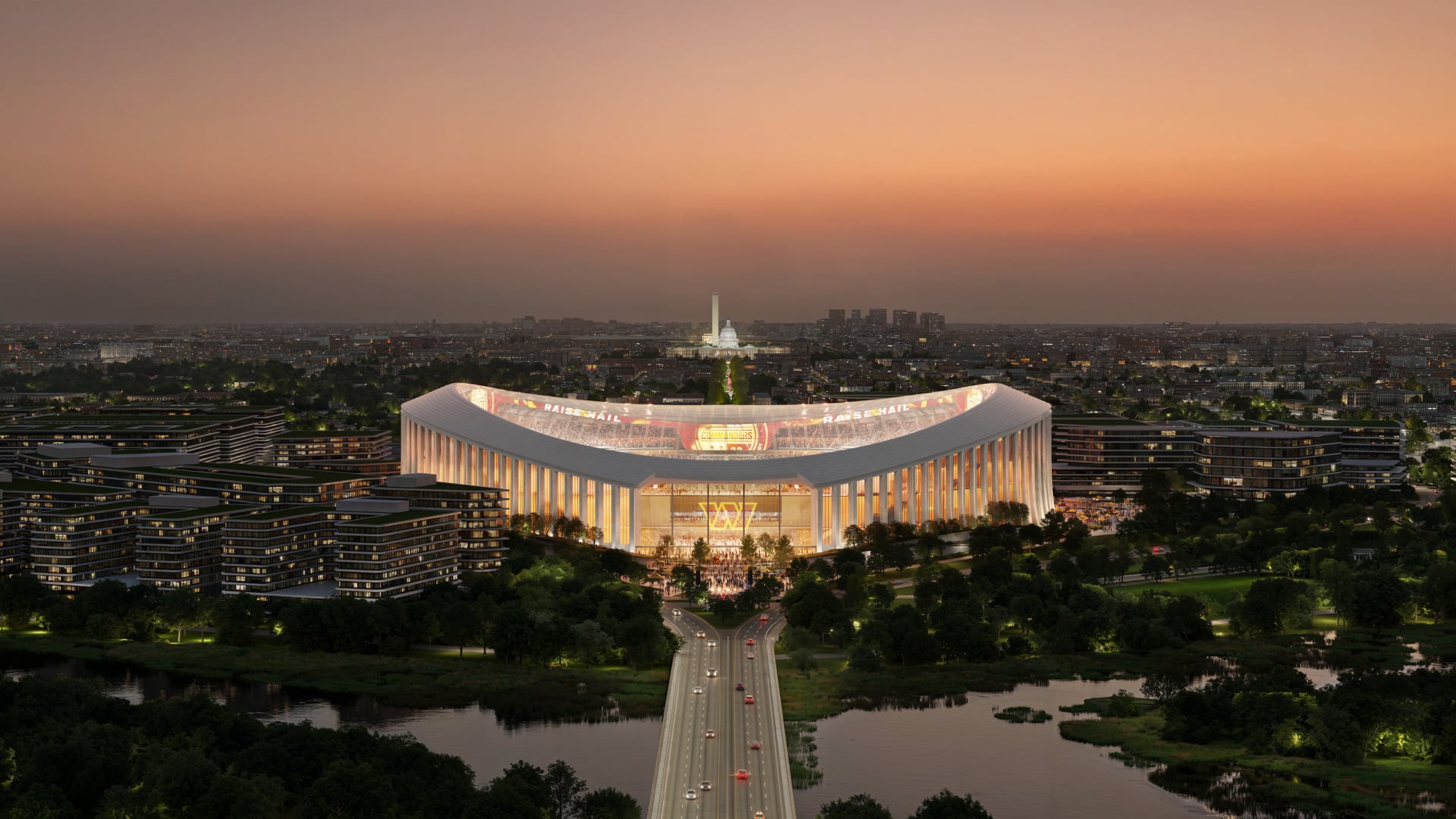
Chief among these upgrades is an estimated $4 billion new stadium for the city’s NFL team, the Commanders, which after 33 years of playing in Landover, Maryland, will finally return to the District in 2030, led by The District and The Commanders —whose ownership group many Washingtonians consider heroes for turning around the fortunes of its beleaguered NFL team. At the same time, Monumental Sports & Entertainment is in the midst of a billion-dollar renovation of Capital One Arena improving its exterior and expanding its footprint by 200,000 square feet. As this issue was going to press, the D.C. Council Chair proposed a $620 million expansion of Audi Field, home to MLS’s D.C. United. Events DC, the city’s official Convention and Sports Authority, is leading the city’s events charge and says it’s hitting another gear.
“It literally is a pinnacle point for us here at Events DC,” said Angie Gates, president of the municipal organization. When we spoke, the organization was celebrating the just-completed annual tennis tournament Mubadala DC Open in Rock Creek Park. Over the last year, Events DC helped facilitate the landing of the Commanders stadium, as well as an IndyCar Grand Prix race, John Cena’s last WWE wrestling match at Capital One Arena, WorldPride Washington, D.C. and the 2027 NFL Draft, set for The National Mall.
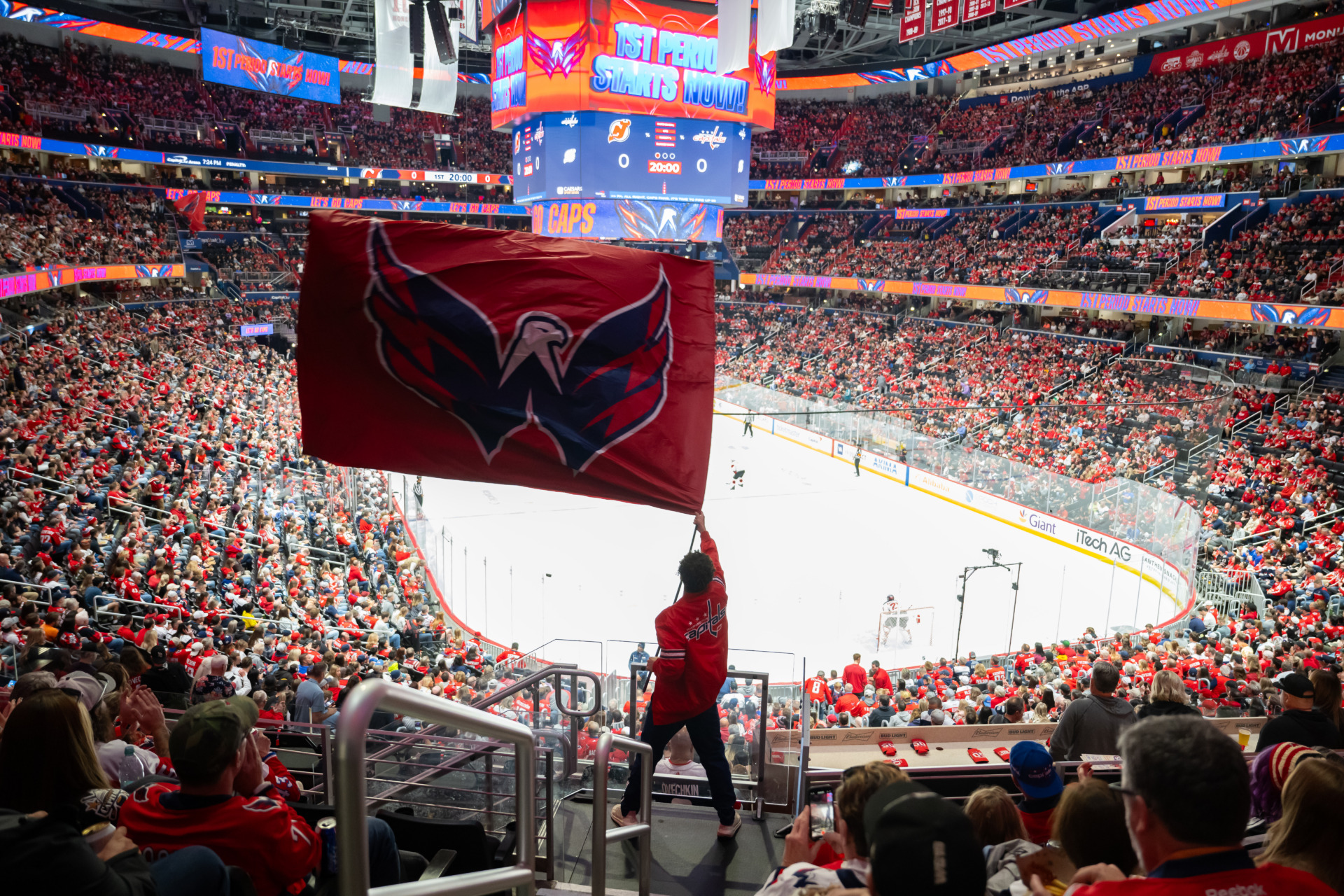
The DMV is one of only 12 U.S. markets to have teams in each of the four major sports leagues. In addition to WNBA, MLS, NWSL and NBA G-League teams, D.C. is also one of the most dynamic, thriving and wide-ranging concert markets. According to Pollstar’s 2026 U.S. Concert Market Rankings, the city is ranked as the ninth-largest market, with total gross revenue of $278,892,338 from 3.41 million tickets sold.
“We’re anticipating a million people over the course of three or four days and anticipating an economic impact of $200 to $250 million,” says Gates, who has economic impact data at her fingertips. “Last year, the Mubadala DC Open Tennis Tournament brought in $34 million in economic impact and about 4,000 hotel room nights. … Wrestling had not been in D.C. in over a decade. The economic impact was about $40.2 million. People came globally from all over the world. … The Duke versus Michigan game is another example; we were partly involved in that, and the economic impact for the Duke versus Michigan game was $7.2 million.”
Consumer spending in the DMV is massive. Five suburban D.C. counties—four in Northern Virginia and one in Maryland—are among the top 10 U.S. counties with the highest median household incomes, based on the 2020 Census. As a government town, DC is said to be “recession proof,” with its main business less susceptible to economic volatility. Though 2025’s DOGE layoffs and deployment of the National Guard, despite data showing violent crime in the city at a 30-year low, had a deleterious impact on the city’s morale and economy.
Over the last few decades, venues have helped transform D.C.’s economy and geography. The 1997 opening of Capital One Arena, then the MCI Center, brought the NBA’s Wizards and NHL’s Capitals back to D.C. from Maryland. Its concerts and events helped turn downtown D.C. into a thriving commercial center. The same pattern played out with Nationals Park, which opened in 2008 and similarly changed the Navy Yard neighborhood in Southeast D.C., along the Anacostia River, with nearby Audi Field opening in 2018. The same pattern holds true for I.M.P.’s The Anthem, which opened in 2017 as part of a massive $3.6 billion Southwest Waterfront development by Hoffman & Associates that also includes Union Stage and the Pearl Street Warehouse.
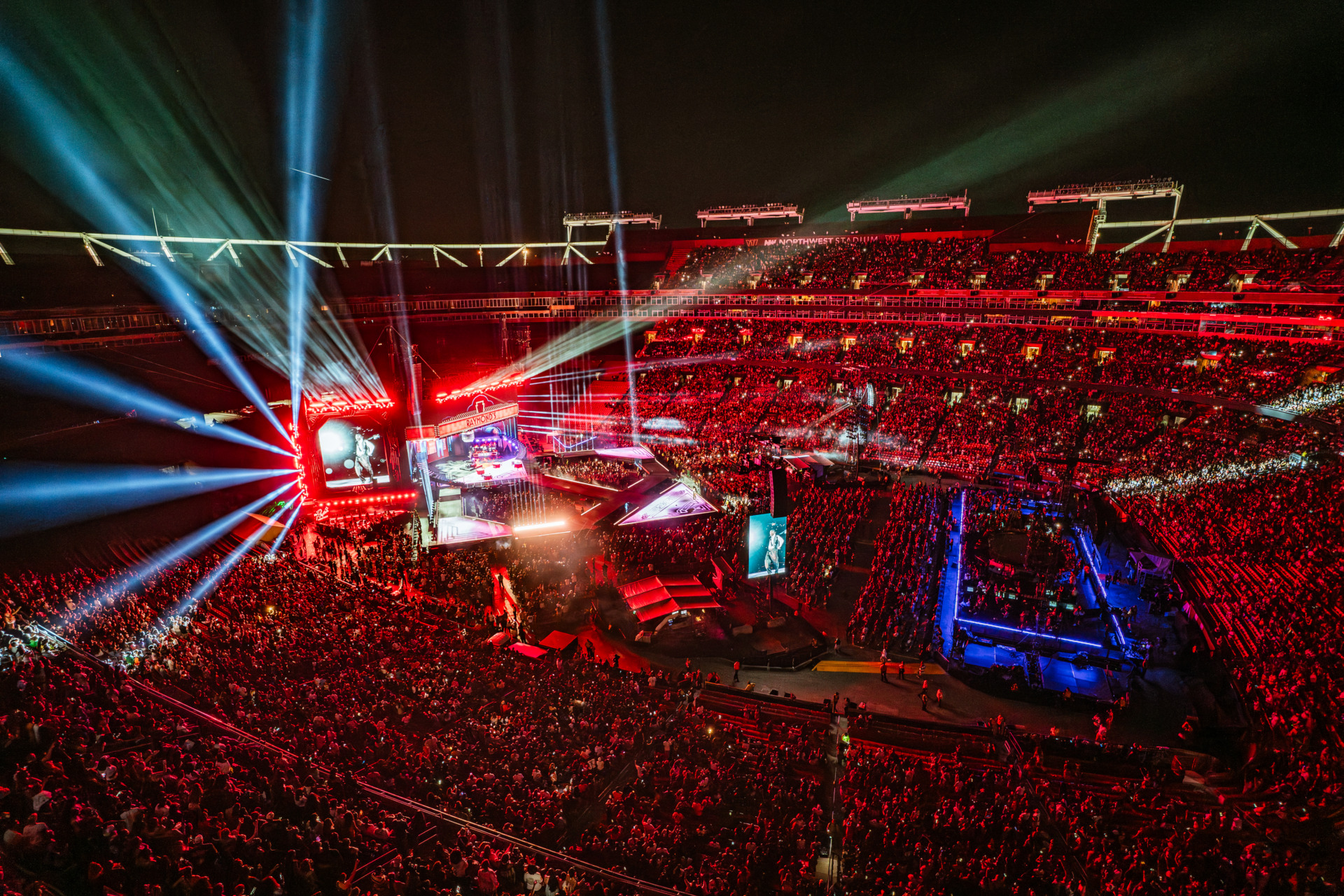
According to 2025 Pollstar Boxoffice reports, the city’s top stadium (over 30K capacity) was Northwest Stadium, with a 62,000-64,000 capacity. It opened in 1997 in Landover, Maryland, first as Jack Kent Cooke Stadium, then FedExField and Commanders Field. Harris Blitzer led entertainment programming in 2023 with its purchase of the NFL franchise. The venue sold 247,920 concert tickets and grossed $51,852,486. It has hosted top tours by The Weeknd, Metallica, AC/DC, Usher and Chris Brown, and Karol G. Nationals Park (41,000 capacity) came in at No. 2 grossing $37,444,908 on 230,358 tickets. The MLB stadium hosted shows by Noah Kahan and Bruce Springsteen and, over the next month, will showcase Foo Fighters, My Chemical Romance, Jason Aldean and Billy Joel with Sting.
The two stadiums’ biggest market entrant will come in 2030 with the construction of the new Commanders Stadium by HBSE, which is currently clearing the necessary hurdles to break ground on a new 70,000-capacity, $4 billion stadium at the former site of RFK Stadium in 2027.
“Our ownership group led by Josh Harris and others are looking at this as a transformational opportunity,” says Commanders Chief Growth Officer Ben Cobleigh. “Gabe (Harris) and Sean (Saadeh, Head of Programming) and the entire HBSC team have done such a good job of demonstrating the demand of the marketplace for a wide variety of programming. And we know that’s going to translate in an incredible way once we have this beautiful new stadium at the RFK Campus.”
The new RFK Campus, according to Harris Blitzer, is projected to bring 14,000 construction jobs for the stadium and 16,000 for RFK mixed-use, generate $4 billion in tax revenue over the entire site, and add 5,000-6,000 housing units, including at least 30% affordable housing.
The building, complete with a colonnade domed roof, was designed by HKS and fits with the national monument motif, with a straight line down East Capitol Street from the U.S. Capitol to the Washington Monument. The new stadium and campus are projected to host over 200 events annually, “including sports, concerts to cultural events, community celebrations and more.” It’s a market Harris Blitzer already knows well.
“D.C. is a very unique market,” says Gabe Harris, the Commanders’ SVP of Entertainment & Strategic Initiatives. “You could maybe compare it with New York or L.A., maybe, but it’s such an international cosmopolitan city, but not just people passing through like diplomats, which is what most people think, but there’s actual natives like Ben, myself, Josh and a bunch of folks in our ownership group. We’ve had hard rock, pop and R&B. K-pop is on our radar. We’ve proven it’s a great market for country.”
At the arena level (15,000-30,000), Capital One Arena, owned by Monumental Sports & Entertainment, is far and away the market leader, grossing $100.7 million on 783,100 tickets. It hosts a wide variety of music, including Afrobeats, K-Pop, Latin and more. MSE, at press time, released new renderings of its $1 billion-plus renovation, which will expand the arena by 200,000 square feet, with a new food hall and immersive video wall.
D.C., like many metropolitan areas, was once dominated by a single regional promoter, Cellar Door Productions, owned by Jack Boyle and Sam L’Hommedieu. Named for its flagship Georgetown venue, Boyle, with partner Dave Williams, built Cellar Door Productions into a regional powerhouse putting on shows at The Bayou; The Crazy Horse; the Capital Centre in Landover, Maryland; Nissan Pavilion (now Jiffy Lube Live) in Bristow, Virginia; GTE Amphitheater in Virginia Beach; and 1,000-seat Agora clubs in Virginia Beach, Tampa and Fort Lauderdale. The company sold in 1999 for more than $100 million to SFX Entertainment. Boyle was named SFX Music Division Director before the company was flipped to Clear Channel and, in 2005, spun off into Live Nation.
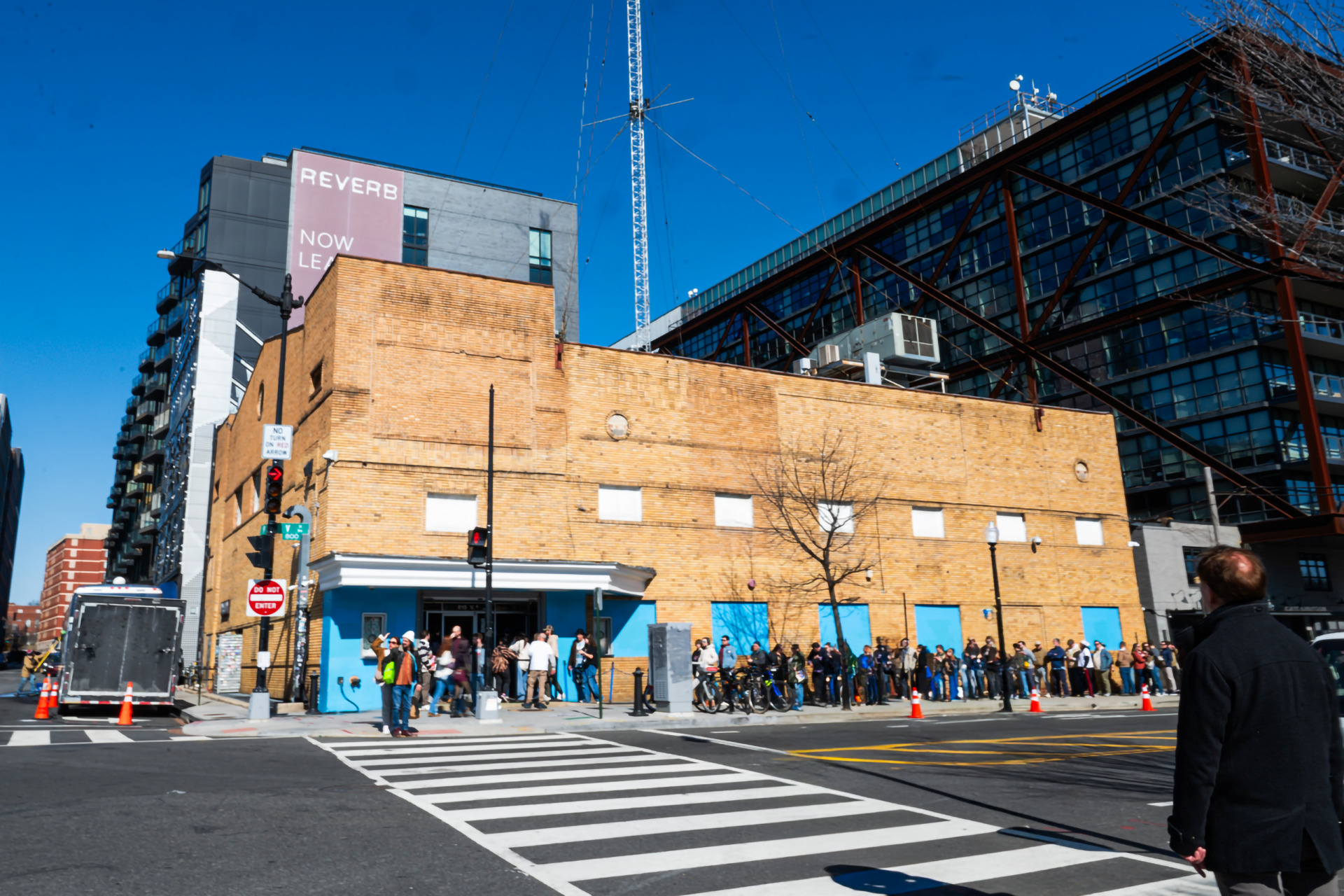
Live Nation remains active in the market, promoting major shows at Capital One Arena, Northwest Stadium and Nationals Park, while owning and/or operating venues including The Fillmore in Silver Spring, Jiffy Lube Live, the historic Warner Theater in downtown D.C. and The Theater at MGM National Harbor in Maryland. I.M.P. is the city’s independent music promoter powerhouse, co-founded by Seth Hurwitz and Rich Heinecke in 1979, and today dominates much of the D.C. market below the arena level with an impressive and vertically integrated venue portfolio.
“We believe that we do the best job to set a band up for their next play,” says Hurwitz. “We like being involved from the beginning. … I concentrate on what we have, and we’re doing well on all the levels that we operate on.”
I.M.P. venues include the iconic 9:30 Club at 1,200 capacity, which, according to 2025 Pollstar Boxoffice Reports for the DMV, was the city’s top-grossing club in the 1,000-1,500 range, bringing in $13.3 million on 392K tickets. It is consistently among the top clubs in the world. The Lincoln Theatre, also operated by I.M.P., with a 1,225 capacity, comes in at No. 3 (after The Howard Theatre) in the same venue range, grossing $7.4 million on 149K tickets.
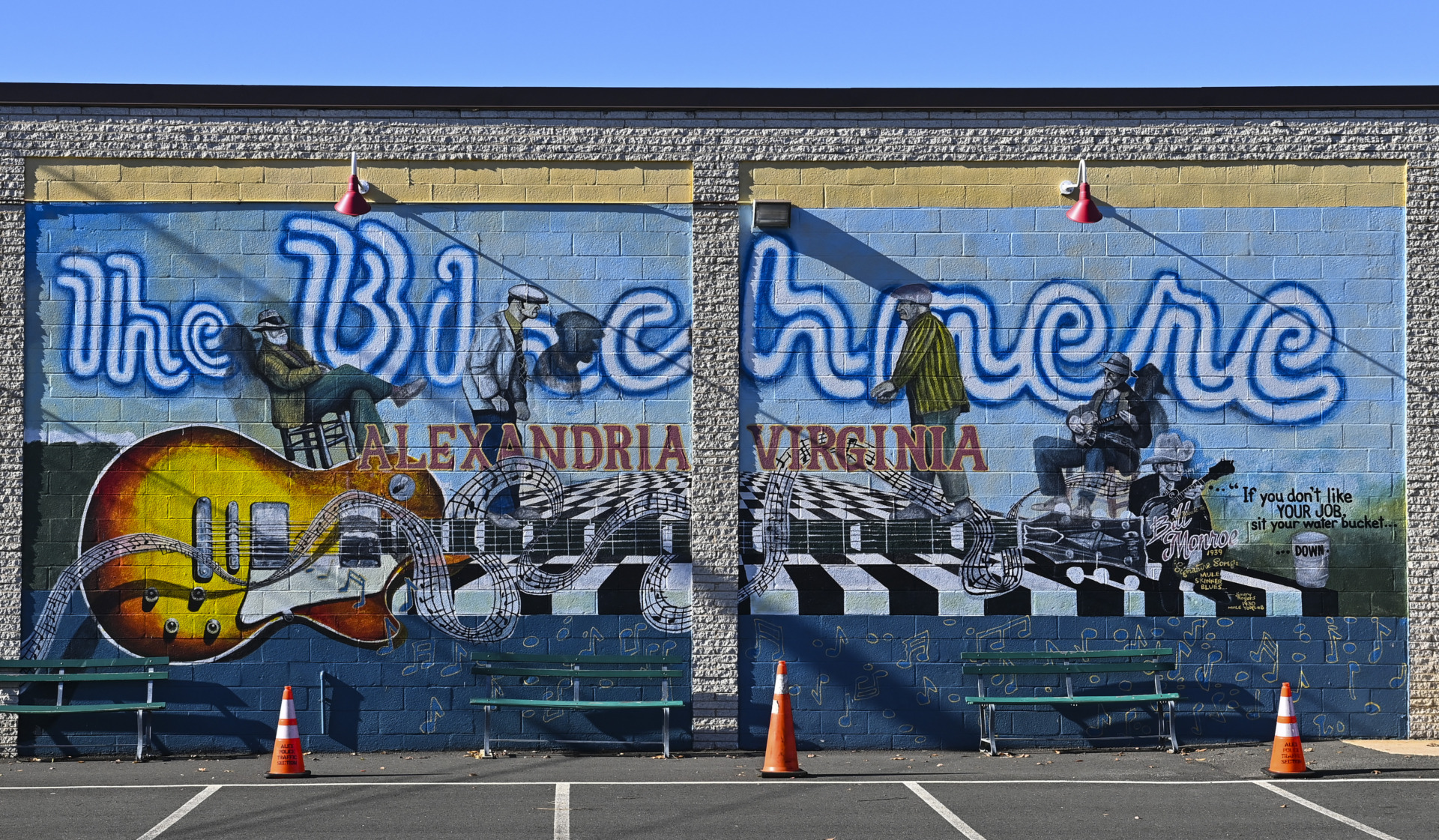
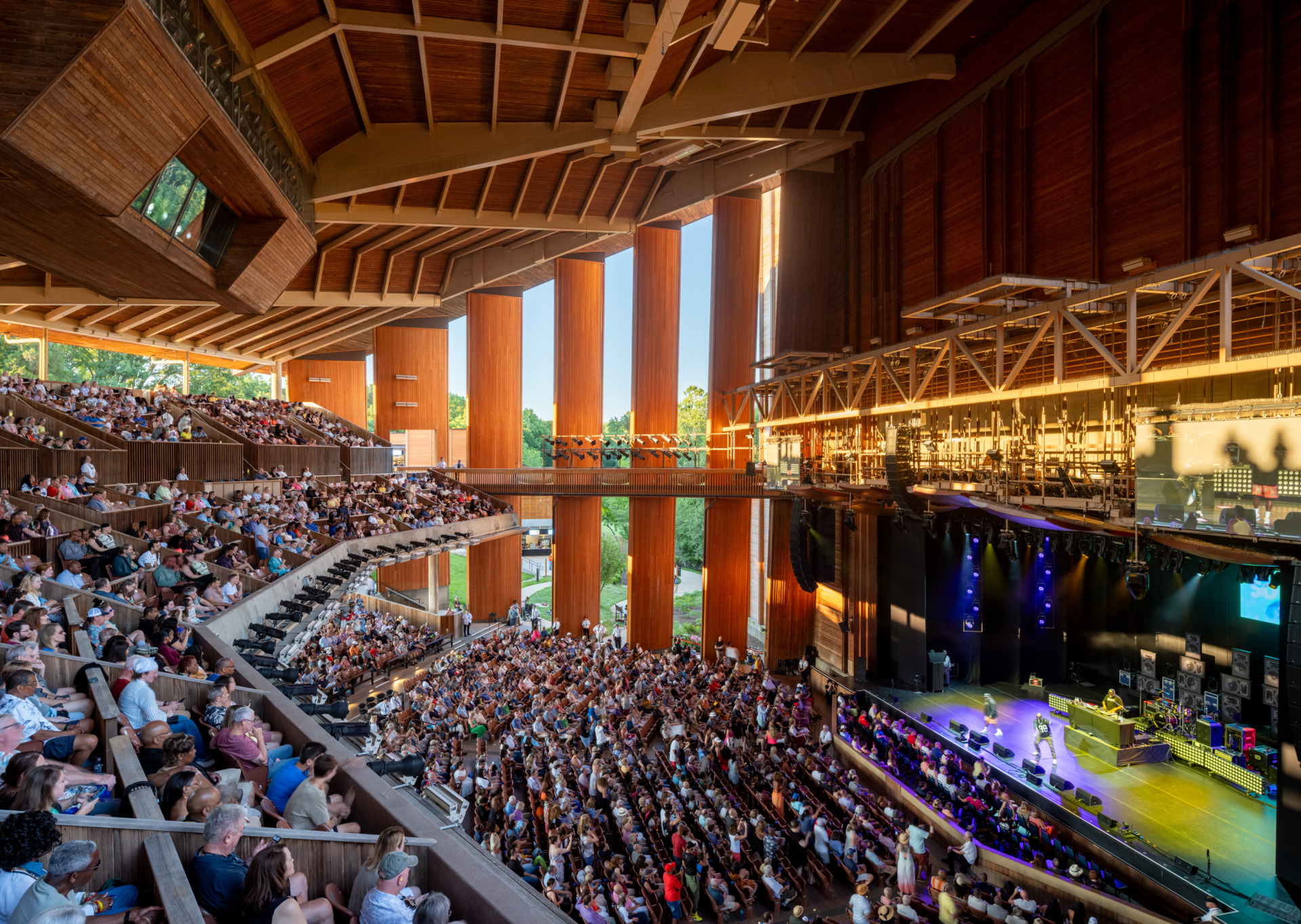
The Anthem, I.M.P.’s 6,000-capacity theater in Southwest, is No. 1 in the 5,001-10K venue category, grossing $50.4 million on 744,000 tickets. Merriweather Post Pavilion, a 19,319-capacity room located in Columbia, Maryland, is the second-highest-grossing building in the 15,001-30,000 capacity category, grossing $43.5 million on 441,000 tickets, according to Pollstar’s 2025 Boxoffice Reports for the DMV. Meanwhile, The Atlantis, the 450-capacity room I.M.P. opened in 2023, is No. 2 in the 750-or-less category, behind Alexandria, Virginia’s Birchmere.
Speaking with Jen Bell, I.M.P. co-head of booking, who oversees the 9:30 Club and Lincoln Theatre and formerly worked as an agent at APA before moving to D.C., the music market here is one of the best in the country.
“When I was an agent in L.A., you think of the top markets for live entertainment and you think L.A., New York, Nashville. But I always knew, and everybody in the industry always knew, that D.C. is a force, a power player in the concert industry, in the live entertainment space with some of the best and one of the biggest collections of indie promoters.”
While I.M.P. may be the preeminent independent D.C. promoter, it doesn’t mean there isn’t a dynamic and competitive market. Union Stage Presents, founded by the Brindley Brothers in 2001 with Jammin Java in Vienna, Virginia, has since expanded its operations to include Union Stage, Pearl Street Warehouse, the historic Howard Theatre, The Miracle Theater and The Capitol Turnaround. The promotions company is also promoting the Jason Aldean and My Chemical Romance shows at Nationals Park.
Elsewhere, Club Glow, an electronic music promoter, operates venues including Echostage, a 3,000-capacity space which, according to Pollstar Boxoffice Reports, is the No. 1 club in the 2,500-5,000 range, grossing $2.3 million on 35,559 tickets. Club Glow also books Soundcheck and has its own festival. In 2020, Club Glow was acquired by Insomniac, owned by Live Nation.
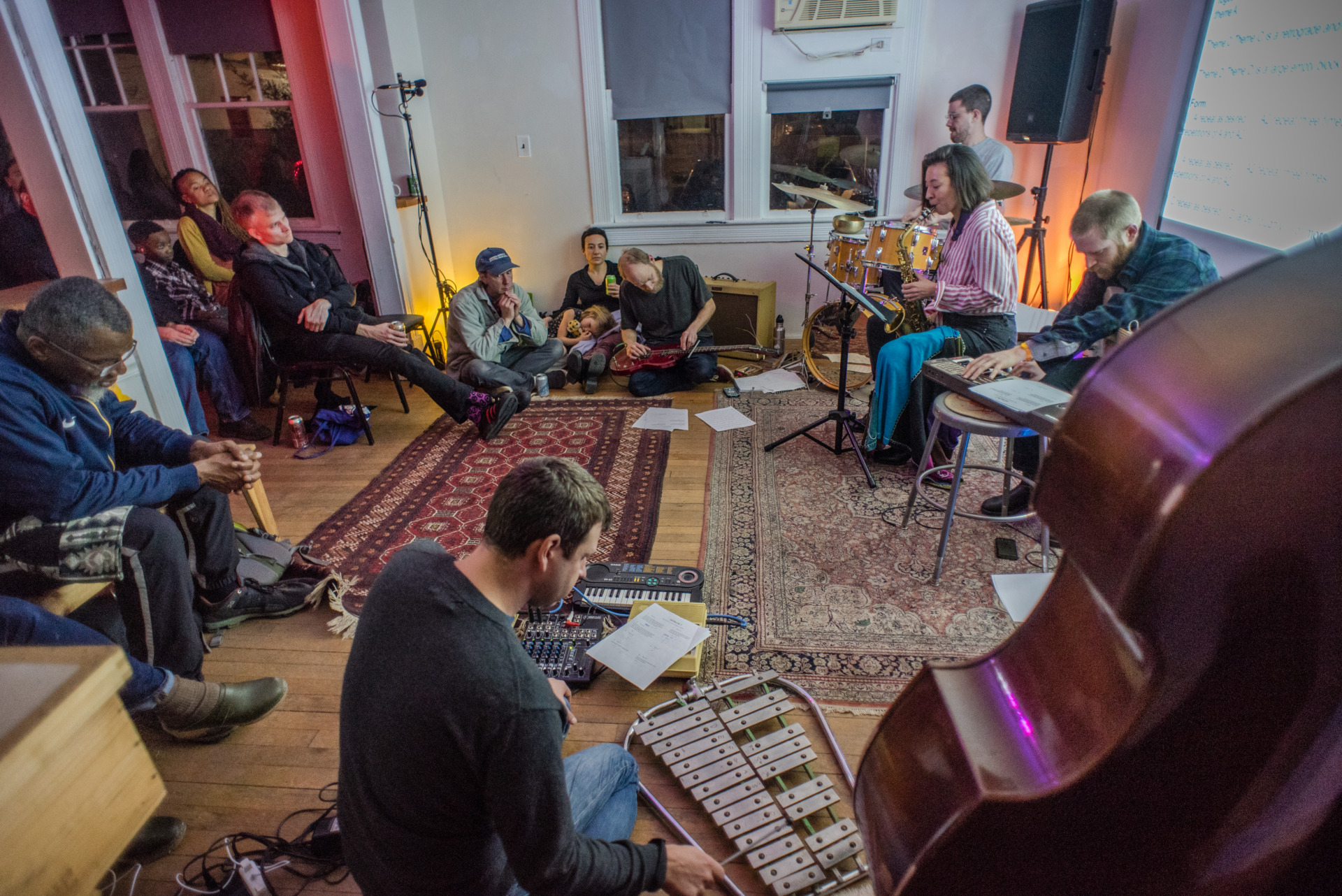
Other clubs in the D.C. area include Songbyrd Music House, DC9, The Black Cat, The Birchmere, and Blues Alley. There are also many off-the-grid venues, including Rhizome, a noncommercial community arts space in Takoma Park; Hells Bottom VFW, also in Takoma Park; and Hank Dietle’s Tavern, a roadhouse in Rockville, Maryland, featuring roots and Americana music dating back to 1916, among others.
Speaking with several D.C. area club promoters, it’s clear the market for smaller buildings is uneven. “People are being more careful with their money,” says Michael Jaworek, longtime promoter out of Alexandria, VA’s Birchmere, which is something of hallowed ground in the DMV dating back to 1966 and hosting legendary musicians including Johnny Cash, Ray Charles, B.B. King, Dave Matthews and Linda Ronstadt among many others. “That means I’m going to see show A because I really have to see that show, but maybe I’m not going to see B because we saw that artist last year or two years ago, and I don’t need to see them as much as I do show A. So there are artists who are touring, and coming through markets once or even twice a year with diminishing sales because the public is going to the white hot shows of whatever genre and maybe saying, “Hmm, I think I’ll pass on so-and-so till the next time.”
“It’s really unpredictable,” says Dante Ferrando, co-owner of the Black Cat, a much beloved and local-centric club off D.C.’s 14th Street corridor dating back to 1993. “Lately, in the last couple of years, basically post-pandemic, things have been bouncing around in hard to predict ways. What it’s sort of settled on for the last two years is slow seasons are really really awful. Dead of winter, dead of summer, nobody’s here. Government’s out. People are all gone. You can have a show that’s worth 300 people and you’re going to be lucky that 200 people show up. OIne-third of your customer base is not in town and are not coming to the show.” Ferrando notes that the Black Cat is configurable to either a 550 capacity or 800 capacity.
D.C.’s theater market drips with history. Ford’s Theatre, which opened in 1863, is where President Lincoln was assassinated by John Wilkes Booth in April 1865. Today, it is a national historic site offering guided tours. The Howard Theatre, which opened in 1910, was the first and largest major theater built for “African-American entertainment,” anchoring D.C.’s historic U Street corridor—widely known as “Black Broadway.” Other historic venues include The National Theatre (1835), Lincoln Theatre (1922) and the Warner Theatre (1924). The 9:30 Club is housed in the former WUST Radio Music Hall (1947), which was once co-owned by D.C.-native Duke Ellington.
The DMV’s music is similarly rich and known globally for two genres: Go-Go music, which features heavily percussive, extended call-and-response funk music, pioneered in the mid-’70s by the great Chuck Brown, a.k.a. The Godfather of Go-Go; and D.C. hardcore, which artists like The Bad Brains and Ian MacKaye of Minor Threat, Fugazi and Dischord Records are best known for.
While those may be D.C.’s best-known music formats, the area has nurtured famed artists from soul, R&B, hip-hop, rock, jazz, country, blues, roots and other formats. D.C.-area luminaries include Marvin Gaye, Duke Ellington, Hot Tuna and Jefferson Airplane’s Jorma Kaukonen and Jack Casady, Roberta Flack, Shirley Horn, Danny Gatton, Billy Hancock, Nighthawks, Nils Lofgren, Tina Weymouth, John Fahey, The Slickee Boys, Velocity Girl, Henry Rollins, E.U., Scream, Dave Grohl, Maggie Rogers, Wale, Ari Lennox, Jawbox, Ex Hex, Deep Dish, Thievery Corporation, Rostam, Nation of Ulysses, Ted Leo and DJ Spooky, among many others.
Washington, D.C. is also host to major festivals including Project Glow, Broccoli City Festival, M3 Rock Festival, Afro Plus Fest, Home Rule Music Festival, DC JazzFest, Go-Go Meets Afro Beats Festival and The All Things Go Festival, which takes place at Merriweather Post Pavilion. While the former RFK site hosted many festivals, the Harris Blitzer team says it will continue hosting festivals on the new RFK Campus.
Another important part of the DMV’s venue mix is Vienna, VA’s Wolf Trap, the country’s “National Park for Music,” which operates as a public-private partnership with the non-profit Wolf Trap Foundation for the Performing Arts. That operational structure allows for relatively low ticket prices and a mandate to book a wide variety of music from the National Symphony Orchestra to Diana Ross, to St. Vincent and Orville Peck to a John Prine tribute and The Wolf Trap Opera performing “Tosca” to Sting and Erykah Badu and so much else. And the Northern VA environs—as well as the rest of the DMV—supports it all.
“The growth in population out here west of the city continues to be explosive,” says Arvind Manocha, President and CEO of the Wolf Trap Foundation, about the depth of the Northern Virginia market. “I’ve lived here 15 years and you can see it everywhere you look. It’s creating many markets within the DMV. If you ask people 10, 15 years ago, and certainly 20, 25 years ago, they would talk a little bit more about a monolithic D.C. market…You’re seeing more of a local pull because there’s enough people to populate these events in a closer vicinity. You’re not necessarily pulling from an hour, an hour and a half away.
Perhaps no venue more embodies the D.C. live music ethos than Fort Reno, a former Civil War fort located in the northwest neighborhood of Tenleytown that in 1968 started a free concert series as part of the National Park Service’s “Summer in the Parks” initiative. Ever since, the summer series has been a platform to showcase emerging artists that have included The Slickee Boys, Fugazi, Ted Leo, Velocity Girl, Jawbox and Trans Am, among many others.
Perhaps not considered often enough are the fans in D.C., who, as Mark Noone of the Slickee Boys noted, are some of the best in the world.
“The D.C. crowds are really good,” he says. “So many bands come to D.C. to start their tour, you know the Beatles. They start their tours here because the crowds are good, they’re appreciative, and it’s a good place to kick off your tour with a positive show and that’s unique to D.C.”
FREE
 Daily Pulse
Subscribe
 Daily Pulse
Subscribe