
Country Roads Lead Him Home: Brandon Flowers Explores Uncharted Territory To Tell His Story
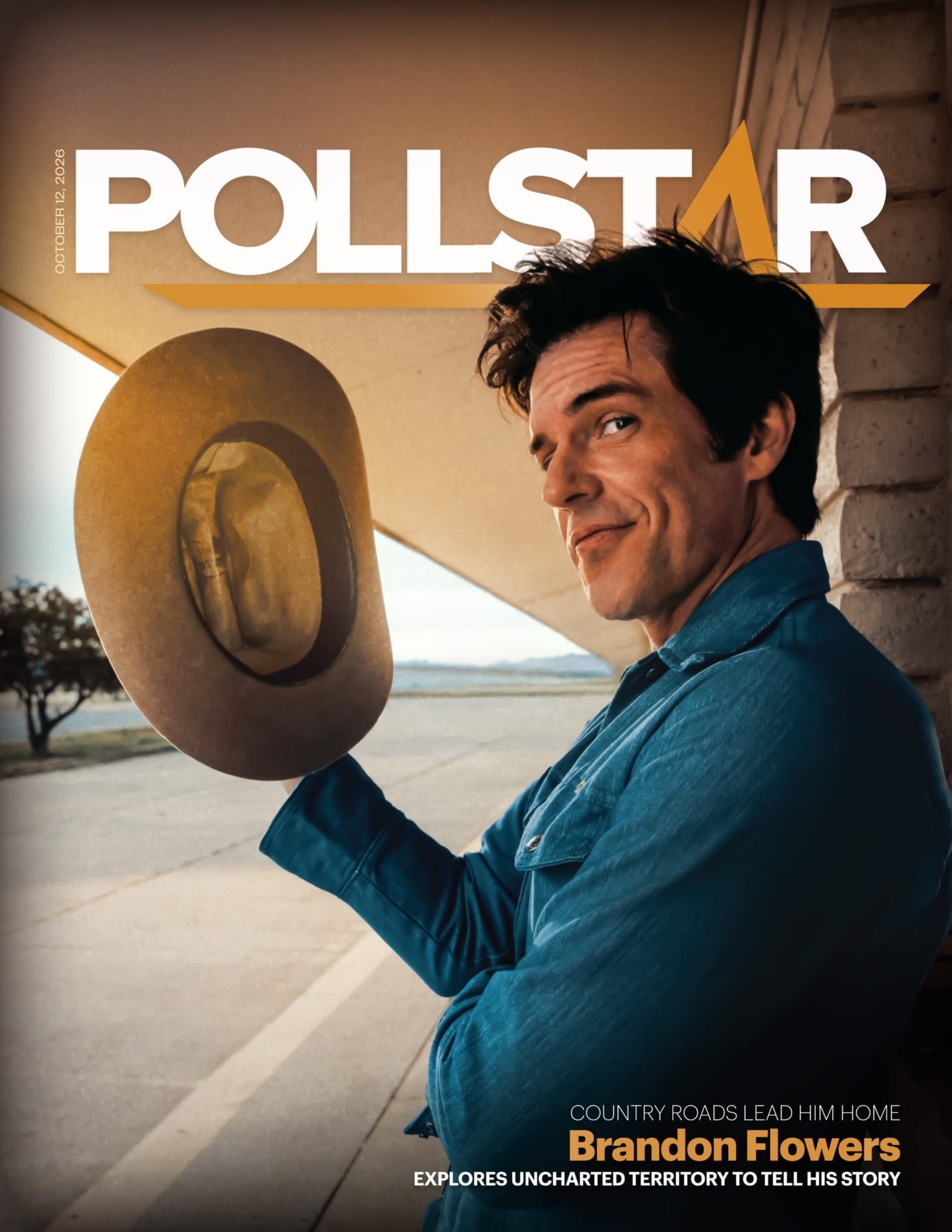
Fans of The Killers are well aware of Brandon Flowers’ eclectic taste and ambition. After the band’s post-punk, new wave debut Hot Fuss in 2004, widely considered one of the decade’s defining albums, The Killers followed up with Sam’s Town, a heartland rock, Springsteen-esque tribute to their hometown of Las Vegas that details their journey to fame.
For years, Flowers and his bandmates have worn their inspirations on their sleeves and channeled David Bowie, U2, Duran Duran, Tom Petty, Eagles, Johnny Cash and just about every American rock icon across their seven albums.
So, it should be no surprise to anybody when Flowers pivoted from the sounds that defined the ’80s and dug deeper into genres that best convey the American stories he wanted to share.
The 45-year-old singer-songwriter took the country roads to take him home, literally and figuratively, in his third solo album Thrasher, which is stripped of the Las Vegas glam and grime for a soulful exploration of his childhood in Nephi, Utah, experimenting with the country and Americana sounds that his father often listened to in the car. There’s even a bit of mariachi to make it an authentic Western listening experience.
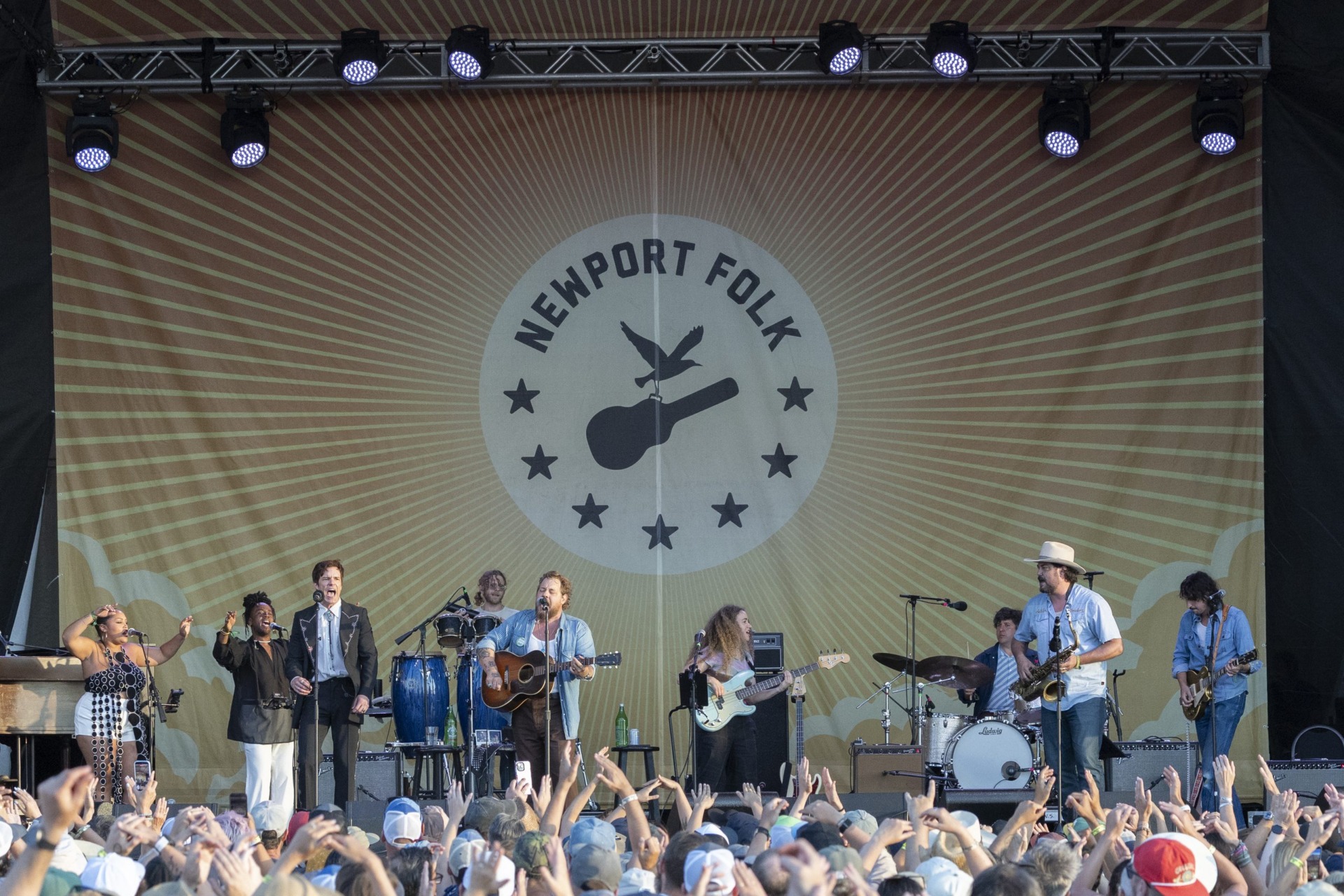
It’s always a gamble when an artist steps into new territory, but in Flowers’ case, the Stetson and boots fit, and he respected the process enough to record the new LP in Nashville. Flowers inflects a baritone vocal style to suit the music without betraying his usual emotive tenor, delivering a genuine Americana sound that even fans at the Newport Folk Festival in Rhode Island appreciated.
Flowers promoted his acclaimed record by hitting the road worldwide, performing in more intimate venues such as the 9:30 Club in Washington, D.C., where his sold-out show grossed $90,000 from 1,200 tickets, according to Pollstar Boxoffice. Before hitting the road, Flowers spoke to Pollstar about the concept of Thrasher, American resilience and the venues that have stayed with him.
Pollstar: What is it about country and folk that you felt would pair well with what you were writing for Thrasher?
Brandon Flowers: A lot of storytelling originated in music with this type of music. And I had these characters and these stories that I had to tell that were from my upbringing in a rural town in Utah. And it was just the perfect skin for them to live in.
It really seems like channeling those genres helped you tell stories that aren’t just yours but something broader, an American story. What’s your personal history with country music? I read that your dad listened to it.
That’s right. I was on a strict diet of bands from Manchester, England. But it was funny. That was the road that I chose when I was with my parents. My father, obviously, wasn’t so into The Smiths and New Order. He was listening to Willie [Nelson] and Waylon [Jennings] and the boys. John Conlee was a big one for him, and even Ray Charles, who’s, I think, country adjacent and people like that.
So, it was always there, and I had gained a real appreciation for it. I would learn those songs, and I knew the words, and I knew the stories, but it just wasn’t something that I had chosen. I just didn’t fully appreciate it until I started getting older and having some life experience. It’s amazing how you mentioned the connection that it can have. The more personal I get, I’m always surprised to see how much that resonates with a lot of people. That’s an interesting serendipitous thing for me that’s come along with writing country music.
I must say that none of the sounds felt forced. Thrasher conveys a longing for something that we can see but is somehow unattainable, evoking sadness as well as a sense of hope in understanding that grief and pain, if that makes sense. I’m not sure if that was your intention. What can you tell me about the process of writing this album?
I believe that there’s an American people’s resilience. We’re optimistic. In my, it’s not a limited amount of traveling, but just as one person with my observations, when I go places, we’re different. We’re a different breed of people. We face things in a different way, and it’s beautiful. It’s something that I’m so grateful for, that heritage. That doesn’t mean that we live in a perfect place, but we do it in spite of not living in a perfect place. That is why it’s amazing. I’m not talking about exceptionalism and all that, but we are different. I’m so thankful to be from here.
And if there is a little bit of a grief, like you talked about, there are things that we’re maybe getting away from, even partly just the generation of people that are going. My dad was born in 1944, and he’s not got much time left. My mom has been gone for quite a long time now. And you want to hold on to the best parts of them and use that as a strength as you move forward into the future. I think you picked up on that.
You recently performed this music at the Newport Folk Festival, which is an honest crowd because they buy their tickets before a lineup is even announced. How was that experience?
That was an interesting one. It was not only the crowd, but the atmosphere was so different because I grew up playing in festivals where bands were sort of like we’re gangs, like we were rivals. “Who’s headlining? Should they be? Should I be? Who’s better? Who got the bigger crowd or the best response?” When you’re backstage at Newport, it’s like, “Who’s gonna sing with me? Who wants to do this? I would like to sing with you.” It’s such a new territory for me. I had to really get in the right frame of mind to do that, but I loved it. I wish that more festivals were like that. As you said, those tickets are bought regardless of who is on the bill, so there’s going to be people who aren’t fans, and there’s going to be people who’ve never heard of you. I was really lucky. I had a great crowd, and I’m not accustomed to playing in the daylight, but I persevered. I just had so much fun. I sang with Lucy Dacus and sang with Nathaniel Rateliff. The guys from Dawes came up and sang with me. David Rawlings came on stage and sang. It was really cool.
That sounds great.
John C. Reilly came up!
No way.
Yeah. We did “The Road Goes On And On,” that Robert Earl Keen Song. We all traded verses, and it was just such a fun couple of days.
Going into uncharted territory in music isn’t entirely new for The Killers, so it’s not much of a stretch for you to embark on this journey and make your way to Newport Folk Festival. How does your approach to a solo effort differ from a Killers album?
I think for better or for worse, my voice comes through a little bit more on the solo endeavors. I don’t necessarily feel like I really have a Brandon side and a Killers side. A lot of it had to do with the amount of songs that I was writing, which really is a blessing when that happens. The only issue is, for a band, they’re not so thrilled if I come to the table with 30 songs. This was a great outlet that I’ve been able to carve out along the way. And I’m really lucky that I’m able to do both things.
It’s no easy effort for any artist to go on the road these days in the competitive touring business. It’s not just about playing the hits these days. You have to give fans a good reason to come out. What are you hoping to accomplish with your tour?
I think that you touched on it with telling a story. One of my favorite aspects of country’s tradition is the storytelling—not just in the songs but around the songs. I don’t have a lot of opportunity to do that in a stadium or in an arena. It just doesn’t lend itself to story time very well. I really wanted to be in a place where I could do that, try that out and maybe give more insight into where a song comes from or what it’s about. I’m looking forward to exploring that.
Is there a specific experience or artist you saw that unlocked something within you and inspired you to tell your story a specific way on the road?
I just said how it’s impossible to do. It’s not impossible, but Bruce Springsteen, going back to him, is able to sometimes shrink those big rooms and make them feel a little bit more personal. That’s obviously something that I really admire about him. And then, it’s not something I’ve seen live, but obviously just watching old videos of John Prine and people like that. The way that he handles his storytelling in between songs is something I really admire and love.
As frontman of one of the biggest bands in the world, you’ve had plenty of experience performing in rooms of all sizes. I recently spoke with [The Killers drummer] Ronnie [Vannucci Jr.] about the band’s early days, and it was amazing to hear about some of the Vegas venues you guys played. What places have really stayed with you over time?
It sometimes can just be the shape of a room. I love the history of Madison Square Garden, but the shape of Barclays Center down the road is special. They’re both great rooms, but it’s just different. With modern engineering and the layout of that room, it’s tighter, and it feels almost smaller, like you’re a little bit more together with the people in a room. As arenas go, those just came to mind as something I remember.
It can also be about a crowd. It can be about a Scottish field somewhere or the fervor that we get in Mexico, whether it’s in a club or a stadium.
The touring business has evolved greatly since The Killers broke onto the scene, especially post-COVID. It has its ebbs and flows. As an artist, how have you navigated these changes in the industry?
We have just been incredibly lucky. We got our foot in the door before any major changes happened. We grew this audience that has stuck with us and has even grown with us over the years, so it’s not lost on me that that’s a real blessing, something that we cherish because it seems like such a difficult atmosphere right now for a young band. I don’t have the answer. I just know that we did it. We were one of the last to do it that old-fashioned way and be able to retain these fans. I feel really lucky.
There are more tools than ever to break through and get exposure with streaming and social media, and it’s also led to new sounds. How do you feel about the state of rock, and do you feel like it’s in a better place than when you started?
No. It’s almost dying. We’re living in a post-rock world. I don’t think it’s going to ever die, but we’re past it. You talk about how easy it is—I think it’s too easy to make content and to make music, and there’s just not enough self-reflection going on or enough growth happening before we’re trying to put ourselves out there. You’ve got to hone what you’re doing and make sure that it’s good enough, get out there and play, and know what it feels like to have something be great or have something suck instead of just releasing things. That would be one thought about it.
Reading some past interviews, you certainly have admitted to having a competitive edge, but not in a toxic way. You clearly want to do better, which is why you and The Killers have pushed yourselves into other genres, which is something many can appreciate.
A little bit of competition never hurt anybody. There’s never a winner, but of course you should be aware of what other people are doing. I for sure have been inspired and had a fire lit underneath me or a kick in the pants because of somebody writing a great song, and I look forward to that.
After going down the country route, where does the road lead? How do you build on Thrasher?
There’s a follow-up record. We made two records in Nashville. We’re putting the feelers out there and doing these shows and seeing how they go. It’s just taking it one day at a time.
I hear you. I’ll be waiting for your mariachi record.
[Laughs] You know, we recorded everything in Nashville, but for the mariachi, we had to go to L.A. because it doesn’t compare to Nashville.
Note: This interview has been edited for clarity.
FREE
 Daily Pulse
Subscribe
 Daily Pulse
Subscribe