
Amsterdam Dance Event Kicks Off: A Look At 30 Years Of ADE With MD Jan-Willem Van de Ven
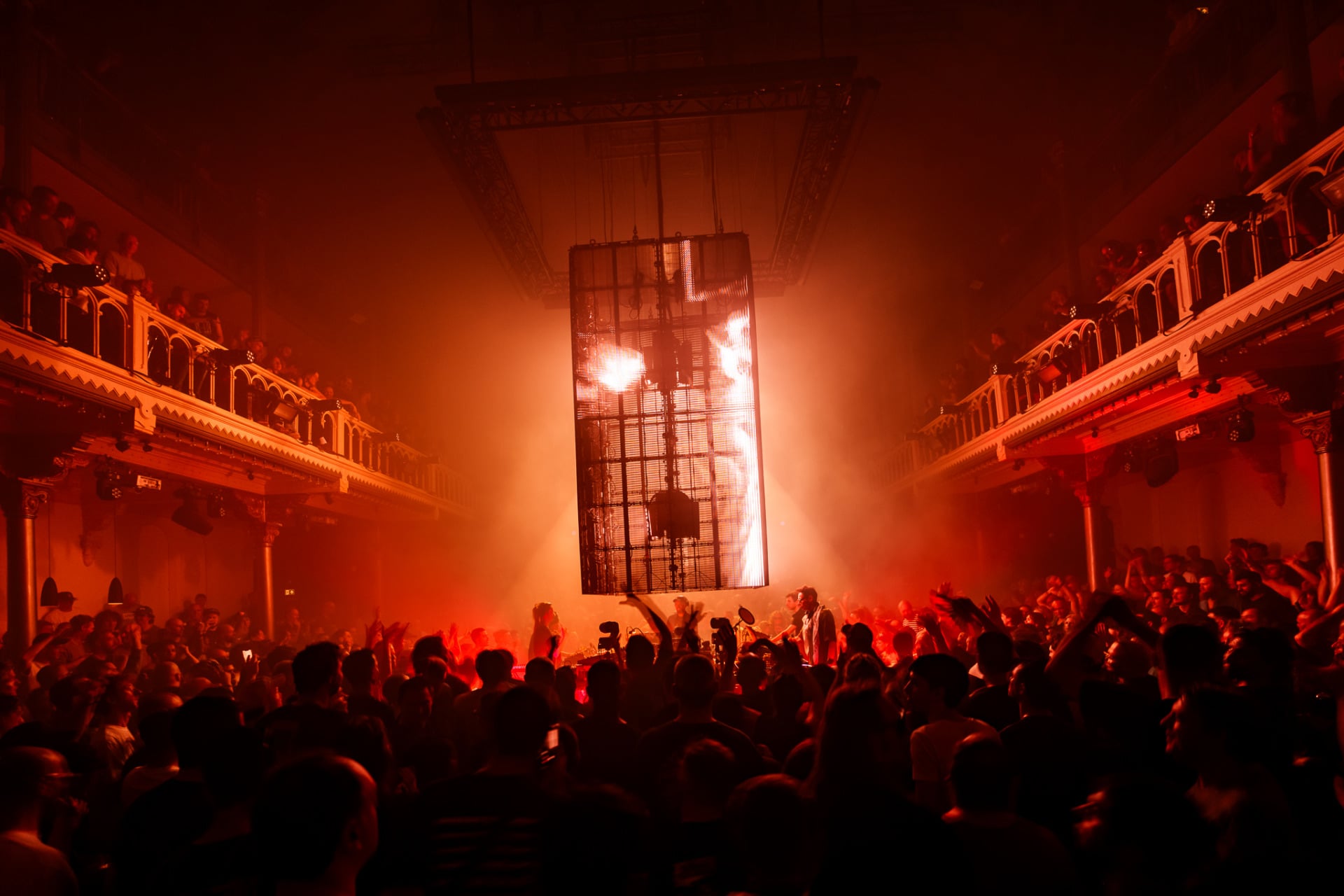
Amsterdam Dance Event (ADE), which kicks off its 30th anniversary edition today, is one of the world’s most impactful gatherings of the global electronic music scene. It has also become so much more, as its monumental program proves each year – a true cultural landmark that expands the perception and definition of electronic music.
In 2025, ADE’s multidiciplinary five-day program featured some 1,200 events that took over more than 300 locations in the city – from clubs to warehouses all the way up to Johan Cruijjf Stadium, as well as some unconventional venues like churches, museums, boats, or trams. This year, the acquarium of Amsterdam’s zoo Artis and Amsterdam City Hall join the mix.
Last year’s edition attracted a record number 600,000 visitors and 11,000 music professionals, and organizers expect at least the same amount for the big anniversary, which takes over the Dutch capital Oct. 21-25. More than 1,500 artists and DJs has confirmed their participation, including some of the biggest names in electonic music like 2manydjs, Artbat, Boris Brechja, David Guetta, Eric Prydz, Paul Kalkbrenner, I Hate Models, guest of honor Jean-Michel Jarre, Maceo Plex, Oliver Heldens, Paul van Dyk, Seth Troxler, to name just the very tip of the iceberg in alphabetical order.
To make sense of it all, Pollstar sat down with the event’s managing director Jan-Willem van de Ven, who first joined the organization in 2009 as an intern while studying at university, and got offered the job as Head of ADE Festival in 2012.
In 2017, van de Ven stepped away to focus on his newborn child, but returned when the supervisory board of ADE called and asked him to come back in 2019. For the next four years, he co-directed the event alongside former ADE CEO Meindert Kennis, and became sole managing director of ADE when Kennis left in 2024.

It’s impossible to cover every aspect that makes up the “black and yellow monster” (van de Ven) that is ADE in one conversation. But if there’s one individual capable of getting close, it’s van de Ven.
Dance culture began in basements and grew into a global phenomenon shaped by countless scenes, communities, and individuals. The same holds true for ADE, which grew alongside the culture. Long-time ADE director Richard Zijlma, who ran the festival between 1999 and 2018, had the vision to let the dance community shape the festival. He knew that if he created a place where the relevant electronic music industry gathered, he didn’t also have to also create a festival from scratch, but could simply collaborate with the city’s venues, who would host all the talent already in town out of their own accord.
According to van de Ven, “that’s still the case today – we’re not the ones programming the festival, we give our stage to programmers, artists, creatives, and let them curate the program.ADE is built together. Our greatest achievement is that after 30 years, so many different people, partners, stakeholders, artists, and communities still genuinely want to be part of ADE.”
Another key individual in the early days of ADE was Anna Knaup, founder of Anna Agency, who shaped ADE into the format it still has today: a conference by day and festival by night. She knew back in 1996 that the classic trade fair format featuring market stalls had no future, and moved the entire conference into Felix Meritis, a building of the Dutch intellectual society by the same name, which remains the conference’s beautiful hub to this day. As an agent who traveled the world with her acts, Knaup was also intsrumental in spreading the word about this new dance event in Amsterdam internationally.
Today, people visit ADE from more than 150 countries, but the core festival and conference are still organized in the same way. Under van de Ven’s auspices, the team created extensions where they made sense, like introducing a talent development program dubbed ADE Lab. “We also started ADE Arts & Culture, where electronic music collides with other genres and art forms,” he explains.
Two examples of this year take place at the Centrale Markthal this year, one of the biggest venues in Amsterdam, where Dutch contemporary artist and composer Boris Acket is going to display his monumental kinetic light and fabric installation EINDER. On Oct. 21, the Dutch Royal Orchestra will perform two concerts of Beethoven’s Fifth Symphony with 70 musicians beneath this installation, followed by Amsterdam’s own Elias Maizan, who will give a rare live set with his band a day later.
“These kinds of events are being invented during ADE, and that’s the type of podium I want to create: where artists and audiences can be the ones developing this industry. It’s not just about festivals or club nights anymore, it’s also about creating new spaces where makers decide what’s next,” says van de Ven.
ADE’s Friends program comprises all those special, one-off events of all shapes and sizes that aren’t part of the core program but take place during the five festival days, like instore sessions, networking drinks, vinyl listening sessions, and much more, some of which are free to attend.
“I had a lot of time to rethink our strategy during COVID,” van de Ven recalls, “and it became clear to me that we had to find a suitable place for all these side shows, and the collective input from the city. We shouldn’t be neglecting or refusing anybody who wants to wear black and yellow during these days. So, we created ADE Friends, which is where all these these really cool, small and mostly free events are happening. It’s really working out nicely, and is the reason we’ve had events like a dance fore the elderly and the youth, or a events organized for refugees. These small events have no commercial value whatsoever, but being able to include so many different audiences in the ADE momentum really makes me happy. Just like it makes me happy to see 50,000 people at Johann Cruijff Arena. After all, they enable us to do what we do.”
Given the rich program, attending ADE can seem overwhelming. But getting lost in it all, and going with the flow, is part of the experience, says van de Ven, who recommends that first-time visitors “pinpoint one thing you really want to see every day across the five days, and go with the flow the rest of the time, because ADE is also about spontaneous interactions.”
ADE 30 also marks the reopening of a true dance temple, the iconic Gashouder, which had been closed for renovations since the beginning of last year. It will open Oct. 21, with two performances of “Swan Lake remixed for ADE” by the Dutch National Ballet, the ISH Dance Collective and guest dancers from a variety of dance worlds, followed by a performance that brings together global music icon Armin van Buuren and hard house whizkid Benwal.

One of the topics that’ll be addressed during ADE Pro, the conference part of ADE, is of course AI. The electronic music scene has always embraced new technologies earlier than others and displayed a real knack for incorporating them into their business models. As Van de Ven points out, “the technological affinity is even in the name of the genre: electronic. This is indeed a genre that embraces new things the fastest, and probably the most efficiently. ADE is the platform for the industry to discuss whether AI is our friend or enemy, where the industry can look into opportunities as well as threats. Regardless of what people conclude, it only makes events like ADE more relevant, because the more digital the world becomes, the more valuable it is to come together as human beings and meet in person. Nowadays, you can look up everything everywhere, everything around you is digital. But creating valuable connections and experiences, and being able to look people in the eye has become so much more relevant. And that’s specifically what ADE does, bringing people together and creating real-life physical moments.”
Most of those moments take place on the dancefloor. It’s one of the things that hasn’t changed over the past 30 years: the dancefloor is still the place where people meet, where they can be themselves and get lost in the music alonside hundreds of strangers who become family for the duration of the show – and maybe friends for life. According to Van de Ven, “it’s the place where you can be free of any assumptions of who you are. You can truly discover yourself and other people, discover forms of art, discover music. I’d suggest that everyone take the journey of night culture sometimes, not just young people, also older people. You will get to be yourself, and therefore understand yourself much better. Nightlife culture has certainly made me much more aware of who I am. It may sound a bit pretentious, but I really do feel like night culture can contribute to raising your consciousness.”

Successfully staging an event like ADE, which takes over the entire city, is only possible if the local politicians are on board, and thankfully they are in Amsterdam. From licensing the many events that want to be part of ADE, to the cooperation with the police and fire departments, van de Ven says “the city of Amsterdam is one of our biggest stakeholders, and I’m really proud of that.”
ADE also receives some public funding, but that amount is nowhere near what it generates from commercial funding and ticket sales. [Dutch copyright organization] Buma Stemra is still involved in the event as a founding partner, but ADE is run as an independent, cultural, non-profit foundation. It’s the structure that best allows van de Ven and his team to execute their goal, which is “to uplift our industry and to make it bigger, to nurture talent and help them grow, while still being the biggest podium for electronic music culture in in the world. That’s our mission. In these times when corporations are taking over, it’s really nice to be able to make independent decisions based on this mission. It’s also why I feel like we are ready for the upcoming 30 years. We’re a small independent foundation around six to seven people full time, and around 80 people on a freelance basis for around half the year. I used to think of this as a weakness, but nowadays I feel like it’s a proper strength, because we can decide ourselves how to grow, if we even want to grow, and where to go next. That’s freedom.”
FREE
 Daily Pulse
Subscribe
 Daily Pulse
Subscribe