
La Nueva Hoya De Jalisco: Coliseo GNP Seguros Cements Guadalajara As No. 2 Mexican Market
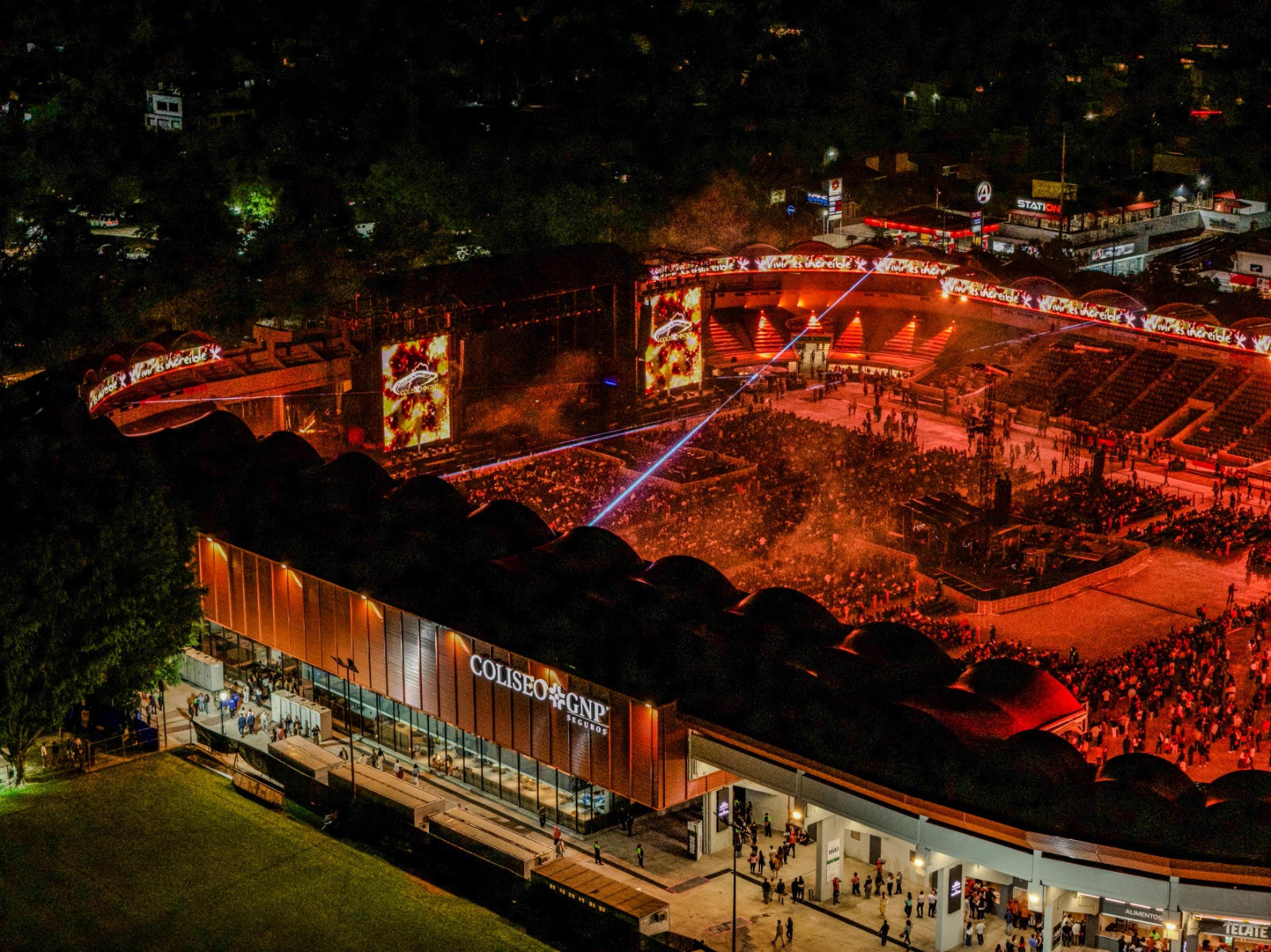
Guadalajara, the birthplace of mariachi and tequila, is on its way to earning another well-deserved title: a live entertainment mecca.
The capital of Jalisco has long been a hotbed of talent—Maná, Peso Pluma, Paty Cantú, Alejandro Fernández, and his legendary father, Vicente Fernández, to name a few—and its rapid development is closing the gap with Mexico.
OCESA, Mexico’s largest promoter, is betting on Guadalajara’s growth as a live music hub with its latest venture: Coliseo GNP Seguros. The Latin entertainment giant, mostly owned by Live Nation, struck a deal with the Universidad Autónoma de Guadalajara, a private university, and reportedly invested 400 million pesos (more than $21 million USD) to renovate Estadio 3 de Marzo, a soccer stadium on its campus.
Coliseo GNP Seguros debuted Sept. 22 with headliner Michael Bublé, ushering in a new era for the storied 55-year-old stadium, which hosted FIFA World Cup matches in 1986 and major acts such as Luis Miguel, Roger Waters, and Shakira.
The venue had been open for business and consistently hosted all kinds of acts, including Linkin Park in 2025, but it desperately needed a transformation.
Estadio 3 de Marzo’s final show was last November, with Keane and Phoenix, and it reopened as Coliseo GNP Seguros just 10 months later, with numbered seating, 66 modern suites offering premium experiences for groups of 18 and 30, new restrooms, and improved traffic flow for fans and production teams.
Lead architect Óscar Rodríguez was tasked with designing the project as a modern music venue while respecting university officials’ wish to preserve the stadium’s athletic origins.
“The idea—shared by us as architects, as well as by OCESA and the university—was to give the stadium a new look without losing its essence as a soccer stadium, of course,” Rodríguez said. “In fact, the stadium is set up for it. It is Coliseo GNP Seguros, but it is also equipped to continue hosting soccer matches.”
They built a base layer to strengthen the field’s foundation, plus a service ring around it to move objects without damaging the pitch. The stage was originally set directly on the field, but it has been updated to be more flexible. It can be shifted toward one end of the stadium, and a section of the stands had to be taken out to accommodate the setup.
“In terms of concerts, it means you can host one show today and another tomorrow … in a very quick succession,” Rodríguez said. “You couldn’t do that before.”
OCESA tasked Rodríguez with maximizing space focused on the fan and artist experience rather than increasing capacity. The experienced architect said he’s visited venues worldwide, especially in the U.S., and has seen a growing trend of creating spaces that encourage fans to socialize and spend more time at the venue.
Guadalajara music fans will notice these spaces at Coliseo GNP Seguros, especially at the main entrance, where fans can gather in a grassy area full of vendors and brand activations.
“People increasingly value comfort,” Rodríguez said. “That is very important. Maybe we could have fit 40,000 instead of 30,000, but that wasn’t the goal. The aim was to really improve the experience for guests and fans, making it more enjoyable and, well, longer while having fun.”
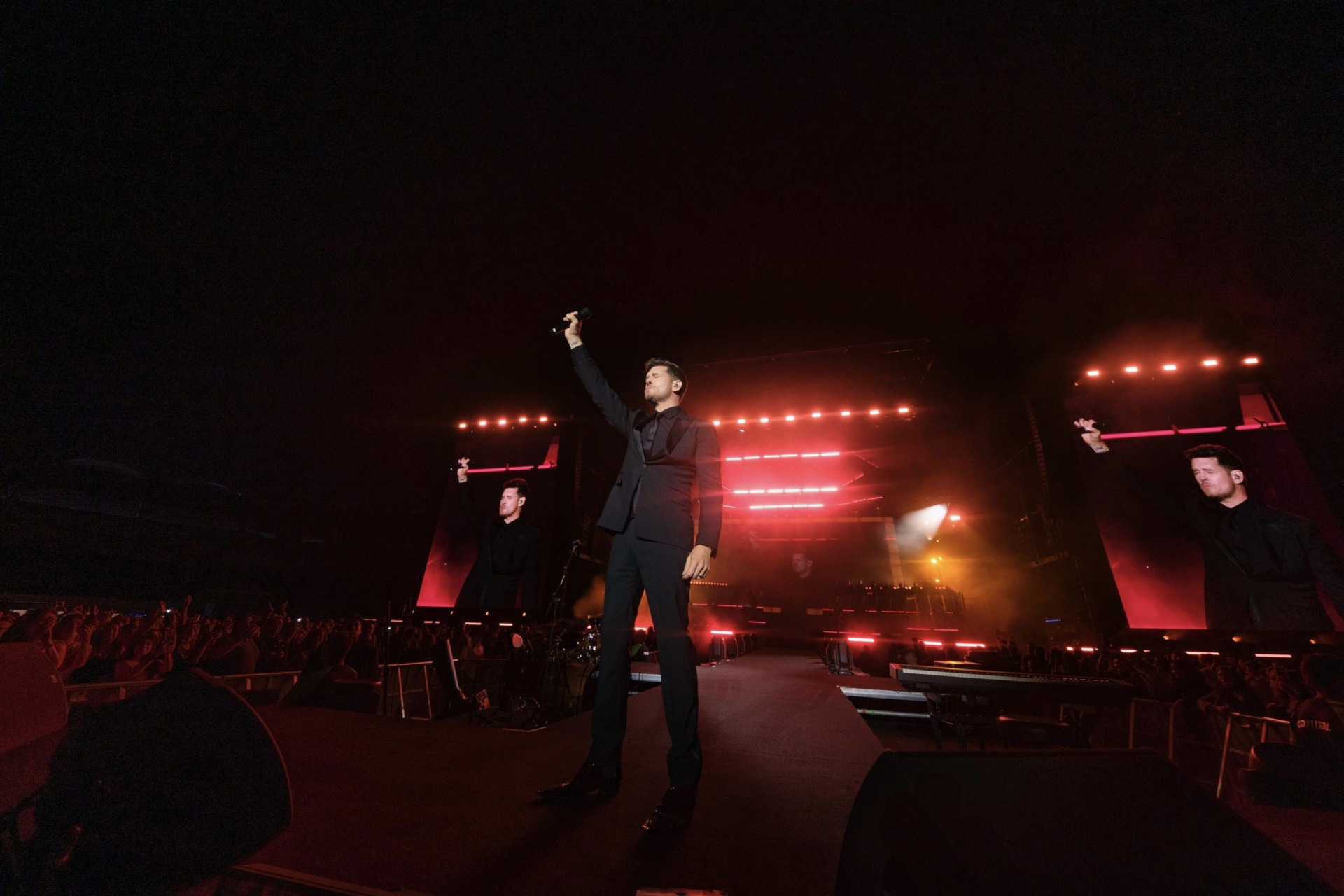
The opening of Coliseo GNP Seguros cements Guadalajara as Mexico’s No. 2 market, complementing a robust ecosystem that includes the soccer stadiums Estadio Akron and Estadio Jalisco, as well as the arenas Auditorio Telmex and Arena Guadalajara, which opened last year. It adds more dates to the Guadalajara metropolitan area, which has a population surpassing 5.6 million across eight municipalities, including Zapopan, where the renovated stadium is located.
What makes OCESA’s latest venue unique is that it manages to deliver an intimate experience in a stadium setting. Coliseo is less than 40 feet tall, and the farthest view is about 110 yards, features Memo Parra, OCESA’s director of events, believes are major selling points that will draw fans and arena acts looking to expand in Mexican cities outside the capital.
“It’s about giving due importance to the Mexican market. If artists are coming to Mexico, to the capital, why should they come to Guadalajara?” Parra said. “If you play Estadio GNP Seguros in Mexico City, which holds more than 60,000, you can sell 20,000-25,000 tickets in Guadalajara. It’s the perfect alternative for stadium-level acts to play Guadalajara in a venue this size and quality.
“The stadium allows for a configuration where the artist can perform for an ‘arena-sized’ crowd, and the venue still looks full,” Parra added. “ … The stadium doesn’t feel too vast, which is a huge advantage.”
It also comes at a perfect time for Guadalajara, which shone as one of Mexico’s three hosts during the recent FIFA World Cup. Footage of tourists, especially those from Korea, being embraced by locals during soccer’s biggest event went viral on social media and boosted visibility not only for Jalisco’s capital but for all of Mexico.
“[The opening of the venue following the World Cup] is pure coincidence. We had been trying to make this happen for years, and the timing was indeed a major coincidence,” Parra said. “But ultimately, it brings us back to the initial point: Mexico is one of the most important countries for the live music industry. That’s why it ranks as the second or third largest market for promoters, depending on the year and global circumstances, because the Mexican market is so significant.”
Mexico’s success as a host for the world’s largest sporting event could accelerate tourism, which contributes 8% to the country’s gross domestic product, contributing more than $30 billion, according to the National Institute of Statistics and Geography (INEGI). Live music can be a major driver of that business, especially when it features international acts.
In addition to having local acts such as Los Bukis, Panteón Rococó, Yuridia, Jorge Medina and Josi Cuen on the calendar, OCESA booked Gorillaz for Dec. 9, marking the band’s first-ever appearance in Guadalajara.
“It was a smart move, and sales were excellent,” Parra said. “As long as supply and demand hold up, we will keep going. We will continue to do whatever is necessary to make Guadalajara a world-class entertainment hub.”
With Bublé opening the venue and scoring a Gorillaz booking, Coliseo GNP Seguros is off to a good start.
FREE
 Daily Pulse
Subscribe
 Daily Pulse
Subscribe