
Making An Impact: OCESA Colombia’s Luz Ángela Castro Reflects On The Past Year & Earthquake Benefit Concert

When the 40,000-plus-capacity Vive Claro opened in Bogotá 14 months ago, it signaled a new era not only for Colombia but for all of South America, showing the live entertainment industry that the region is ready and capable of hosting large, elaborate productions by major acts.
The venue has hosted My Chemical Romance, Ed Sheeran, Shakira, Linkin Park, and Imagine Dragons over the past year, but on one day—366 days after opening its doors—Vive Claro became a place of refuge, reflection, and celebration for a thriving industry and the entire country.
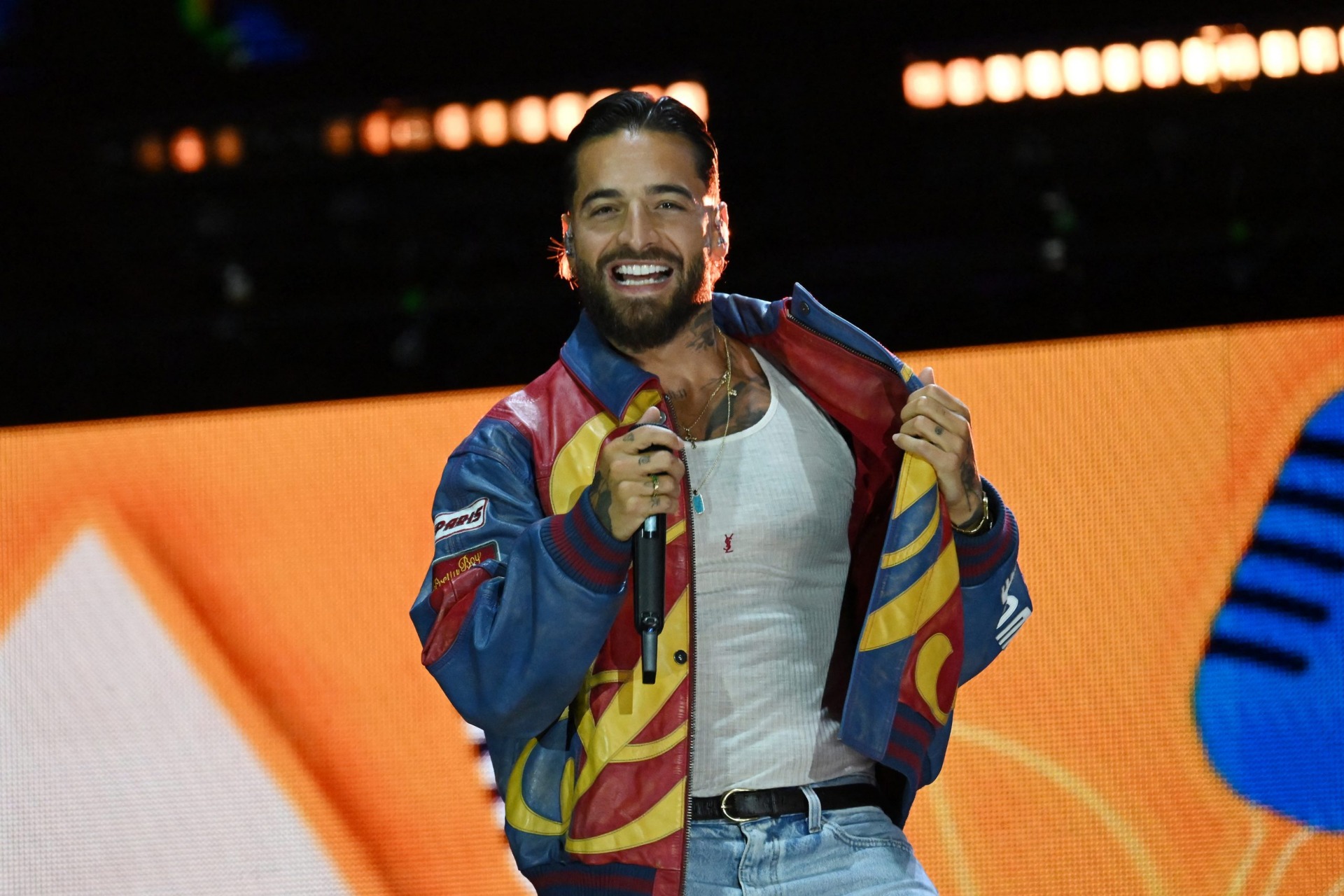
Promoters, agents, artists and managers rallied together for “Colombia: Voces Por La Vida,” a benefit concert to support those affected by the 7.4 earthquake that struck Chocó and killed at least 335 and injured thousands more. Maluma, Sebastián Yatra, Silvestre Dangond, Grupo Niche, Miguel Bosé, Eladio Carrión, Manuel Turizo and many more came to Colombia in a time of need, helping people process its worst natural disaster in nearly three decades.
It was a bittersweet moment for Luz Ángela Castro, CEO of OCESA Colombia, who saw her vision for Vive Claro, South America’s first stadium built for music events, realized with the entire LATAM live music industry and fans coming together for a special moment while mourning what many in her country lost.
Companies such as Villalón Entertainment, MOVE Concerts, Páramo Presenta, Cárdenas Marketing Network and Vibras Lab quickly raised their hands to help organize a massive production 13 days after the earthquake, and a local network as well as YouTube extended the concert’s reach by broadcasting the event. The concert drew more than 30,000 fans and raised more than $3.5 million to help as many as 260families who lost their homes.
Karol G was on tour in the States at the time but participated in the benefit show via livestream. She donated $1 million through her Con Cora Foundation, a nonprofit that aims to empower women and close gender gaps.
Castro, one of the most respected executives in the LATAM live industry, opened up to Pollstar about the concert, how it came together and the trials and tribulations of the past year.
Pollstar: Kudos to you and everyone else who worked on “Voces Por la Vida.” It’s a testament to the work you and your colleagues do, and it also shows the impact a venue like Vive Claro can have on a community. How did it come together?
Luz Ángela Castro: On the day of the earthquake, I was actually landing in Bogotá, arriving around midday coming from Mexico. And suddenly, my phone just blew up, with people asking, “How are you? What happened?” It was wild. Everyone was reaching out, even though I hadn’t experienced the earthquake itself.
I was actually heading to Medellín for a conference aimed at new artists and people starting out in the music industry, acting as mentors and guides for those entering the field. I’d been invited by an organization called ProAntioquia, which works to boost the city. I was at lunch with promoter Omar García, who is well-connected in the vallenato and pop music scenes, and he told me, “Silvestre [Dangond] is on board for whatever we decide to do.” So, I grabbed my phone and set up a group chat, and added all the key players and promoters from the Colombian music industry.
At the same time, suppliers came on board, and I told them, “Gentlemen, we have a venue: Vive Claro is at your disposal, and we have a ticketing partner in Ticketmaster.” Someone mentioned they already had artists lined up.
That’s incredible. It’s almost as if they were waiting for the call to help.
I felt we needed to come together to create solutions for the country, to contribute directly and take the initiative ourselves. That’s how it all began; the group grew and still exists today. There are about 75 people in the chat. We invited everyone, found a date and started confirming all the details.
[Castro laughs] It was absolute madness. We were talking about a 13-day turnaround! It took place on Aug. 23, which coincidentally was the one-year anniversary of Vive Claro. Under my leadership, we managed to bring the entire entertainment industry together, and everyone contributed. There was no “I’ll cover the expenses out of proceeds” or anything like that. Everyone contributed 100% of their work, their services, and their assets to make this happen. It really elevated Vive Claro as the great temple of music in Bogotá, for the world to see.
We had over 30 artists, and the production, especially backstage, was truly titanic. I don’t think we could have pulled this off in any other venue in the city. It was all about movement. We had this rotating catwalk and a 360-degree stage, and it was truly incredible. It was one of the most rewarding experiences of my professional and personal life. We managed to raise a little over $3.5 million with contributions from various artists—Grupo Firme, Karol G and others. It was an impressive effort, and I believe this helped solidify the entertainment industry as a powerful driver of change, evolution and growth in the country, taking the lead in organizing a fundraiser to build homes for those who lost everything and offering them a bit more dignity during this transition.
I see this as the first step in a larger building process, a space where we as the entertainment industry can make a difference. … We were all incredibly generous with one another, and that made a huge difference. Every artist was ready to cooperate. … It was highly significant for all of us. It elevated us as individuals, as people and as an industry.
So the earthquake happened on Aug. 10, and you guys organized a massive concert for the 23rd?
I sent the call on the 11th, which was a Tuesday. By Friday, we had artists ready to go, and we started setup on Saturday. You had people from MOVE, Páramo, CMN and others working toward the same goal, and it speaks to our DNA, to what runs in our veins. Even though we’re competitors—fierce ones, you could say—I prefer to think of us all as part of the same circle, part of the same ecosystem and facing the same challenges. We have a duty, not just to put on spectacular events and connect artists with their fans, but also to provide a sense of happiness that could have been achieved any other way. It was about ensuring our artists’ voices could serve as a source of encouragement, especially for those facing such a terrifying situation.
It’s been an interesting year, to say the least, for you and this venue. I know there were bumps in the road, with local communities complaining about noise and documentation issues, but you never ran from them. What’s your biggest takeaway from that experience?
This has been the most fulfilling project of my entire life. While I did learn about real-world competitive dynamics—the kind you see in movies or TV shows like “Billions” or “Succession,” where you think, “Wow, Life in New York and dealing with that must be intense—the reality is that these things actually happen. You aren’t immune to certain tactics, such as the use of “straw men” or the filing of baseless complaints, actions intended simply to distract you from your goal.
But this experience made me stronger. It gave me the chance to test myself in the major leagues. I’m reminded of something my grandmother used to say: “People only throw stones at trees that bear fruit.” I think it served as a wake-up call for the industry, not just in Colombia but globally. Being able to find a solution that allows a nearly 50,000-capacity stadium to be built in just eight months—that is truly significant. Furthermore, persistence makes things happen and creates a real difference. You need the ability to adapt to unfolding events and the resilience to handle shifts in your environment.
For instance, I learned that people, in general, resent change. They don’t like it, especially when something is being taken away from them, even if what’s being taken is essentially nothing. This plot of land, for example, was just an abandoned site in the middle of Bogotá, enclosed by a makeshift fence of wooden posts and barbed wire. Then you transform it, you turn it into a park, you plant native trees to act as natural sound barriers, increase the site’s biodiversity by 30% and add artificial ponds to help control CO2 emissions—yet the initial human reaction to any change is resistance, simply because people don’t know what to expect.
On the other hand, we’ve had neighbors ask, “Why haven’t you held any events?” During the first six months of the year, there was a real drought of stadium concerts across South America, and people actually missed the events. For some, it became an economic opportunity. They would rent out their driveways for parking, set up small stalls, sell ponchos or put up temporary shops. So that’s another side of reality.
During Shakira’s residency, people complained a bit about the movement [of the stands], even though the same technical setup was used for Adele’s shows [in Germany]. But at an Adele concert, people tend to stay seated. They don’t dance. At Shakira shows, and all of our events, people dance. That Latin passion just bursts to the surface. But we managed to find a solution. It really highlighted our creativity and ability to navigate challenges, devise solutions and adapt engineering techniques.
It’s a testament to the venue’s versatility. Despite that drought, you’ve had some major names perform at Vive Claro and hosted a large benefit concert. How do you build on this moving forward and continue to elevate Colombia as a market in the live industry?
We’ve welcomed over 300,000 fans to events we’ve hosted. We’ve held 10 events, not counting “Voces Por La Vida,” featuring 35 artists in total. And it’s just the first year! More than 36,000 jobs have been created, directly and indirectly, which is significant to the country’s economy—roughly $10.8 million contributed in taxes. In terms of tourism, the estimated impact is approximately $26.1 million, with 8% of attendees coming from outside Colombia.
We’ve also achieved some significant milestones regarding sustainability, such as the Global Zero Waste certification through our waste management. We’ve also conducted 80 hours of noise monitoring.
… We also have 250 super fans who have been to at least five events. We have over 21 sponsors. All of this speaks to the nature of Vive Claro, demonstrating an ecosystem built on economic activity, management, change, evolution, job creation and well-being. There is a clear commitment to social responsibility initiatives, waste management plans and everything related to sustainability and circularity.
Far from there being any regression or negative impact, biodiversity has actually increased. You should see how excited these botanists get. When they spot something, they’ll send me photos, like one of a bird that hasn’t been seen in Bogotá for ages.
From various perspectives, these are all signs of a thriving, happy environment. We also recently opened the music hall within the venue for 6,000 people, which further enhances the stadium’s structural flexibility, allowing us to host events of that scale. We’ve fully realized the potential of a cultural district, bringing together diverse audiences in the geographic heart of Bogotá, with access to mass transit nearby. It has been the reclamation of a magical space for the city.
And it’s all happening as Medellín prepares to open DAVIarena soon and Live Nation remodels a venue in Cali. It really does feel like the beginning of something big in Colombia, something that can inspire other countries in the region.
It’s not just about taking the credit or boasting, “Look at me; I’m a big shot.” It’s about how we paved the way for the industry, how we opened up Simón Bolívar Park so concerts could be held in the heart of Bogotá. How we started selling beer at events where it previously wasn’t allowed. How we opened up El Campín Stadium for concerts and, as I mentioned, began selling beer there, too. It’s also about addressing regulations—like how to handle noise issues—and taking the lead on those matters. That’s what it’s all about: driving progress, setting an example and shifting perceptions.
We’ve moved from being seen as a superficial activity—something only a few music enthusiasts do—to becoming a significant sector of the country’s GDP and economic growth. In fact, entertainment is the only sector currently growing at a double-digit rate. That is incredibly important for a country whose economy has historically relied on commodities—essentially acting as a supplier of raw materials or agricultural products—when, in reality, there is an inexhaustible wellspring of talent rooted in music and the things we are truly passionate about. It’s about the artists and the entertainment world, and how they can create happiness for the public while also generating wealth for the nation.
FREE
 Daily Pulse
Subscribe
 Daily Pulse
Subscribe