
Roberta Flack, Music Icon, Activist And Advocate Dies At 88
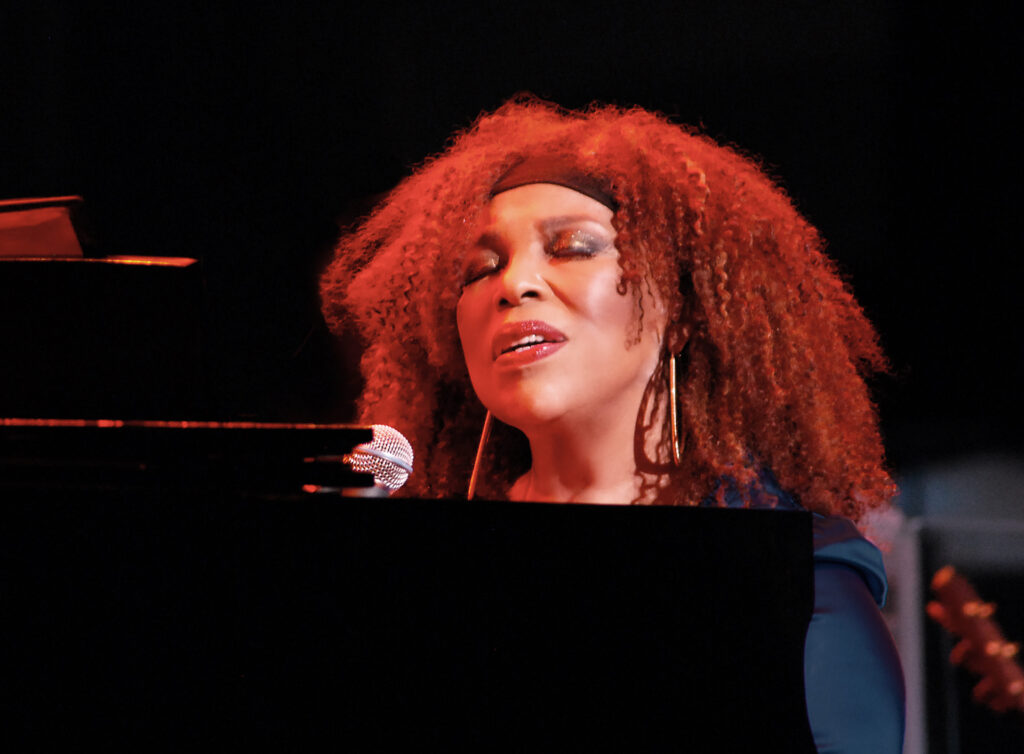
Stark and powerful, soulful and intricate, Roberta Flack was the voice of a generation finding their footing after the ‘60s decade of love. She personified grace and breathtaking talent when glitter balls and platform shoes were the norm. And now she has gone softly into the night.
The 88-year-old icon did today, Feb. 24. The cause of death is unknown but Flack announced in November 2022 that she had ALS and could no longer perform.
The adored doyenne of the brokenhearted, Flack never stopped reverberating. Even though she sang with restraint, she moved hearts.
She was born Roberta Cleopatra Flack, in Black Mountain, North Carolina, on Feb. 10, 1937, and was raised in Arlington, Virginia. Her mother, Irene, played organ at the Lomax African Methodist Episcopal (AME) Church, and her father, Laron, was a Veterans Administration draftsman as well as a serious pianist and jazz interpreter.
The AME church liturgy leaned closer to Handel’s Messiah than Gospel and Flack grew up with a strong classical foundation. A piano prodigy, Flack told NPR’s Ann Powers in 2020, “For the first three decades of my life, I lived in the world of classical music. I found in it wonderful melodies and harmonies that were the vehicles through which I could express myself.”
Her skill and intellect were obvious. After skipping several grades, Flack was 15 when she was awarded a full musical scholarship at HBCU Howard University in Washington D.C.
She moved from specializing in piano studies to a music education major after she was told that being a classical concert pianist was improbable, given the racial barriers at the time. But changing majors opened another door.
She became an assistant conductor of the university choir and set her sights on becoming an opera singer. That career aspiration came to an end when her father died in 1959 and she moved back to North Carolina to teach music in public schools. A year later she returned to D.C., where she taught at several middle and high schools for nearly a decade.
It was the foundation of her lifelong commitment to education.
In the early ‘60s, her voice teacher told Flack that her vocals were better suited for pop than the classics. She went from accompanying opera singers at the Tivoli Opera Restaurant in nearby Georgetown, to singing blues, folk, and pop standards between sets. Patrons paid attention. She began playing various clubs in the D.C. area and eventually took a residency at Mister Henry’s, a well-known Capitol Hill club.
“There was no end to the people coming in there and I mean senators, the Kennedys, no end – once I got out there,” Flack said in the past. “It wasn’t the money, it never was.”
Word of her talent spread and celebrities flocked to the club including creative juggernauts Burt Bacharach and Hal David, Carmen McRae, Eddie Harris, Woody Allen, Ramsey Lewis, Dionne Warwick and Johnny Mathis.
In 1969, jazz pianist Les McCann attended a show. “It was a good thing that I found a seat before she took her place at the piano and sang her first note, because my knees would never have made it standing,” McCann would later write in the liner notes for Flack’s first album. “Her voice touched, tapped, trapped and kicked every emotion I’ve ever known. I laughed, cried and screamed for more…She alone had the voice.” McCann convinced Atlantic Records producer Joel Dorn to check her out.
Dorn, who worked with mostly men including McCann, John Coltrane, Otis Redding, Eddie Harris, Yusef Lateef, Charles Mingus, Herbie Mann, Max Roach, Rahsaan Roland Kirk and the Allman Brothers, was reluctant, but Flack won him over with her mesmeric vocals and ability to effortlessly cross genres. Dorn said, “We want people who buy James Brown records and Andre Segovia records to buy Roberta Flack records. We hear all of that in her.”
In the studio for the first time, Dorn wanted to create the effect of a live audience so he brought in nearly three dozen regulars from another D.C. club. They recorded 40 tracks over three days with eight making the album First Take – because she recorded all of them in one take.
First Take was released in June 1969. It defied classification including folk music covers; soaring ballads; a Spanish elegy about racial prejudice, “Angelitos Negros” (Flack would later introduce the song onstage by asking, “Painters, why do you always paint white virgins? Paint beautiful Black angels.”); and “Tryin’ Times,” a song about Black suffering that was also a plea for conciliation written by Flack’s Howard University friend, Donny Hathaway.
First Take was embraced by critics but wasn’t much of a commercial success, at first. That changed when a cut from First Take, “The First time Ever I Saw Your Face,” was included by producer/actor Clint Eastwood in his 1971 film “Play Misty For Me.” The song became her first No. 1, where it stayed for six weeks. It went on to top Billboard’s year-end charts and won Grammy awards for Song of the Year and Record of the Year. On Dec. 15, 1972, “The First Time Ever I Saw Your Face” was used as the wake-up music for the astronauts aboard Apollo 17.
In August 1970, she released Chapter Two and in November 1971 Quiet Fire. Both albums were aligned musically with First Take’s diverse mix. Even with the sweeping range of material, Flack developed a unifying sound. Flack said many times that her song choices were rooted in her desire to portray stories in her music, whether they were about love, lives or politics.
“My music is inspired thought-by-thought, and feeling-by-feeling. Not note-by-note,” she told Powers in 2020. “I tell my own story in each song as honestly as I can in the hope that each person can hear it and feel their own story within those feelings.”
Flack is credited with expanding the definition of popular music by melding pop, folk and Black musical formats into a soulful conversation with the listener. Quiet and tender, she was often described as a “romantic singer” but she was also keenly aware of the charged political climate of the early ‘70s.
Flack befriended Black radical Angela Davis while Davis was still in jail, awaiting trial for conspiracy charges (she was acquitted), and marched with Rev. Jesse Jackson. She also appeared in a documentary film, “Save the Children,” about Jackson’s Operation PUSH exhibition in Chicago in 1972, and appeared at Bob Dylan’s 1975 benefit for boxer Rubin “Hurricane” Carter, who was wrongfully convicted of murder.
Leading up to the success of “First Time Ever I Saw Your Face,” Flack and Hathaway had recorded an album together, Robert Flack & Donny Hathaway. The first single, “Where Is The Love,” was slated for release in 1972. Eastwood movie was a blockbuster launch pad. First Take, which had been out for three years, became a No. 1 record and the Flack/Hathaway duet “Where Is The Love” reached the Top 5.
The foundation was set for Flack’s trademark “quiet storm” style. “Killing Me Softly With His Song” sealed the deal. The song spent more weeks at No. 1 than any other record in 1973. The song won Grammy awards for Song and Record of the Year, making her the first artist ever to capture those honors two years in a row.
Flack’s strength was her ability to not just interpret a song as a vocalist but dissect the deeper meaning for the listener. She sang not simply to them, but for them and they in turn felt seen and understood.
Flack produced her next album, 1975’s Feel Like Makin’ Love, under the name Rubina Flake, a childhood alter-ego of Flack’s. But taking control came with a price.
Flack said after the record was released: “When you assert your own ability to make a final decision you are of course categorized. In most instances you are called, very simply, a bitch. As a Black woman it goes a step further, even. To actually get back there and push the buttons on the console and to make the decisions, to tell men what to do, takes a lot of courage. In that sense, I probably made some inroads for other women to do what I have done.”
Flack’s 1978 album, Blue Lights in the Basement went to No. 8 on Billboard’s Top 200, and the dream-like single “The Closer I Get to You” – another duet with Hathaway – reached No. 2.
In 1979, the pair who met and formed a creative bond at Howard, were scheduled to record another album, but the project was cut short after two songs when Hathaway, who suffered from mental illness, committed suicide at 33. Flack resumed work on the album entitled Roberta Flack Featuring Donny Hathaway which was released in 1980. She included the two duets they had recorded including “You Are My Heaven,” the last song Hathaway sang the day he died.
Flack continued to stretch as a songwriter, producer and performer. She collaborated with Luther Vandross and Peabo Bryson on the soundtrack for the Richard Pryor’s film “Bustin Loose.” The soundtrack was the largest body of work composed, produced and arranged by Flack, who re-mastered the soundtrack for digital re-release in 2021.
The creative relationship with Bryson also resulted in a double album, Live & More, released in December 1980. Their second volume of duets on Capitol Records, Born to Love, in 1983, included “Tonight I Celebrate My Love,” which was their first duet to break the Billboard Top 100, peaking at No. 2 in November 1983.
Oasis was Flack’s next solo album in 1988, including the No. 1 title track and “Uh-uh Ooh-ooh Look Out (Here It Comes),” a No. 1 on the dance charts. Set the Night to Music was released in 1991, featuring a duet with Maxi Priest, which peaked at No. 2 on Billboard’s Hot 100. Let it Be Roberta: Roberta Flack Sing the Beatles in 2012 was the last album of original recordings released by the singer and included liner notes by Yoka Ono. In 2020. an expanded 50th anniversary edition of First Take was released.
In her later years, Flack focused on causes she was enthusiastic about, including education. In 2006, with her manager Suzanne Koga, Flack founded The Roberta Flack School of Music, providing free music education to underprivileged students in the Bronx. In 2010, she established the Roberta Flack Foundation with a mission of supporting music education and animal welfare causes.
With longtime friend Londel McMillan, she became an active participant in the Artist Empowerment Coalition, which advocates for artists’ rights and control of their creative properties. She was a spokesperson for the American Society for the Prevention of Cruelty to Animals, donating the use of “The First Time Ever I Saw Your Face” for ASPCA ads.
In 2008, she started performing live more often appearing with symphony orchestras in the U.S. and abroad. Following a concert in Barbados with her band on Jan. 16, 2016, Flack suffered a stroke that ended her touring career.
The stroke affected her voice, but she remained active overseeing expanded releases of her early music and writing a children’s book, “The Green Piano: How Little Me Found Music,” about the piano that her father restored for her as a girl.
“He painted it green, and it smelled bad, but I played and practiced for untold hours on that piano,” she told People in February 2022. “It gave me wings of music that as a 9-year-old girl I needed so badly.”
Flack also took part in the making of Antonino D’Ambrosio’s documentary, “Roberta,” which was released on PBS American Masters in December 2022. On May 13, 2023, Flack was awarded an honorary doctorate by the Berklee College of Music and celebrated by members of the graduating class who performed a concert of her music.
In 2020, the Recording Academy presented Flack with the Lifetime Achievement Award at the 62nd Annual Grammy Awards ceremony at the Staples Center in Los Angeles. Flack attended and received lavish praise from a long list of artists including Lizzo, Lady Gaga, Joni Mitchell, Ava DuVernay, Babyface, Alicia Keys, Demi Lovato, Ariana Grande, Khalid, Rashida Jones, Debbie Allen, Cyndi Lauper, Usher, Kenny G, Trombone Shorty and Chick Corea.
She told Forbes, in 2021, “Being recognized was so moving in that I was taken in and honored by young artists and that my music touches and continues to inspire change and growth.”
In that same Forbes interview, Flack added, “I’ve always tried to express myself musically from a place of complete honesty in the hope that each person can find his or her own story when they listen in a way that helps them to feel their own truth.”
In November 2022, a spokesperson for Flack confirmed that the singer was diagnosed and being treated for amyotrophic lateral sclerosis, or ALS. On Feb. 24, she was surrounded by family when she died. Funeral details have not been announced.
In archival footage from “Roberta” the icon offered: “If I have to use one phrase to describe how I feel about the whole experience, it would simply be that love is a song and an honest giving of feelings and emotions. As a performer, if you can connect to that thought, then whatever the song is, it’s a success. It’s not like I’m trying to sound like somebody else or be somebody else. I’m happy to be Roberta Flack. I’m happy to sound like I do. So that feels good. I mean, I’m very satisfied with that.”
FREE
 Daily Pulse
Subscribe
Daily Pulse
Subscribe
 Daily Pulse
Subscribe
Daily Pulse
Subscribe