
Outdoor Innovation: A New Kind Of Luxury Shed Emerges

The last few years have seen record-breaking investments in large-scale standalone venues, with SoFi Stadium in Los Angeles and Allegiant Stadium in Las Vegas setting the multibillion-dollar bar for NFL stadiums. Those openings coincided with the debut of $1 billion-plus trend-setting arena projects in Climate Pledge Arena (Seattle) and UBS Arena (New York), which both came online as the pandemic was winding down.
Further eye-popping investments in standalone venues have followed, with another Inglewood project in the Intuit Dome reportedly topping $2 billion, and the dazzling Sphere, again in Las Vegas, reportedly hitting the $2.3 billion mark. These standalone sports and entertainment venues have shown the commitment to the live experience, creating opportunity for artists, homes for pro sports franchises and serve as cultural anchors in their respective communities for decades.
On a smaller scale, the previously modest sector of concert amphitheater venues are following suit to elevate the experience and match consumer demand for heightened amenities.
Longstanding popular outdoor venues like Northwell at Jones Beach Theater in New York underwent a multiyear, multimillion-dollar renovation touching entryways, seats, technology, restrooms, food and beverage and premium spaces.
Newer facilities, including Maine Savings Amphitheater in Bangor, have similarly taken cues to invest in an already popular concert destination, adding permanent seats, bathrooms and plumbing, multiple premium club spaces and rooftop bars. This has led to the venue’s busiest season yet, with sold-out concerts from stadium-sized artists, creating a viable tour stop in a relatively remote corner of the country.
These types of projects have redefined the definition of a traditional rudimentary shed venues, and developers are determined to further push the boundaries of what the outdoor music experience can be, with impressive numbers in the amphitheater space from relatively new players in the industry.
“What we’re building there has never been done before. It’s off the charts,” says J.W. Roth, founder, CEO and chairman of Venu Holding Company, which is breaking ground in January on a $300 million amphitheater in McKinney, Texas.
With a half-dozen projects in the works and ongoing discussions in more cities, Roth says Venu is investing more than $1 billion into Sunset Amphitheaters, a placeholder name until naming rights are sold.
Having opened the 8,000-capacity Ford Amphitheater in Colorado Springs this summer, the company’s debut venue project with a reported price tag around $90 million, Roth says a more appropriate word for the venues might be “music coliseum.”
For now, “amphitheater” works.
“At the end of the day, I don’t think there’s ever been a $300 million ‘music coliseum’ or music amphitheater,” he said. “This will be over the top premium.” At 20,000 capacity, the Sunset Amphitheater near Dallas looks to raise the bar for mid-sized outdoor music venues, with firepit suites and other premium memberships, publicly available on its website as an investment opportunity.
Luxury “firepit suites” are Venu’s signature feature, a vision Roth says was born out of his own fondness for the campfire experience. He says he was financially prepared in the event that the fire-pits didn’t sell as hoped, but that has not been the case.
“I put up 200 fire pits for sale in McKinney, and (registration) has only been open now for about 120 days, and I’ve sold almost 80 of them,” Roth said. “It tells you how hungry and aggressive the demand for premium is.” He previously told VenuesNow the sale of 133 Colorado Springs firepit suites brought in $33 million in 14 weeks.
Other high-end perks at Venu amphitheaters include HydroChill technology used on the lawn to keep temperatures comfortable, ample bathrooms and parking space. Getting in on the action is three-time Super Bowl winner and former Dallas Cowboys quarterback Troy Aikman, who gets his very own branded and custom-built club spaces at amphitheaters in Texas and Oklahoma. Memberships start at $150,000.
Sales are handled internally, Roth said, likening the deals to real estate investments.
Being a music fanatic looking for opportunities himself, Roth says there is plenty of demand on the investment side as well.
“Most of my investors, they’re music nuts like I am,” Roth explained. “When someone comes along and invests a half million dollars in a fire-pit suite, they’re going to get a nice piece of rent from that, which comes from the tickets. That’s going to return 8% to 10% on his investment. At the same time, he’s going to write off his investment because of the depreciation. On top of all of that, he’s going to go enjoy his passion, whether he goes to every show or half of half of the shows. So you enjoy the investment that you made, you have a return on the investment that you made, and you write off the investment. It’s hard to beat those three things.”
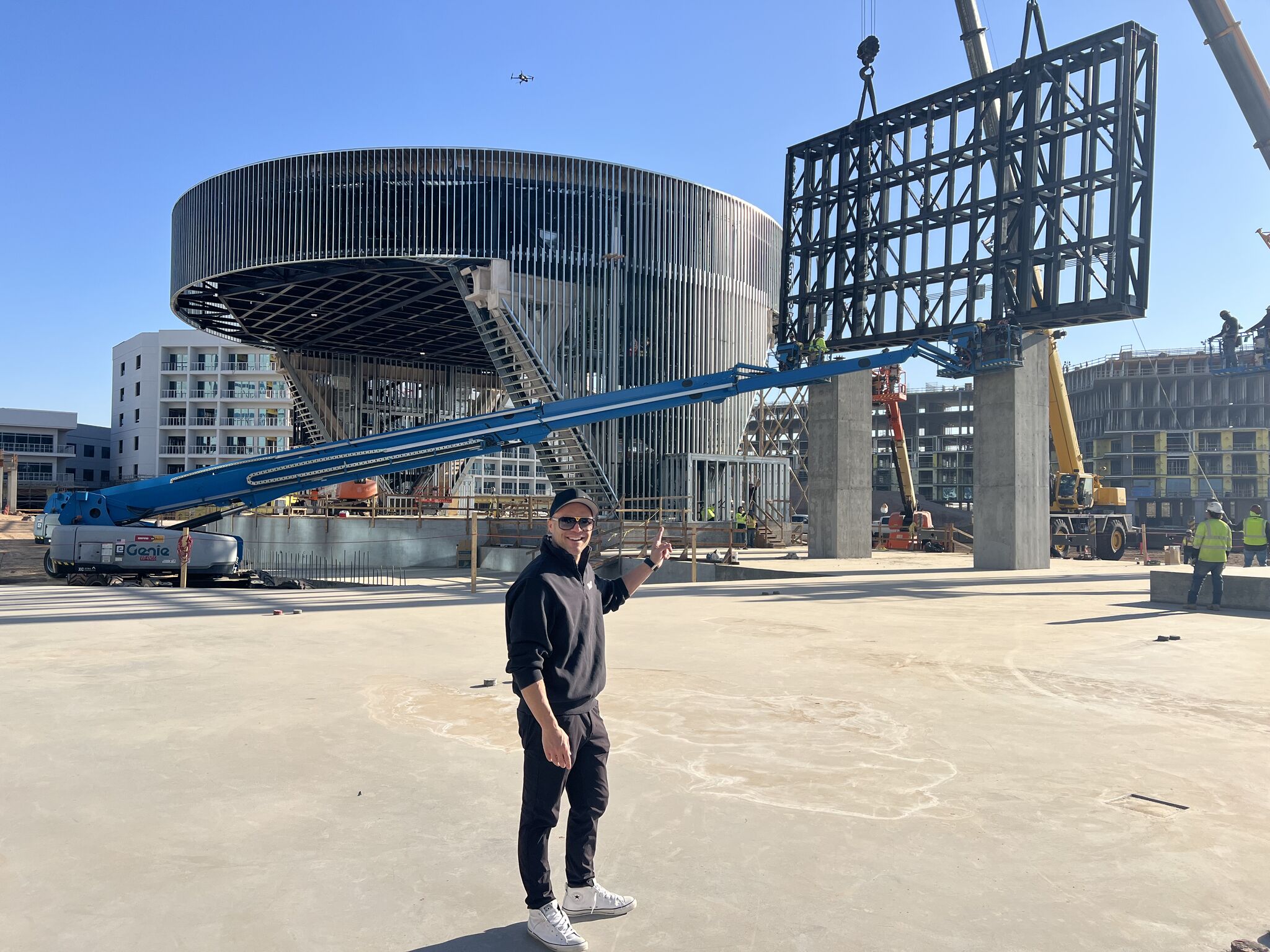
Another big-money outdoor music venue project from outside the traditional venue industry is VAI Resort in Glendale, Arizona, a $1 billion, non-gaming hotel-resort project across the street from State Farm Stadium.
The 1,100-room property currently under construction on 60 acres is to feature 27 separate bar spaces and lounges, 11 dining experiences including celebrity chef tie-ins, separate nightclub spaces, a spa and fitness center and more. It’s anchored by an 11,000-capacity amphitheater, which is surrounded by hotel towers looking over the performance space. Of the hotel rooms, 149 will include balconies that provide viewing space for the concert performances.
As a unique resort project built specifically around the amphitheater, VAI’s developers are getting creative with ticket packages and membership concepts. It’s largely uncharted territory, and difficult to plan before any concerts have been announced or booked yet.
“We did not have a road map, and that applies to everything we are doing across the 60 acres,” said Howard Weiss, VAI’s senior vice president of entertainment sponsorships.
The VAI team includes seasoned veterans in the worlds of hospitality, casino-resorts and concerts, but the project is markedly different in its summation.
“We’re creating the playbook from scratch for everything, from our steakhouse to the amphitheater to our indoor theater,” said Weiss. A theater venue is currently under construction, likely with a later opening date. “We just announced a massive partnership yesterday with Jose Andrés in terms of bringing one of his restaurant concepts here. Everything we’re doing is from scratch, which is good and bad. It’s good because we don’t have any red tape, but it’s challenging because it’s really never been done before.”
VAI Amphitheater, with a price tag last reported in the $50 million range, has a booking partnership with C3 Presents and with independent ticketing platform Tixr. Construction and technology partners include concert industry veterans TAIT, which is building a massive moving LED wall on the venue’s circular rotunda stage. Tunnels underground lead from the stage to private hotel rooms for artists and VIPs, while yet more private premium space exists underground able to serve as hospitality areas or host private functions.
The project is on the same property as the first Mattel Adventure Park, set to open soon as an indoor-outdoor, family-friendly theme park with roller coasters and other attractions. Further adding ambiance to the site are additional attractions including the 5-acre Konos Island swimming area and a temperature-controlled “party island” man-made beach.
VAI is currently offering a “Ticket Bank Program” granting priority ticket access to concerts at the amphitheater and plenty of other perks. Packages range from $25,000 to $250,000, with the amount of money spent going into a “bank” that can be spent on specific event tickets, access to various VIP and exclusive areas and dining and hotel reservations, to be used within a certain time frame between 12 months and 30 months depending on package. VAI director of premium entertainment sales Colin Gharrity says interest is high but, until a show calendar is announced, it will be hard to gauge success.
The goal is to host 100 ticketed concerts per year, with further activations within the property including club nights and private parties as well as meetings and conventions on the property’s 100,000 square feet of meeting space.
On the artist side, “We’re in discussions right now,” said Weiss, noting the venue’s capacity falling between typical arena and amphitheater venues. The amphitheater will host a mix of touring artists, one-offs and multi-show runs, Weiss said.
“We need that first guinea pig to jump on the stage and say, ‘Hey, I’m gonna do it,’” he said. “We’re a plug-and-play environment, and we feel that we’ve spec’ed out anything that would be on any A-list rider and nailed it from an audio-visual standpoint, but there’s not enough space to roll up with 50 semi-trucks. The benefit is for a bigger-type show and even a festival; they can play both to the hotel and out to the beach area, where we believe there’s a ton of opportunity as well.”
FREE
 Daily Pulse
Subscribe
Daily Pulse
Subscribe
 Daily Pulse
Subscribe
Daily Pulse
Subscribe