
Hot Rod Lincoln: Nebraska Capital To Get Its First Convention Center
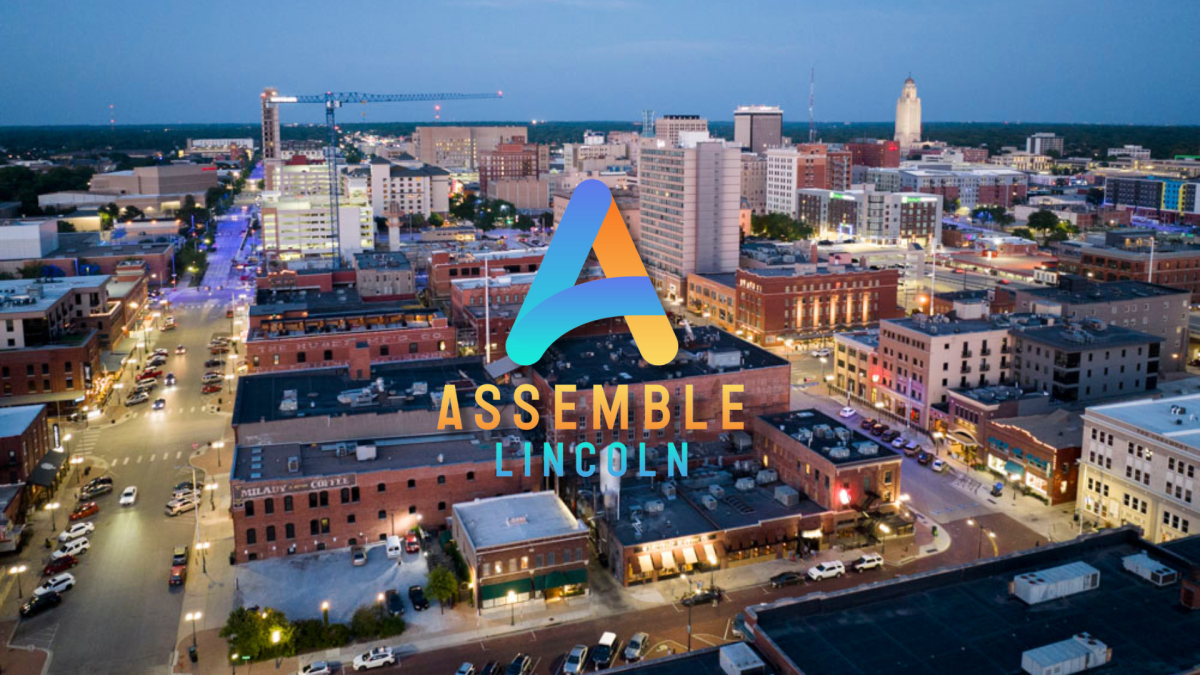
Nearly every U.S. state capital has some sort of convention center. Even if it is smaller than what you would expect in a capital, these facilities typically attract trade shows, host government meetings and stage events.
Surprisingly, Lincoln, Nebraska, has never had a convention center and currently uses space at the Cornhusker Marriott Hotel, which opened in 1984 for meetings. But that is about to change. Last week, Assemble Lincoln approved a downtown location for the city’s new $120 million convention center.
“That’s been the challenge for our team at Visit Lincoln is the amount of times that we have to say ‘No’ because we don’t have the space, either on date availability or the contiguous space under one roof,” said Jeff Maul, executive director of Visit Lincoln. “In fact, we have assembled a long list of state, regional and national associations that have outgrown us – that we’ve unfortunately had to say no to for way too many years.”
Maul said there was a “unanimous desire” by associations to get back to the capital city, which was founded in 1856 and named for President Abraham Lincoln. With its limited inventory, the city was only able to meet 30 percent of demand.
“So, 70 percent was being turned away and going to other communities, which in our world is disheartening,” added Maul.
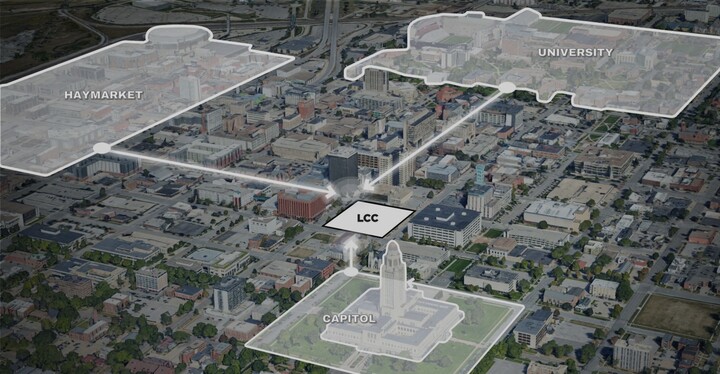
Assemble Lincoln, the Lancaster County committee charged with overseeing the development of the convention center complex, selected the downtown parcel for its central location and potential impact on downtown attractions and businesses.
“From day one, our interest was to build a destination that was not only good for the State of Nebraska but create a building that was architecturally and technologically meeting every standard that people wanted,” said Maul. “We wanted people back in Lincoln.”
The site is on the south edge of downtown and situated directly across from the Lincoln Marriott Cornhusker Hotel. It is also within walking distance of major Lincoln cultural attractions including the Nebraska History Museum, the Lied Center for the Performing Arts and the Lincoln Children’s Museum.
In discussion since 2010, the process of finding a location began in the fall of 2023 following two feasibility studies in 2022 and 2023 by Convention, Sport & Leisure (CSL), which were commissioned by the Downtown Lincoln Association, Lincoln Downtown Rotary No. 14 and Visit Lincoln. Three sites were on the shortlist in 2024 with the Garfield Public/Private site ultimately selected.
The 2023 study “did what we wanted it to do, and that was it told us that we ranked near the bottom for meeting space in our competitive set, for meeting space under one roof, and we ranked near the top when it comes to amenities to support a convention center in downtown Lincoln,” said Maul.
Convention centers attract business and generate revenue. According to a 2023 report from the U.S. Travel Association, spending on meetings and event-related travel was $119 billion directly supporting 600,000 jobs. Hosting events, conventions or trade shows stimulates a region’s economy through bookings at event and meeting facilities, stays in local hotels, dining in restaurants and shopping at local retail stores.
According to the 2023 Lincoln feasibility study, the 125,000-squre-foot convention center is expected to have an annual economic impact of $18.5 million supporting 230 jobs and generating nearly $1.3 million in tax revenue per year.
“That’s what the taxpayers want to hear, that we’re not doing any new taxes and there will be an economic impact that will broaden that tax base,” said Maul.
Future construction plans include a 25,000 to 30,000-square-foot multipurpose event hall, 20,000 to 24,000-square feet of supporting ballroom and meeting space and popular industry amenities including state-of-the art technology, pre-function and outdoor spaces.
The project has brought together a team that includes state government leaders from Governor Jim Pillen’s office, state senators from the Nebraska Legislature, Congressman Mike Flood’s office, Lancaster County, Assemble Lincoln, Legends, Populous and local architecture firm Clark & Enersen. Criteria for the selection process followed numerous meetings on the topic that included public forums and presentations to gather feedback.
Now that a site has been selected, next steps include beginning outreach and preliminary negotiations with landowners of the parcels being considered for development and submitting Lancaster County’s Turn Back Tax application to the State of Nebraska to fund construction.
“Even though it’s in Lincoln, we want this to be something that the state can be very proud of,” explained Maul. “When Lincoln’s successful, so is the state of Nebraska, and that’s one thing as the state capital, you try to stick with – pride yourself on – that you’re not just doing what’s good for Lincoln but the state.”
FREE
 Daily Pulse
Subscribe
Daily Pulse
Subscribe
 Daily Pulse
Subscribe
Daily Pulse
Subscribe