
Hospitality Drives $100M Barclays Center Renovation
The days of getting a hot dog and beer at a game aren’t bygone, but it certainly has evolved with caviar-topped Wagyu beef links and a sommelier at your service.
Arenas and stadiums are renovating their facilities with hospitality at the forefront including premium food and innovative dining spaces, setting a new bar for customers.
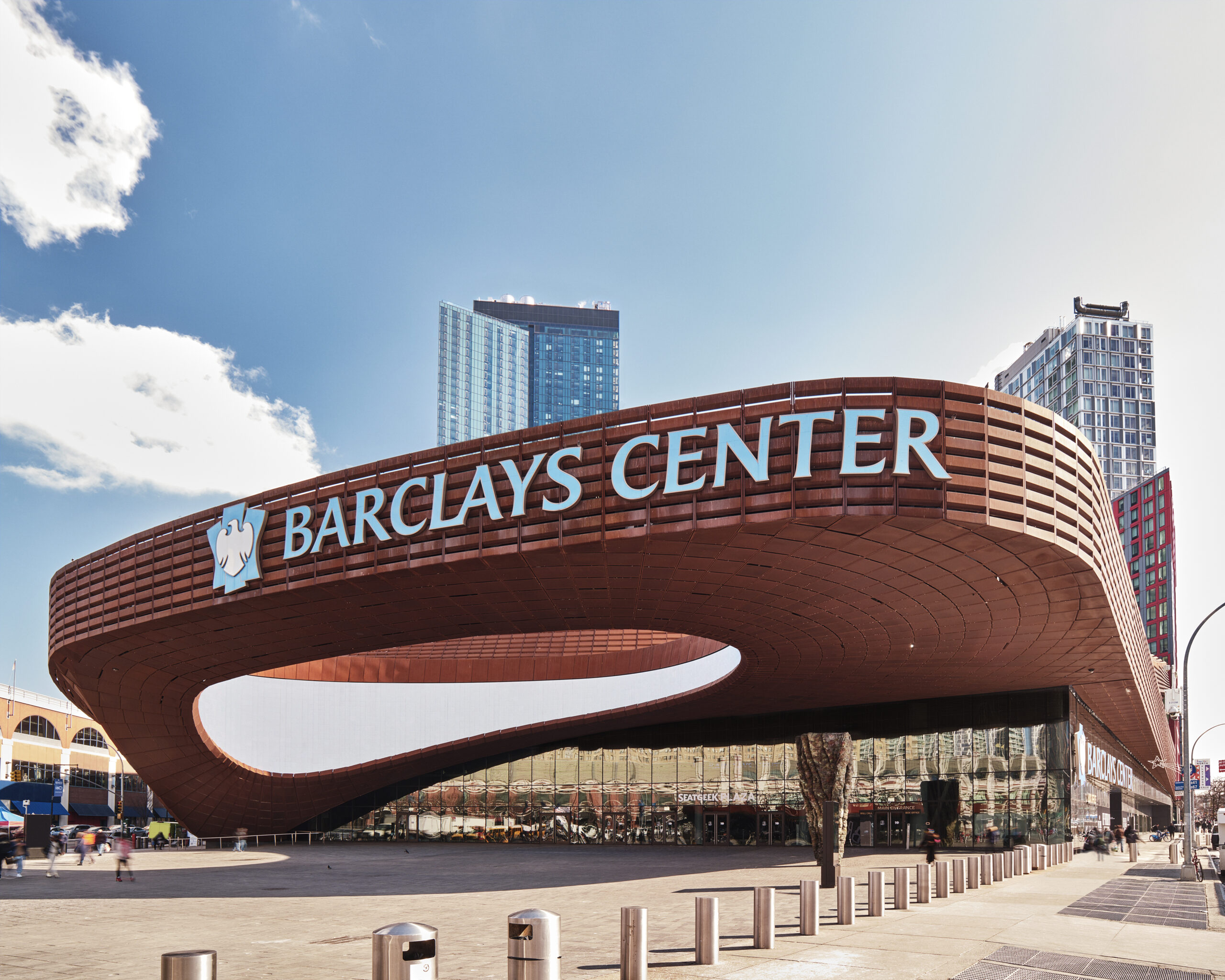
BSE Global recently launched the second phase of a $100 million-plus, five-year renovation to enhance the fan experience at Barclays Center in Brooklyn including a premium membership club, Gallagher Terrace, the only place in the arena with in-seat dining, white-glove waiter service, premium cocktails and an expertly curated wine list; The Bridge, an upper concourse fan zone that includes a performance area and the venue’s largest 63-foot bar; and two new premium clubs – The Toki Row and JetBlue at The Key, which were completed in phase one.
Levy is the hospitality partner at the 19,000-cap. arena, which is home to the NBA Brooklyn Nets and WNBA New York Liberty, tasked with creating custom F&B profiles for each of the new spaces from ceviche and lettuce wraps to mini brats and a mac ‘n’ cheese bar.
With two decades of hospitality experience, New York native Chris Giacalone, Levy’s Vice President of Hospitality and Strategy at Barclays Center, dishes about how they nurture the local culinary scene, use technology and embracing sustainability.
“Growing up in Queens and living in New York, all the boroughs, my whole live, I’ve been going to ball games and shows and concerts since, well, forever,” admits Giacalone. “A hot dog from a hawker was sort of the pinnacle of the ballpark experience. And just to watch how that’s evolved over the last 20 years. Basically, whatever we see happening socially immediately reflects in the arena and stadium world.”
Influenced by the Food Network and social media, people expect venues to satisfy their changing tastes.
“They’re here for three hours so if we’re not matching what is out there in the world, then we are failing the guests,” explains Giacalone.
Heightened awareness around food means the Barclays Center team needs to be creative about sourcing top-notch ingredients for an array of menus and the volume makes it possible to see some economies in bulk purchasing.
“It just goes with the philosophy of investing in the best experience and luckily, we have ownership and leadership that believes in that more than the bottom line,” adds Giacalone.
Sourcing locally is a factor when it comes to access and quality control. The goal is to provide the same experience in the venue as people would find in their neighborhood market. Barclays Center has seven culinary salaried professionals on staff to help manage the margins.
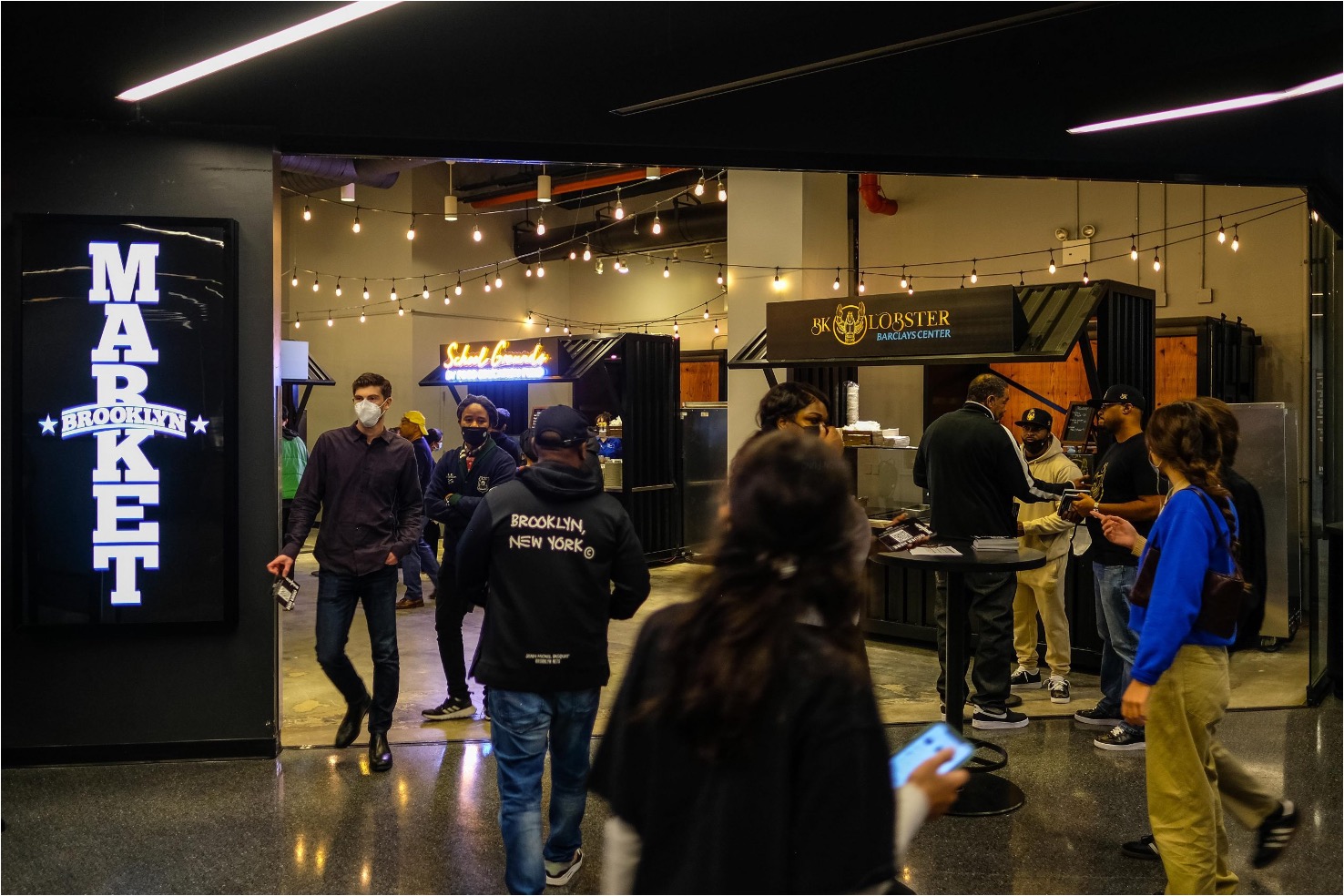
Sourcing products – including a local butcher who makes a signature burger blend for the arena’s smash patty – is beneficial, but increasingly venues are welcoming local restaurants inside the tent serving as an incubator for local businesses allowing them to test products and gain valuable experience before sizing up to a permanent location in the footprint. The Barclays Center version of the local proprietor food court is Brooklyn Market.
Potential partners are identified via a variety of sources including BSE Global’s Chief Diversity, Equity, and Inclusion Officer Jackie Wilson, staff recommendations, a website where vendors can apply and following area food writers, Instagram and TikTok.
Once they identify a prospective partner, the team reaches out to gauge interest and bandwidth including offering support and resources to help restaurants supersize the opportunity. An ox tail grilled cheese sandwich led to a relationship with Fat Fowl. A staff lunch resulted in a multi-year partnership with Five Spice, a Vietnamese fusion restaurant.

“It gets their name out there and we get to do something really cool and interesting in the building,” explains Giacalone. “It’s grassroots. It’s that simple because we all live and work here and we know who’s doing fun stuff.”
The concept isn’t just entertaining, it’s good business. Venue real estate is a valuable commodity and putting an untested vendor in a static concession stand is risky. If they aren’t successful, it adds pressure on other vendors resulting in longer lines and dissatisfied customers. Testing and developing a restaurant concept in the Market improves the odds.
“We thought, if we build these really cool booths and we find all these really interesting people that are doing fun stuff, and they do a two-month stint in Brooklyn Market, we can gauge is it a right fit for them? Is it the right fit for us?” says Giacalone. “The Brooklyn Market affords us the opportunity for them to crawl before they run.”
The market has four booths including Food Education Fund, a local charity that works with high school students exploring careers in hospitality. The small number of booths provides a buffer for the vendors – there are enough options that they don’t feel undue pressure and yet sales aren’t diluted. The hospitality team provides support and advice including the number of portions to prepare, which is typically 250 to 300 servings of the signature dish.
“These numbers are so much more approachable to them so it is actually very seamless,” says Giacalone. “We provide a lot of the equipment, a lot of the resources, we create the signage for them. As many hurdles as we can remove for them, that’s our goal.”
Rotating Market vendors every few months provides Giacalone with the data necessary to identify vendors who are seasoned and ready to move up to a permanent location. In a diverse city with a strong food culture, Brooklyn Market is a genuine reflection of the surrounding community.
“I say this a lot – but I really mean it – if what we serve inside the building doesn’t reflect what’s available in the neighborhood outside the building, then we’re failing,” says Giacalone. “If we can’t ring a bell and tip our hat to the community who’s coming to watch our shows and our games and give them a taste of home – how they grew up – then we’re just not getting it right.”
The commitment to serving something for everyone includes gluten-free, vegan and plant-based options, which supports the arena’s commitment to sustainability including a full-time sustainability manager, onsite trash sorting and composting and food waste and recovery programs.
“We can through the sheer volume of what we do and what we sell make an impact – both positive or negative, and we fight really hard to be positive,” says Giacalone. “It’s a no brainer nowadays, we have to be good stewards of the environment.”
Advances in technology have also changed the game by improving transaction efficiency while maintaining a balance between high-tech and high touch: from using QR codes to order and pay, to grab and go and the traditional belly-up counter model.
“Everything we do revolves around how we get better, faster, smarter,” says Giacalone. “We get a wide range of fans and guests – some are very young that embrace the technology, some don’t, it doesn’t make sense to them and it becomes a hindrance – and we don’t want that. We want everyone to feel welcome and comfortable so we try to balance. As proud as we are of our food story, we have to get the guests back to their seat so they can enjoy the show or the game.”
FREE
 Daily Pulse
Subscribe
Daily Pulse
Subscribe
 Daily Pulse
Subscribe
Daily Pulse
Subscribe