
Liability Responsibility: How Some Venues Are Requiring Artists To Provide Insurance
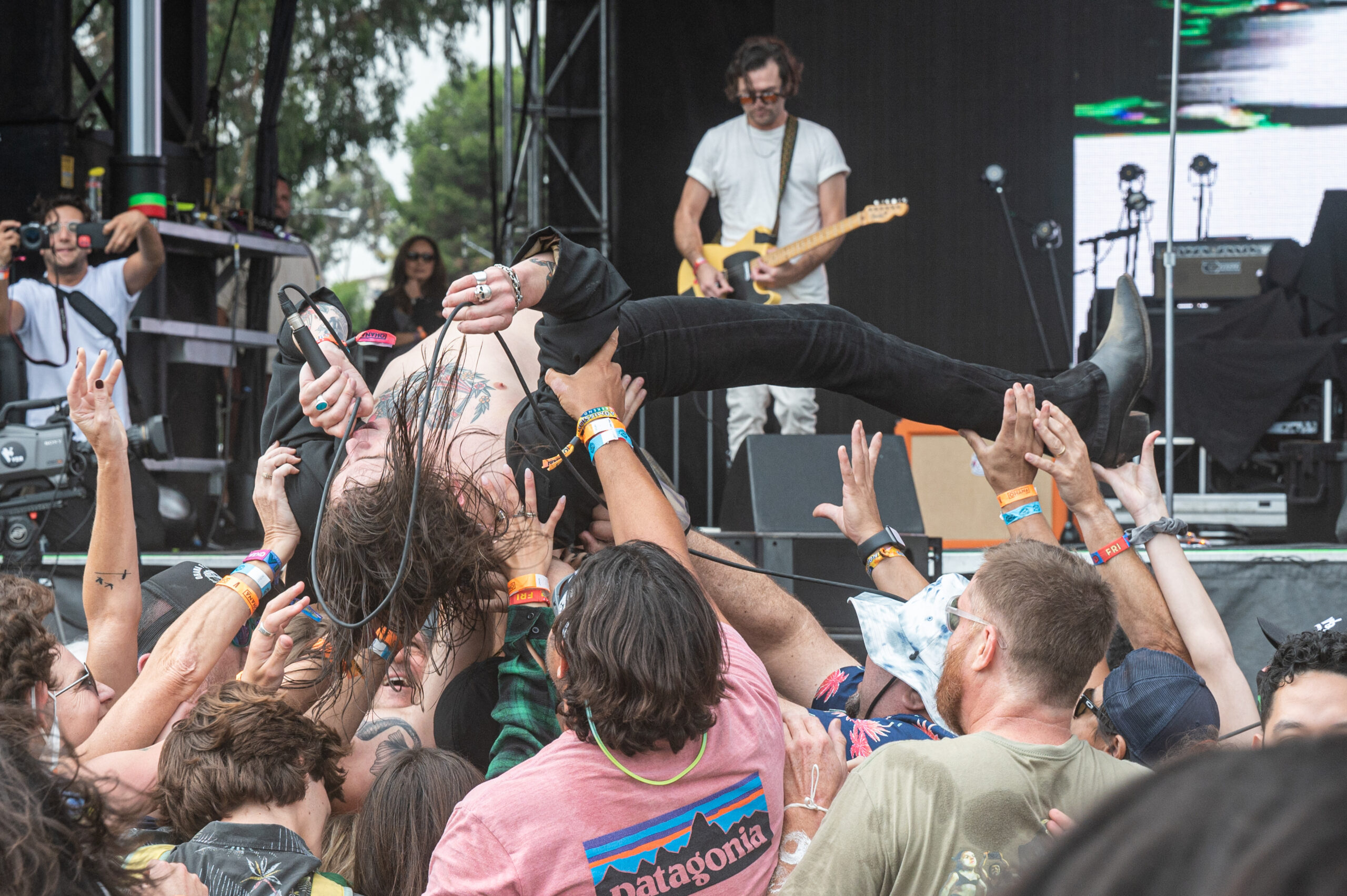
Photo by Jim Bennett / WireImage
It used to be that all you needed to turn your recording project into a touring entity was a reliable van, gumption and a decent amount of talent, along with an affinity for fast food during strange hours and sleeping on floors. Now, in addition to many festivals, more venues are requiring artists – including up-and-coming acts – to have their own insurance. What could be less rock ’n’ roll? And while big-name arena and stadium artists can surely afford to include insurance as part of their touring budget, it can be a struggle for baby bands.
“The big shift has been away from [solely] headliners. If you’re touring 5,000-capacity venues on average, likely you already had an insurance policy for what you’re doing – the shift is to these smaller level acts that were never really being asked before … The margins are so incredibly small, and when you ask someone to maybe take on a $5,000 to $7,000 additional insurance policy, that really cuts into [the profits of] some of these folks that are barely making any money on the road,” says Nathaniel Marro, Executive Director of National Independent Talent Organization (NITO).
Amy Butterer, partner and chief operating officer of independent booking agency outer/most, clarifies that natural disasters such as flooding, tornadoes and hurricanes affecting shows “would probably fall under a force majeure clause, which most artist performance contracts would cover … On the artist side, they wouldn’t be liable; that would be something that the promoter or venue or events insurance would cover.”
Rather, many artists today are required to have general liability insurance to cover possible incidents and lawsuits before they even get on stage.
“It’s like stage diving. Really, anything that’s happening from the stage toward the audience is the thing,” Marro says.
He adds, “If you’re in a club and all of a sudden the roof caves in, that’s obviously not the artist’s fault, but if the artist throws a microphone stand into the audience, that’s probably the artist’s fault. … The big problem here is that 99.9% of the shows are never going to have a claim of any sort. And so it’s like any insurance policy you’re just taking out should something happen. It’s an added cost that people still have to factor in that they didn’t have to. Every budget is getting tighter and tighter and tighter. These things really start to add up, especially when you’re at a level that is scraping by at best.”
Marro notes that some may see venues passing on costs to artists as a continuing trend – while also acknowledging that many venues are struggling.
“It’s not been easy to come back from 2020, and there’s a lot of issues, but also, taking on the risk of putting on a show has always been a risk. I mean, it’s also just as much of a risk to go out on the road and tour,” Marro says.
Butterer adds, “It’s costing everybody more. It’s not just costing them more because their policies are now increasing. Everything that the artist is paying is double to triple now, too. … Independent promoters and venues are a little bit more flexible. They’re generally not as stringent on it. It’s the climate that we’re in. I really think that has a lot to do with it. But we’re probably going to continue to see this, unfortunately.”
All that said, Marro and Butterer agree that the liability insurance requirement is most likely coming from pressure from the insurance companies, rather than promoters and venues.
“It’s definitely something that I push every festival to implement,” said Mona Grabowski, vice president at HUB, who covers festivals, live events and touring. “Promoter policies typically exclude the performers and artists. While we can try and prepare for the unexpected or unintended by creating a robust liability policy for the promoter (lifting the Tossing of Objects Exclusion, as an example). Insulating the promoter/festival through indemnification is best.”
Of note – depending on the genre, some artists are charged more than others for insurance. For example, general liability insurance offered by EPIC Insurance Brokers & Consultants starts at the minimum premium (MP) of $1,500 on a flat basis “for smaller unknown bands in a mild genre – IE: not rap, heavy metal, hard rock, screamo type music.”
“There should be more or less the same rules for everyone across the board,” Marro says. “The reality is, if you’re going to a punk show, you know what you’re signing up [for]. No one’s going to be that upset if something happens, or you shouldn’t be.”
He adds, “How much can you litigate live music at that point? These audiences understand somewhat what they’re signing up for when they go into a performance. So, not covering [artists of certain genres] or charging more is a little bit of discrimination, I would say.”
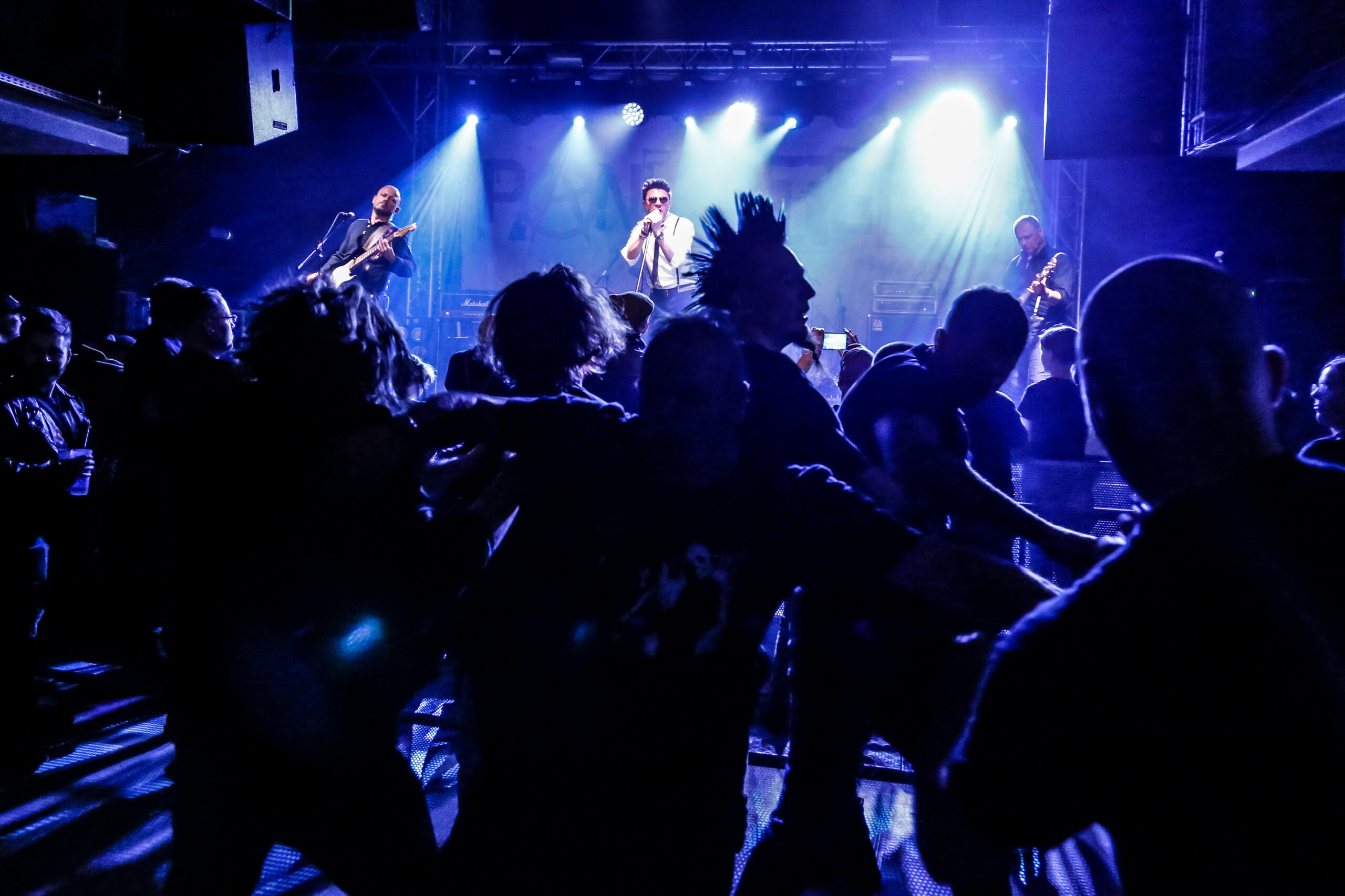
As for the price difference for insuring artists of different genres, Keli Tomack, managing principal at EPIC Insurance Brokers & Consultants, explains: “We really cannot guesstimate the price difference as they are specific to the band. A mild rapper may still qualify for unlimited show, but instead of $1,500 it might be $3,500 or $5,000. A metal band who does not encourage moshing or stage diving is less than one who does. Insurance is unfortunately not one size fits all. It is individually underwritten for the risk at hand. Even if there was a band in a mild genre of music, but they have a terrible reputation off the stage – they are going to be surcharged as well. If a band has had a terrible loss – they are going to be penalized for that too.”
General Liability is described by Epic Insurance as the backbone of all the coverages and must be purchased, either for domestic shows only or with a foreign extension, to access the other coverage lines. Coverage is quoted based on either unlimited shows or on a per show basis, ranging from $50 a show to $5,000 a show, depending on the music type, loss history and notoriety of the client.
Other types of coverage include Equipment Floater, Commercial Auto and Event Cancellation.
Grabowski explains that at HUB, “There are a few ways to approach coverage, whether artists are purchasing liability coverage through a TULIP or Buy-in offered through the festival or on an online 1-day policy placement, typically the cost is anywhere from $150-$300, depending on genre. Country, folk and jazz will have a lower rate than say metal, punk or hip-hop. It all depends on their popularity, genre, etc., but average premium can range between $1,500 to $2,500 minimum premium.”
Asked why artists need liability insurance if venues are already covered, outer/most’s Butterer explains that if there’s an incident that happens on site at an event and somebody sues – they want to sue everybody.
“In my opinion, as an agent, I would recommend that our artists have a policy because if they do get sued, then at least they have an insurance policy they could potentially tap into,” Butterer says. “If there is a claim paid out, then the insurer of whoever is at fault is going to be paying all that money. They would rather go to all of the variable insurance companies for the artists, for the vendors, whoever’s on site when this incident occurred. They want to kind of recoup as much as they can. So basically, they’re sharing the risk. If they’re going to be out there insuring this event, they’re asking for all the other individuals involved in that event who are going to be on site to take some of that risk as well.”
FREE
 Daily Pulse
Subscribe
Daily Pulse
Subscribe
 Daily Pulse
Subscribe
Daily Pulse
Subscribe