
Green By Design: Venue Architects Help Reach Sustainability Goals
When Populous Head of Sustainability Mohit Mehta talks about how today’s modern stadiums and venues can be both revenue-generators, appealing to fans and environmentally sound, his peers tend to listen.
In a world threatened by climate change, where everyone is looking to get as close to zero-carbon, zero-waste and zero-energy as possible while seeking sustainable solutions, Mehta is an expert in the field.
The New York-based Mehta heads up that very area for Populous, the Kansas City, Missouri-based global architectural design firm which has overseen the renovation of iconic sports and concert venues around the world, from New York’s Yankee Stadium, Nashville’s Geodis Park for Major League Soccer’s Nashville SC club, Elmont, New York’s UBS Arena home to the NHL’s New York Islanders, Las Vegas’ Sphere and Seattle’s Climate Pledge Arena, home to the NHL Kraken, to UK’s Tottenham Hotspur Stadium, Hong Kong’s Kai Tak Sports Park and Italy’s New Inter Milan Stadium.
The New Delhi native brings more than two decades of experience and research devoted to the analysis and delivery of high-performance and low-carbon buildings, with a comprehensive understanding of environmentally responsive building practices, materials and site designs that promote and encourage comfort, healthy solutions and energy and resource efficiency.
He is committed to the belief that it is “vital and essential” to address climate change and biodiversity loss through architecture and design.
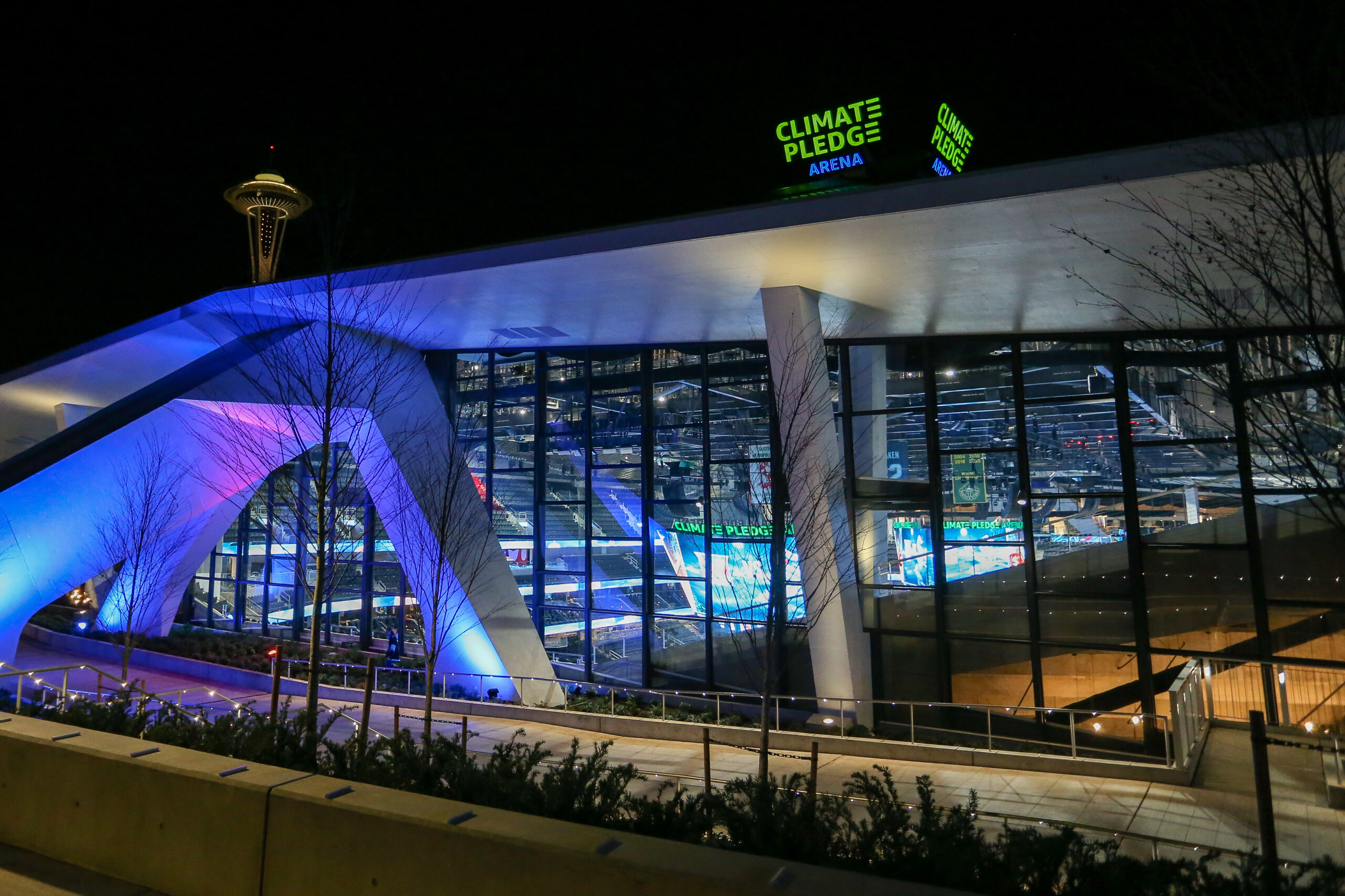
His redesign of Seattle’s Climate Pledge Arena – home to the NHL Kraken and WNBA Storm — several years ago has turned the venue into the planet’s only certified zero-carbon facility, what they boast is “the most progressive, responsible and sustainable arena in the world.”
Mehta is an active member of the D.C.-based non-profit USGBC (U.S. Green Building Council), whose LEED (Leadership in Energy and Environmental Design) certification is the most widely recognized voluntary green building rating system.

According to the website, its guidelines “offer a framework for healthy, efficient and cost-effective green buildings, providing environmental and social benefits.”
LEED keeps amending and updating these principles, with the current iteration, its fifth, “the most transformational,” according to Mehta, with a “hard push” towards decarbonization, limiting greenhouse gas emissions and “resiliency” in the face of climate change.
The latter includes anticipating how to withstand the destructive elements of extreme weather events in building and designing these structures, like hurricanes, flooding and fires.
LEED’s individual tiers – Certified, Silver, Gold or Platinum (the highest) – are based on points earned by adopting sustainable strategies in categories like Energy & Atmosphere, Water Efficiency, Sustainable Site and Indoor Environmental Quality.
The rating, originally developed mostly for office buildings, has now been adapted to monitor stadiums, arenas and other sports and entertainment projects.
Another resource along the same lines is the Living Building Challenge, a philosophy-driven advocacy tool and certification program that looks to define sustainability goals surrounding carbon use, renewables, recycling and composting.
Mehta insists that sustainability is a hard thing to define precisely.
“If you get 15 people in a room, you’ll get 15 answers as to what it means,” he noted. “We are in 25-30 individual countries, and the regulations are different in each. It’s very difficult to apply broad-based principles across all the regions. Each has their specific circumstances and demands … the recycling and composting facilities nearby, the source of energy, the climate, all those things.”
“We don’t want these buildings to operate using fossil fuels in the form of natural gas,” added Mehta.
“But that’s easier said than done, especially in certain parts of the world, where they are using oil and coal – often more harmful than natural gas to the environment – to create electricity. What have I gained in that case by going all-electric? I’ve only made the situation worse.”
Mehta points to the use of solar panels on arena roofs as being an energy-efficient alternative to electricity and gas.
“It’s a very easy, economical way to visibly demonstrate their commitment to sustainability. “There are always architectural, design and structural nuances to it, but solar panels are an excellent way to further reduce your carbon footprint.”
Other initiatives include composting, the use of reusable aluminum cups, preserving energy for reuse – all of which take place on the operational, rather than the design, side, but it is Mehta’s job to point out the ROI benefits of being green.
“When most people hear the word ‘sustainability’ or LEED, they automatically think it’s going to cost more,” he explained. “But that’s not always the case. You have to work from day one with ownership and the consultants to move toward a consensus on achieving the targets you set. It’s not just about a payback. The sports world has already felt disruptions due to climate change, at the same time as it’s causing those emissions that create this situation. It’s a very symbiotic relationship that needs to be addressed, and that’s where we come in.”
Mehta insisted that being eco-friendly for a company is “good business” because it helps its “brand recognition,” the “fan experience” and even employee satisfaction and engagement.
“There is the perception that you’re running an ethical business,” he explained about its help in attracting like-minded sponsors for valuable assets like naming rights and brand activations inside and out. “You’re a friend to the community, a contributor to the common good. All that goes straight to the bottom line. Sustainability has become a revenue-driver. There’s real money involved.”
The other vital link in the chain is the use of eco-friendly construction materials, with their “embodied” carbon, as opposed to “operational” carbon, created through energy sources.
“You can save money by lowering your energy costs just through insulating your building better,” said Perkins & Will Managing Principal Don Dethlefs. “We still see the use of these all-glass buildings with no shading, which results in heat gain in the summer, requiring the use of more power to cool it down.”
Mehta points to the use of low-carbon cement, steel, glass, aluminum and insulation – where are your materials sourced? Can steel be acquired from local providers? Is it 100% recycled? These are the elements that translate into making a low-carbon building, even more than energy use, according to Mehta.
“Choosing the correct materials is a one-time shot,” he said. “Once you’ve committed, there’s no turning back.”
HOK Group’s Senior Project Designer Rashed Singaby is currently overseeing the construction of the first all-electric stadium in Willets Point, Queens, for the NYCFC soccer team, right across the way from Citi Field, home of the New York Mets baseball team.
“Every element of architecture and design must be seen through the lens of sustainability,” he said. “There’s a responsibility on both owners and designers to be advocates. If you want to be a good neighbor, you want to become sustainable in a way that reduces the carbon footprint. We all know what energy hogs these stadiums can be.”
FREE
 Daily Pulse
Subscribe
Daily Pulse
Subscribe
 Daily Pulse
Subscribe
Daily Pulse
Subscribe